Medicine Ball Sit Up
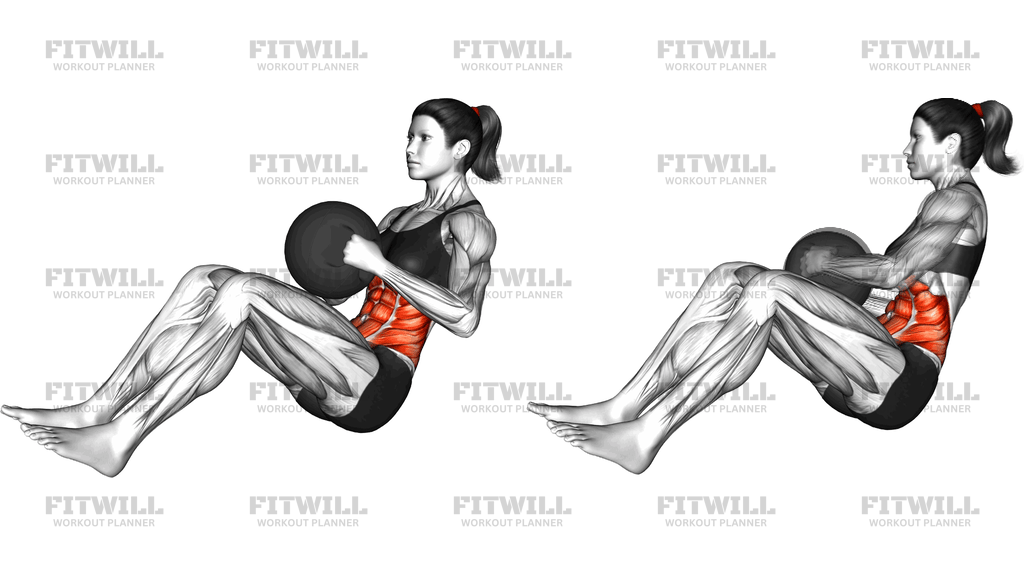
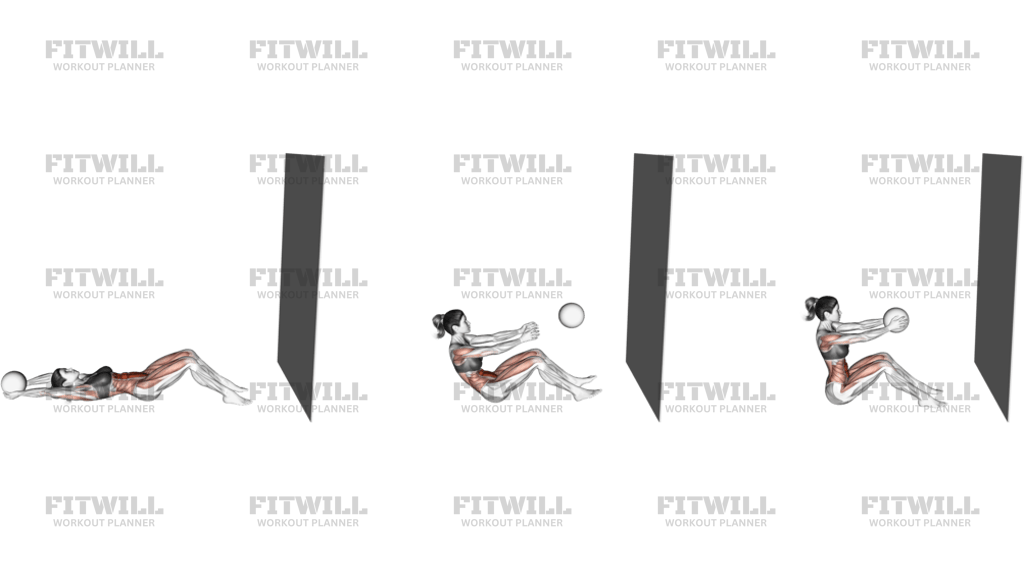
The Medicine Ball Sit Up is a loaded trunk flexion exercise performed on the floor with a medicine ball held against your chest. Instead of crossing your arms over your torso or reaching your hands forward, you cradle the ball at your sternum throughout the entire rep, which adds constant resistance to every inch of the sit up and forces your abs to work harder from the moment your shoulders leave the floor until you reach the top.
This movement is useful for anyone who has outgrown bodyweight sit ups. If you can knock out twenty or more unweighted reps without much effort, adding a medicine ball is one of the simplest ways to make the pattern challenging again without switching to more complicated equipment. It suits general strength trainees, martial artists and field sport athletes who need a strong trunk for transferring force, and lifters who want direct abdominal work that scales cleanly by simply choosing a heavier or lighter ball.
The primary muscles worked are the abs, especially the rectus abdominis, which drives the trunk from a lying position up to a seated position. The hip flexors assist strongly as you approach the top of the range, and the obliques work isometrically to keep the ball level and prevent your torso from rotating. Holding the ball at the chest rather than extending it overhead keeps the load close to your center of mass, which protects the lower back while still demanding real strength from the trunk.
Setup matters more than most people expect. Lie with your knees bent and feet flat on the floor, roughly hip width apart, so your hips can stay grounded while your torso curls up. Keep the ball pressed lightly into your upper chest with both hands rather than letting it drift forward over your face, and move through the rep at a deliberate pace. A slow lower under control does as much for abdominal strength as the drive upward, so treat the descent as part of the working rep rather than a collapse back to the floor.
A common use case is performing three to four sets of eight to fifteen reps near the end of a training session, either as direct core work or as a finisher. Because the ball adds meaningful resistance, most people do better with fewer, higher-quality reps than with fast, loose repetitions. If your lower back arches off the floor at the bottom or your feet lift as you rise, the ball is probably too heavy, and dropping to a lighter weight will let you build the pattern properly before progressing.
[ Workout Log & Planner ]
Put your next workout in Fitwill
Keep your plan and training log ready when you are.


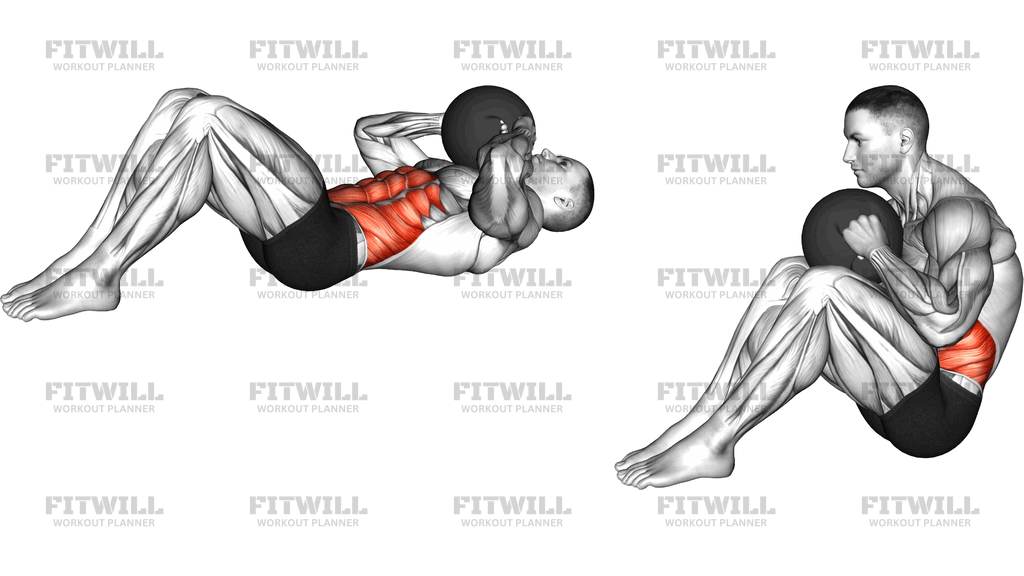
Instructions
- Sit on the floor with your knees bent, then place a medicine ball within arm's reach before lying back.
- Lie on your back with your knees bent to roughly 90 degrees and your feet flat on the floor about hip width apart.
- Pick up the medicine ball and hold it against your upper chest with both hands, elbows tucked close to the ball.
- Brace your abs by gently tightening your midsection and pressing your lower back toward the floor before you begin.
- Exhale and drive your torso up, curling your shoulders first and letting your ribs move toward your hips as you rise.
- Continue up until your trunk is upright or close to it, keeping the ball pressed to your chest and your feet grounded.
- Pause briefly at the top, then lower your torso back down slowly, reversing the same path with your spine unrolling one segment at a time.
- Inhale on the way down, reset your brace when your shoulder blades touch the floor, and start the next rep without bouncing.
- Complete your set, then place the ball on the floor beside you before standing up.
Tips & Tricks
- Hug the ball at your sternum, not your neck. If the ball rides up toward your chin as you fatigue, your elbows flare and your neck starts compensating, so pull it back down to your chest.
- Do not let momentum do the work. Swinging your arms or thrusting your chest forward turns the Medicine Ball Sit Up into a hip flexor jerk, so keep the ball still against your chest and let your abs lift the load.
- If your feet pop off the floor as you rise, the ball is too heavy or you are jerking upward. Anchor your feet flat and slow the first third of the ascent.
- Control the last few inches of the descent. Most people drop from seated straight onto their back, which removes the eccentric work where a lot of abdominal strength is built.
- Keep your chin neutral by looking at a spot on the wall above your knees. Tucking your chin to your chest shortens the range your abs actually travel.
- Start with a light ball, around 4 to 6 pounds, until you can hold a smooth tempo for all reps. Progressing the weight is only useful if the movement path stays clean.
- If your lower back feels pinched at the bottom, stop the descent when your shoulder blades touch the floor instead of letting your whole back flatten and arch under the load.
- Pair this with a plank variation in the same session. The sit up trains trunk flexion, so adding an anti-extension exercise balances out your core work.
Frequently Asked Questions
What muscles does the Medicine Ball Sit Up work?
The abs, particularly the rectus abdominis, do most of the work as they pull your trunk from the floor to a seated position. The hip flexors assist strongly near the top, and the obliques stabilize to keep the ball from tipping side to side.
Where should I hold the medicine ball during the sit up?
Hold it against your upper chest with both hands, elbows tucked. Holding it there keeps the load close to your trunk; extending your arms overhead or pushing the ball out front changes the leverage and makes the movement much harder on your lower back.
Is the Medicine Ball Sit Up good for beginners?
It can be, but most beginners should master unweighted sit ups or partial curl ups first. Once you can perform fifteen or more clean bodyweight reps, a light medicine ball in the 4 to 6 pound range is a sensible starting load.
Why do my hip flexors feel the Medicine Ball Sit Up more than my abs?
This usually means you are rising as one rigid block instead of curling your spine. Focus on peeling your shoulders off the floor first and letting your ribs move toward your hips, which shifts the work back onto the abs.
Should my feet be anchored or unanchored?
The standard setup keeps your feet unanchored and flat on the floor, which forces your abs to do the lifting. Anchoring your feet under a bench or partner makes the hip flexors dominate, so avoid it unless you specifically want that variation.
How heavy should the medicine ball be?
Choose a weight that lets you complete eight to fifteen reps with a controlled tempo and your feet staying planted. If you have to yank your torso up or your lower back arches off the floor, go lighter.
Can I substitute the Medicine Ball Sit Up with a plate or dumbbell?
Yes, a small weight plate or light dumbbell held at the chest works the same pattern. A medicine ball is simply easier to hold securely and more comfortable against your chest, especially when you sit up quickly.
Is it safe for the lower back?
For most people with healthy backs, yes, as long as you control the descent and stop the rep if you feel pinching. Repeatedly slamming your back into the floor between reps is the main thing to avoid, so lower down quietly rather than collapsing.
How do I progress the Medicine Ball Sit Up over time?
Increase the ball weight in small increments, slow the lowering phase to three or four seconds, or pause for a breath at the top of each rep. These options add difficulty without letting form break down.