Medicine Ball Sit Up
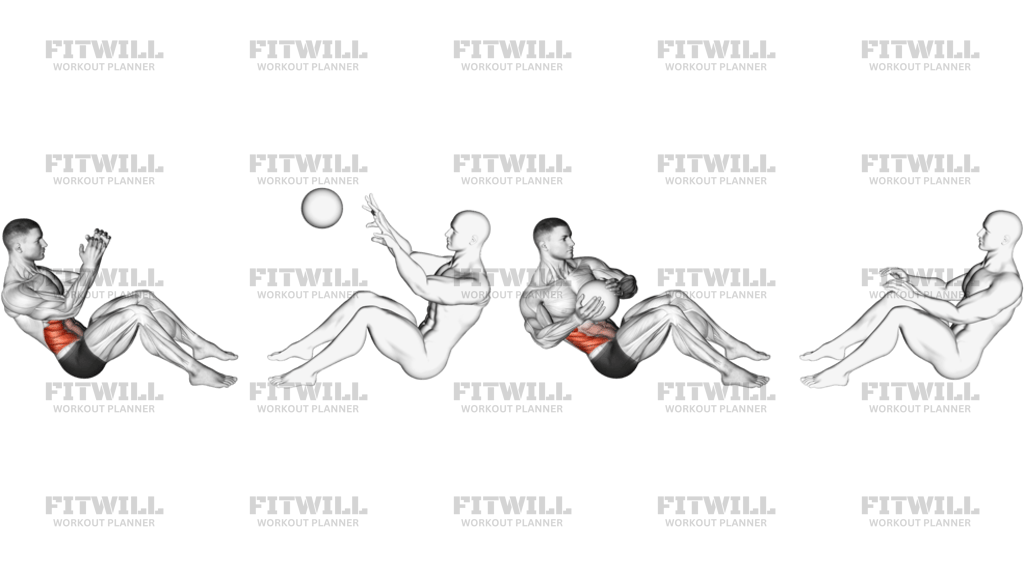
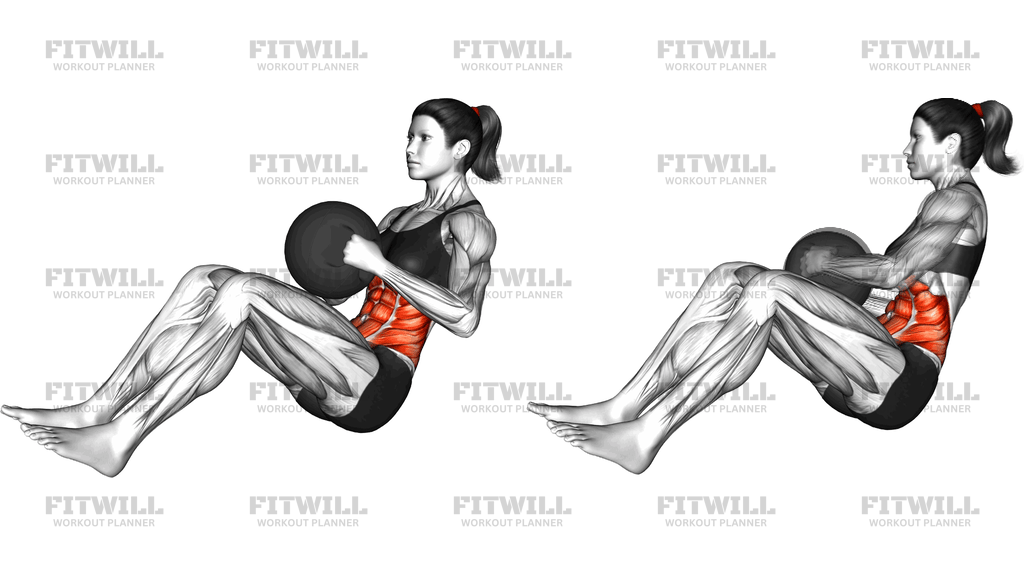
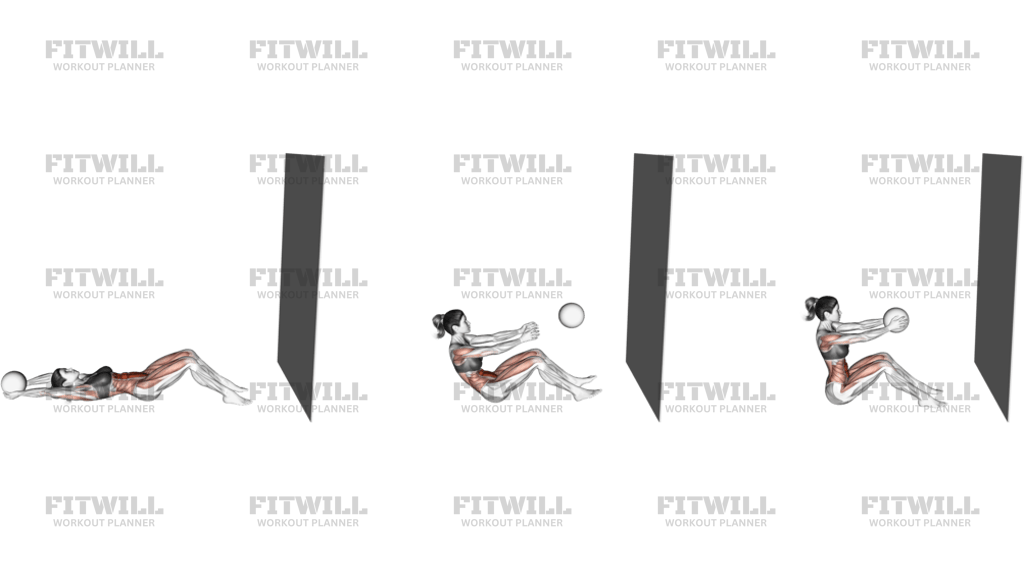
The Medicine Ball Sit Up is a weighted trunk flexion exercise performed on the floor with a medicine ball held against your chest. You start lying on your back with knees bent and feet flat, curl your torso up until you are sitting upright, then lower back down under control. The ball adds resistance to a bodyweight sit up, which makes the abdominal muscles work harder through the full range of motion without needing a cable stack, dumbbell, or plate.
This movement trains the rectus abdominis as the prime mover, with the hip flexors assisting to bring the ribcage toward the thighs and the obliques stabilizing the trunk so it stays square to the ceiling. Holding the ball at the sternum shifts your center of mass forward, which increases the lever load on the abs and also forces the arms and shoulders to hold the ball securely as you move.
The setup matters more than people expect. Feet flat and knees bent give you a stable base, and tucking the ball firmly against your chest rather than letting it drift in front of you keeps the load close to your trunk. If the ball floats away from your body, your arms become the limiting factor and your lower back takes strain it does not need.
This exercise suits lifters who find bodyweight sit ups too easy, athletes who want trunk strength that transfers to throwing and bracing, and anyone training at home with minimal equipment. It is also a straightforward way to progress a client from bodyweight trunk work to loaded trunk work. Because the movement happens on the floor, a mat makes the transition between reps more comfortable on the spine and tailbone.
To execute it well, think about peeling your shoulders off the floor one segment at a time rather than yanking yourself up, and keep the descent slower than the ascent. Do not let momentum from a floor bounce do the work. Most people should use a ball light enough that the last few reps slow down from fatigue rather than from form breakdown.
A practical safety note: if your feet lift or your lower back arches sharply as you lower, the ball is probably too heavy or your range is too long. Reduce the weight, shorten the descent slightly, and build up. Stop the set if you feel the movement shifting from your abs into your neck or lower back.
[ Workout Log & Planner ]
Put your next workout in Fitwill
Keep your plan and training log ready when you are.


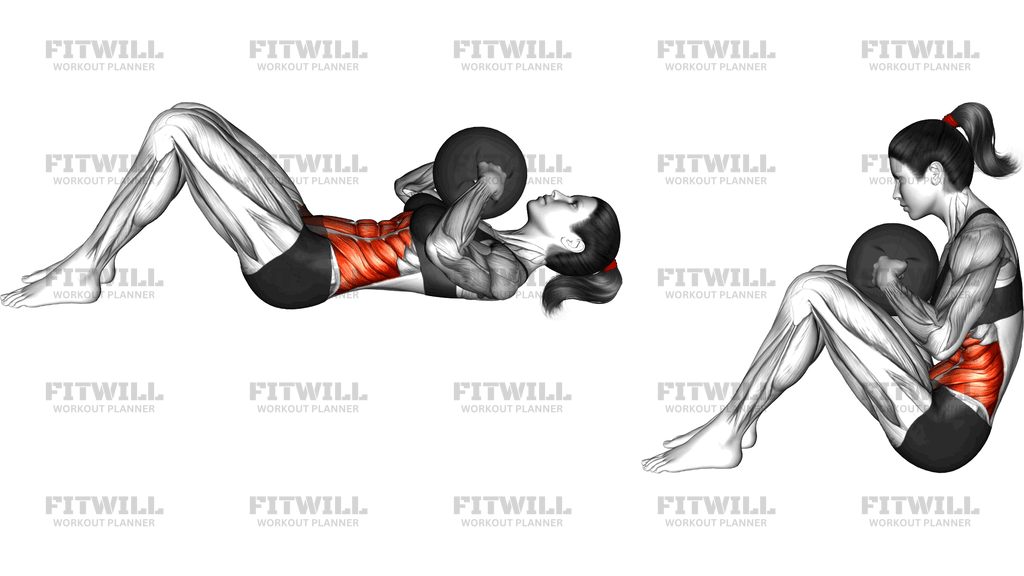
Instructions
- Sit on an exercise mat with your knees bent to roughly 90 degrees and your feet flat on the floor.
- Lie back until your shoulders and head rest on the mat, holding the medicine ball with both hands tucked against your chest.
- Squeeze the ball firmly with your palms and fingers so it stays pressed to your sternum throughout the rep.
- Brace your abdominal muscles and lightly press your lower back toward the floor before you start moving.
- Curl your head, shoulders, and upper back off the mat, then continue flexing your trunk until you are sitting upright with the ball still at your chest.
- Pause briefly at the top with your torso tall and your shoulders stacked over your hips.
- Lower yourself back down in a slow, controlled curl, reversing the same path until your shoulders and head touch the mat again.
- Exhale as you sit up, and inhale as you lower back toward the floor.
- Complete the rep, then reset your brace and foot position before starting the next repetition.
Tips & Tricks
- If the ball keeps sliding away from your chest, wrap your hands on opposite sides of it and keep your elbows tucked, because loose hands turn the rep into an arm exercise.
- Watch for your feet lifting off the floor as you sit up; that usually means you are pulling with the hip flexors instead of curling with the abs, so slow the ascent down.
- Do not slam the back of your head into the mat on the way down; aim to touch lightly so you preserve tension for the next rep.
- If you feel the work in your neck, keep your chin about a fist's distance from your chest and let the trunk do the flexing, not your head.
- Choose a ball weight that lets you finish all reps with the same controlled lowering speed; once the descent turns into a drop, the set is done.
- Keep your knees pointing straight up rather than collapsing inward, which keeps the hips in a stable position under the load.
- Sitting all the way upright is optional; a partial curl to about 45 degrees keeps constant tension on the abs if you find the top position easy.
- On a slippery floor, position your heels against something solid like a wall or heavy object so your feet stay planted.
Frequently Asked Questions
Which muscles does the Medicine Ball Sit Up work?
The rectus abdominis is the primary mover, curling the trunk from lying to sitting. The hip flexors assist at the top of the range, and the obliques work to keep the torso from twisting as you hold the ball.
Should I hold the medicine ball at my chest or extend it overhead?
Holding it against your chest, as this exercise is performed, keeps the load close to your trunk and lets your abs do most of the work. Extending the ball toward the ceiling lengthens the lever and is a harder variation you can progress to later.
Is the Medicine Ball Sit Up suitable for beginners?
Yes, as long as the ball is light. If a full sit up feels difficult, start with a partial curl to 45 degrees or perform the same movement with no ball until your trunk strength improves.
How heavy should the medicine ball be?
Pick a weight you can control on the way down for every rep. Most people do well with a light to moderate ball, typically in the 2 to 6 kilogram range, and should progress only when the full set feels smooth.
Why do my feet lift off the floor during the Medicine Ball Sit Up?
That usually happens when the ball is too heavy or you are rushing the ascent, so the hip flexors dominate and drag on the thighs. Slow the movement down, tuck the ball tighter to your chest, or wedge your heels against a stable object.
Can I do this exercise without a medicine ball?
You can perform the same sit up pattern with a dumbbell hugged to your chest, a weight plate, or just your bodyweight. The medicine ball is simply convenient because it is comfortable to hold against the sternum.
Is it bad for my lower back to do full sit ups with weight?
Full sit ups involve the hip flexors and put some load on the lumbar spine, so keep the lowering phase controlled and stop if you feel pinching or sharp discomfort. If you have a history of back issues, a partial curl range is a sensible starting point.
How does the Medicine Ball Sit Up differ from a crunch?
A crunch only lifts the shoulders and upper back off the floor, while this exercise takes you all the way to a seated position, which adds hip flexor involvement and a longer range under load.
How many reps and sets should I do?
For trunk strength, 3 to 4 sets of 8 to 12 controlled reps works well. For muscular endurance, use a lighter ball and aim for 15 to 20 reps per set.