Band Decline Close Grip Press
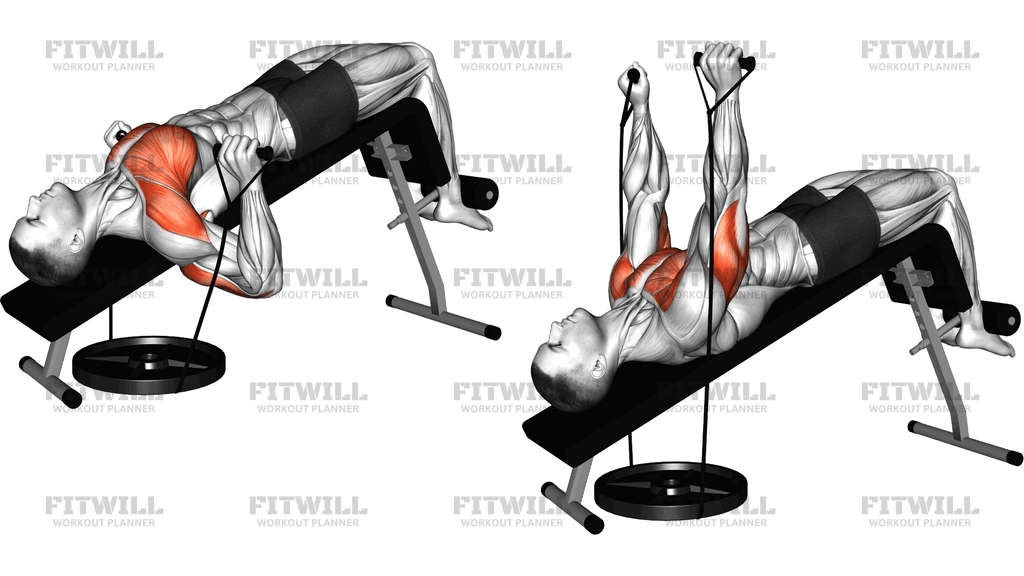
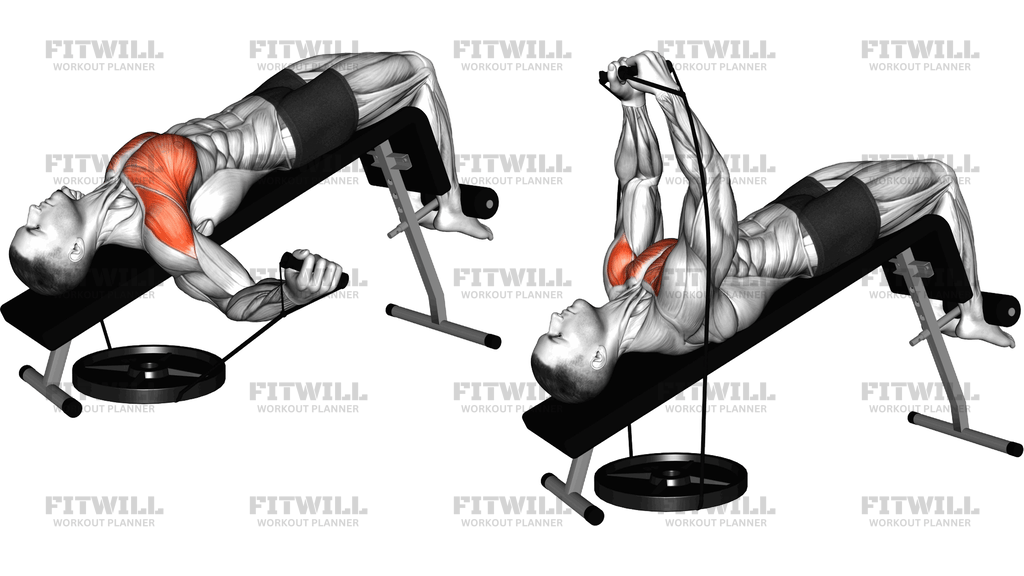
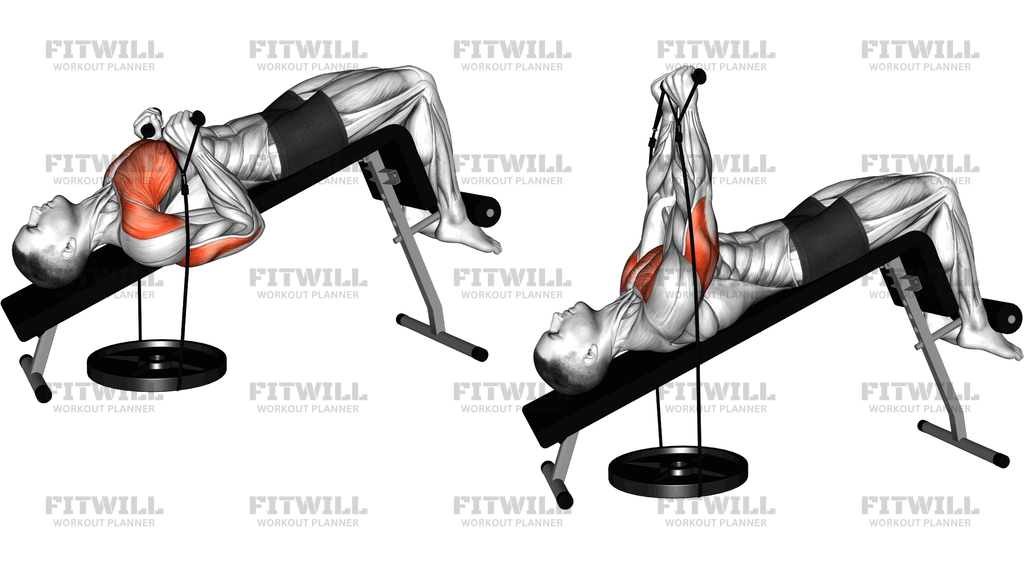
Band Decline Close Grip Press is a chest press performed on a decline bench with a resistance band anchored beneath the bench and pressed upward with the hands set close together. The decline angle shifts emphasis toward the lower portion of the chest, while the narrow hand position increases elbow flexion and brings the triceps heavily into the pressing motion. Because the band is anchored below the body, the tension pulls straight down toward the floor, which means the resistance is highest near the top of the press where the arms extend.
This setup suits lifters who train at home or travel with minimal gear, since a band and a decline bench replace the need for a barbell, dumbbells, or a cable stack. It is also a useful variation for lifters who already press with a wide grip and want to build the inner chest and lockout strength, or those whose shoulders feel cramped during flat barbell pressing and prefer an angle where the head is lower than the hips. The anchored band provides a smooth, joint-friendly resistance curve that stays challenging through the full extension.
The decline position matters for more than just muscle emphasis. With the feet secured under the bench rollers, the hips and torso stay fixed, so you can focus on driving the hands up along a slightly backward arc toward the ceiling rather than stabilizing a free weight. The close grip keeps the upper arms close to the torso and turns the movement into a chest press and triceps extension hybrid, which is why many lifters use it as a finisher on lower-chest or triceps-focused days.
To execute the movement well, lie back with your head lower than your hips, grip the band with hands roughly shoulder-width apart or slightly narrower, and start with the hands over the lower chest. Press up and slightly back until the arms are straight above the upper chest, then lower with control until the hands are just above the chest line. Keep the wrists neutral and the elbows tracking at roughly a 45-degree angle to the torso rather than flaring fully out to the sides.
Safety comes down to two points: check that the band is securely anchored under the bench or plate before each set so it cannot slip free mid-rep, and choose a band tension you can lower slowly. If your feet slide out of the rollers or the band loses tension at the bottom, adjust your position before continuing. Stop the set if the band snaps back toward your face or the press path drifts forward of the shoulders.
[ Workout Log & Planner ]
Put your next workout in Fitwill
Keep your plan and training log ready when you are.


Instructions
- Anchor the middle of a resistance band under the decline bench or a heavy plate at the low end, and confirm it cannot slip before you load it.
- Set the decline bench at a modest angle, hook your feet securely under the rollers, and lie back so your head is below your hips and your upper back is supported on the pad.
- Grab the band with both hands using a close grip, hands about shoulder-width apart or slightly inside, and bring them over your lower chest with elbows bent and tucked near your sides.
- Brace your core and pull your shoulder blades gently down and back so your chest stays open against the pad.
- Press your hands up and slightly back in an arc until your arms are fully extended above your upper chest, keeping the band taut the entire time.
- Squeeze the lower chest briefly at the top without letting the wrists bend backward.
- Lower your hands slowly along the same path until they sit just above the lower chest, maintaining tension in the band rather than letting it go slack.
- Exhale as you press up, inhale as you lower the hands back down.
- Complete all reps with your feet locked in the rollers, then release the band carefully and sit up before standing clear of the bench.
Tips & Tricks
- If the band pulls you toward the low end of the bench, slide your hips slightly downhill or shorten the band setup so your torso stays centered on the pad.
- A common mistake is flaring the elbows out to a full 90 degrees, which strains the shoulders in the decline position; keep them at about 45 degrees to the torso.
- Do not let the hands drift forward past your face at the top; the lockout should finish above your upper chest, not ahead of your shoulders.
- Because the band is easiest to stretch at lockout, pause for a full second with straight arms to make the triceps and lower chest work hardest where the resistance peaks.
- If the band goes slack before your hands reach your chest, switch to a shorter band or add a second band; the bottom position should still have noticeable tension.
- Keep your wrists stacked over your elbows throughout the press; bending the wrists backward under band tension is a frequent cause of forearm fatigue.
- Grip the band firmly with the thumbs wrapped around it rather than pinching it flat against the palm, since a slipping band mid-press is the main risk in this setup.
- If your feet feel unstable in the rollers, squeeze a light pad between your lower legs and the roller pads to add security before pressing.
Frequently Asked Questions
What muscles does the Band Decline Close Grip Press work?
It primarily targets the lower chest, with strong involvement from the triceps due to the close hand position. The front shoulders assist during the press, and the core works to hold your torso steady on the decline angle.
Why does this exercise use a close grip instead of a normal bench press grip?
The narrow hand position keeps the upper arms close to the torso, increasing elbow flexion and range for the triceps while still pressing through the chest. It shifts the exercise from a pure chest press toward a chest-and-triceps hybrid.
Can beginners do the Band Decline Close Grip Press?
Yes, as long as they start with a light band and a gentle decline angle. Beginners should practice the pressing path with a flat or very shallow decline first so the anchored band does not pull them off balance.
How do I anchor the band for this exercise?
Loop the band under the low end of the decline bench or under a heavy weight plate on the floor at that end, with even lengths on both sides. Test the anchor by pressing lightly before committing to a full set.
How does the decline angle change the exercise compared to a flat press?
With your head lower than your hips, the pressing path angles slightly upward and backward, which biases the sternal or lower fibers of the chest. The feet hooked under the rollers also remove some of the stabilization demand compared to a flat bench press.
What is the most common mistake in this movement?
Letting the elbows flare straight out to the sides, which stresses the shoulder joints on a decline bench. Fix it by consciously keeping the elbows at roughly 45 degrees to your torso as you press and lower.
What can I substitute if I do not have a decline bench?
You can perform a close grip band press on a flat bench or the floor, anchoring the band beneath the bench or your upper back. You lose some lower-chest emphasis, but the close grip triceps and chest stimulus remains similar.
Is it safe to have the band under tension near my face?
The band should be anchored below your chest and pressed away from your head, so it pulls down and away, not toward you. Still, inspect the band for tears before every set, since a snapped band under load is the main hazard with any banded press.
How many reps should I use for the Band Decline Close Grip Press?
Because band tension rises toward lockout, moderate sets of 10 to 15 reps work well for most lifters. Use a band you can lower under control for at least 8 reps without the band going slack at the bottom.