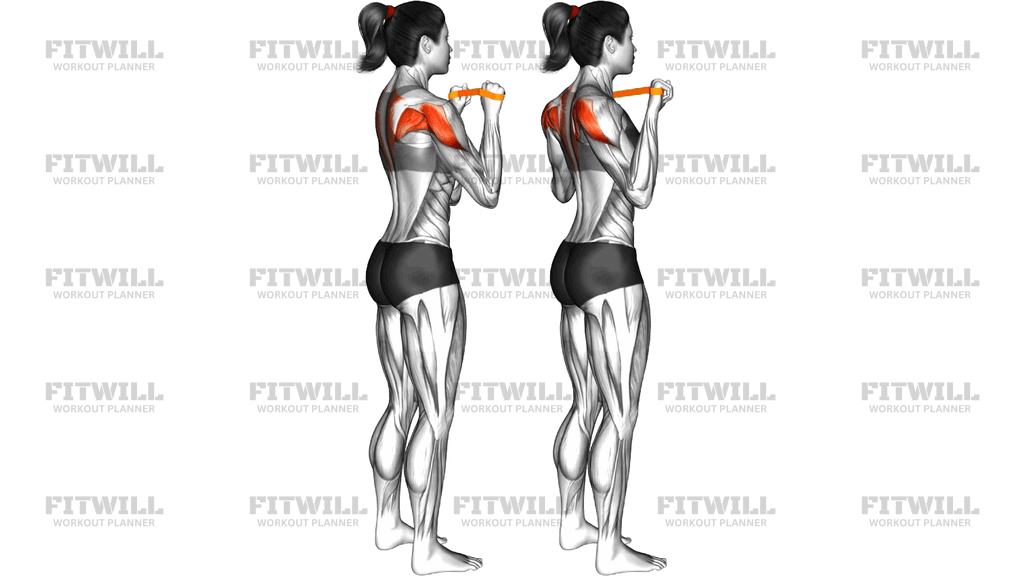
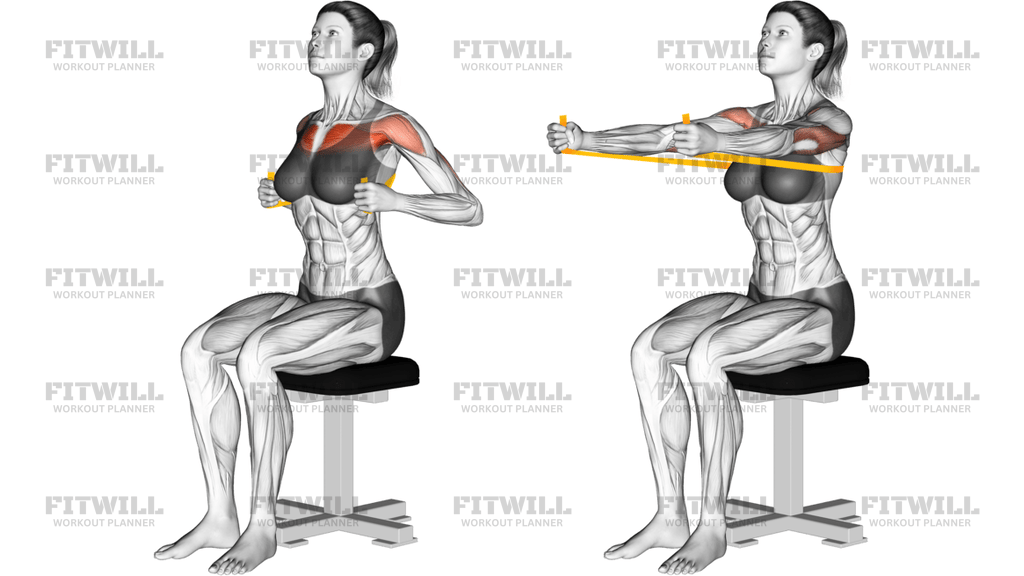
Resistance Band Standing Chest Press
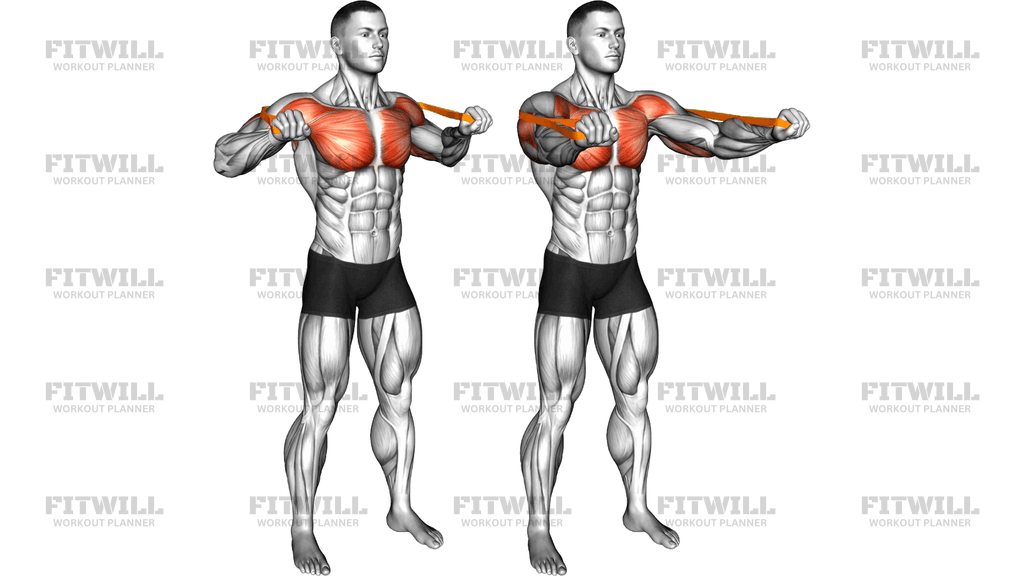
The Resistance Band Standing Chest Press is a horizontal pressing movement performed while standing, with a band anchored behind you at roughly chest height. You grip one end of the band in each hand, start with your elbows bent and hands beside your chest, and press forward until your arms extend in front of you at chest level. Because the band pulls backward toward the anchor point, your chest, front shoulders, and triceps have to work the entire time, including on the way back to the start.
This exercise suits a wide range of lifters. Beginners can learn the horizontal pressing pattern without loading a bar or managing dumbbells, while more experienced trainees can use it as a warm-up, a finishing pump for the chest, or a pressing option when traveling or training at home. The standing position also makes it a practical choice for people who have trouble getting down to or up from a bench.
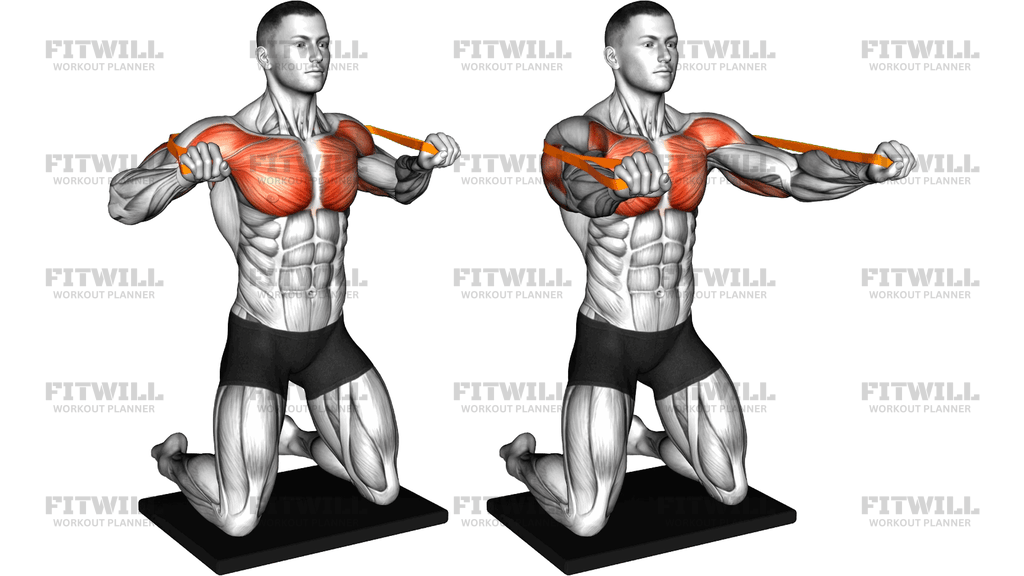
The main muscles worked are the chest, with particular emphasis on the upper portion when the anchor sits at or slightly below shoulder height, as shown by the highlighted upper chest in the movement. The front shoulders assist the press, the triceps extend the elbows to lockout, and the core works to keep your torso upright and square as the band pulls you backward.
Setup matters more than most people expect. The anchor height determines the angle of resistance: anchored near chest height, the band mimics a flat or slightly incline press; anchored too high and the movement drifts toward a downward press, too low and it becomes an upward one. You also need enough distance from the anchor that the band is already under light tension with your hands at your chest, so there is resistance from the very first rep.
To execute it well, stagger your stance or set your feet hip-width apart, brace your abdominals, and press both hands forward along a slightly converging path so your hands finish roughly in line with your mid-chest rather than drifting wide. Keep your shoulders pulled back and down, avoid shrugging, and let the band's tension, not momentum, drive the tempo. Move your hands back under control until they frame your chest again.
In practice, you will see this movement used in band-only chest workouts, in warm-up sequences before bench pressing, and in rehab-friendly or hotel-gym settings where barbells and machines are not available. Because band resistance increases as you press, the hardest part is at full extension, which trains the chest strongly at lockout and challenges the stabilizers around the shoulder throughout the set. Keep your wrists straight and your ribs down, and stop the set if your shoulders roll forward or your lower back starts to arch excessively.
[ Workout Log & Planner ]
Put your next workout in Fitwill
Keep your plan and training log ready when you are.


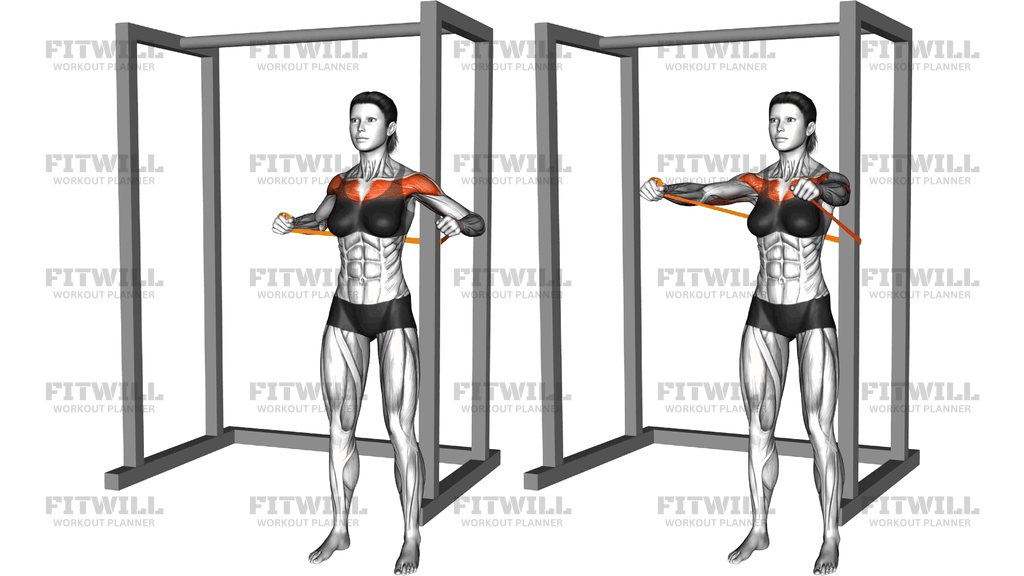
Instructions
- Anchor the band securely behind you at about chest height, such as around an upright rack or a sturdy post, and make sure the anchor cannot slip.
- Grab one end of the band in each hand and walk forward until the band is under light tension with your hands held beside your chest, elbows bent and pointing out to the sides.
- Stand tall with your feet hip-width apart or in a short staggered stance, and position yourself so the band runs along both sides of your torso at chest level.
- Pull your shoulders back and down, brace your abdominals, and keep your gaze forward with your ribs stacked over your hips.
- Exhale and press both hands forward and slightly toward the midline until your arms are fully extended in front of your chest, squeezing your chest at the end position.
- Keep your wrists straight and your elbows from flaring above shoulder height throughout the press.
- Pause briefly at full extension, then inhale and slowly bend your elbows to bring your hands back toward your chest, controlling the band's pull instead of letting it snap you back.
- Stop when your hands frame your chest and the elbows sit slightly behind your torso, then begin the next rep.
- Complete all reps, then step forward toward the anchor to release the band tension before letting go.
Tips & Tricks
- If your hands drift outward as you press, consciously aim them toward a point in front of your sternum so the chest, not just the shoulders, drives the movement.
- The most common fault with this setup is leaning forward as you press. Keep your torso vertical and let the band pull against your braced core instead of your posture.
- Do not start with slack in the band. If the first few inches of each rep feel easy, step back until tension begins immediately with your hands at your chest.
- Keep your elbows at or slightly below shoulder height. Pressing with the elbows high and wide increases strain on the front of the shoulder joint.
- Control the return. Letting the band yank your arms back is the fastest way to lose chest tension and irritate the shoulder.
- If the band rubs or digs into your underarms, widen your grip slightly on the band or switch to a band with handles so the path stays clear of your torso.
- Shorter, heavier bands make the lockout brutally hard but the start easy. If the top end is too heavy, use a lighter band and slow the tempo rather than punching the arms out.
- Breathe out on the press and in on the return rather than holding your breath through the set.
- Reset your stance and shoulder position between sets rather than staying half-braced with the band under tension the whole time.
Frequently Asked Questions
What muscles does the Resistance Band Standing Chest Press work?
The chest is the primary mover, especially the upper portion when the band is anchored at chest height. The front shoulders and triceps assist the press, and the core stabilizes your upright torso against the backward pull of the band.
Why is the band anchored behind me at chest height for this exercise?
A chest-height anchor makes the band pull horizontally backward, which recreates the line of a standing bench press. It also places the resistance angle so the upper chest contributes strongly as you press forward and slightly inward.
Is the Resistance Band Standing Chest Press good for beginners?
Yes. It teaches the horizontal pressing pattern with a self-limiting resistance that is easy to adjust, and there is no bench or heavy weight to position. Beginners should start with a light band and master the braced, upright stance before increasing tension.
How far should I stand from the anchor point?
Stand far enough that the band is already under light tension with your hands beside your chest. If the band goes slack during the first part of the rep, take a step back; if you cannot reach full extension, step closer or use a lighter band.
Why does the Resistance Band Standing Chest Press feel hardest at the top of the press?
Band tension increases as the band stretches, so resistance peaks when your arms are fully extended. This trains the chest and triceps hard through lockout, which is the opposite of free weights, where the stretch position is usually hardest.
My lower back arches when I press. How do I fix it?
The band is pulling you into extension, so tighten your abdominals, tuck your ribs down, and try a staggered stance for a more stable base. If you still arch, the band is likely too heavy for your current core control.
Can I press one arm at a time instead of both?
You can, but pressing one arm while the band pulls to one side demands much more anti-rotation work from your core. Widen your stance and keep the movement slower, or hold the unused end firmly at your chest to reduce the twisting pull.
What can I use instead if I do not have a band anchor behind me?
You can loop the band around your back and hold it under your armpits or grip it behind your shoulder blades, which mimics the same forward press. A cable machine set at chest height with two handles is the closest gym alternative.
Is it safe for my shoulders?
For most people, yes, as long as the anchor is at chest height, the elbows stay near shoulder level, and the return is controlled. If you have a current or past shoulder injury, use a light band, keep the range pain-free, and check with a qualified professional first.
How many reps and sets should I do of the Resistance Band Standing Chest Press?
For general strength and muscle, 3 to 4 sets of 10 to 15 reps works well, since band tension peaks at lockout and higher reps let you stay in control. For a warm-up before bench pressing, 1 to 2 lighter sets of 12 to 15 reps is enough.