Band Incline Close Grip Press
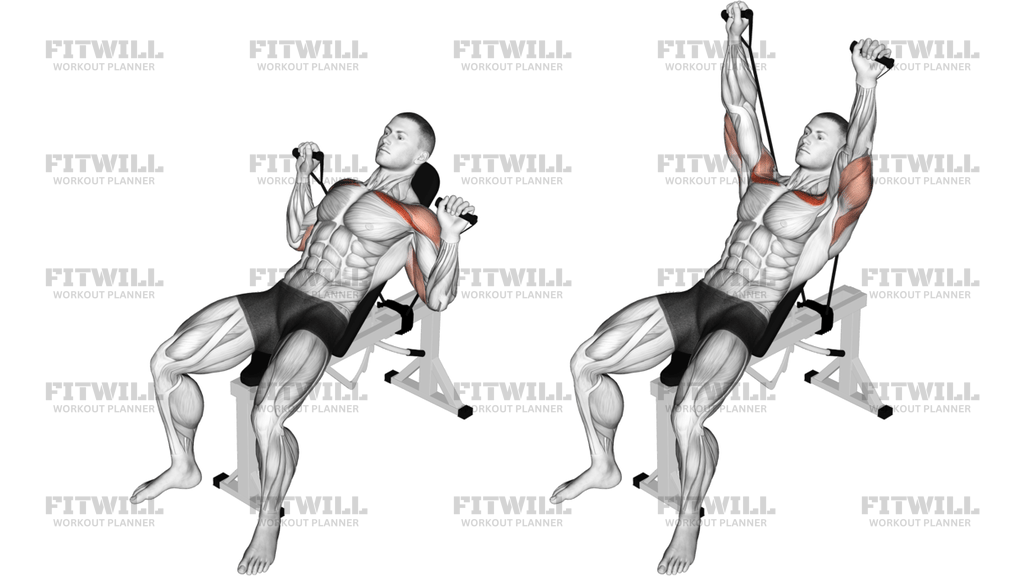
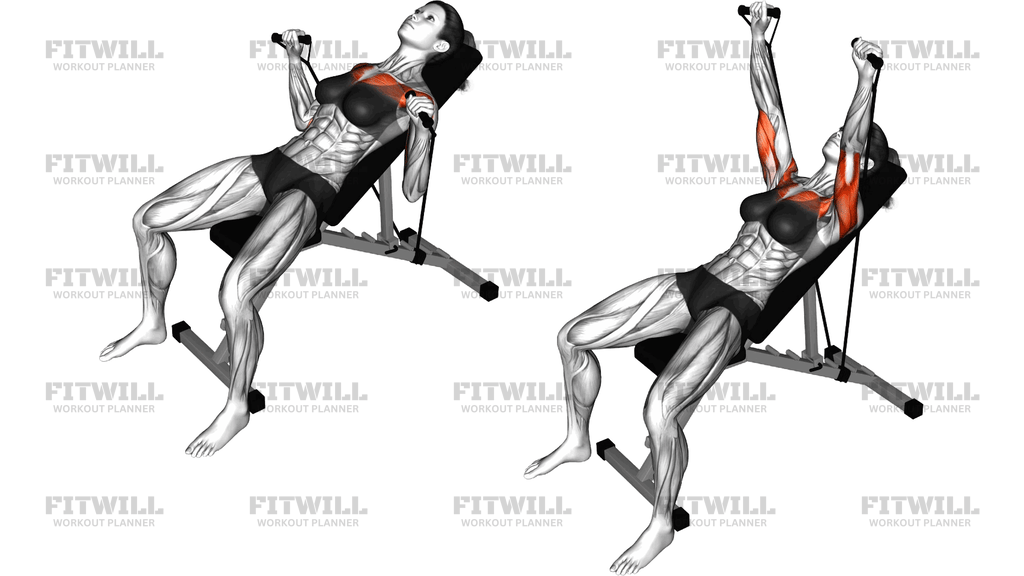
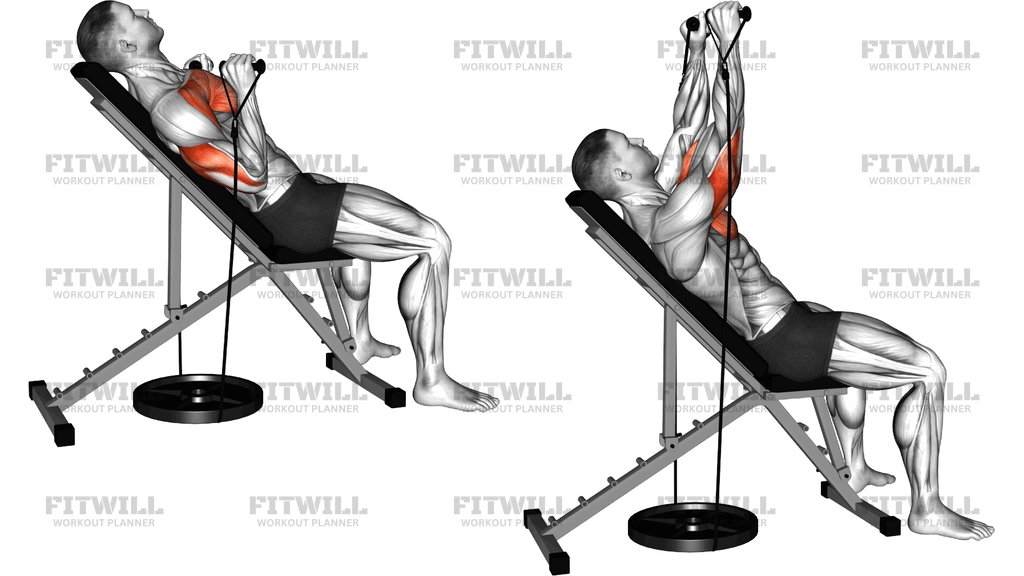
The Band Incline Close Grip Press is a seated pressing exercise performed on an incline bench with a resistance band anchored low behind you. You hold the band handles at upper-chest height with a narrow, hands-inside-shoulders grip, then press up and slightly inward until your arms extend over your upper chest. Because the band runs from a low anchor behind the bench up to your hands, the resistance pulls down and back along the same line a barbell or dumbbells would travel, giving you a pressing pattern without weights.
The close grip is the defining detail here. With your hands narrow and elbows tracking close to your torso, the triceps take on a larger share of the work, while the incline angle shifts emphasis toward the upper chest and front shoulders. This makes the movement a good choice for lifters who want to build pressing strength in the lockout range, or anyone whose elbows complain about heavy barbell close-grip work. The band provides a smooth, joint-friendly resistance curve that gets harder as you press to lockout.
Setup matters more than it might seem. The anchor point should be directly behind and below the bench, so the band tension pulls straight down your pressing line rather than dragging your hands forward or sideways. Sit back firmly against the pad with your feet planted, retract your shoulder blades, and start each rep with the handles just outside your upper chest. If the band is slack at the bottom, you lose tension at the exact point where you want control; if it is over-tensioned, the start position becomes awkward and pulls you out of posture.
To execute well, press the handles up and slightly together over your upper chest, stopping just short of jamming your elbows into full lockout. Keep your wrists stacked over your elbows and your lower back in contact with the pad rather than arching sharply off the bench. Lower under control until the handles are near chest level, elbows tucked at roughly 45 degrees to your torso, then drive the next rep. Exhale on the press, inhale on the way down.
This exercise fits well as a secondary pressing movement on upper-body days, as a warm-up activation before incline barbell or dumbbell pressing, or as the main pressing option in a home setup where only bands and a bench are available. Because band resistance peaks at lockout, it also serves as a useful tool for practicing strong, complete lockouts without heavy loading on the shoulder joint at the bottom of the range.
[ Workout Log & Planner ]
Put your next workout in Fitwill
Keep your plan and training log ready when you are.


Instructions
- Anchor the resistance band low behind the incline bench, either around a heavy weight plate, a floor anchor, or the base of the bench, so the band runs up behind your shoulders when you sit down.
- Set the bench to a 30-45 degree incline, sit back firmly against the pad with feet flat on the floor, and grip one handle in each hand with a narrow, hands-inside-shoulders grip.
- Pull the handles up to the sides of your upper chest, elbows bent and tucked close to your torso, and squeeze your shoulder blades back and down against the bench.
- Brace your core and press your lower back into the pad so it does not arch excessively as tension increases.
- Press both handles up and slightly inward over your upper chest until your arms are nearly straight, keeping your wrists stacked over your elbows the whole way.
- Pause briefly at the top with the band under full tension, without slamming the elbows into a hard lockout.
- Lower the handles slowly back to upper-chest level, letting the elbows stay close to your sides rather than flaring wide.
- Exhale as you press up and inhale as you lower the handles back down.
- Complete all reps with even tension on both sides of the band, then release the handles carefully and stand up before letting the band snap back to the anchor.
Tips & Tricks
- If the band pulls you backward or forward at the start of each rep, move the anchor point directly in line with the bench instead of off to one side.
- A common mistake is turning this into a shoulder press by drifting the hands over the face; aim the handles over the upper chest to keep the incline press angle.
- Keep the elbows at roughly 45 degrees to the torso rather than flared to 90 degrees; wide elbows with a close grip defeats the purpose of the narrow hand position.
- If the band is slack at the bottom of each rep, choke up on the handles or shorten the band so tension exists through the entire range.
- Avoid letting the band snap your hands back down; the eccentric should take two to three seconds, which is where much of the chest and triceps work happens.
- If your hips slide forward on the seat during the press, plant your feet harder and drive your upper back into the pad instead of pushing through your lower back.
- Use a slower tempo and a lighter band before jumping to heavy resistance; bands feel easy at the bottom and surprisingly hard at lockout, so choose tension based on the top of the rep.
- If one handle creeps higher than the other, slow down and match your weaker side's path; uneven pressing with bands often hides a side-to-side strength difference.
- Warm up the shoulders and elbows with a few light, high-rep sets before adding a stronger band, since the narrow grip loads the triceps and elbows directly.
Frequently Asked Questions
What muscles does the Band Incline Close Grip Press work?
It primarily targets the upper chest, with heavy involvement from the triceps because of the narrow grip. The front shoulders assist throughout the press and help stabilize the lockout.
Why use a close grip on an incline press instead of a normal grip?
The narrow hand position keeps the elbows tucked, which shifts more of the load to the triceps while the incline angle keeps the upper chest involved. It is a good compromise when you want both triceps and upper-chest work in one movement.
Where should the band be anchored for this exercise?
Anchor it low and directly behind the bench, such as around a heavy weight plate on the floor or a low anchor point. This keeps the resistance pulling straight down your pressing line instead of dragging your hands off course.
Is the Band Incline Close Grip Press good for beginners?
Yes, it is beginner-friendly because the band offers light, adjustable resistance and the bench supports your back throughout. Start with a light band and focus on keeping the elbows tucked and the wrists stacked over the elbows.
How does band resistance differ from using dumbbells for this press?
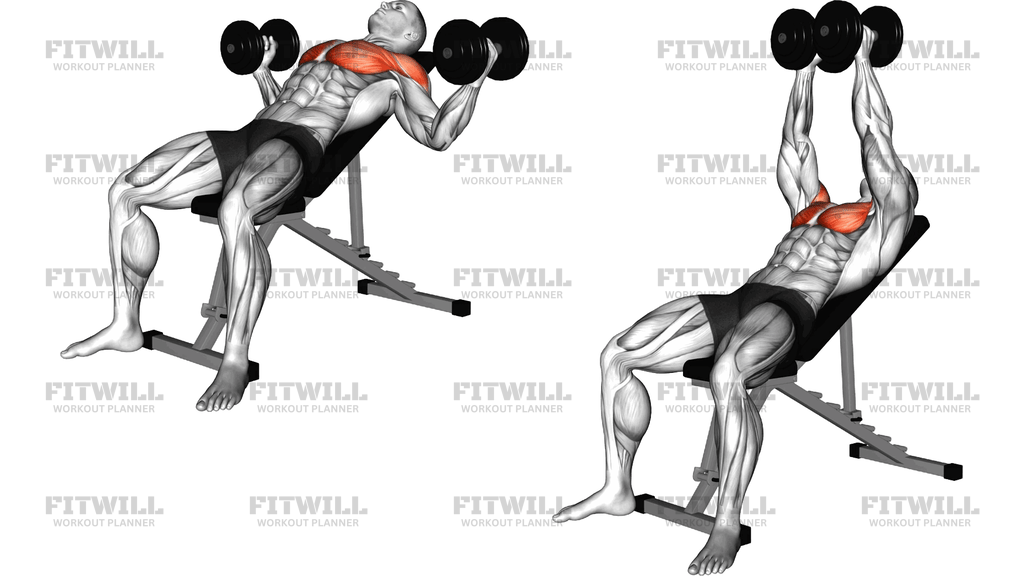
The band is easiest at the bottom and hardest at lockout, while a dumbbell load stays constant. This means you get strong triceps work at the top of the rep with less stress on the shoulders at the bottom.
What is the most common mistake with this movement?
Flaring the elbows out wide or pressing the handles over the face instead of the upper chest. Both mistakes turn it into a generic shoulder press and remove the close-grip triceps emphasis the exercise is designed for.
What can I use instead of handles if my band has none?
You can grip the band ends directly or loop them around your palms, as long as the band stays secure in a narrow grip. Just be careful that the band cannot slip out of your hands under tension.
How do I know if I'm using too much band tension?
If the band pulls your torso forward off the pad at the start of each rep or forces your elbows to flare as you fight to the bottom position, the resistance is too high. Choose a band you can press smoothly to full lockout without losing posture.
Can I do the Band Incline Close Grip Press if my shoulders are sensitive?
The band's low tension at the bottom of the range often makes it more comfortable than weighted pressing, but stop if you feel sharp pain. Keep the range of motion to what you can control and avoid forcing a deep stretch at chest level.