Alternate Upper Chest Raise
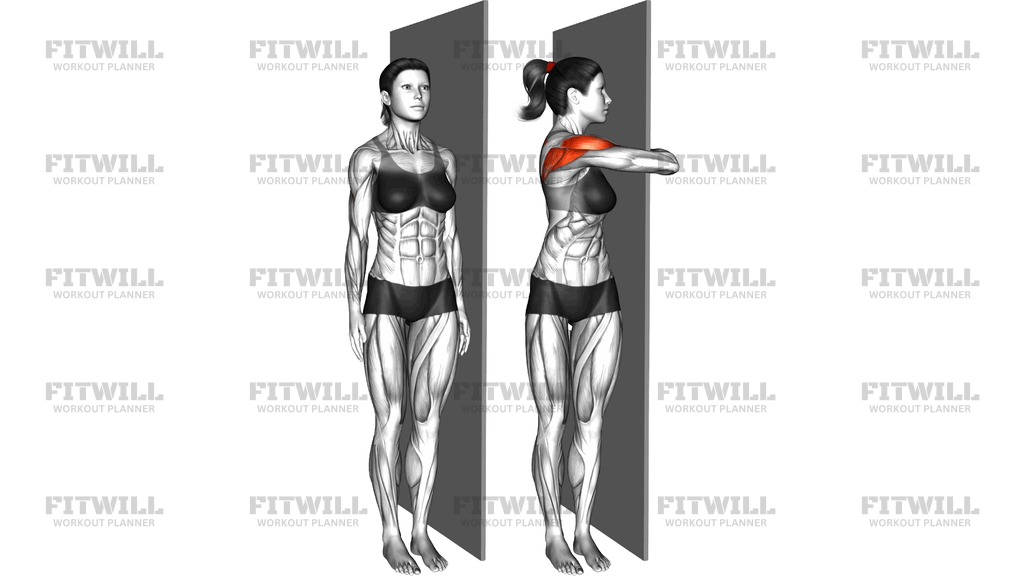
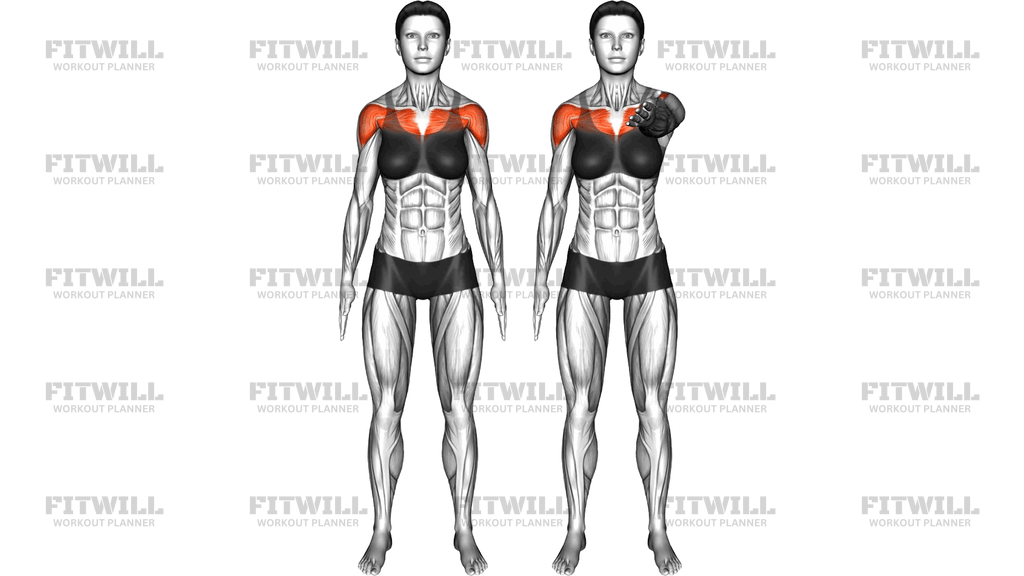
The Alternate Upper Chest Raise is a standing, bodyweight movement where you raise one arm at a time forward and upward to roughly eye level, deliberately squeezing the upper portion of the chest at the top of each rep. Because there is no external load, the exercise relies entirely on intentional muscle contraction and clean movement mechanics, which makes it a useful activation drill rather than a heavy strength builder. The highlighted working area is the clavicular head of the pectoralis major, the fibers that run from the collarbone down toward the upper arm, with the front delts assisting as you lift.
This movement suits people who struggle to feel their upper chest during pressing work, anyone warming up before incline presses or flyes, and lifters who train at home without equipment and still want direct upper-chest work. It is also a low-fatigue option for recovery days, since a set of slow alternate raises costs very little energy but drives blood into the chest and shoulder area.
Setup matters more than it looks. Standing tall with your feet about hip-width apart, ribs stacked over your pelvis, and shoulders pulled gently back gives the chest fibers a stable origin to pull from. If you slouch or let the shoulder roll forward as you lift, the front delt and upper trap take over and the upper chest stops doing the work. Think of the arm as a lever attached to the chest: the chest initiates, the arm simply follows.
To execute it well, start with both arms relaxed at your sides. Raise one arm forward and slightly inward, as if reaching up and across toward the ceiling in front of you, keeping the elbow nearly straight but not locked. Stop around shoulder to eye height, add a firm one-second squeeze across the upper chest, then lower under control before switching arms. The alternating rhythm lets one side work while the other resets, which keeps the rep quality high.
A common mistake is swinging the arm using momentum or shrugging the shoulder toward the ear. Both turn a targeted chest contraction into a sloppy shoulder raise. Keep the movement slow enough that you could pause at any point, and keep the opposite shoulder down and relaxed while the working arm lifts.
For programming, two to four sets of ten to fifteen raises per side works well as a warm-up, while longer sets of fifteen to twenty-five with a hard top squeeze can serve as a finisher. Because the resistance is your own arm weight, progress comes from slower tempo, longer top holds, and sharper mental focus on the chest rather than from adding load.
[ Workout Log & Planner ]
Put your next workout in Fitwill
Keep your plan and training log ready when you are.


Instructions
- Stand with your feet hip-width apart, weight evenly distributed, and your posture tall with the sternum lifted and shoulders drawn lightly back and down.
- Let both arms hang straight down at your sides with the palms facing your thighs, and relax the neck and jaw.
- Brace your core lightly to keep the ribs from flaring, and confirm that both shoulders are level before you start.
- Begin raising one arm straight forward and slightly inward, leading the lift from the upper chest near the collarbone rather than from the hand.
- Continue the raise until the arm is roughly at shoulder to eye height, keeping the elbow soft and the shoulder blade from shrugging upward.
- Pause at the top for about one second and squeeze across the upper chest as if pressing the arm up and toward the midline of the body.
- Lower the arm slowly and under control back to your side, resisting gravity instead of letting the arm drop.
- Exhale as you raise the arm and inhale as you lower it, keeping your breathing steady throughout the set.
- Repeat on the other side, and continue alternating arms until the planned number of reps per side is complete.
- Reset your posture between sets, checking that the shoulders have not crept up toward the ears.
Tips & Tricks
- Cue the lift from the collarbone area, not the hand. If you only think about lifting the hand, the arm moves on momentum and the upper chest never gets a real contraction.
- Watch for shrugging. If the trap on the working side climbs toward your ear, stop the raise a few degrees lower and keep the shoulder blade pressing down as the arm lifts.
- Slightly angling the arm inward at the top, toward the body's midline, lines the movement up with the diagonal fiber direction of the upper chest and improves the squeeze.
- Do not lock the elbow hard at the top. A soft, nearly straight arm keeps tension on the chest instead of resting in the joint.
- Keep the opposite arm and shoulder still and relaxed. Twisting the torso to help the lifting arm is a sign the raise is moving too fast or too high.
- Use a two-second lower on each rep. With no external weight, the lowering phase is where most of the muscle-building stimulus comes from.
- If you cannot feel the upper chest at all, try pre-setting the shoulder back and down before the first rep and lifting only to shoulder height rather than eye height.
- Slower is better than higher. A controlled raise to shoulder height beats a flung arm overhead, which mostly recruits the traps and front delts.
- Place this drill before incline pressing in your session to prime the upper chest, or use it as a light finisher when your shoulders are too fatigued for pressing.
Frequently Asked Questions
Which muscles does the Alternate Upper Chest Raise work?
The primary target is the upper chest, specifically the clavicular head of the pectoralis major. The front deltoid assists the lift, and the core works lightly to keep your torso steady.
Is the Alternate Upper Chest Raise good for beginners?
Yes. With no equipment and a short, safe range of motion, it is one of the easiest ways to learn what an upper-chest contraction feels like before moving to loaded pressing or flye variations.
Why does the Alternate Upper Chest Raise use one arm at a time?
Alternating sides lets you focus fully on the contraction of each side, which helps expose and correct a weaker or less responsive upper chest. It also keeps the set rhythmic and prevents rushing both arms together.
How high should I raise my arm?
Aim for shoulder to eye height. Going overhead shifts the work toward the traps and front delts and reduces the squeeze across the upper chest.
Can the Alternate Upper Chest Raise build real muscle without weights?
It can produce modest growth in untrained people, but its main value is activation, warm-up, and technique work. For significant hypertrophy, combine it with loaded upper-chest exercises like incline presses and low-to-high flyes.
Why do I feel this in my shoulder instead of my chest?
That usually means the shoulder is shrugging or the arm is being lifted by the front delt on autopilot. Pull the shoulder blade down before each rep, lift slower, and consciously initiate the movement from the collarbone area.
What can I use instead of the Alternate Upper Chest Raise?
Low-to-high cable flyes, incline dumbbell flyes, or resistance-band upward chest flyes all target the same upper-chest fibers with external resistance. The bodyweight version is simply the most accessible option.
How many reps and sets should I do of the Alternate Upper Chest Raise?
For warm-up or activation, two to three sets of ten to fifteen reps per side at a moderate tempo works well. As a standalone home exercise, use three to four sets of fifteen to twenty-five reps with a one-second squeeze at the top.
Is it safe to do the Alternate Upper Chest Raise every day?
Generally yes, since the load is light and the movement is low-impact. If you notice shoulder soreness, reduce the range, slow the tempo, or give the area a rest day before training it again.