Band Standing Face Pull To Y Raise
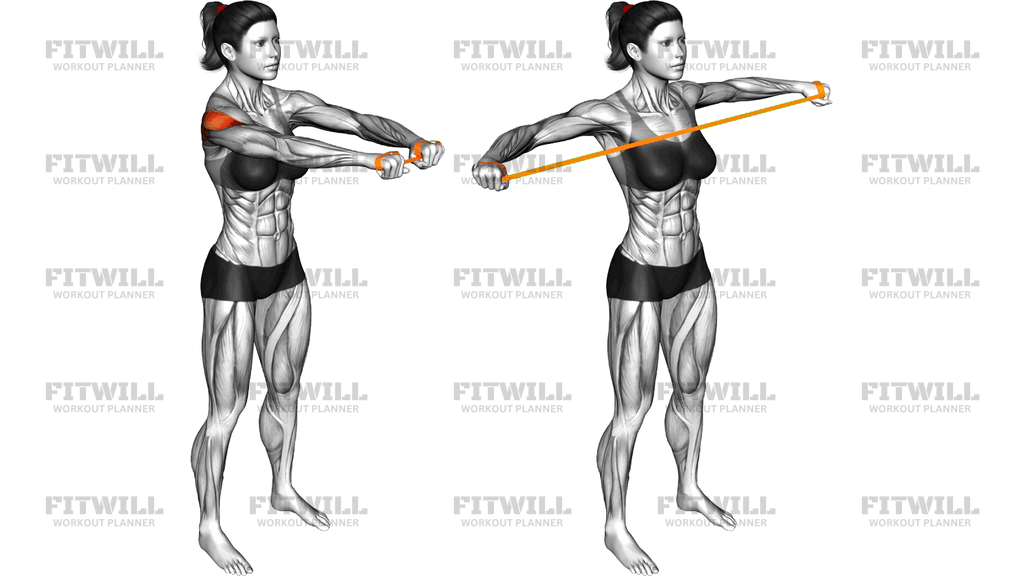
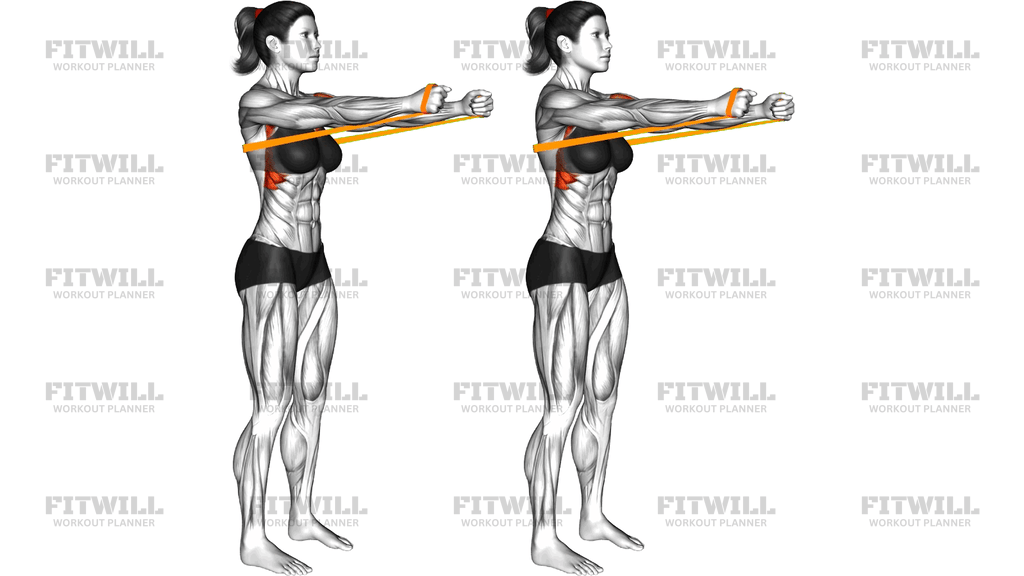
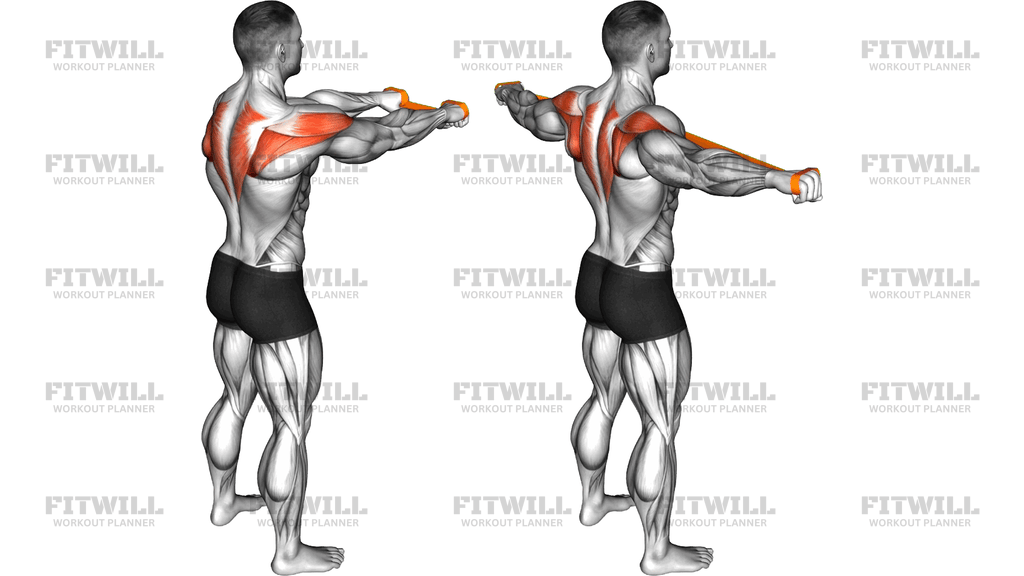
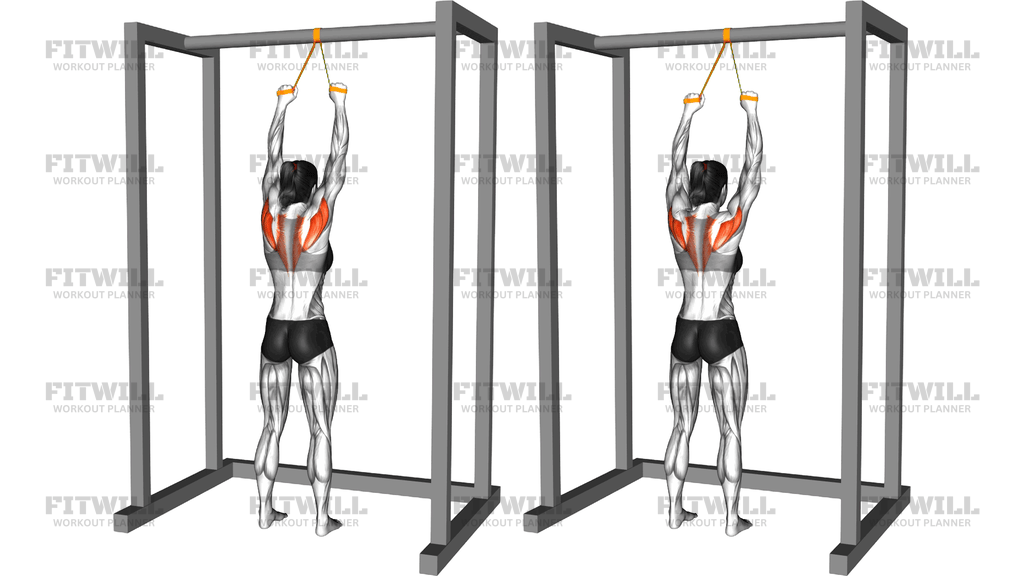
The Band Standing Face Pull To Y Raise is a two-part pull that combines a face pull with an overhead Y-shaped finish. You anchor a resistance band at roughly face height, stand facing the anchor point, and start with your arms extended straight ahead. From there, you pull the band up and back toward you while your arms travel upward, ending with your hands spread wide above your head in a Y position. The band stays under tension the entire time, which makes the whole arc one smooth, continuous movement.
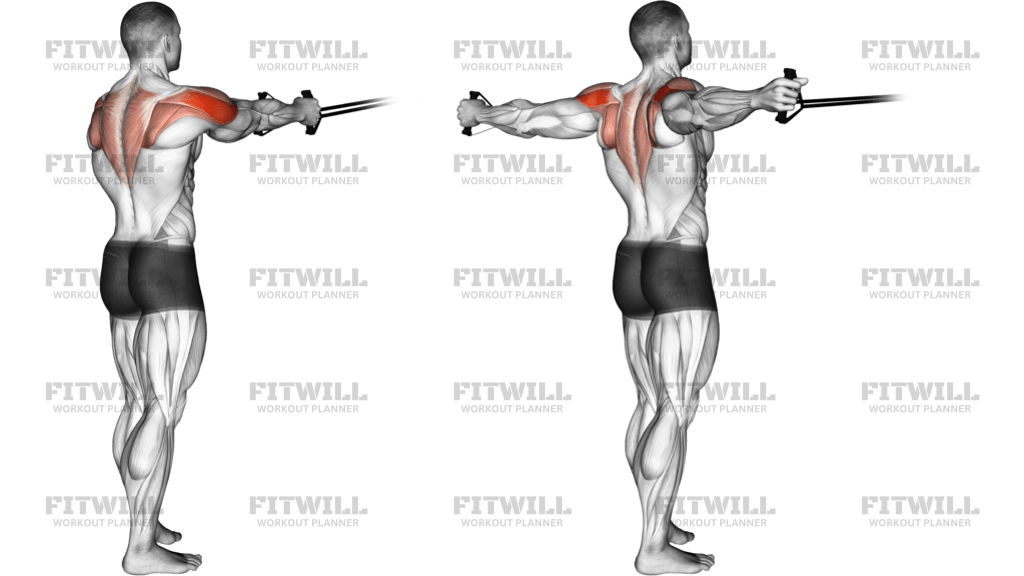
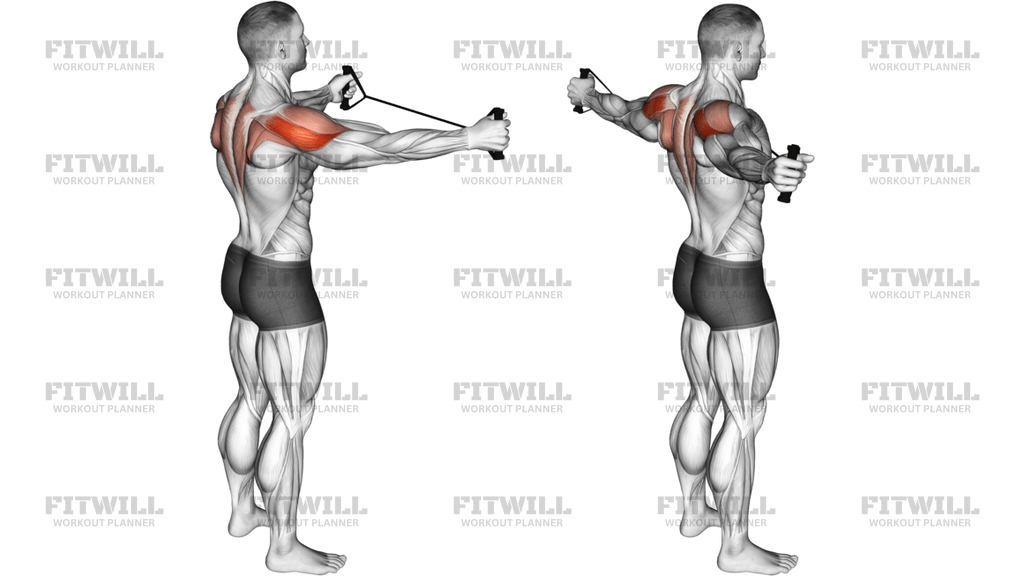
This exercise hits the upper back and rear shoulders from an angle that most pressing-heavy training ignores. The pulling phase loads the rear deltoids, rhomboids, and mid traps as the shoulder blades retract, while the final Y position shifts the emphasis to the lower traps and the rotator cuff as the arms elevate and rotate outward. Because the band's resistance increases as it stretches, the hardest part lands exactly where most people are weakest: the fully elevated Y position overhead.
It is a great fit for anyone who sits at a desk, benches or presses a lot, or wants healthier shoulders without adding heavy load. Office workers use it to counter rounded shoulders, lifters slot it in as a warm-up or finisher on upper-body days, and it works well in rehab-adjacent settings where controlled, light-resistance scapular work is appropriate. Since it requires only a band and something sturdy to anchor it to, it is easy to do at home or in a corner of the gym.
Setup matters more here than with most band drills. Anchor the band at about face or upper-chest height so the line of pull rises as you draw it back and up. Stand far enough away that there is light tension with your arms extended, and keep your torso upright rather than leaning back to cheat the band. If the anchor is too low or too high, the pull turns into something closer to a row or a pulldown and loses the face-pull-to-Y character.
To execute it well, think of leading with the elbows and letting the hands follow. Pull the band toward your upper face, then continue driving the arms up and out until they form a wide Y overhead, thumbs pointing up or back. Pause briefly at the top, squeeze the shoulder blades down and together, then lower the arms back to the extended start under control. Keep the ribcage stacked over the pelvis and avoid shrugging toward the ears, which shifts work away from the lower traps.
A couple of practical points: choose a band light enough that you can reach full overhead extension without arching your lower back, and treat the tempo as the main tool rather than cranking up resistance. This movement rewards smooth, deliberate reps far more than fast ones, and a controlled return keeps tension on the target muscles instead of letting the band snap the arms forward.
[ Workout Log & Planner ]
Put your next workout in Fitwill
Keep your plan and training log ready when you are.


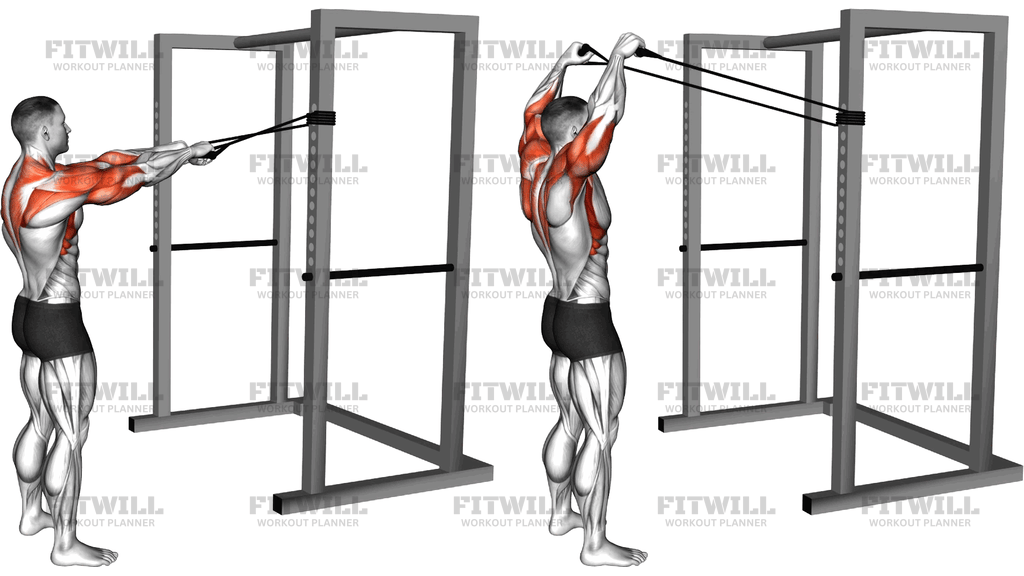
Instructions
- Anchor a resistance band at about face or upper-chest height on a rack or other sturdy attachment point.
- Grip the band with both hands and step back until your arms are extended straight in front of your chest with light tension on the band; stand with feet about hip-width apart and a soft bend in the knees.
- Stand tall, brace your core lightly, and pull your shoulder blades down and back to set your posture before moving.
- Pull the band back toward your upper face by driving your elbows out and up, keeping them slightly above shoulder level as the band approaches you.
- Continue the pull upward without stopping, rotating the arms outward and spreading the hands until they finish in a wide Y position above your head.
- Hold the top position for a beat, feeling the squeeze between and below the shoulder blades as the band pulls you forward.
- Lower your arms slowly along the same path, resisting the band's pull until your arms are fully extended in front of you again.
- Exhale as you pull up into the Y and inhale as you return to the start.
- Complete your set, then release the band from an extended position rather than letting it snap forward toward your face.
Tips & Tricks
- If your shoulders shrug toward your ears at the top, the band is probably too heavy — drop to a lighter band so the lower traps can do the lifting instead of the upper traps taking over.
- Watch for the low back arching as the arms go overhead; brace the abs and squeeze the glutes slightly to keep the ribcage from flaring up during the Y phase.
- Do not stop the rep at the face-pull position — the half the band spends traveling from face height to full Y is where the lower trap work happens, and cutting it short turns this into a plain face pull.
- Keep the wrists neutral with thumbs angled up at the top; bending the wrists backward to chase height usually means the shoulders have run out of room.
- If the band digs into your palms or slips, wrap it once around each hand for a secure grip, but keep enough length free so the stretch can build through the full range.
- Stand far enough back that there is tension even at the start — if the band goes slack with your arms extended, each rep begins with a dead spot before resistance kicks in.
- Slow the lowering phase down deliberately; the band will try to fling your arms back to the start, and letting it removes half the training effect.
- Keep the elbows from dropping below shoulder height during the pull — if they sink, the movement drifts into a row and loads the lats instead of the rear shoulders and traps.
- For a warm-up, use a light band for 12-15 smooth reps; for a strength finisher, add a 2-3 second pause at the top of each Y rather than adding resistance.
Frequently Asked Questions
What muscles does the Band Standing Face Pull To Y Raise work?
It primarily targets the trapezius, especially the lower and middle traps, along with the rhomboids and rear deltoids. The rotator cuff and shoulder stabilizers assist as the arms rotate outward into the overhead Y position.
How high should I anchor the band for the Band Standing Face Pull To Y Raise?
Anchor it at roughly face or upper-chest height so the line of pull rises toward you and finishes overhead. Anchoring too low turns it into a row, while too high makes it feel more like a pulldown.
Is the Band Standing Face Pull To Y Raise good for beginners?
Yes, as long as a light band is used and the range is limited to what can be done smoothly overhead. Beginners often benefit most from the tempo focus, since the movement teaches shoulder blade control before any heavy loading.
Why do my shoulders shrug up when I raise into the Y position?
That usually means the upper traps are compensating because the lower traps and rear shoulders are not strong enough for the band you chose. Use a lighter band, actively press the shoulder blades down as the arms rise, and rebuild the range gradually.
Can I do the Band Standing Face Pull To Y Raise instead of a regular face pull?
It can replace a face pull on days when you want extra lower trap and overhead-rotation work, but it is not a strict substitute. The Y phase reduces how much load you can handle, so keep some heavier rowing or standard face pulls in your program if strength is the goal.
How far should I stand from the anchor point?
Step back until there is light, even tension with your arms fully extended in front of your chest. If the band goes slack at the start, move closer; if the pull is too hard to complete the Y, step in or switch bands.
What can I use if I do not have a rack to anchor the band to?
Loop the band around any sturdy object at chest height, such as a heavy squat stand, door anchor, or pole, and test that it will not shift before pulling. The key is a stable anchor point at face height so the pull path stays the same.
How many reps and sets of the Band Standing Face Pull To Y Raise should I do?
For warm-ups or posture work, 2-3 sets of 12-15 controlled reps with a light band works well. As a strength finisher, 3 sets of 8-12 reps with a brief pause at the top of each Y gives plenty of stimulus without needing heavy resistance.
Should I stop at the face-pull position or go all the way into the Y?
Go all the way into the Y unless overhead motion causes discomfort. The transition from face height to the overhead Y is what separates this exercise from a standard face pull, and stopping early removes most of the lower trap benefit.
Is it safe for my shoulders if overhead pressing bothers them?
Many people find this movement comfortable precisely because the band offers light, graduated resistance, but individual shoulder issues vary. Stay within a pain-free range, start with a very light band, and check with a qualified professional if you have a known shoulder problem.