Dumbbell Standing Single Leg Calf Raise
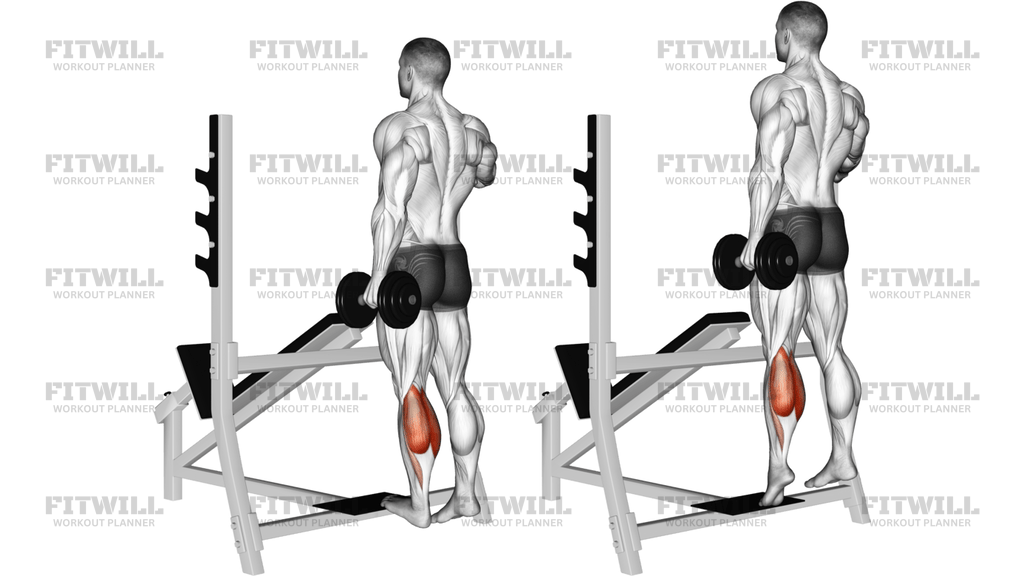
Dumbbell Standing Single Leg Calf Raise is a unilateral calf-strength exercise that builds lower-leg strength, ankle control, and balance one side at a time. The working foot stays on the ball of the foot with the heel free to drop below the edge of a step or platform, while the dumbbells add load without changing the basic calf-raise pattern. Because this is a single-leg movement, the quality of the setup matters as much as the calf contraction itself.
The main target is the calf complex, especially the gastrocnemius and soleus, with the ankle, foot, and hip working hard to keep the body quiet. Holding dumbbells at your sides increases the demand on posture and foot stability, so the rep should feel controlled rather than bouncy. If the torso leans, the knee collapses inward, or the hips shift side to side, the set stops training the calves cleanly and starts becoming a balance drill.
Set the working foot on a firm edge or raised surface and keep most of your weight over the big toe, second toe, and heel line of that foot. The standing leg should stay tall, the knee mostly straight but not locked, and the free leg should stay out of the way without helping you push off. At the top of each rep, finish on the highest point you can control, then lower slowly until you feel a full calf stretch without losing foot contact or control.
Use this exercise when you want direct calf work that carries over to running, jumping, field sports, or general lower-leg development. It is useful as a strength accessory, but it also works well in higher-rep hypertrophy sets because the small range of motion makes cheating obvious. The key is to keep the heel path smooth, avoid bouncing off the bottom, and keep the dumbbells still so the calves do the lifting instead of momentum.
If you need more support, lightly touch a rack or wall with the free hand while keeping the working leg responsible for the raise. A lighter load with full range and a clear pause at the top will usually train the calves better than heavy dumbbells with shortened reps. When the ankle stops moving cleanly or the heel can no longer drop and rise under control, the set has reached its useful limit.
[ Workout Log & Planner ]
Put your next workout in Fitwill
Keep your plan and training log ready when you are.


Instructions
- Place one foot on the edge of a step, block, or calf-raise platform with the ball of the foot supported and the heel free to drop.
- Hold a dumbbell in each hand at your sides and shift your weight fully onto the working leg.
- Keep the standing knee mostly straight, unlock it slightly, and let the free leg hang or bend behind you without helping.
- Brace your trunk and keep your hips level before you start the first rep.
- Drive through the big toe and second toe to rise onto the highest calf contraction you can control.
- Pause for a brief squeeze at the top without rolling the ankle outward or letting the knee drift.
- Lower the heel slowly until you feel a full calf stretch below the edge of the platform.
- Keep the dumbbells quiet and your torso tall as you repeat for the planned reps.
- Switch sides only after the working leg finishes its set with the same tempo and range.
Tips & Tricks
- Use a step height that lets the heel drop below the forefoot without losing balance.
- Keep pressure on the big toe mound and avoid collapsing onto the outside edge of the foot.
- A small knee unlock is enough; bending the knee too much turns the rep into a different calf emphasis.
- Let the free leg stay relaxed instead of using it to push off the floor or swing for momentum.
- Pause at the top long enough to feel the calf finish the rep instead of bouncing through the peak.
- Lower under control for a full stretch, especially if your calves are tight.
- Choose dumbbells that let you keep the torso stacked instead of leaning toward the working side.
- If you cannot keep the heel path smooth, reduce the load before the set turns into a balance struggle.
Frequently Asked Questions
What muscle does Dumbbell Standing Single Leg Calf Raise target most?
It primarily trains the calf complex on the working leg, especially the gastrocnemius and soleus.
Can beginners perform this exercise?
Yes, beginners can use it if they start with bodyweight or very light dumbbells and hold a wall or rack for balance.
Should my heel hang off the edge of the step?
Yes. Let the heel drop below the forefoot so you get a full calf stretch at the bottom of the rep.
Why use one leg instead of both legs?
Single-leg work exposes side-to-side differences and makes each calf do the full job without the stronger side taking over.
Where should I feel the movement?
You should feel the working calf lengthen at the bottom and contract hard through the top half of the raise.
How do I keep from bouncing at the bottom?
Lower slowly, pause briefly in the stretched position, and then drive up without using any rebound from the ankle.
Can I hold onto something for balance?
Yes. A light fingertip touch on a rack or wall is fine if it helps you keep the working calf in control.
What is the biggest form mistake with this exercise?
The biggest mistake is turning the rep into a fast bounce by using body sway, knee bend, or the free leg for help.