Single Leg Calf Raise On A Dumbbell
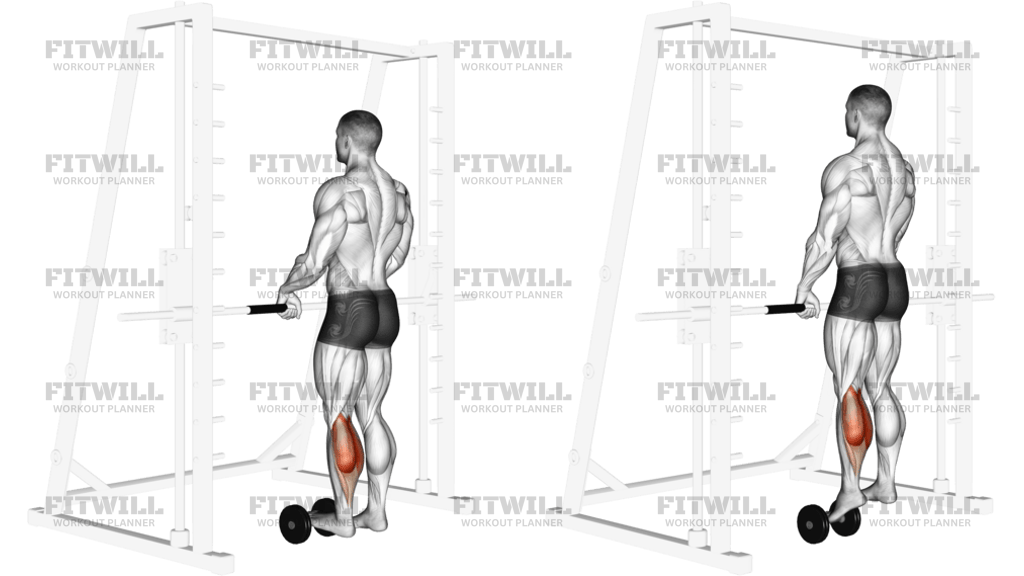
Single Leg Calf Raise On a Dumbbell is a straightforward calf exercise that loads one ankle at a time through a very clear motion: the heel drops below the level of the dumbbell, then the foot drives back up onto the toes. It is useful when you want focused calf work, side-to-side balance, and more control than you usually get from two-legged calf raises. The movement also asks the foot and lower leg to stabilize the body, so it fits well when you want strength work that still rewards precision.
The setup matters more here than in many standing calf drills. Place the ball of one foot on the dumbbell handle or center section so the heel can hang freely off the back edge, then keep the other foot off the floor while you lightly hold a rack upright, bar, or wall with the free hand. Keep the working knee stacked over the second toe, keep the arch from collapsing, and keep your hips level so the calf does the work instead of a hip shift or ankle wobble.
On each repetition, lower the heel under control until you feel a strong stretch through the calf, then reverse the motion by pressing through the big toe and second toe to rise as high as possible. The top position should feel like a hard calf squeeze, not a bounce off the bottom. Breathing should stay simple: inhale as you lower, then exhale as you drive up. If the tempo gets sloppy, shorten the range slightly and make the lowering phase slower.
Single Leg Calf Raise On a Dumbbell is easy to slot into accessory work, lower-body sessions, warmups, or unilateral training blocks because it can be loaded with bodyweight first and then progressed by holding weight in the free hand. It is also a good choice for spotting left-right differences in ankle strength, foot control, and calf size. Keep the movement pain-free and controlled, and if the bottom stretch feels too aggressive on the Achilles or foot, reduce the drop before adding load. A brief pause at the bottom also makes the calf work harder without needing a bigger dumbbell, and it teaches you to own the stretched position instead of bouncing through it.
[ Workout Log & Planner ]
Put your next workout in Fitwill
Keep your plan and training log ready when you are.


Instructions
- Place one dumbbell flat on the floor and put the ball of one foot on the center of the handle so your heel can hang off the back edge.
- Lightly hold a rack upright, bar, or wall with the free hand for balance, then keep the other foot lifted off the floor.
- Stand tall with your hips square, chest up, and the working knee softly bent and lined up over the second toe.
- Brace your midsection and press the big toe and second toe into the dumbbell before you start the rep.
- Lower the heel slowly until you feel a strong calf stretch and the ankle drops below the level of the handle.
- Pause for a brief moment at the bottom without bouncing or letting the arch collapse.
- Drive through the ball of the foot to rise as high as you can onto the toes and squeeze the calf at the top.
- Lower under control for the next repetition, keeping the ankle, knee, and hip stacked in the same line.
- After the final rep, step off the dumbbell carefully and switch sides.
Tips & Tricks
- Keep the support hand light; if you lean hard into the rack, the calf stops doing most of the work.
- Let the heel travel straight down and straight up, not in a circle around the dumbbell.
- A small knee bend shifts more work toward the soleus, while a straighter knee biases the larger calf head.
- If the dumbbell handle feels narrow, place the foot so the big toe pad stays fully planted on top.
- Use a 2-3 second lowering phase to expose weak control instead of chasing faster reps.
- Do not bounce out of the bottom stretch; start the upward drive from a dead stop when possible.
- If the Achilles feels pinched, shorten the drop before reducing the load.
- Load the exercise only after your left and right sides feel equally stable and smooth.
Frequently Asked Questions
What muscle does Single Leg Calf Raise (on a dumbbell) target most?
It mainly targets the calf muscles, especially the gastrocnemius and soleus. The foot and lower-leg stabilizers also work to keep you balanced on the dumbbell.
Why stand on a dumbbell instead of a flat floor?
The dumbbell creates a raised edge so your heel can drop below toe level for a fuller calf stretch. That extra range is what makes this version different from a basic floor calf raise.
Should I hold onto a rack or wall while doing Single Leg Calf Raise On a Dumbbell?
Yes, light support is fine and usually helps you keep the working ankle honest. Use just enough balance help to stay tall, not enough to push off the support arm.
How far should my heel drop on the dumbbell?
Lower until you feel a strong calf stretch, but stop before the ankle feels sharp or your arch collapses. The drop should look controlled and straight, not forced.
Can I keep my knee straight the whole time?
You can, and a straighter knee emphasizes the larger calf head more. A slight bend is also acceptable if you want a bit more soleus involvement or if a locked knee feels unstable.
What if I feel this mostly in my foot instead of my calf?
That usually means the foot is collapsing or the load is too light to challenge the calf. Keep pressure through the big toe and second toe, and make sure the heel is hanging freely off the back edge.
How do I make Single Leg Calf Raise On a Dumbbell harder?
Add load in the free hand, slow the lowering phase, or pause longer at the top. You can also stop using extra balance help once the ankle stays steady on its own.
Is this a good calf exercise for beginners?
Yes, as long as you start with bodyweight and light balance support. Beginners usually do best with a smaller range and a slower tempo until the ankle feels stable.