Dumbbell Plyo Squat
Dumbbell Plyo Squat is a lower-body power variation built around a squat pattern performed with an explosive drive out of the bottom. It targets the glutes, quads, hamstrings, calves, and trunk while teaching the legs to produce force quickly instead of grinding through every rep. Because the movement is meant to be fast and athletic, the dumbbell load should stay light enough to let the body move crisply.
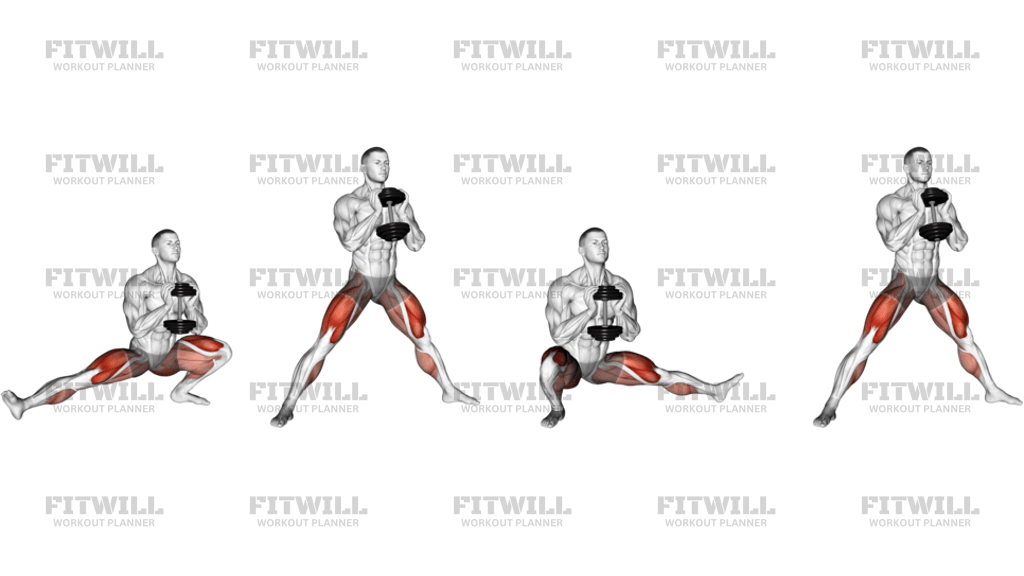
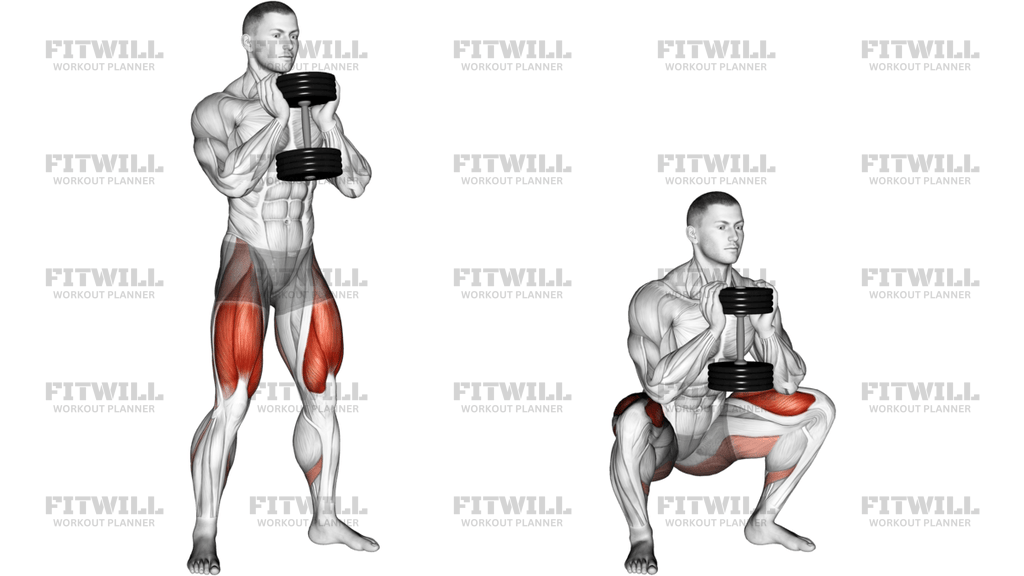
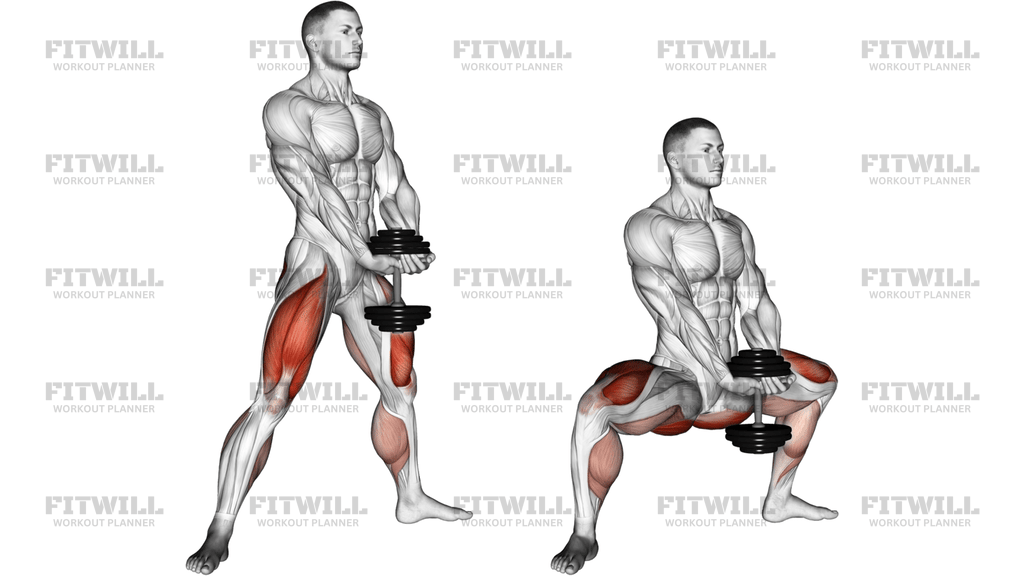
This exercise is useful when you want squat mechanics with a power emphasis. The torso should stay organized, the feet should stay rooted, and the knees should track in line with the toes so the hips and knees can share the work. In the image reference, the setup shows a wide-stance goblet-style hold, which is a common way to keep the load centered while the legs do most of the work.
Set the stance before the first rep. A slightly wider foot position gives the hips room to sit down and drive up without the dumbbell pulling you forward. Hold the weight close to the body, keep the ribs stacked over the pelvis, and lower under control so the bottom position is stable before you accelerate upward.
The power phase should look sharp, not rushed. From the bottom, drive the floor away and rise with intent while keeping the feet grounded and the knees aligned. If your program calls for a true plyometric version, the transition at the top should be quick and the landing should be soft and quiet. If not, keep the movement explosive without losing control of the stance.
This squat variation is often used in athletic warm-ups, conditioning blocks, and lower-body power training where a lifter needs speed and coordination as much as strength. It works best with clean repetitions, a small enough load to preserve tempo, and enough rest between sets that every rep still looks snappy. Once the squat becomes slow, noisy, or unstable, the power stimulus is gone and the load is too high.
Fitwill
Log Workouts, Track Progress & Build Strength.
Achieve more with Fitwill: explore over 9600 exercises with images and videos, access built-in and custom workouts, perfect for both gym and home sessions, and see real results.
Start your journey. Download today!




Instructions
- Stand with your feet a little wider than hip width and turn your toes slightly out.
- Hold one dumbbell vertically at chest level with both hands, or keep the load in the position shown for your program.
- Brace your trunk and keep your chest tall before you descend.
- Sit down between your hips into a controlled squat until your thighs reach the target depth.
- Keep your knees tracking in line with your toes as you lower.
- Drive up aggressively through the whole foot and stand up fast.
- If your version includes a plyometric reset, leave the floor only enough to stay athletic and land softly with bent knees.
- Absorb the landing quietly, re-brace, and sink into the next rep only when the stance is stable.
- Repeat for the programmed reps without letting the dumbbell drift away from your torso.
Tips & Tricks
- Use a light dumbbell that lets you move quickly from the bottom without rounding your back.
- Keep the dumbbell close to your sternum or between your hands so it does not pull you forward.
- A slightly wider stance usually makes the squat easier to control and gives the hips room to drive.
- Think about pushing the floor apart on the way up to keep the knees from collapsing inward.
- The bottom position should look loaded but organized, not loose or bouncy.
- If the rep turns into a grind, the weight is too heavy for plyometric intent.
- Land softly enough that you could freeze the next rep immediately.
- Keep your heels rooted if the goal is squat power, and do not roll onto the toes early.
- Use a smaller range if your hips or ankles cannot keep the torso tall.
- Stop the set when your reps stop looking fast and symmetrical.
Frequently Asked Questions
What muscles does Dumbbell Plyo Squat work?
Dumbbell Plyo Squat mainly trains the glutes, quads, hamstrings, calves, and core. The upper back and trunk also work hard to keep the dumbbell centered during the squat.
Is Dumbbell Plyo Squat beginner-friendly?
Yes, if you start with a light load and treat it as a controlled squat before adding any plyometric speed. Beginners should master the stance and landing mechanics first.
Should I hold one dumbbell or two?
The image shows a single dumbbell held in front of the chest, which is the most stable choice for this variation. Two dumbbells can work too, but they usually make the power position less compact.
How heavy should I use?
Use a load that lets you keep every rep quick, balanced, and quiet. If the descent is controlled but the drive up slows dramatically, the dumbbell is too heavy.
What stance should I use?
A slightly wider-than-hip stance with the toes turned out a little usually works well. That setup gives the hips space to load and helps keep the torso upright.
What if I cannot jump or land safely?
Keep the movement as an explosive squat without leaving the floor. You can still train power by standing up fast and controlling the return to the bottom.
Where should the dumbbell travel?
The dumbbell should stay close to the body, centered over the midfoot, and quiet throughout the rep. It should not swing forward as you rise.
What is the main mistake to avoid?
Do not turn it into a heavy strength squat. Once the reps become slow, noisy, or unstable, you lose the power emphasis that makes this variation useful.
Can I use this in a warm-up?
Yes. A few light, crisp reps can prepare the hips and legs for heavier lower-body work, as long as the squat pattern stays sharp and controlled.