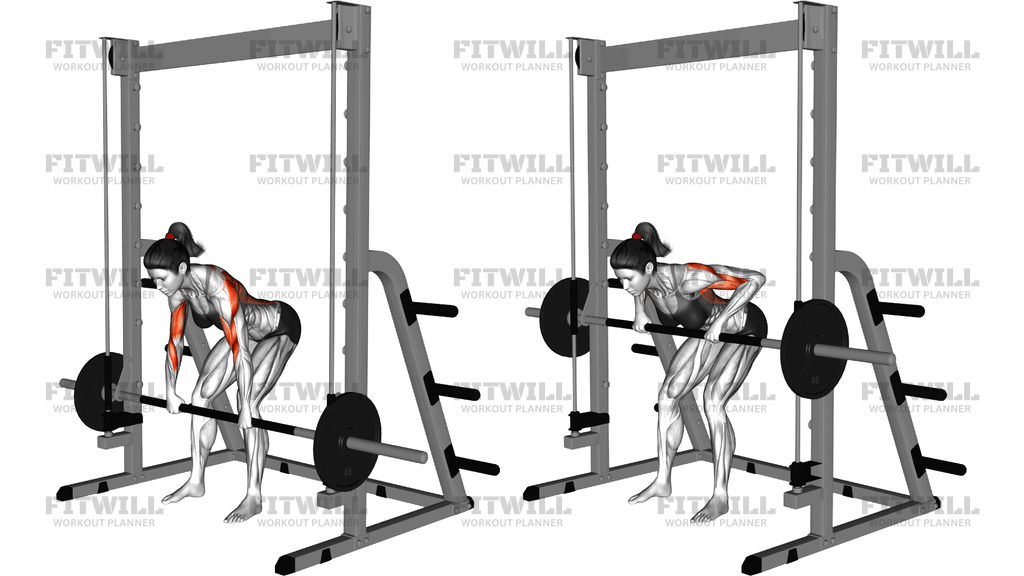
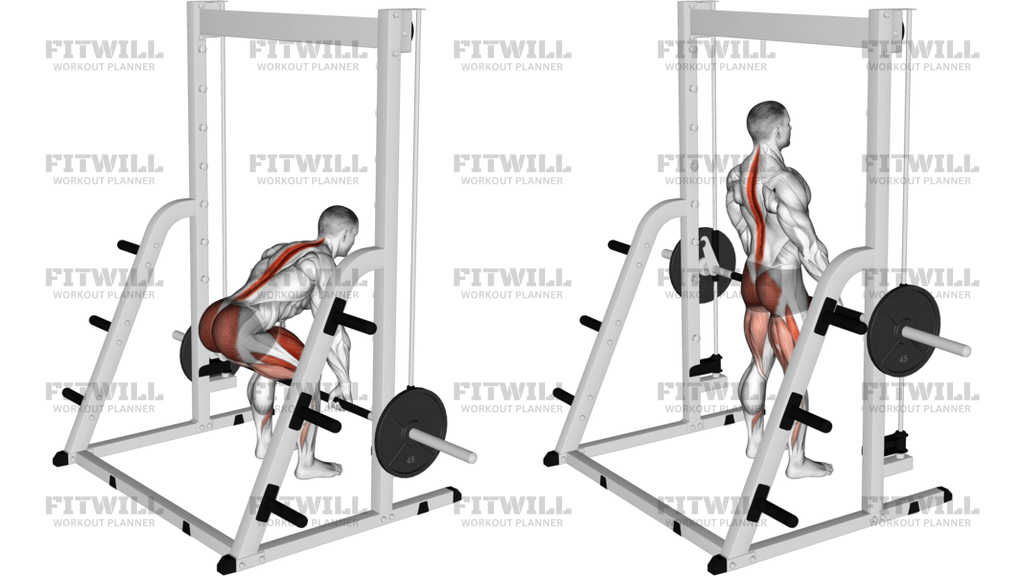
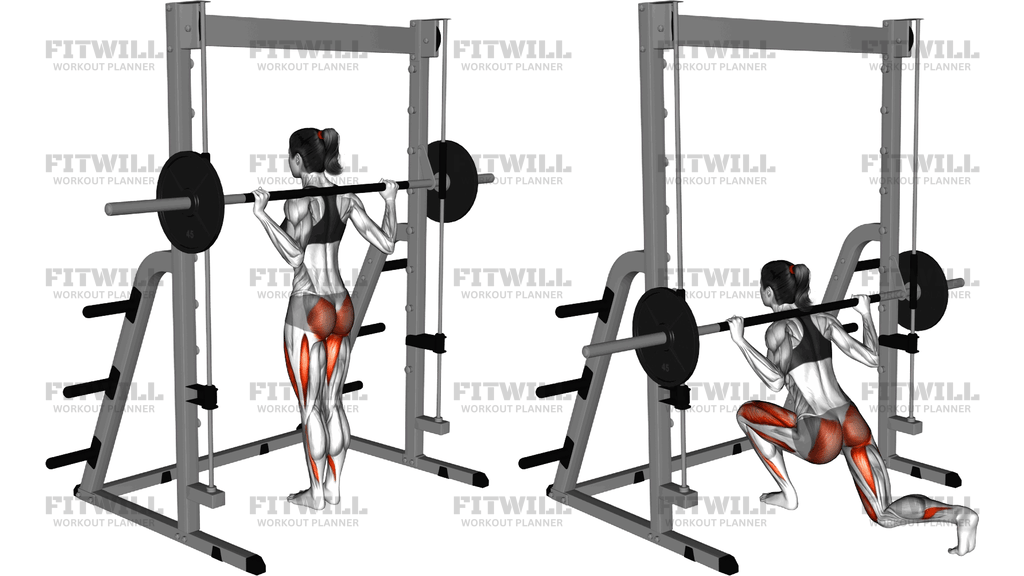
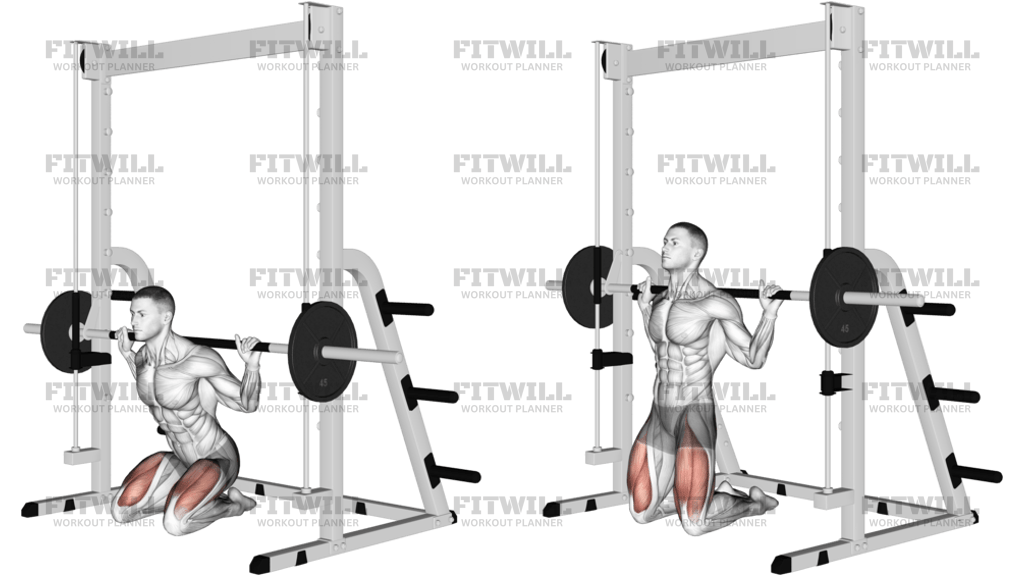
Smith Kneeling Rear Kick
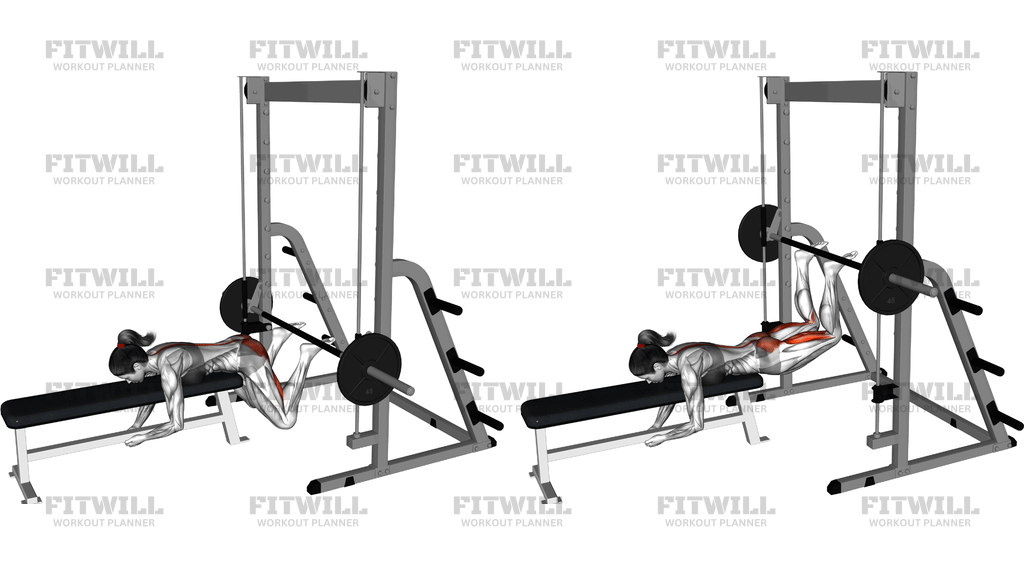
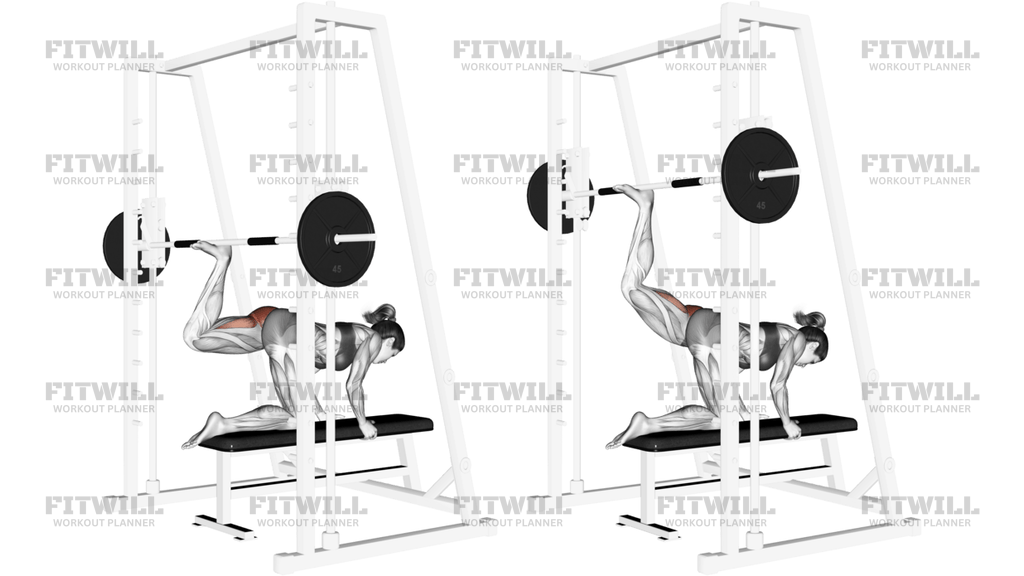
Smith Kneeling Rear Kick is a glute-focused Smith machine exercise that uses a kneeling support position to isolate hip extension. One knee and one hand stay planted on the bench while the working leg drives back against the bar, so the glutes do most of the work and the torso can stay more stable than it would in a free-standing kickback. It is useful when you want direct glute tension without turning the rep into a full-body swing.
The movement mainly trains the gluteus maximus, with the hamstrings helping to stabilize the leg and the core working to keep the pelvis from rotating. Because the bar travels on a fixed path, Smith Kneeling Rear Kick can help lifters feel the top squeeze and learn how to extend the hip without arching the lower back. That makes it a practical accessory for lower-body days, glute-focused sessions, and warmups before squats, deadlifts, or lunges.
The setup matters more than the range. Set the Smith bar low enough that your working leg can press into it from a kneeling position without you having to twist your trunk or chase the bar with your low back. Keep the support knee, support hand, and working-side hip organized before every rep, then brace lightly through the ribs and abdomen so the pelvis stays level as the leg moves.
Each repetition should feel like a clean hip extension, not a swing. Drive the heel back and up until the glute is fully contracted, then lower the leg under control until you are back in the loaded start position. If the bar height, bench position, or load forces you to lean, rotate, or over-arch, shorten the range and reset the setup instead of forcing a bigger kick.
Smith Kneeling Rear Kick is best used as controlled accessory work rather than a max-effort lift. Light to moderate resistance usually gives the best glute tension and the cleanest line of pull, especially for beginners who need extra stability. When the set is done, step away from the bar carefully and reset the machine before changing sides or starting the next set.
[ Workout Log & Planner ]
Put your next workout in Fitwill
Keep your plan and training log ready when you are.


Instructions
- Set the Smith bar low enough that your working leg can press into it while you kneel on the bench without twisting your torso.
- Place one knee and the opposite hand on the bench, then extend the other leg behind you with the knee bent and the foot contacting the bar.
- Square your hips to the floor, keep your ribs down, and tighten your abdomen before the first rep.
- Press the working leg gently into the bar to create tension before you start the kick.
- Drive the heel back and slightly upward by extending the hip, keeping the knee bent through the movement.
- Stop when the glute is fully contracted and the pelvis still feels level instead of arching your lower back.
- Lower the bar back under control until you are back in the loaded start position.
- Reset your brace, repeat for the planned reps, and step away from the bar carefully when the set is finished.
Tips & Tricks
- Set the bar height so the kick comes from the hip, not from reaching with your lower back.
- Keep the support hand directly under the shoulder so the bench position stays stable.
- If your hips open toward the working side, shorten the kick and reduce the load.
- Think about driving the heel back, not lifting the foot high.
- A brief squeeze at the top keeps tension on the glute and reduces bouncing against the bar.
- Use a light load first; this movement gets sloppy quickly when the bar is too heavy.
- A folded pad or towel under the support knee can make the setup more comfortable on a hard bench.
- If you feel the hamstrings taking over, keep the knee bent and focus on moving the thigh from the hip socket.
- Stop the set when the lower back starts to arch or the torso starts rocking.
Frequently Asked Questions
What muscles does Smith Kneeling Rear Kick work?
The main target is the gluteus maximus, with the hamstrings and core helping to stabilize the body during the kick.
Is Smith Kneeling Rear Kick the same as a glute kickback?
It is a Smith-machine version of a kneeling glute kickback. The guided bar gives you a fixed line of resistance and makes the top squeeze easier to feel.
Which hand and knee should stay on the bench?
Use one knee and the opposite hand for support, then keep the working leg behind you under the bar. The goal is to keep your hips square while the free leg moves.
How high should I kick the bar?
Kick only until the glute is fully contracted and your pelvis stays level. If your lower back starts to arch, the rep has gone too high.
Should my working knee stay bent?
Yes. Keeping the knee bent helps keep the exercise focused on hip extension instead of turning it into a straight-leg swing.
Is Smith Kneeling Rear Kick beginner-friendly?
Yes, as long as you start light and keep the motion strict. The Smith bar can help beginners control the path and learn the glute squeeze.
Why do I feel this more in my hamstrings than my glutes?
That usually means you are curling the heel too much or overextending with the lower back. Keep the knee bent, brace the ribs down, and drive the thigh back from the hip.
What can I use instead if I do not have a Smith machine?
Cable kickbacks, bench-supported donkey kicks, or a glute kickback machine are the closest substitutions.