Dumbbell Alternate Biceps Curl
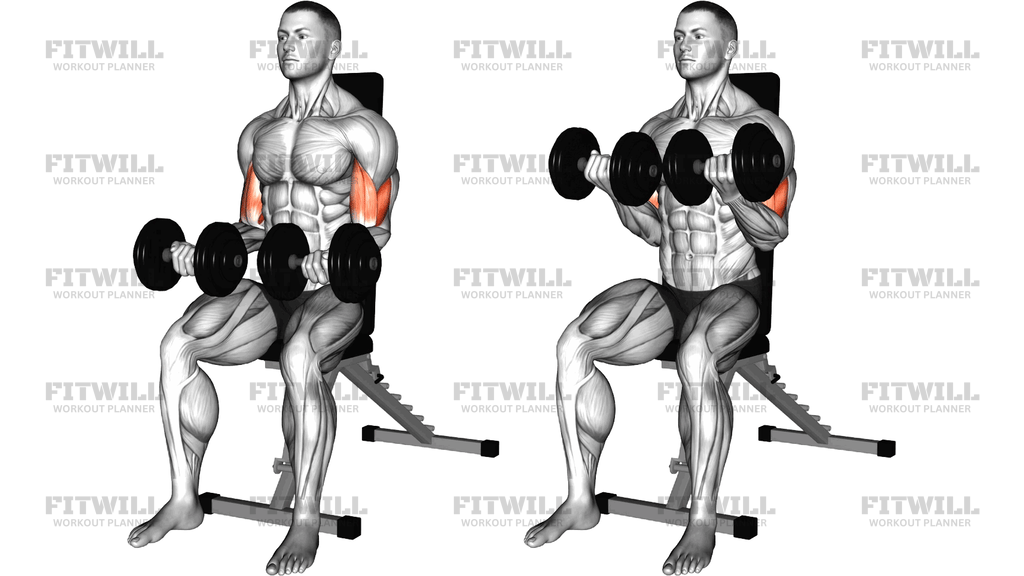
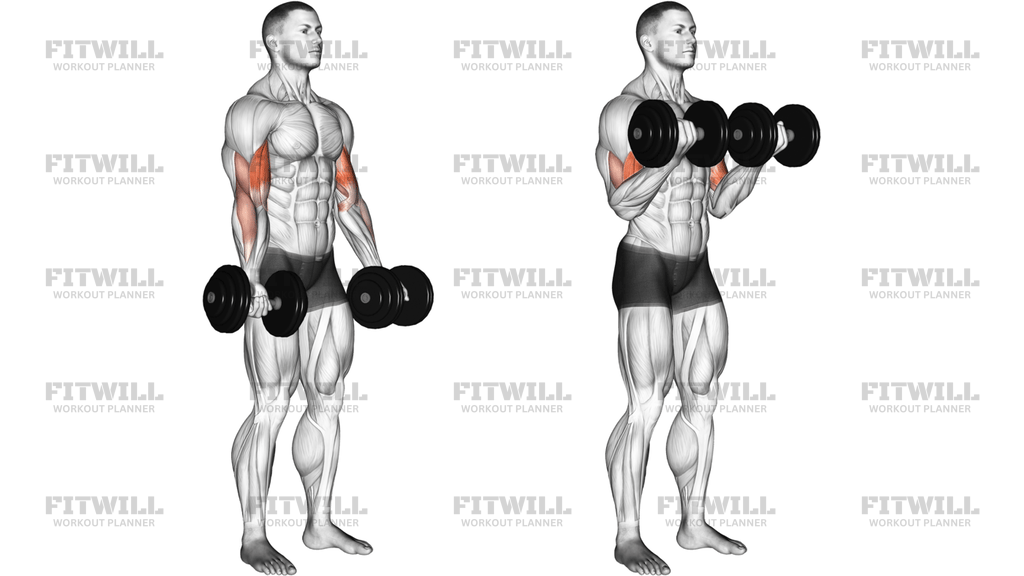
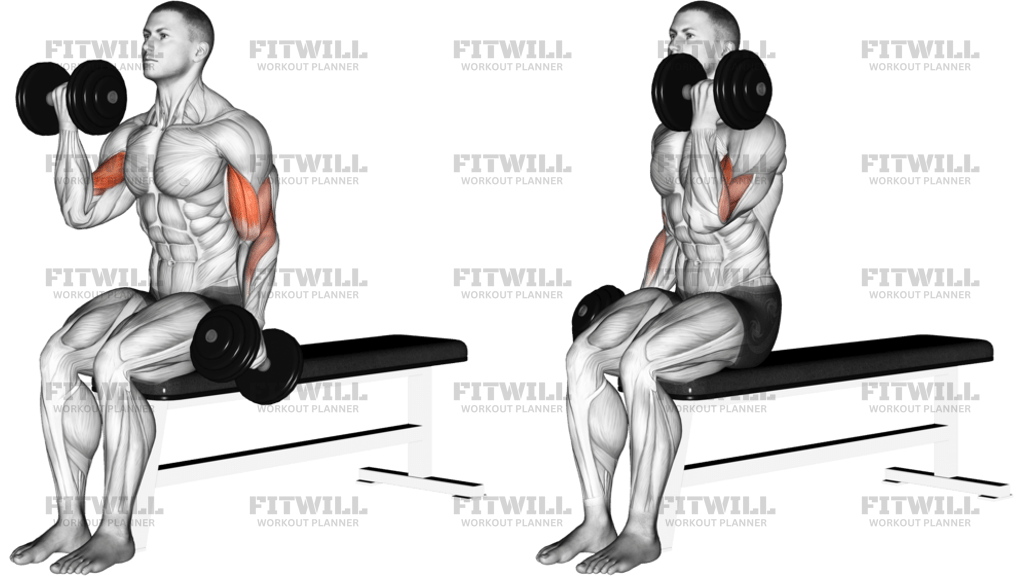
Dumbbell Alternate Biceps Curl is a strict arm exercise built around one dumbbell at a time, usually performed seated on a flat bench so the torso stays quiet and the curl can stay honest. The image shows a seated alternating version: one arm works while the other rests by the side, which makes it easier to feel the biceps contract without turning the rep into a full-body swing. It is a simple movement on paper, but the setup matters because a small change in posture, elbow path, or wrist angle can shift work away from the biceps and into momentum.
The main training target is the biceps brachii, with brachialis and brachioradialis helping drive elbow flexion and forearm control. The forearm muscles and shoulder stabilizers assist so the dumbbell stays lined up through the curl. Because each arm moves independently, this exercise is useful for spotting left-to-right differences in strength, control, and range of motion. It is also a practical choice when you want direct arm work without needing a machine or barbell.
The best repetitions start from a still lower position with the shoulder relaxed, the chest tall, and the elbow close to the side of the torso. From there, curl the dumbbell toward the front shoulder without letting the upper arm drift forward or the torso lean back. The hand should travel in a smooth arc, the wrist should stay stacked, and the top of the rep should feel like a biceps squeeze rather than a shrug. Lower the weight slowly until the arm is nearly straight, then alternate sides and repeat with the same control.
This exercise fits well as accessory work after heavier pressing or pulling, or as a focused arm finisher when you want a clear biceps stimulus. It is beginner-friendly when the load is light enough to keep the seated posture stable and the eccentric phase controlled. The biggest payoff comes from repeatable form: a clean path, no swinging, and steady breathing. If the body starts rocking or the elbow drifts forward to cheat the weight up, the set is too heavy for the intended quality of work.
[ Workout Log & Planner ]
Put your next workout in Fitwill
Keep your plan and training log ready when you are.


Instructions
- Sit on a flat bench with a dumbbell in each hand and your feet planted firmly on the floor.
- Let both arms hang at your sides with the palms turned forward or slightly inward and the wrists straight.
- Set your chest tall, keep your shoulders down, and brace so your torso does not rock.
- Curl one dumbbell up toward the front shoulder while keeping that upper arm close to your side.
- Rotate the hand so the palm faces up as the weight rises, if that feels natural for the elbow.
- Squeeze briefly at the top without shrugging the shoulder or letting the elbow drift forward.
- Lower the dumbbell slowly back to the start until the arm is nearly straight and still under control.
- Alternate to the other arm and keep the same tempo and range on every rep.
Tips & Tricks
- Keep both sitting bones on the bench and avoid leaning back to turn the curl into a body swing.
- Let the upper arm stay almost vertical; if the elbow keeps sliding forward, the dumbbell is too heavy.
- Use a slow lowering phase so the biceps stay loaded when the arm returns toward full length.
- Keep the wrist stacked over the forearm instead of letting it bend back at the top of the curl.
- Finish each rep with the forearm near vertical and the dumbbell close to the front shoulder, not the chest.
- Relax the non-working hand at your side so it does not help drive the rep.
- Exhale as you curl and inhale as you lower to keep the trunk quiet and the rep rhythm steady.
- If one arm is weaker, start with that side and match the other side to the same clean range.
Frequently Asked Questions
What muscle does Dumbbell Alternate Biceps Curl target most?
The biceps are the main target, especially the biceps brachii on the front of the upper arm.
Why is this version shown seated on a bench?
Sitting on a flat bench makes it easier to keep the torso still, which reduces cheating and keeps tension on the arm.
Should I keep my elbows locked to my sides?
Keep them close to your torso, but do not force them behind your body; a small natural movement is fine as long as the shoulder does not take over.
How high should the dumbbell come up?
Curl until the forearm is near vertical and the biceps is fully shortened without shrugging the shoulder or leaning back.
Is it better to rotate the palm while curling?
Yes, a smooth turn toward palm-up as the dumbbell rises is natural for most lifters and helps finish the curl cleanly.
What is the most common mistake with this exercise?
Swinging the torso, letting the elbow drift forward, and using the lower back to help move the weight are the biggest form leaks.
Is this exercise beginner friendly?
Yes, especially when you start light and use the seated setup to keep each rep controlled.
What are good alternatives if I do not have a bench?
You can do the same alternating curl standing, but the seated bench version is stricter because it limits momentum.
How should I breathe during the curl?
Exhale as you lift the dumbbell and inhale as you lower it back down under control.