Push Press
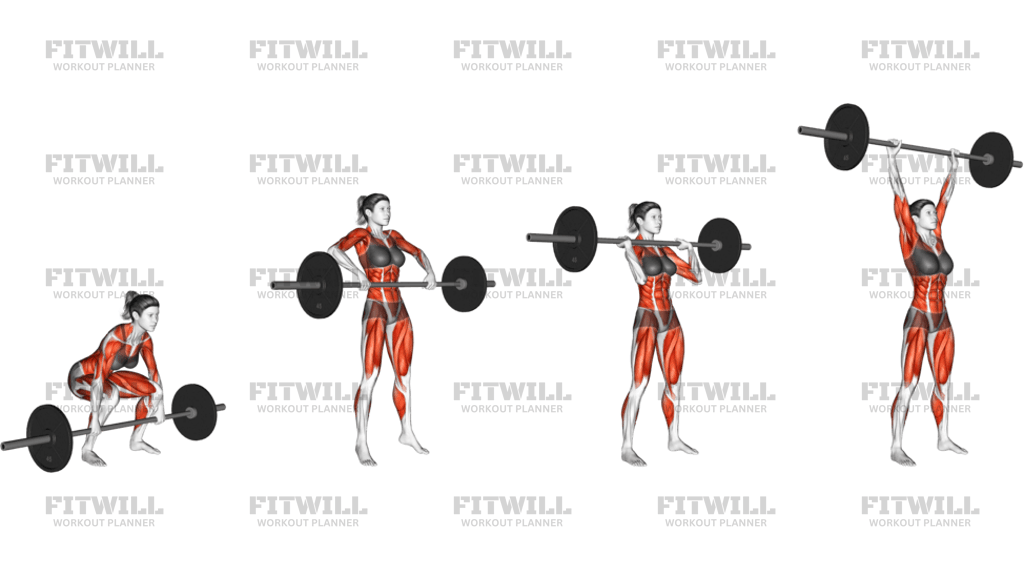
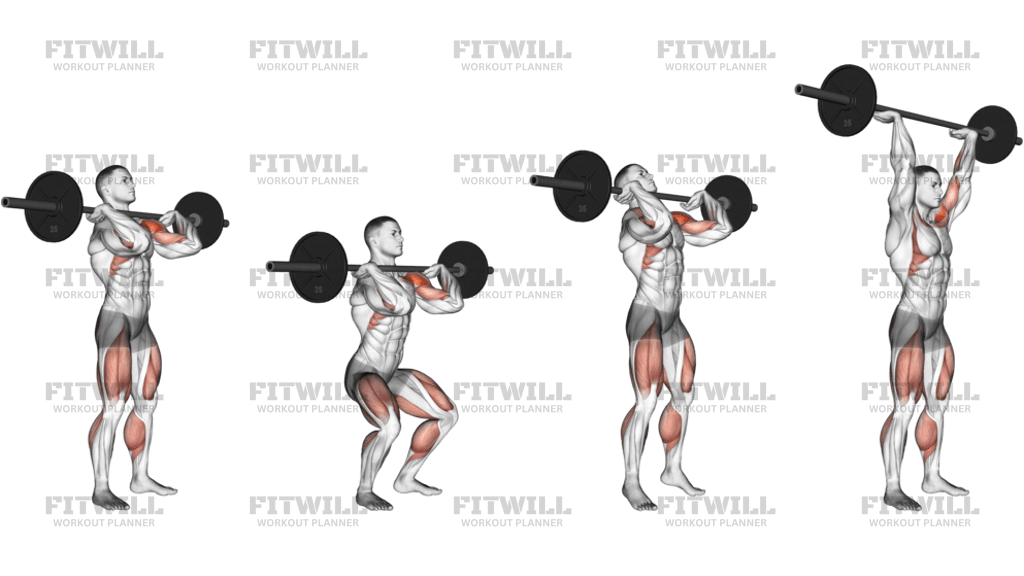
Push Press is a standing overhead power lift that starts with the barbell in the front rack and uses a short leg drive to send the weight overhead. It is useful when you want to train shoulder strength, triceps power, and whole-body coordination at the same time. Because the movement begins from the legs and finishes with the arms, the setup matters as much as the press itself.
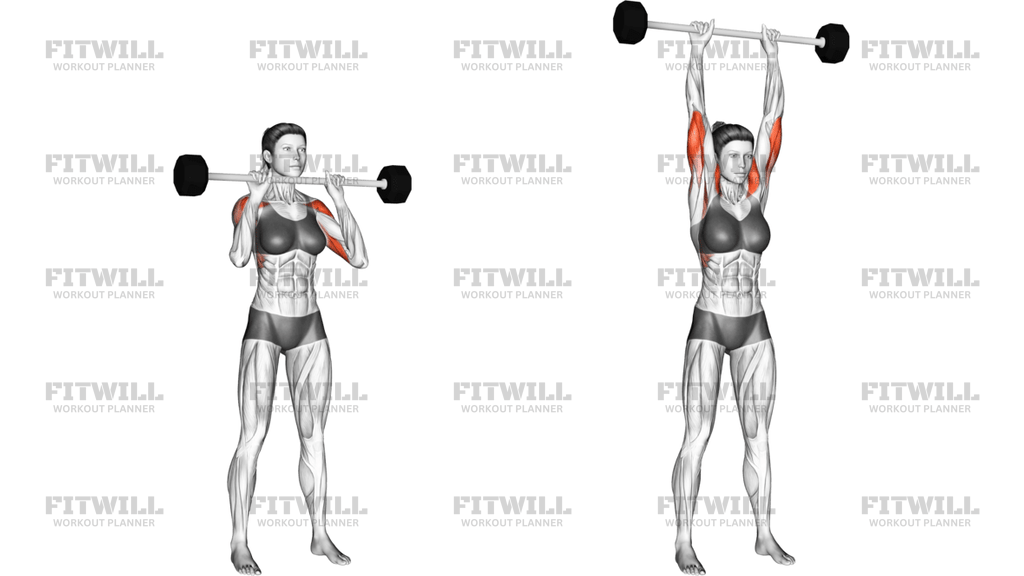
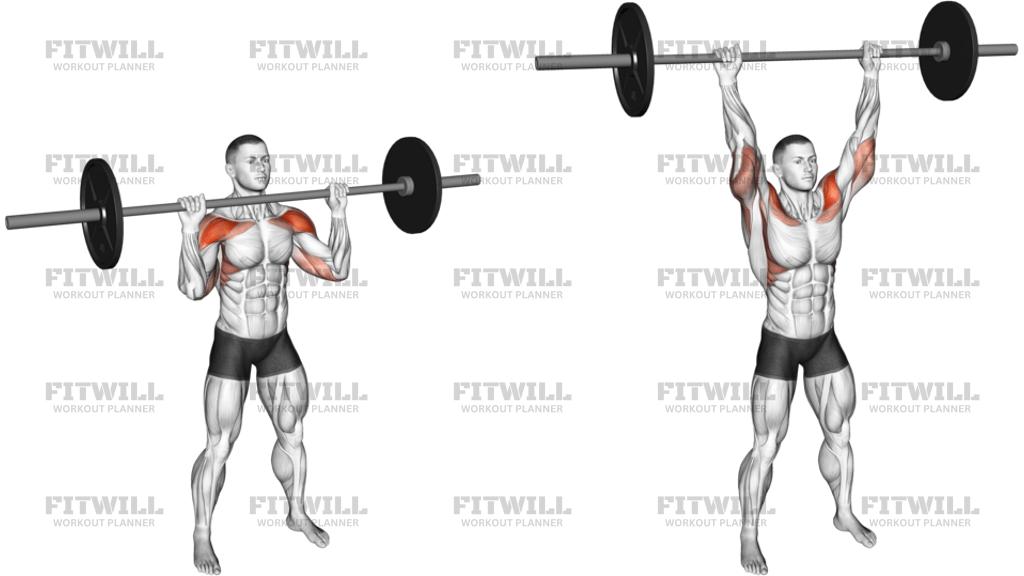
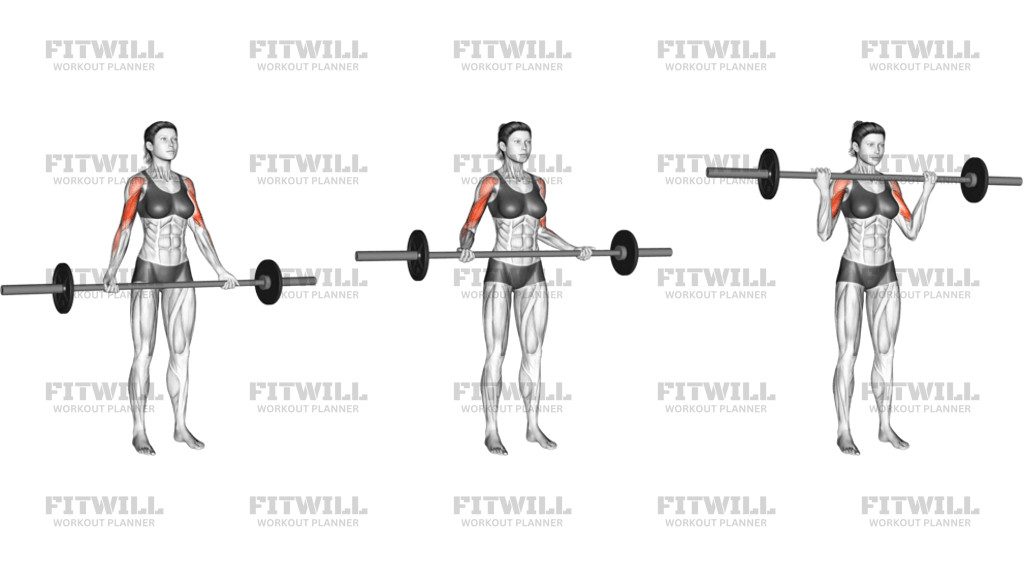
The bar should sit across the front of the shoulders with the elbows slightly forward, the chest tall, and the feet planted about hip-width apart. That front-rack position gives you a stable shelf for the bar and keeps the path efficient when you dip and drive. If the rack position is loose or the torso leans back early, the bar usually drifts forward and the press turns into a mess of compensation instead of a clean overhead rep.
A good Push Press uses only a shallow dip. Bend the knees just enough to preload the legs, keep the torso upright, and then reverse direction aggressively so force travels through the bar in one quick line. Once the bar clears the face, move the head slightly back and then through to finish with the bar stacked over the midfoot, elbows locked, and ribs kept under control. The goal is not to heave the weight, but to transfer leg drive into a strong overhead finish.
This exercise is commonly used for strength, power, and sports training because it teaches the upper body to receive and finish force efficiently. It can also be a useful bridge between strict pressing and more explosive barbell work. Moderate loads usually work better than maximal grinding weight, since the quality of the dip, drive, and lockout matters more than sheer load on the bar.
Safety depends on staying organized through the torso and using a bar path that remains close to the body. If the lower back arches hard, the elbows drop, or the knees bend too deeply, the press becomes less stable and more stressful on the shoulders and spine. Keep the repetition crisp, reset the rack after each rep, and stop the set when the bar no longer finishes directly over the shoulders and midfoot.
[ Workout Log & Planner ]
Put your next workout in Fitwill
Keep your plan and training log ready when you are.


Instructions
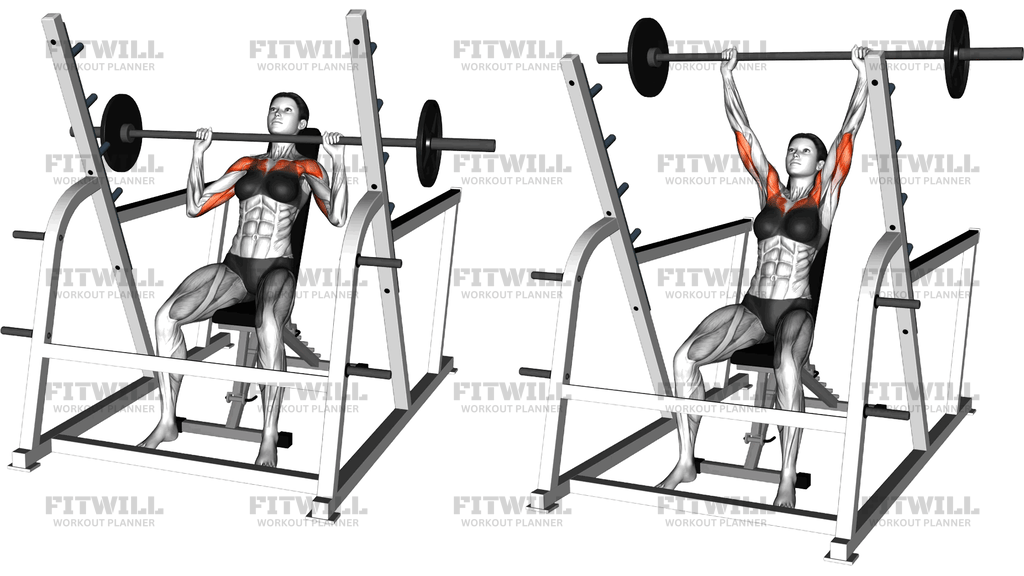
- Set the barbell in the front rack across the front of your shoulders, with your feet about hip-width apart and your weight centered over midfoot.
- Hold the bar just outside shoulder width, keep your wrists stacked under the bar, and point your elbows slightly forward instead of dropping them down.
- Stand tall with your ribs down, glutes lightly tight, and your chest stacked over your pelvis before every rep.
- Take a short breath and dip a few inches by bending your knees while keeping your torso nearly vertical.
- Reverse the dip immediately and drive hard through the floor so the bar starts moving upward from leg power.
- As the bar passes your face, move your head slightly back and then through so the bar can travel straight overhead.
- Finish with your elbows locked, biceps near your ears, and the barbell stacked over your shoulders and midfoot.
- Lower the bar back to the front rack under control, absorb the catch with soft knees, and reset before the next rep.
Tips & Tricks
- Keep the dip shallow; if your thighs drop into a full squat, the bar path usually gets slower and harder to control.
- Let the bar stay close to your face on the way up, then move your head through once it clears your forehead.
- Keep pressure through the whole foot, especially the heel and big toe, so the drive stays balanced instead of tipping forward.
- The front rack should feel like a shelf on the shoulders, not a wrist hold; if the wrists take over, widen the grip slightly.
- Finish every rep with the bar over the middle of your feet, not in front of your head.
- Use the legs to start the rep, but do not turn it into a standing incline press by leaning back at the top.
- If the lower back arches hard, reduce the load and keep the ribs pulled down through the lockout.
- Stop the set when the dip becomes slower than the press or the bar starts drifting away from your face.
Frequently Asked Questions
What muscles does Push Press train most?
Push Press hits the front and side shoulders most directly, with the triceps, upper back, and legs helping to drive and stabilize the bar.
Is Push Press the same as a strict overhead press?
No. Push Press adds a short knee dip and leg drive to move the bar, while a strict press uses only the shoulders and arms.
Where should the bar sit before I start Push Press?
It should rest in the front rack across the front of your shoulders, with the elbows slightly forward and the hands just outside shoulder width.
How deep should the dip be in Push Press?
Only a few inches. Think short and quick, not squat depth, so the bar gets a fast leg-driven start instead of a slow drop.
Why does my bar drift forward when I press?
Usually the elbows are dropping, the torso is leaning back, or the bar is looping around the face. Keep the rack tall and drive the bar straight up.
Can beginners use Push Press safely?
Yes, if they already know the front rack and can keep the dip short. Light loads and a rack or spotter are smart until the bar path feels consistent.
Should my knees bend a lot during Push Press?
No. The knees only bend enough to preload the legs; too much bend turns the lift into a squat pattern and reduces clean overhead drive.
What is the biggest mistake on the lockout?
Missing the stacked finish. The bar should end over the shoulders and midfoot, with the head through and the ribs not flared forward.