Cable Twist Up Down Version 2
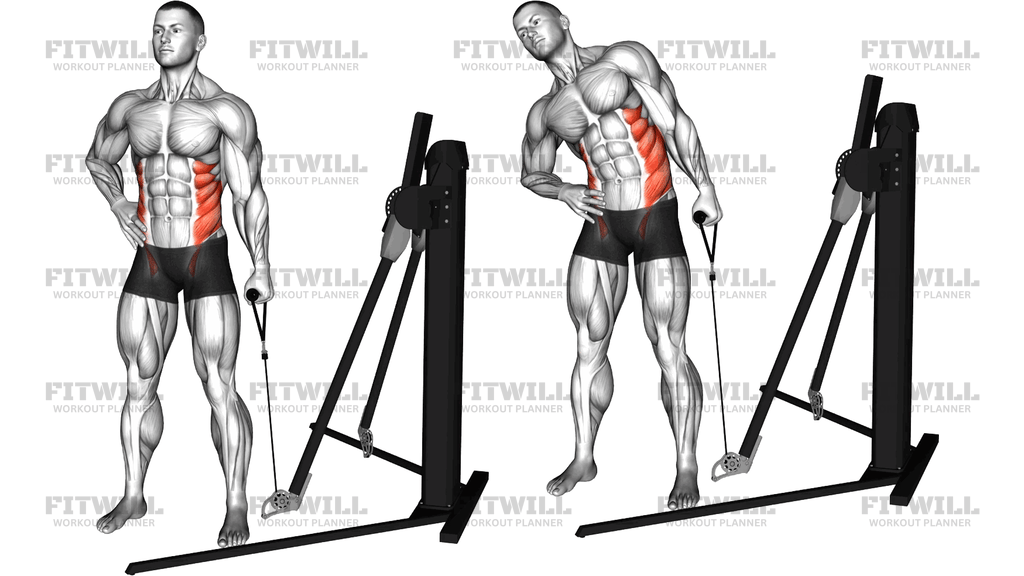
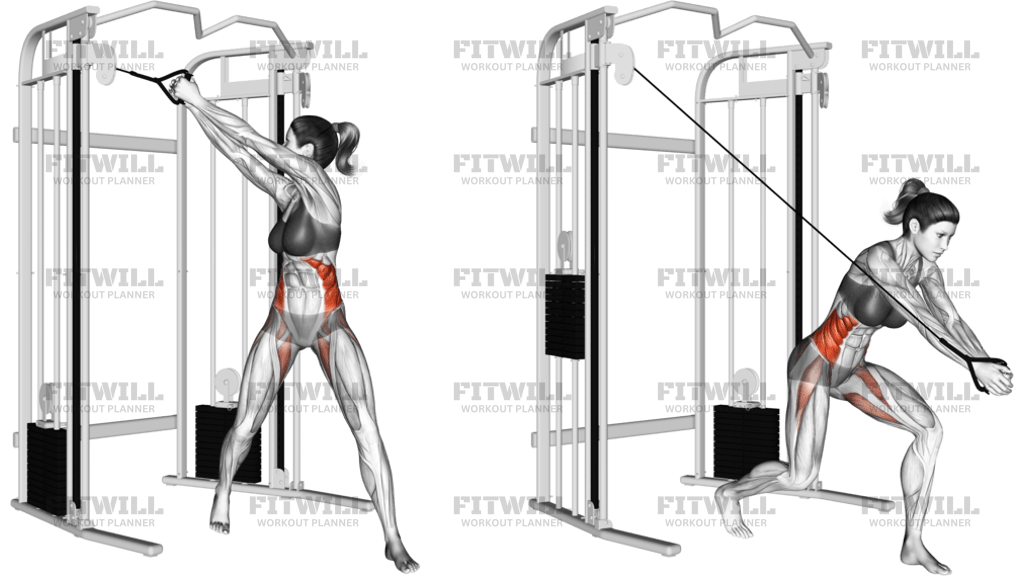
Cable Twist Up Down Version 2 is a standing diagonal cable rotation that trains the obliques through a controlled high-to-low chop. The cable line of pull creates a useful strength curve: the rep becomes most demanding when the torso is stacked against the load and has to keep rotating without collapsing into side-bending or lower-back extension. That makes the exercise valuable for building rotational strength, trunk stiffness, and controlled speed across the midsection without needing a heavy spinal load.
The setup matters because the starting position determines whether the movement feels athletic and repeatable or loose and improvised. Set the pulley high, stand side-on to the stack, and leave enough room for the handle to travel diagonally from above shoulder height toward the opposite hip. A staggered stance usually gives the cleanest base because it lets the hips contribute just enough turn while the trunk stays organized. Keep the ribs down, pelvis neutral, and shoulders relaxed before the first repetition so the obliques can do the work instead of momentum taking over.
As you pull the handle down and across the body, the arms should guide the cable while the torso creates most of the rotation. The finish should feel like the ribcage and near shoulder have come through together, with the handle landing near the front pocket or opposite hip depending on how the machine is set up. On the way back, resist the stack and return with control instead of letting the cable snap you open. If the torso has to lean, the pelvis spins away, or the low back arches to finish the rep, the load is too heavy or the stance is too narrow.
This version fits well in core blocks, athletic accessory work, and warmups before rotational or upper-body training. It is also a useful bridge between anti-rotation drills and faster woodchop patterns because it teaches you to control force across the torso while the cable keeps tension on both the pull and the return. Beginners can learn it with a light stack, but the exercise only pays off when the rep path stays clean, the torso stays stacked, and the lower back does not take over from the obliques.
A good set should feel smooth and repeatable, not rushed. Match the cable height, stance width, and range of motion to your own control, then progress the load only when you can keep the diagonal path crisp from the first rep to the last. Done well, Cable Twist Up Down Version 2 develops usable rotation and trunk control that carries over to sport, lifting, and everyday twisting tasks.
[ Workout Log & Planner ]
Put your next workout in Fitwill
Keep your plan and training log ready when you are.


Instructions
- Set the pulley above shoulder height and attach the handle securely.
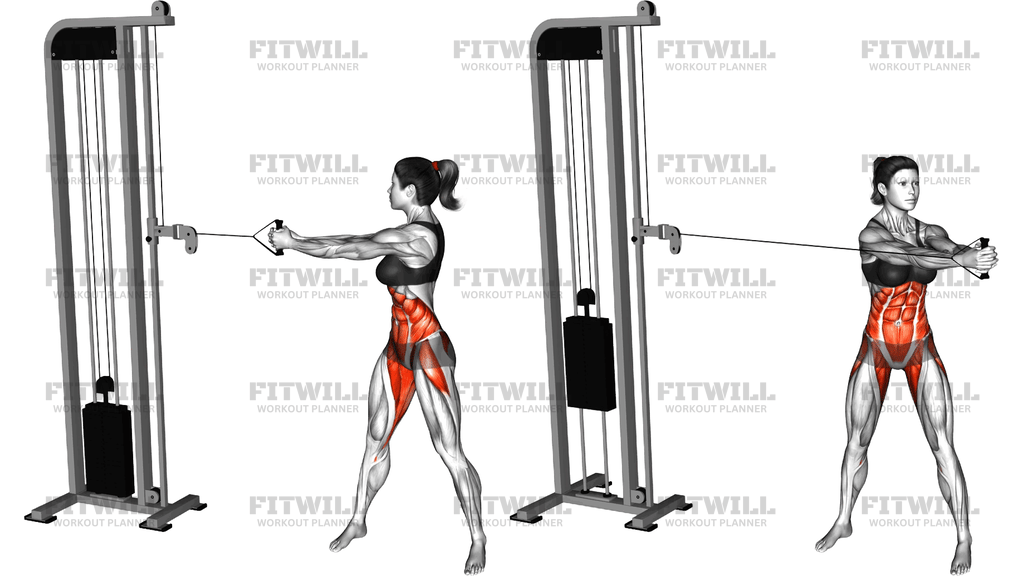
- Stand side-on to the stack with a staggered stance and enough room for the handle to travel diagonally down across your body.
- Grip the handle, soften both knees, and start with the cable slightly in front of the outside shoulder.
- Set your ribs over your pelvis, brace your midsection, and keep your shoulders relaxed before the first rep.
- Pull the handle diagonally down and across your body toward the opposite hip or front pocket.
- Let the torso rotate with the cable while the hips stay grounded and the back heel pivots only as needed.
- Squeeze briefly at the bottom without leaning back or shrugging the shoulder.
- Return slowly to the start under control, keeping tension on the cable and repeating for the planned reps.
Tips & Tricks
- Set the stack high enough that the cable pulls from above shoulder height instead of across your neck.
- Use a staggered stance so the pelvis has a stable base and the low back does not become the pivot point.
- Keep the elbows softly bent and treat the handle as a guide, not a straight-arm swing.
- Think about turning the ribs and shoulders together rather than yanking the hands across the body.
- Stop the pull when the handle reaches the opposite front pocket or hip; bigger range is not better if the torso starts to wobble.
- Let the back heel pivot a little if you need rotation, but do not let the hips spin far ahead of the trunk.
- Exhale through the diagonal pull and inhale as the handle returns to the start.
- Reduce the load if the plates slam, the torso leans, or the return becomes faster than the pull.
Frequently Asked Questions
What muscles does Cable Twist Up Down Version 2 work most?
The main emphasis is on the obliques, with the deeper abs and other trunk stabilizers helping to control the rotation.
Is this a good beginner cable core exercise?
Yes, as long as the load is light and the rep stays smooth. Beginners should keep the range short enough to avoid leaning or twisting through the low back.
Where should the handle finish on each rep?
It should finish near the opposite front pocket or hip, not behind the body and not high across the chest.
Should my hips turn during the twist?
A small amount of hip pivot is fine, especially through the back foot, but the pelvis should not spin freely ahead of the torso.
What is the most common mistake with this movement?
Most people either yank with the arms or lean back to create range. The rep should come from a controlled torso rotation with a stable base.
Can I use a rope instead of the handle attachment?
The handle attachment usually gives a cleaner line of pull for this variation, but a rope can work if it lets you keep the same diagonal path and torso control.
Why does the movement feel hardest near the bottom of the pull?
That part of the rep is where the cable is asking the trunk to keep rotating and resist side-bending at the same time, which is exactly what the obliques have to control.
What should I do if my low back feels this exercise more than my abs?
Lighten the load, shorten the range, and make sure the ribs stay stacked over the pelvis. If the back is still taking over, the setup is probably too open or the cable is too heavy.