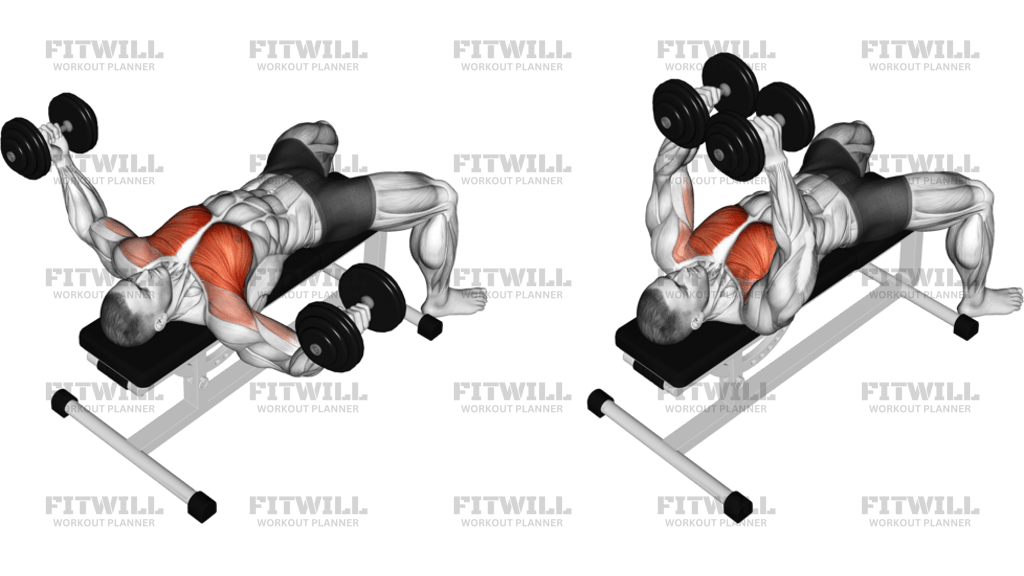
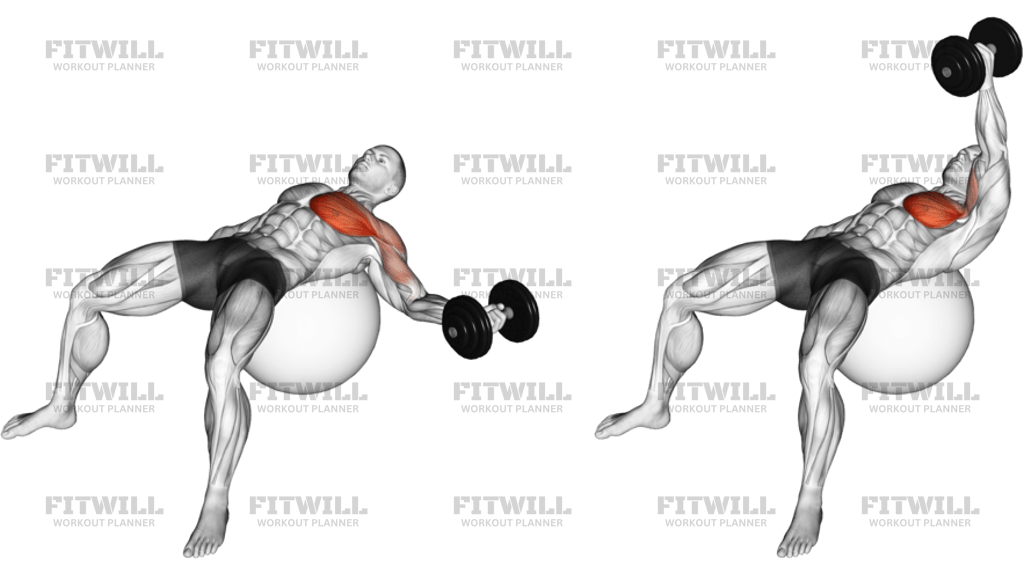
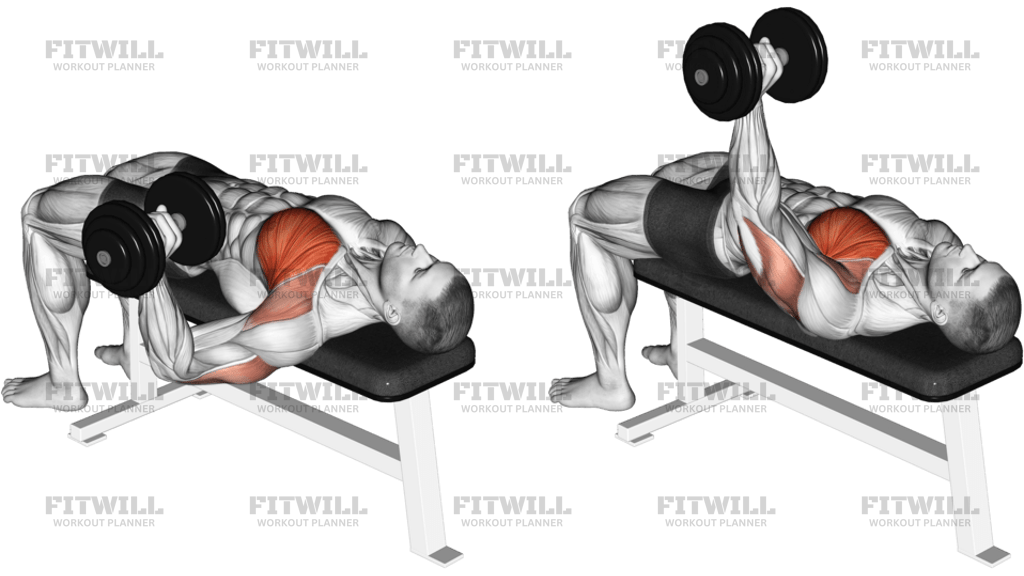
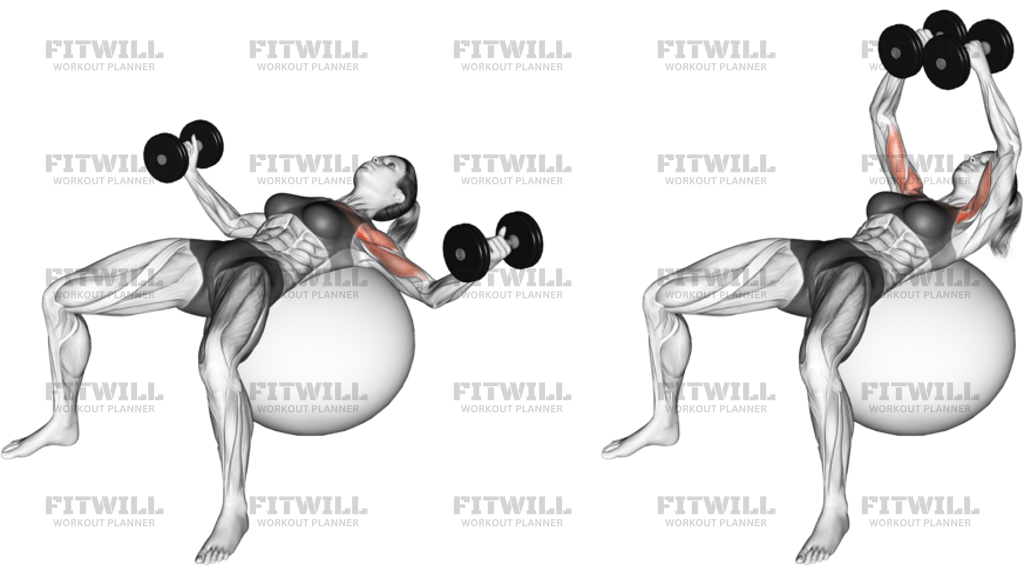
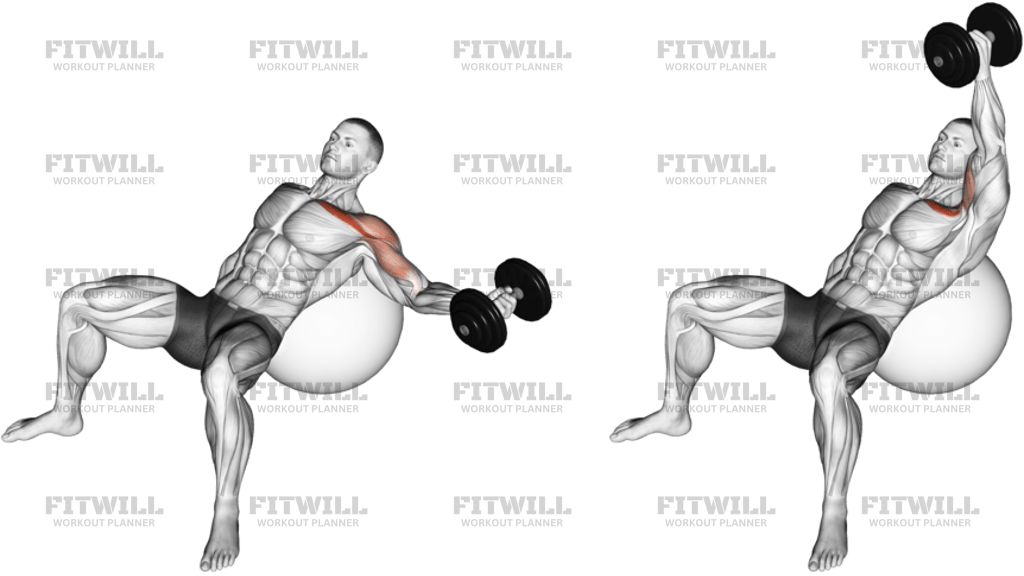
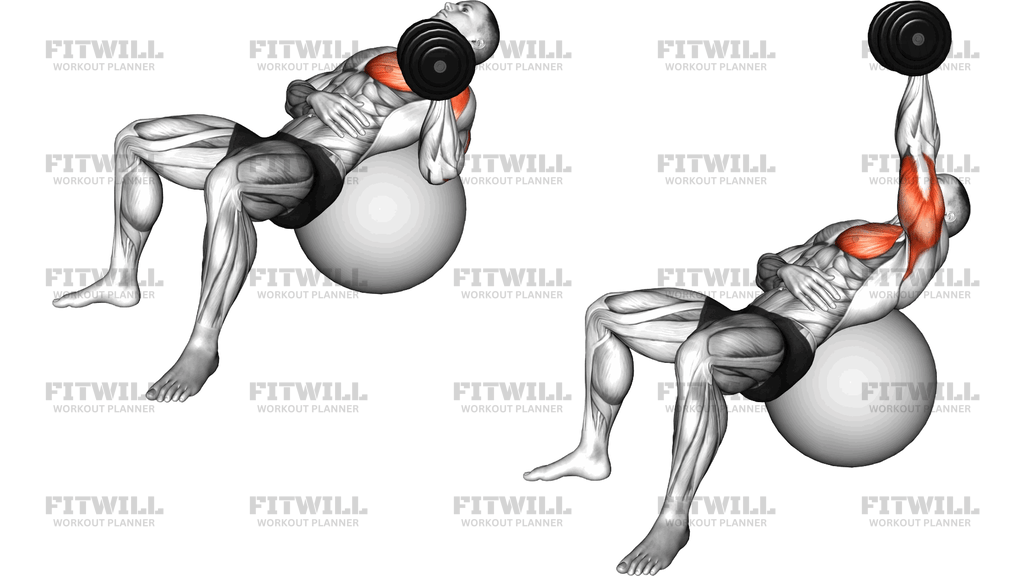
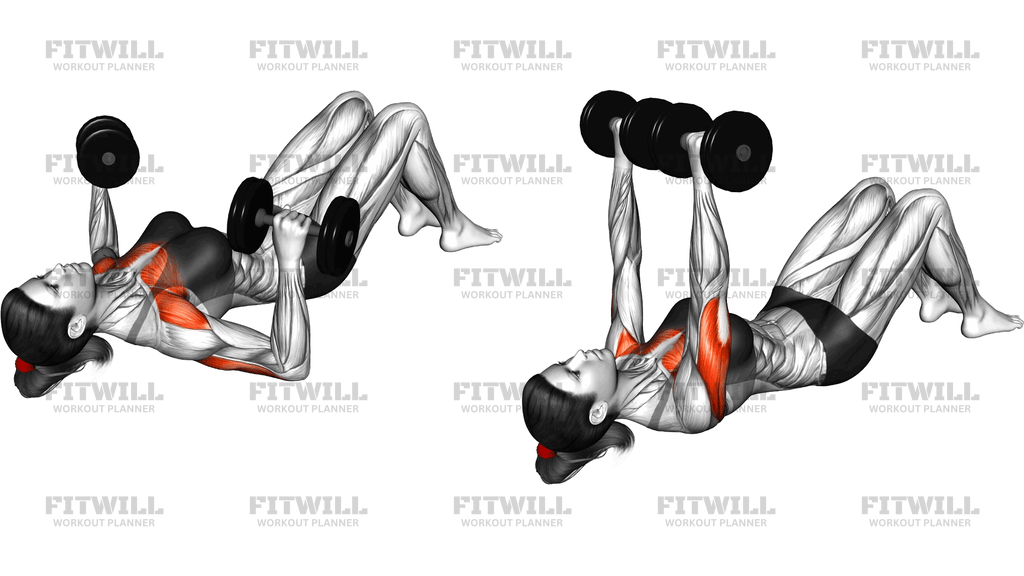
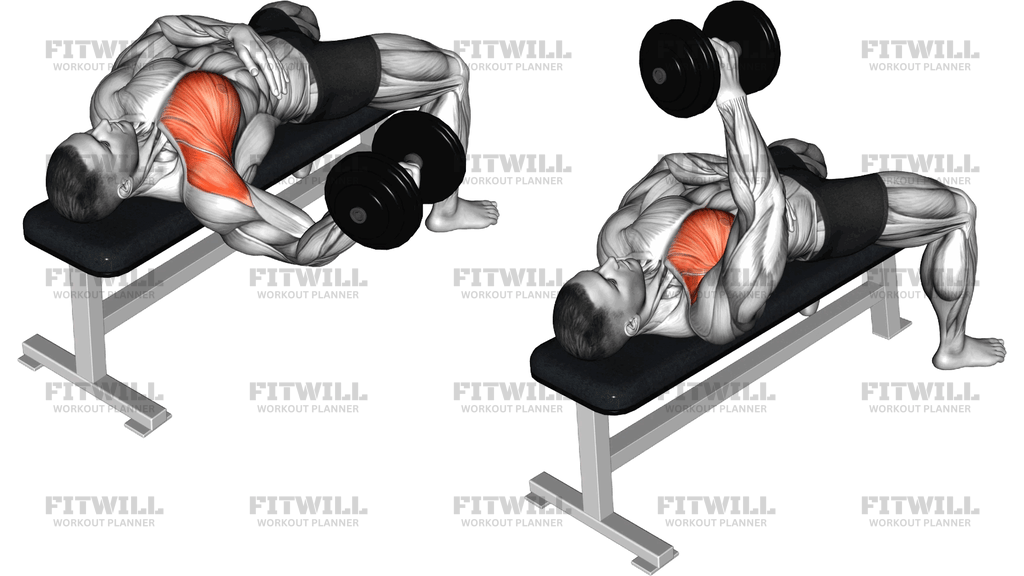
Dumbbell Incline Reverse-Grip 30 Degrees Bench Press
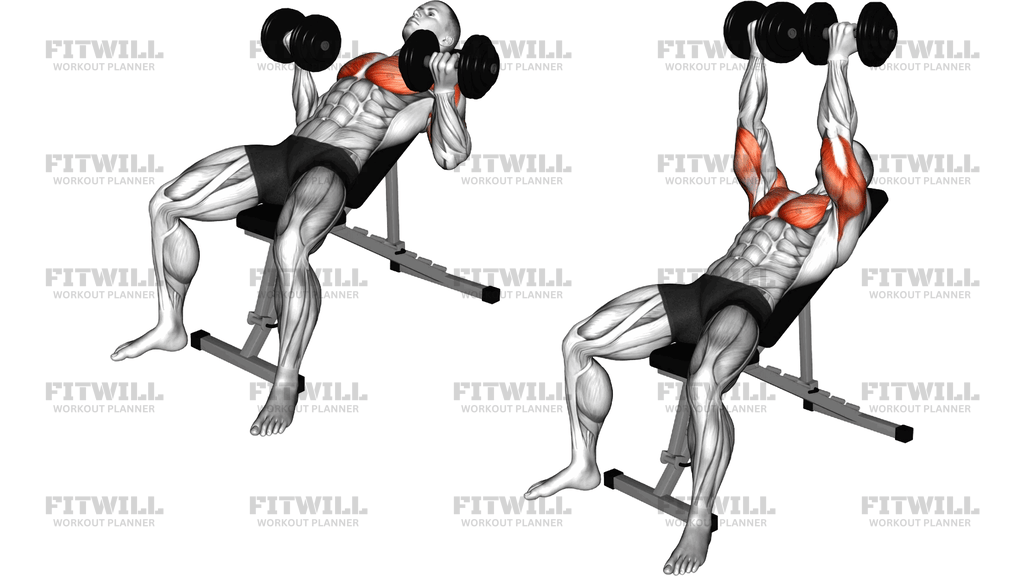
Dumbbell Incline Reverse-Grip 30 Degrees Bench Press is a chest-focused pressing variation that uses a 30-degree incline bench and an underhand dumbbell grip. The incline shifts more work toward the upper chest and front shoulders than a flat press, while the dumbbells let each arm move independently and follow a more natural path than a fixed bar.
The reverse grip changes the wrist and elbow position, so the setup matters more than it does in a standard dumbbell press. With the bench set around 30 degrees, the shoulders stay in a pressing angle that still loads the chest well without turning the movement into a steep shoulder press. That makes this a useful option for lifters who want an upper-chest emphasis and a slightly different stress pattern on the shoulders and elbows.
A clean rep starts by lying back with the shoulder blades pulled down and back, feet planted, and the dumbbells stacked over the shoulder joints. The palms face you, the wrists stay straight, and the forearms stay close to vertical as the weights travel. At the bottom, the dumbbells should come down under control to the upper chest line without bouncing or letting the shoulders roll forward.
Press the dumbbells upward by driving through the chest and triceps together, keeping both weights moving evenly and finishing above the upper chest rather than drifting toward the face. The elbows should stay slightly tucked, not flared hard out to the sides, so the press feels stable and repeatable. A short pause near the bottom can help remove momentum and keep the front of the shoulder from taking over.
This variation works well as a primary dumbbell press when you want upper-chest development, or as accessory work after heavier compound pressing. It is also a practical option for lifters who prefer dumbbells because each side has to stabilize itself, which exposes uneven control quickly and makes technique honest. Keep the load moderate, lower the dumbbells carefully to the thighs before sitting up, and stop the set if the wrists fold back or one arm starts to dominate the press.
[ Workout Log & Planner ]
Put your next workout in Fitwill
Keep your plan and training log ready when you are.


Instructions
- Set a bench to about 30 degrees, sit with a dumbbell on each thigh, and keep both palms facing you before you lie back.
- Lean onto the bench one dumbbell at a time, then use your thighs to help guide the weights into the starting position over your shoulders.
- Plant your feet, pull your shoulder blades down and back, and keep your chest lifted without over-arching your lower back.
- Stack the dumbbells over the shoulder joints with straight wrists and palms still facing you.
- Lower the dumbbells in a controlled arc toward the upper chest line while keeping your elbows slightly tucked.
- Pause briefly near the bottom if you can keep the shoulders packed and the wrists straight.
- Press the dumbbells up and slightly inward until your arms are almost straight and both weights finish evenly above the upper chest.
- Exhale as you press, inhale as you lower, and keep both dumbbells moving at the same speed.
- When the set ends, bring the dumbbells back to your thighs before sitting up.
Tips & Tricks
- Use lighter dumbbells than you would for a flat neutral-grip press; the underhand position usually feels stronger on the chest but harder on the wrists and stabilizers.
- Keep the bench angle close to 30 degrees. A steeper incline shifts the work toward the front delts and makes the exercise feel less like a chest press.
- Let the dumbbells travel toward the upper chest, not the lower chest. If they drift toward the face, the shoulders usually take over.
- Keep your palms turned toward you and your wrists stacked over your forearms. If the wrists fold back, the dumbbells will feel unstable fast.
- Tuck the elbows slightly instead of flaring them wide. That keeps the press path smoother and usually feels friendlier on the shoulders.
- Lower the weights slowly enough that you can pause for a beat near the bottom without losing position.
- Press both dumbbells together. If one arm starts finishing early, the load is too heavy or one side is losing control.
- Keep your shoulder blades pinned to the bench from the first rep to the last. Letting them slide forward at the bottom reduces chest tension.
- If the bottom stretch feels sharp in the front of the shoulder, shorten the range slightly and stop just above the point where the shoulder rolls forward.
Frequently Asked Questions
What muscles does Dumbbell Incline Reverse-Grip 30 Degrees Bench Press work?
It mainly targets the upper chest, with the front delts and triceps assisting through the press. The underhand grip does not turn it into an arm exercise; the chest still does most of the work.
Why use a reverse grip on Dumbbell Incline Reverse-Grip 30 Degrees Bench Press?
The reverse grip changes the pressing angle and can make the upper chest feel more direct for some lifters. It also changes wrist and elbow stress, so lighter loading is usually smarter than forcing heavy numbers.
Is Dumbbell Incline Reverse-Grip 30 Degrees Bench Press beginner-friendly?
Yes, if you start very light and keep the wrists stacked over the forearms. Beginners should master the bench setup and the underhand dumbbell path before chasing load.
How low should I lower the dumbbells?
Lower them toward the upper chest line until you still keep the shoulder blades pinned back and the wrists straight. If the shoulders roll forward or the dumbbells drift too deep, shorten the range.
What is the most common form mistake?
Letting the dumbbells drift toward the face or letting the wrists bend back. Both mistakes make the movement unstable and shift tension away from the chest.
Should the elbows stay tucked or flare out?
Keep them slightly tucked. A moderate tuck keeps the press path cleaner and usually feels better on the shoulders than a wide flare.
Can I do Dumbbell Incline Reverse-Grip 30 Degrees Bench Press if my shoulders get irritated on flat pressing?
Sometimes, yes, because the incline and underhand grip can feel more comfortable than a flat barbell press. But if the front of the shoulder feels pinchy at the bottom, reduce the range or switch to a neutral-grip incline press.
What is a good substitute if I do not like the reverse grip?
A neutral-grip incline dumbbell press is the closest alternative. It keeps the incline chest emphasis while making the wrist position simpler.