Dumbbell Side Lunge
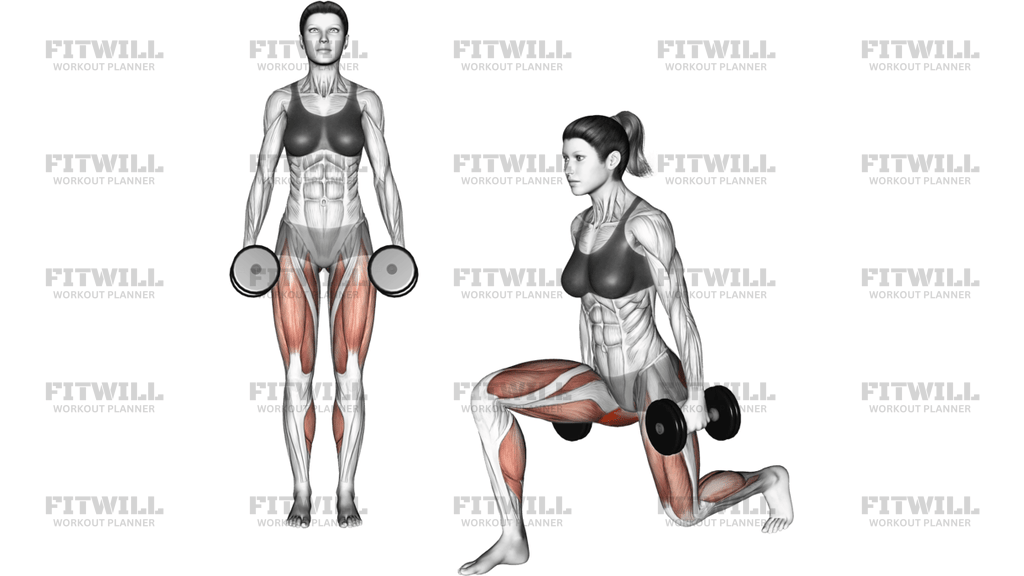
Dumbbell Side Lunge is a lateral single-leg strength exercise that loads the hips as you step out, sit back into one side, and return to standing with the dumbbells hanging at your sides. It is a practical lower-body pattern for building the ability to shift weight, control knee tracking, and produce force through one leg at a time while the other leg stays long and grounded.
The exercise is especially useful when you want the glutes to do more than simply extend the hip in a straight line. As you move laterally, the lead hip must absorb the load, the trail leg stays straighter, and the inner-thigh tissues help control the descent and return. That makes the movement a strong blend of glute, adductor, hamstring, and trunk work, with the upright torso helping you keep the dumbbells stable instead of letting them swing.
Setup matters because a side lunge can turn sloppy very quickly if the stance is too narrow, the step is too short, or the chest collapses forward. Start tall with the dumbbells beside your thighs, then step one foot out far enough that the bent knee can travel over the foot while the opposite leg stays extended. The goal is to keep the feet pointing mostly forward, the standing heel rooted, and the pelvis organized as you sink into the working hip.
Each repetition should look and feel deliberate. Shift your hips back and toward the stepping leg, lower under control until you reach a deep but pain-free range, then press the floor away through the whole foot to return to center. The return should be smooth, not a bounce or a push from the trailing leg. If you cannot keep the torso stable or the knee aligned, reduce the depth or the dumbbell load before adding more range.
Use Dumbbell Side Lunge as accessory strength work, part of athletic lower-body training, or a warmup drill for lateral stability and hip mobility. It fits well when you want a movement that challenges balance without requiring complicated equipment. Beginners can use it with light dumbbells or even bodyweight first, while lifters can progress it by slowing the descent, deepening the lunge, or adding load only when each side stays clean and controlled.
[ Workout Log & Planner ]
Put your next workout in Fitwill
Keep your plan and training log ready when you are.


Instructions
- Stand tall with a dumbbell in each hand at your sides, feet about hip-width apart, and toes pointed mostly forward.
- Brace your trunk and keep your chest lifted so the dumbbells stay quiet and vertical as you move.
- Step one foot out to the side far enough that you can sit back into that hip without losing balance.
- Keep the stepping foot flat and the opposite leg long as you bend the working knee and push the hips back.
- Lower until the working thigh is near parallel or as deep as you can control without collapsing the torso.
- Keep the knee tracking over the middle of the foot and let the inside of the hip and thigh control the descent.
- Drive through the whole foot of the bent leg to return to standing, bringing the trailing leg back under you.
- Reset fully at the top, then repeat the same path on the other side or for the planned reps on one side first.
- Exhale as you drive up and inhale on the descent so each rep stays controlled and repeatable.
Tips & Tricks
- Take a wider step than you think you need; if the step is too short, the knee will travel too far forward and the hip will not load well.
- Keep the trailing leg straighter and the toes forward so the movement stays lateral instead of turning into a squat.
- Let the hips travel back and down, not just out to the side, so the glute of the working leg can do the work.
- Keep the dumbbells hanging still beside the thighs; swinging weights usually means the torso is shifting too aggressively.
- Use the foot of the working leg like a tripod, with pressure under the heel, base of the big toe, and base of the little toe.
- If the inner thigh or groin feels strained, shorten the range and slow the lowering phase before adding load.
- Do not let the standing knee cave inward when you push back to center; track it in line with the middle toes.
- Use a lighter load if you cannot pause briefly in the bottom position without wobbling.
Frequently Asked Questions
What does Dumbbell Side Lunge train most?
It targets the glutes strongly, while the adductors, hamstrings, quads, and trunk help control the side-to-side load shift.
Where should I hold the dumbbells?
Hold one dumbbell in each hand at your sides and let them hang naturally. Keeping them quiet helps you stay upright and avoid twisting.
How wide should my side step be?
Wide enough that the working hip can sit back without the opposite heel lifting. If you cannot keep the stepping foot flat, the step is probably too short or too deep.
Should the non-working leg bend too?
It should stay mostly straight and long while the working leg bends. That is what makes this a side lunge instead of a wide squat.
Can beginners do this exercise?
Yes. Start with bodyweight or very light dumbbells and use a smaller range until you can keep the knee, hip, and torso stacked.
What is the most common mistake?
Rushing into the bottom and then bouncing back up. A controlled descent and a smooth push from the working foot create the right hip loading.
How deep should I go?
Go as deep as you can while keeping the working heel down, the torso controlled, and the knee tracking over the foot. Depth should never force the pelvis to twist or the arch to collapse.
How can I make the side lunge harder without cheating?
Add load only after the movement is stable, then slow the lowering phase, pause in the bottom, or increase range while keeping the dumbbells steady.