Dumbbell Incline Alternate Hammer Curl
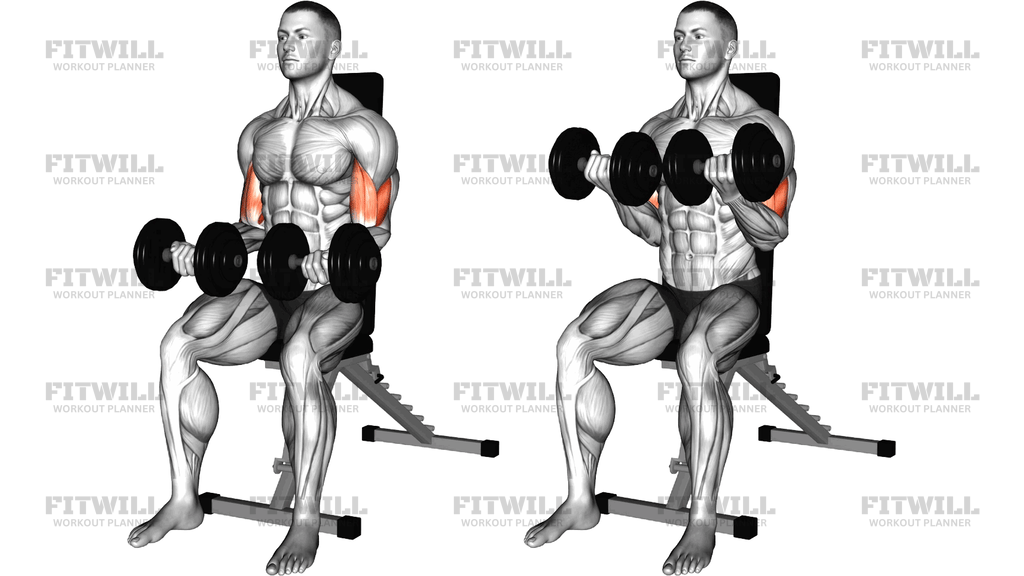
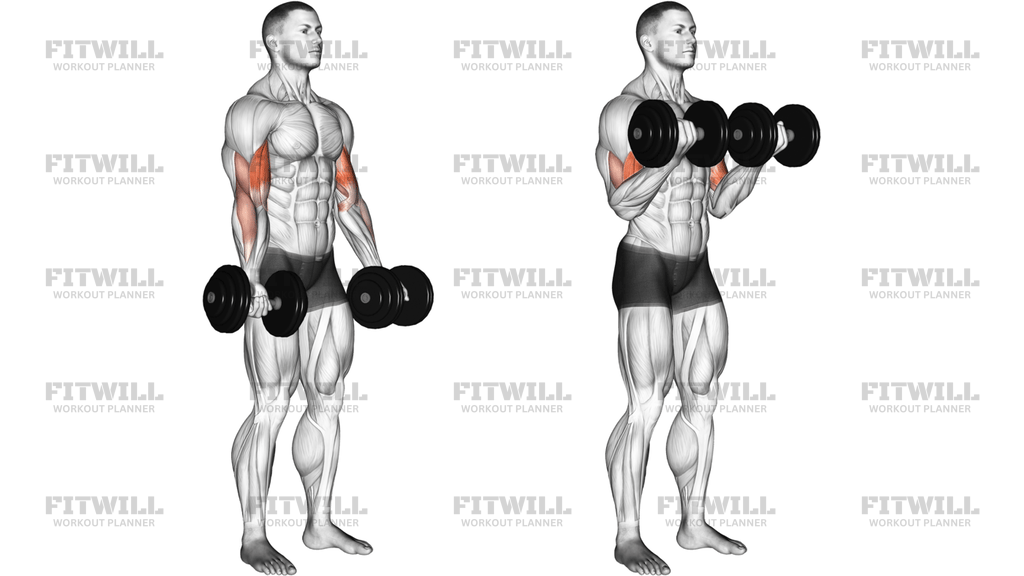
Dumbbell Incline Alternate Hammer Curl is a seated arm exercise that uses an incline bench and a neutral dumbbell grip to train the biceps through a long, stretched starting position. The bench angle matters because it fixes the torso against the pad, reduces cheating, and keeps the upper arm slightly behind the body so the curl begins with more tension at the elbow.
The main muscles working are the biceps, with strong help from the brachialis, brachioradialis, and forearm flexors. Compared with a standing hammer curl, the incline position makes the rep feel stricter and more isolated. The alternating pattern also helps you focus on one arm at a time and keep the shoulders level instead of swinging both weights together.
Set the bench to a moderate incline, sit fully back, and let both arms hang straight down with the palms facing in. From there, curl one dumbbell toward the front of the shoulder without turning the wrist, then lower it slowly before repeating on the other side. Keep the elbow close to the ribcage, avoid shrugging into the top, and let the arm fully lengthen at the bottom without losing shoulder contact with the bench.
This is a useful accessory lift for arm hypertrophy, elbow-flexor strength, and balanced forearm development. The incline setup increases the demand on strict control, so the exercise rewards moderate loads and deliberate tempo more than heavy body English. If the bench angle is too steep or the dumbbells drift forward, the movement turns into a front-delt curl instead of a clean hammer curl.
Use Dumbbell Incline Alternate Hammer Curl when you want a controlled biceps variation that is easier on wrist rotation than a supinated curl. It works well in arm-focused sessions, upper-body accessories, or finishing work after pressing and pulling. Beginners can use it safely with light dumbbells if they keep the shoulders pinned to the bench and stop the set before the torso starts to twist.
[ Workout Log & Planner ]
Put your next workout in Fitwill
Keep your plan and training log ready when you are.


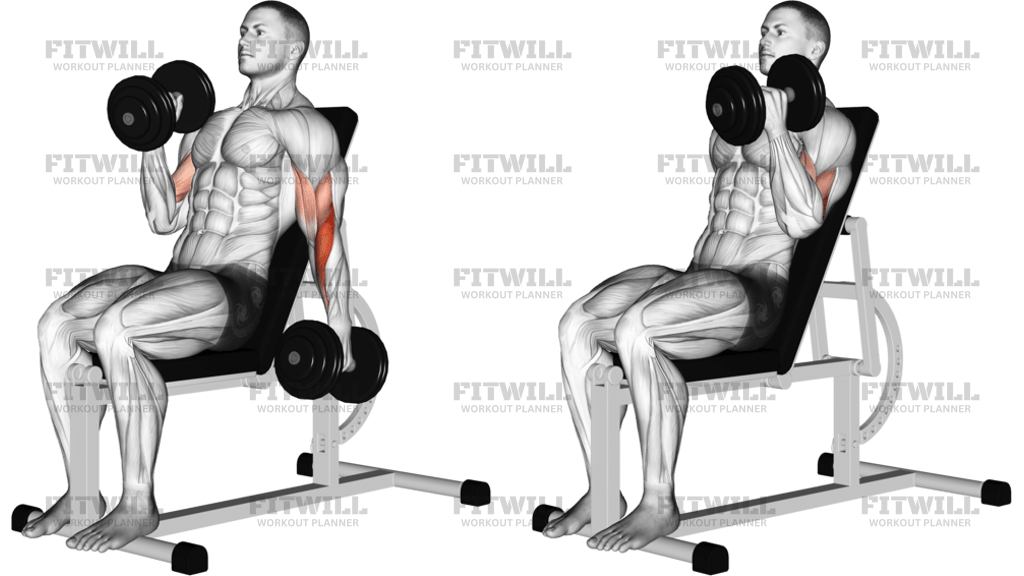
Instructions
- Set an incline bench to a moderate angle and sit with your back and head supported on the pad.
- Plant both feet flat on the floor and hold a dumbbell in each hand with your palms facing inward.
- Let your arms hang straight down so the dumbbells are beside your thighs and the elbows stay close to your ribs.
- Brace lightly through your midsection and keep your chest tall without lifting off the bench.
- Curl one dumbbell up toward the front of that shoulder while keeping the wrist neutral and the upper arm still.
- Squeeze briefly near the top without letting the elbow drift forward or the shoulder roll up.
- Lower the weight slowly until the arm is almost fully straight, keeping tension in the biceps and forearm.
- Alternate to the other arm and continue for the planned number of repetitions.
Tips & Tricks
- Choose a bench angle that keeps your upper arm slightly behind your torso at the bottom; too upright shortens the stretch and changes the exercise.
- Keep the dumbbell handle vertical and your wrist straight so the movement stays in hammer-curl territory instead of turning into a twist.
- Do not let the shoulder drift forward as the curl starts; the upper arm should stay quiet while the elbow bends.
- Use a slow lowering phase so the long-range tension on the biceps and brachialis does not disappear between reps.
- If your torso starts rocking against the bench, the dumbbells are too heavy for the form you want.
- Let one arm rest while the other works, but keep both shoulders pressed evenly into the pad so you do not rotate side to side.
- Exhale as you curl and inhale as you lower to help keep the ribcage and neck relaxed.
- Stop the set when the elbow starts drifting forward on every rep or the dumbbells stop reaching a controlled bottom position.
Frequently Asked Questions
What muscle does Dumbbell Incline Alternate Hammer Curl target most?
The biceps are the main target, with the brachialis and brachioradialis doing a lot of the work too.
Can beginners perform this exercise?
Yes. Beginners usually do well with light dumbbells and a bench angle that makes it easy to keep the back and elbows steady.
Why use an incline bench instead of standing?
The incline bench limits torso swing and keeps the arm in a stretched position, which makes the curl stricter and more focused.
Should my elbow move forward during the curl?
A small amount of movement is normal, but the elbow should stay mostly fixed beside the body instead of driving far forward.
Why alternate arms instead of curling both together?
Alternating helps you keep each rep strict and reduces the chance of shrugging, twisting, or rushing through the set.
What grip should I use on the dumbbells?
Use a neutral grip with the palms facing each other for the full rep, and keep the wrist stacked over the forearm.
Where should I feel the movement most?
You should feel the front and outer part of the upper arm, along with the forearm, rather than the shoulders doing the lifting.
How deep should the bottom position be?
Lower the dumbbell until the arm is nearly straight, but keep control so the shoulder stays anchored to the bench.