Cable Seated Row Bent Bar
Cable Seated Row (Bent Bar) is a supported rowing exercise that trains the upper back, mid-back, lats, rear shoulders, and arms through a horizontal pull. The bent-bar attachment gives you a close, neutral grip, which usually feels natural on the wrists and makes it easier to keep the elbows tracking near the torso. That combination makes the movement useful for building back thickness, improving shoulder-blade control, and practicing a strong seated pulling pattern.
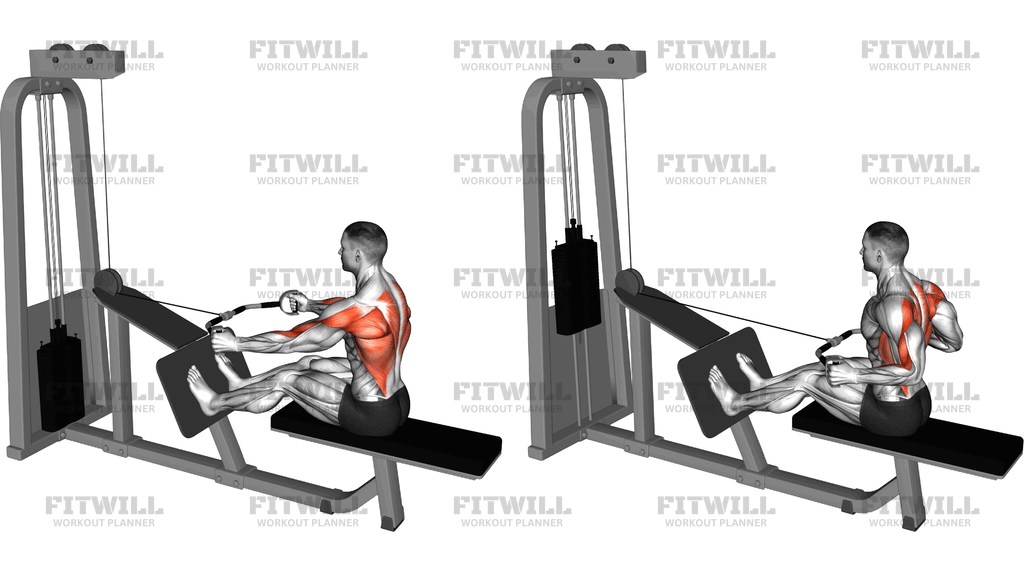
The image shows a seated cable row performed with the feet braced on the platform, the torso upright, and the cable traveling from a low pulley toward the lower ribs. That setup matters because the bench, foot support, and handle position let you generate force without turning the rep into a standing swing. The goal is not to rock the torso or yank the stack; it is to pull with the back while keeping the chest tall and the spine steady.
As you row, the shoulder blades should move naturally: reach forward under control at the start, then pull the elbows back and squeeze the upper back as the handle comes into the body. A clean repetition finishes when the handle reaches the lower ribs or upper abdomen and the elbows are slightly behind the torso, not flared high. On the way back, let the arms extend and the shoulder blades open without losing posture or letting the lower back round.
This exercise fits well in back-focused strength work, hypertrophy sessions, or any program that needs a controlled horizontal pull without a lot of body momentum. Because the machine guides the cable path, it is also a good option for beginners who are still learning how to row with their back instead of with their lower body. It can be loaded moderately heavy, but only if the torso stays still and the rep remains smooth from stretch to squeeze.
Use a weight that lets you keep the chest lifted, the neck long, and the elbows traveling close to the body. If you have to lean back hard, shrug the shoulders, or shorten the return phase, the load is too high. Treat the bent-bar row as a precision back movement first and a strength exercise second; that is what makes it productive and safe.
[ Workout Log & Planner ]
Put your next workout in Fitwill
Keep your plan and training log ready when you are.


Instructions
- Sit on the bench facing the low pulley, place your feet on the platform, and grab the bent bar with a neutral grip.
- Scoot back until the cable is taut, then sit tall with a neutral spine, chest lifted, and knees softly bent.
- Let the arms reach forward just enough to feel the upper back lengthen, but keep the shoulders under control instead of collapsing.
- Brace your midsection and keep both feet planted before you start the pull.
- Pull the handle toward your lower ribs or upper abdomen by driving the elbows back close to your sides.
- Squeeze the shoulder blades together and slightly down as the handle reaches the body.
- Pause briefly at the end of the row without leaning far back or shrugging the shoulders.
- Return the handle forward in a slow, controlled arc until the arms are long again and the shoulders can reach forward under tension.
- Repeat for the planned reps, exhaling on the pull and inhaling on the return, then let the handle settle before standing up.
Tips & Tricks
- Keep your wrists in line with your forearms so the bent bar does not get folded back into the hands.
- Pull the elbows toward your back pockets, not straight up, to keep the row centered on the mid-back and lats.
- If your torso is swinging more than a few degrees, lower the load and remove the momentum.
- Do not turn the finish into a shrug; the shoulders should stay away from the ears.
- Let the shoulder blades reach forward at the start so you get a real stretch before each rep.
- Use a smooth return instead of letting the stack slam back and pull you off posture.
- Keep the chest tall and the lower back quiet; the bench and footplate should do the bracing, not a big lean.
- Stop the rep when the handle touches the torso cleanly rather than forcing it farther behind the body.
Frequently Asked Questions
What muscles does Cable Seated Row (Bent Bar) work most?
It primarily trains the upper and mid-back, especially the traps and rhomboids, while the lats and biceps assist.
Can beginners perform this exercise?
Yes. The seated setup and guided cable path make it beginner-friendly as long as the load stays light enough to keep the torso still.
Where should the bent bar travel on each rep?
Pull it toward the lower ribs or upper abdomen, then return it forward until the arms are long without letting the shoulders collapse.
Should my torso move during the row?
It should stay mostly upright. A tiny amount of natural movement is fine, but big leaning or rocking means the weight is too heavy.
Why use a bent bar instead of a straight bar?
The bent-bar or neutral grip usually feels easier on the wrists and elbows and helps keep the elbows tucked closer to the sides.
What is the biggest form mistake on this machine row?
Leaning back to finish the rep is the most common error. The handle should move because the back pulls, not because the torso swings.
How should I breathe on Cable Seated Row (Bent Bar)?
Exhale as you pull the handle to the body, then inhale as you let it return under control.
What should I do if I feel this mostly in my biceps?
Use a lighter load, keep the chest tall, and think about driving the elbows back instead of curling the handle with your arms.