Drop Push-Up
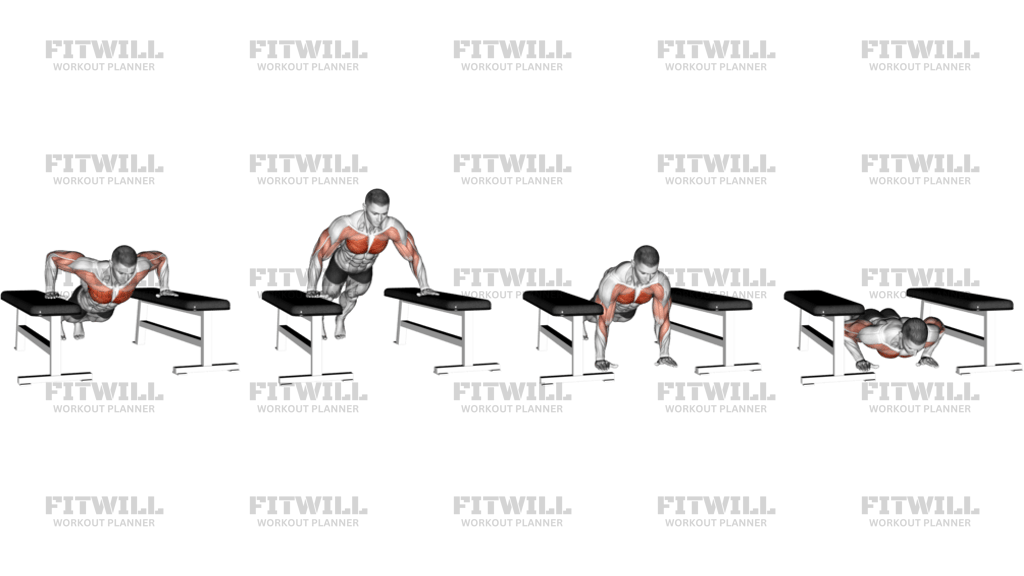
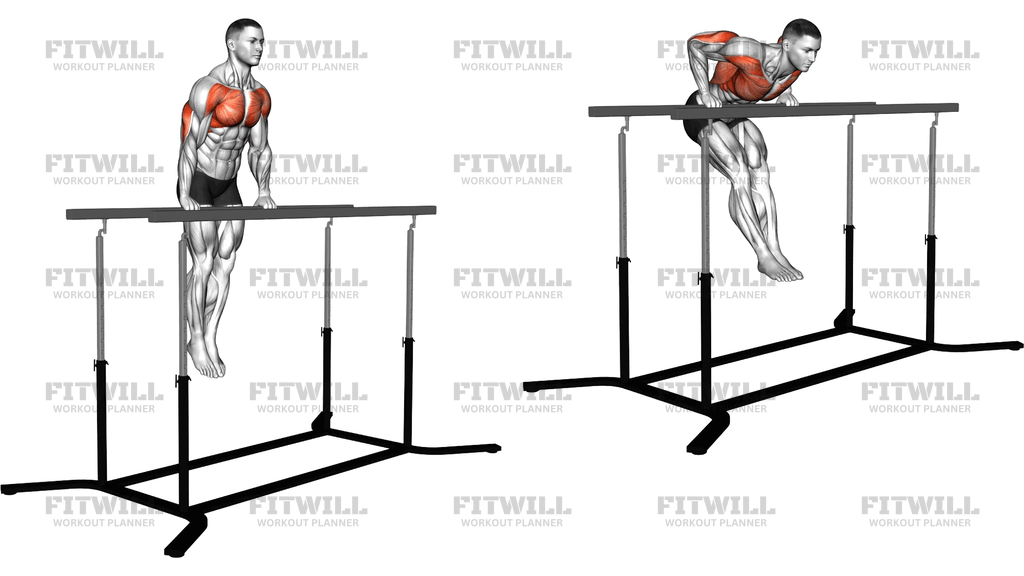
Drop Push Up is a deficit push-up performed with the hands on two stable benches so the chest can travel lower than the hands. That longer range of motion increases demand on the chest, triceps, front shoulders, and core while also asking the shoulder girdle to stay organized under a deeper stretch. The exercise is useful when you want more pressing range than a floor push-up without switching to external load.
The setup matters because the benches define both your depth and your shoulder position. Place the benches parallel, firm, and non-slip, then set your hands on the top edges with the wrists under the shoulders and the fingers pointing forward. Walk the feet back into a straight plank so the body makes one line from head to heels, then squeeze the glutes and brace the midsection before the first descent. If the shoulders drift forward or the benches wobble, the bottom position becomes sloppy and the rep stops being a clean strength movement.
On each repetition, lower under control until the chest drops between the benches and sits just below hand level. Keep the elbows tracking back at a comfortable angle rather than flaring hard to the sides, and let the chest move between the supports instead of letting the hips sag. From the bottom, press the benches away and return to full elbow extension while keeping the neck long and the ribs from popping up. A brief pause at the deepest point can make the rep stricter, but only if you can hold the shoulder position without pinching.
Use Drop Push Up when you want a harder body-weight pressing variation for strength, hypertrophy, or accessory work after the main lifts. It is especially useful for lifters who already own standard push-ups and want a deeper pec stretch and more triceps involvement. Keep the range pain-free, choose a bench height you can control, and stop the set when the chest starts to collapse or the lower back takes over. The goal is a smooth, repeatable press through a controlled depth, not a rushed bounce off the bottom.
Fitwill
Log Workouts, Track Progress & Build Strength.
Achieve more with Fitwill: explore over 9600 exercises with images and videos, access built-in and custom workouts, perfect for both gym and home sessions, and see real results.
Start your journey. Download today!




Instructions
- Place two sturdy benches parallel and slightly wider than shoulder width, then put one hand on each bench edge with the wrists under the shoulders and the fingers pointing forward.
- Walk the feet back into a straight plank with the body aligned from head to heels, then squeeze the glutes and brace the ribs down.
- Set the shoulder blades in a controlled position and keep the neck neutral before the first rep.
- Inhale and lower your chest between the benches, letting the elbows bend and track back at about a 30 to 45 degree angle from the torso.
- Descend until the chest reaches just below hand level or as low as your shoulders can control without losing position.
- Pause briefly at the bottom if you can keep tension through the chest, upper back, and core.
- Exhale and press the benches away until the arms are straight and the shoulders stay stacked over the hands.
- Reset the plank before the next rep and keep every repetition smooth and repeatable.
Tips & Tricks
- Choose bench height carefully: the higher the hands, the deeper the deficit and the harder it is to keep the shoulders organized at the bottom.
- Keep the hands fully planted on the bench edges so the wrists do not slide when you press out of the deepest point.
- If the chest cannot drop between the benches without shoulder pinching, shorten the range instead of forcing depth.
- Keep the hips and ribs moving together; a sagging midsection turns the rep into a low-back exercise instead of a press.
- Do not flare the elbows straight out to the sides, because that usually increases shoulder stress in the bottom position.
- A short pause near the deepest stretch removes bounce and makes the chest and triceps do the actual work.
- Exhale through the press and inhale on the way down so the torso stays braced without holding a sloppy breath.
- Stop the set as soon as the shoulders roll forward or the head starts jutting ahead of the spine.
Frequently Asked Questions
What does Drop Push Up train most?
It mainly trains the chest, with strong help from the triceps, front delts, and core to control the deeper push-up range.
Why do the hands stay on two benches?
The benches create a deficit so the chest can travel lower than the hands, which increases the stretch and the pressing demand.
How wide should the benches be set?
Keep them roughly shoulder width to slightly wider so the chest can pass between them without forcing the shoulders into an awkward angle.
Is this harder than a regular push-up?
Usually yes, because the deeper range increases the stretch at the bottom and gives the chest and triceps more work per rep.
Can a beginner do Drop Push Up?
Only if a normal push-up is already solid; otherwise start with a shallower setup or a floor push-up first.
What should I do if my shoulders pinch at the bottom?
Reduce the depth, raise the hand supports, or stop the descent before the uncomfortable range starts.
Should my elbows flare out wide?
No. Let them track back at a moderate angle so the press stays strong and the shoulders stay more comfortable.
How do I make the exercise easier?
Use a lower range of motion, move the supports higher, or switch to a standard floor push-up until the bottom position is controlled.