Dumbbell Fly On Exercise Ball
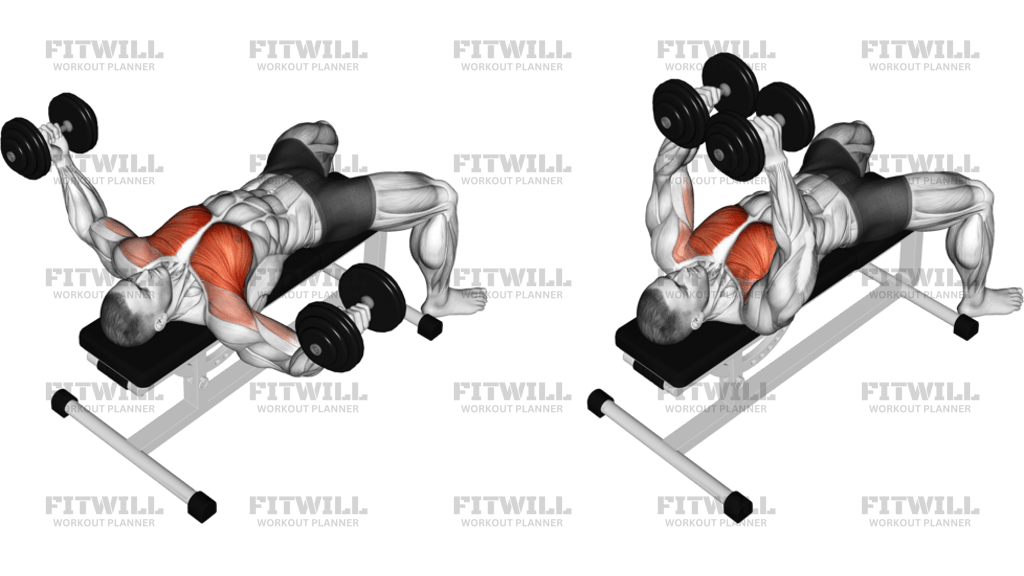
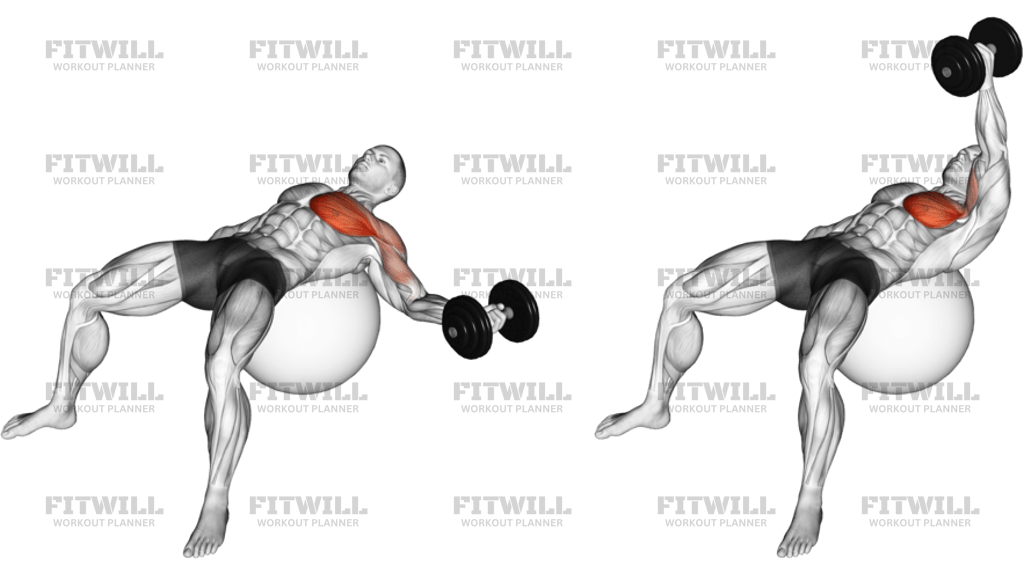
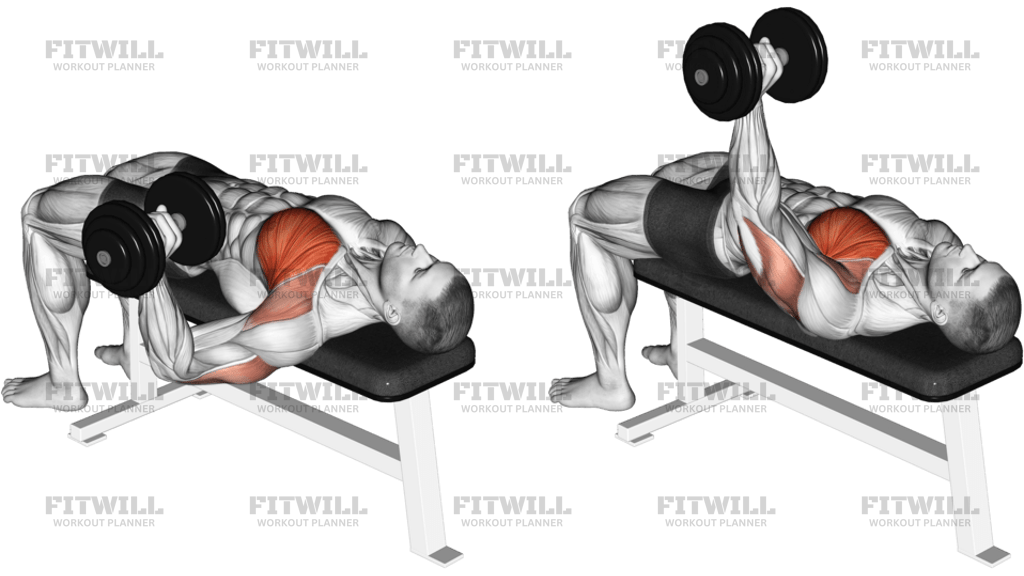
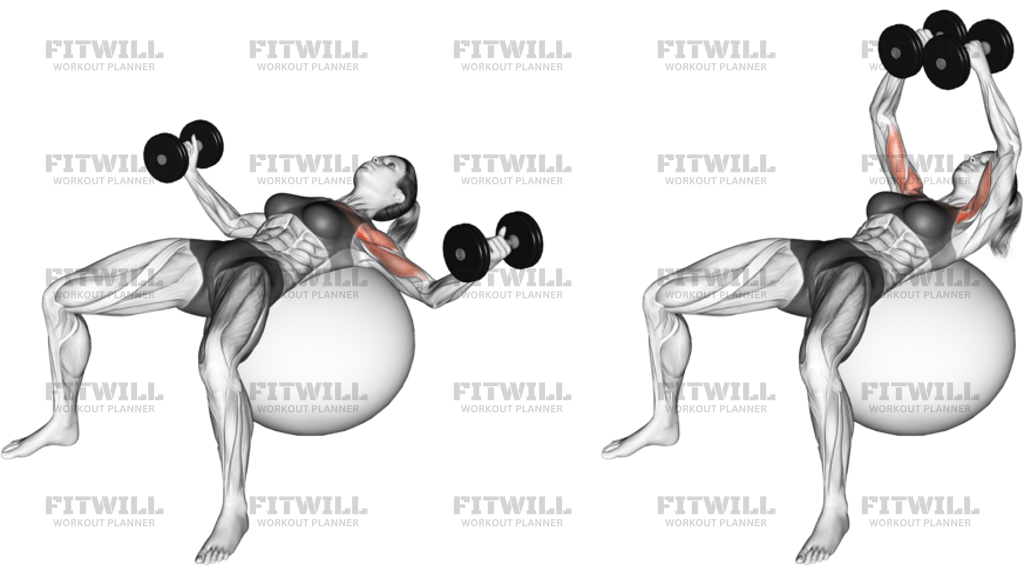
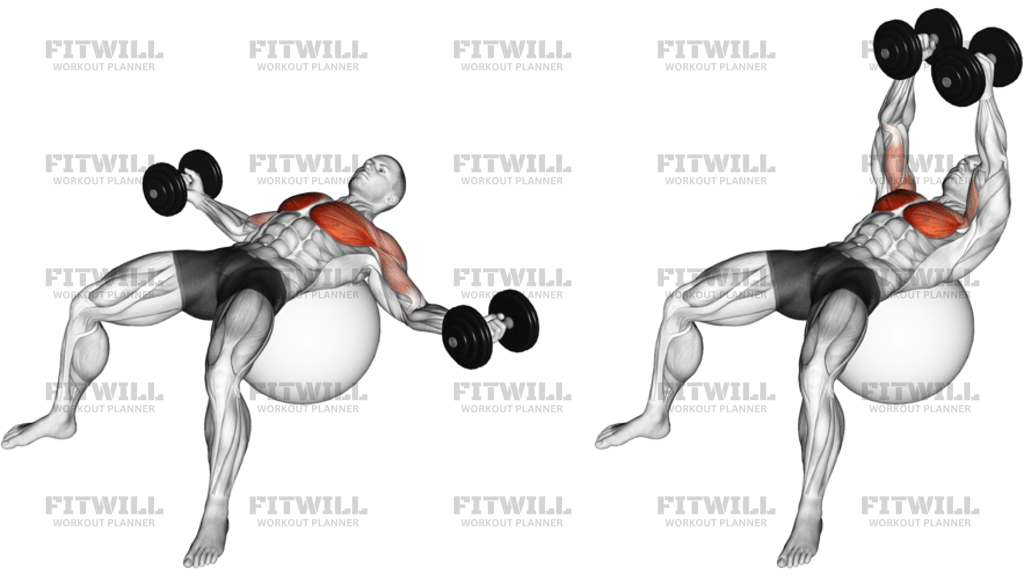
Dumbbell Fly On Exercise Ball is a chest-focused isolation exercise that uses the stability ball to add balance demand while the arms move through a wide fly path. The chest does most of the work, with the front shoulders, triceps, and core helping stabilize the shoulders and torso. Compared with a flat-bench fly, the ball asks for a steadier setup and a lighter load because your upper back has less fixed support.
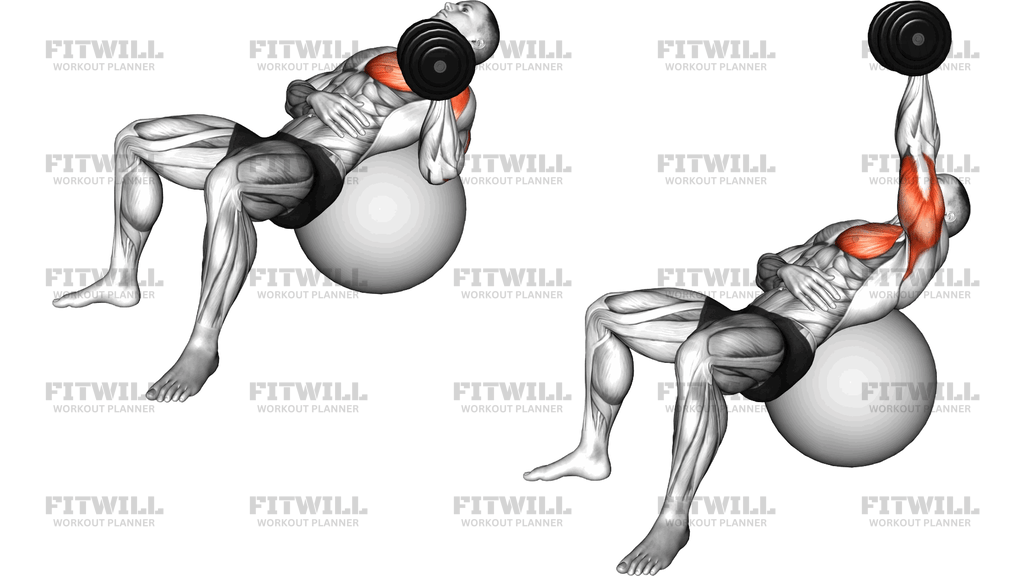
The setup matters more here than on a bench. Place the ball under your upper back and shoulders, plant both feet firmly, and keep the hips lifted only as much as needed to stay balanced. Hold the dumbbells over the middle of the chest with a soft bend in the elbows and wrists stacked over the handles. If the feet are too close or the ball sits too high on the back, the position becomes unstable before the first rep starts.
Each rep should feel like a long arc instead of a pressing motion. Lower the dumbbells out to the sides until you feel a strong chest stretch without the shoulders rolling forward, then sweep the weights back together above the chest. Keep the elbow angle nearly fixed so the movement comes from the shoulder joint, not from turning it into a mini press. Exhale as the dumbbells come together and control the return so the chest stays under tension the whole time.
Dumbbell Fly On Exercise Ball is useful when you want chest isolation plus trunk control in the same movement. It fits well after presses, during hypertrophy work, or as a lighter accessory on days when you want to train the pecs without chasing maximal load. Because the ball adds instability, the exercise rewards precision, tempo, and clean repetition quality more than heavy weights.
Use a smaller range if the shoulders feel pinched or if the ball shifts under you. A short, controlled fly with stable feet is better than a deep stretch that pulls the shoulders forward or causes the lower back to arch. When the setup is right, Dumbbell Fly On Exercise Ball should feel smooth through the chest with the torso steady and the weights returning to the same path every rep.
[ Workout Log & Planner ]
Put your next workout in Fitwill
Keep your plan and training log ready when you are.


Instructions
- Sit with the dumbbells on your thighs, then walk your upper back onto the exercise ball until it sits under your shoulder blades and upper back.
- Plant your feet wider than hip-width and roll until your knees are bent and your hips stay lifted and steady.
- Press the dumbbells above the middle of your chest with palms facing each other and a soft bend in the elbows.
- Set your ribs down and keep your shoulder blades gently back and down before the first rep.
- Lower both arms out in a wide arc until the dumbbells are level with or slightly below your chest.
- Stop the descent before your shoulders roll forward or the ball shifts under you.
- Sweep the dumbbells back together over your chest while keeping the same elbow angle.
- Squeeze the chest at the top, then lower again with the same controlled path and reset the dumbbells safely after the final rep.
Tips & Tricks
- Use much lighter dumbbells than you would on a flat bench because the ball removes a lot of support.
- Keep your feet wide enough that the ball does not drift as the arms open.
- Hold the elbow bend nearly constant so the set stays a fly instead of turning into a press.
- Stop the lowering phase when the upper arms line up with the torso if the shoulders feel stretched or pinched.
- Think about hugging a large barrel rather than pushing the weights straight up.
- Keep the dumbbells over the chest line instead of letting them drift behind the shoulders.
- If the ball wobbles, widen your stance before cutting the range of motion.
- Exhale as the dumbbells come together and inhale as you open them back out.
Frequently Asked Questions
What muscles does Dumbbell Fly On Exercise Ball work most?
The chest is the primary target, with the front shoulders, triceps, and core helping stabilize the movement.
Why use an exercise ball for Dumbbell Fly On Exercise Ball instead of a bench?
The ball adds instability, so you train chest isolation while also challenging balance and trunk control. That also means you should use lighter weights than on a flat bench.
How low should the dumbbells go on Dumbbell Fly On Exercise Ball?
Lower only until you feel a controlled chest stretch and the shoulders stay packed. If the upper arms drop far below the torso or the shoulders roll forward, shorten the range.
Should my elbows stay bent during Dumbbell Fly On Exercise Ball?
Yes. Keep a slight bend that stays almost the same from start to finish so the movement stays a fly instead of becoming a press.
Is Dumbbell Fly On Exercise Ball good for beginners?
Yes, if you start very light and keep your feet wide for stability. Beginners should learn the shallow, controlled version before chasing a deeper stretch.
What if the ball feels unstable during Dumbbell Fly On Exercise Ball?
Widen your stance and reduce the dumbbell load first. If the ball still rolls, your upper back is too high on the ball or the feet are too close together.
What are the most common mistakes with Dumbbell Fly On Exercise Ball?
Letting the dumbbells drift behind the shoulders, turning the fly into a press, and arching the lower back to fake a bigger range are the big ones.
When should I put Dumbbell Fly On Exercise Ball in a workout?
Use it after your main pressing work or as an accessory chest movement. It is better for controlled hypertrophy work than for maximal strength attempts.