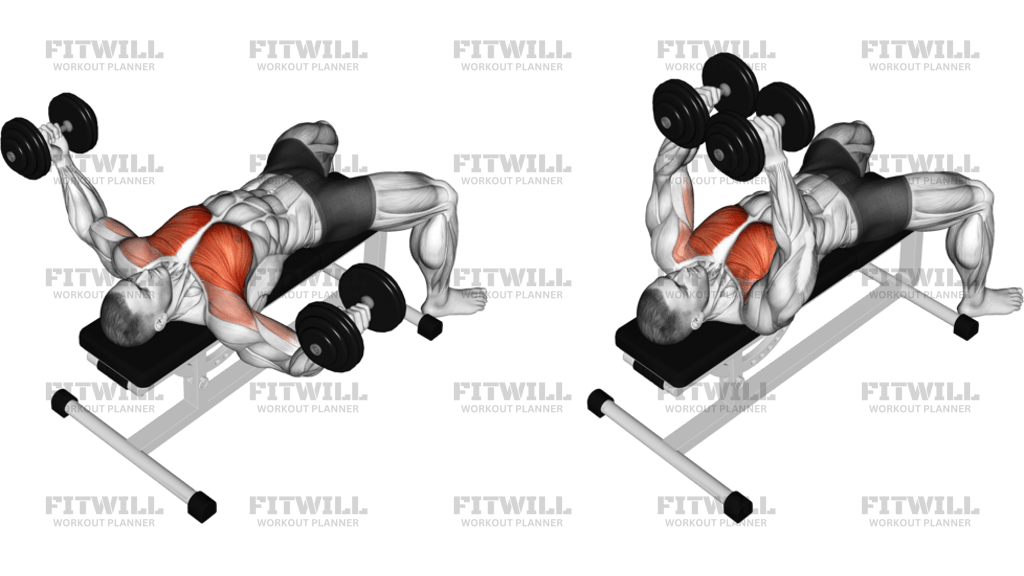
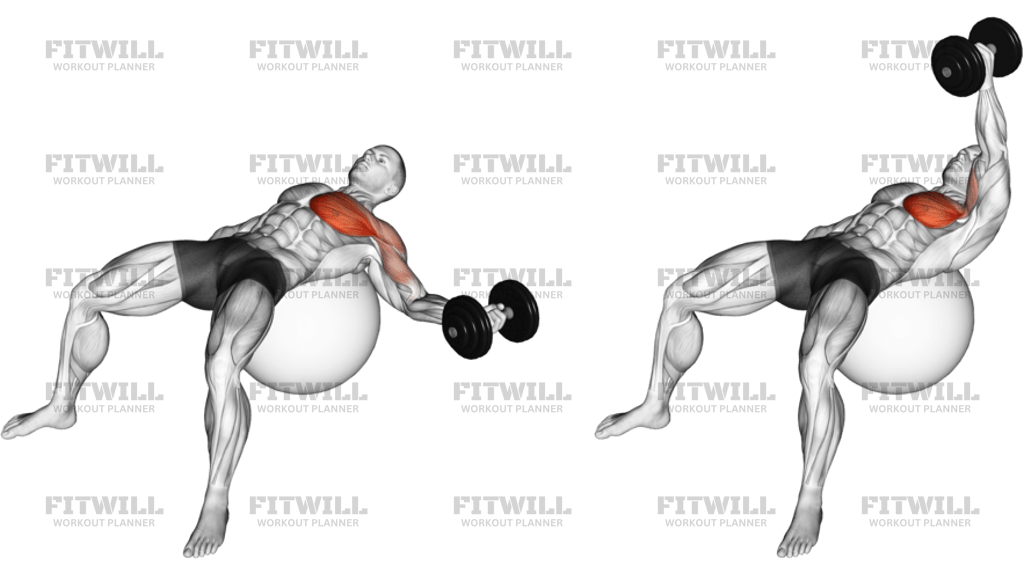
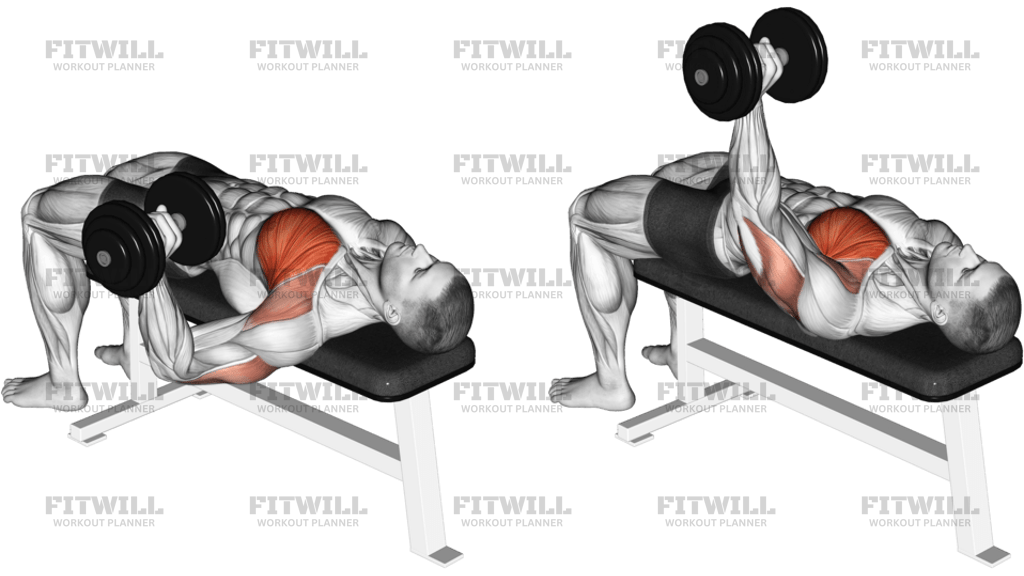
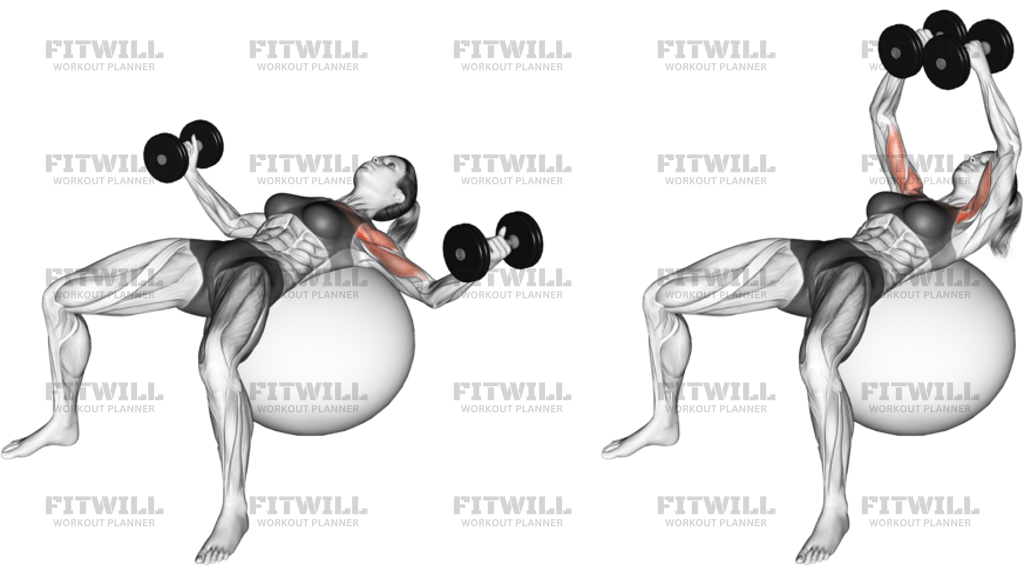
Dumbbell Incline Press On Exercise Ball
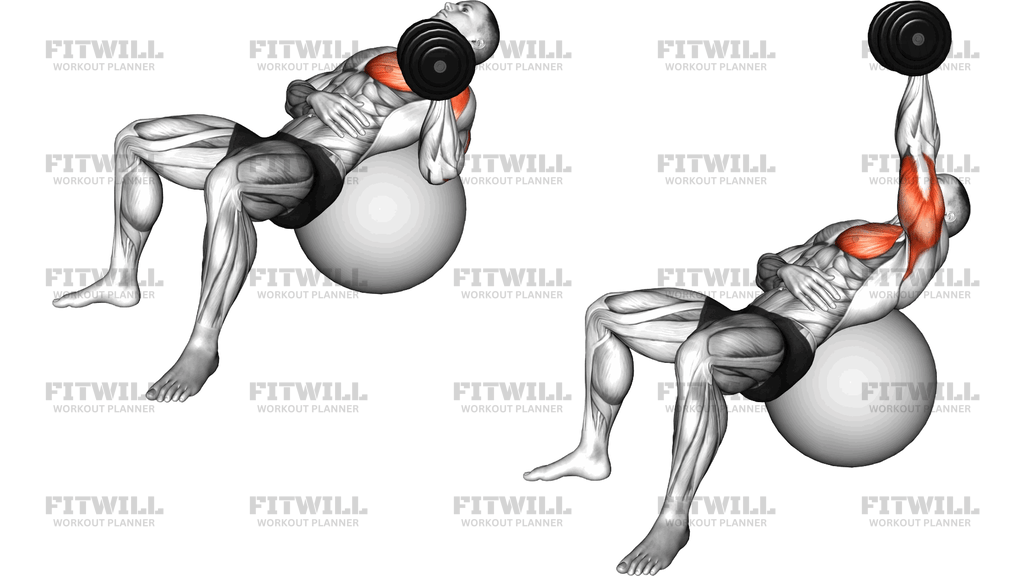
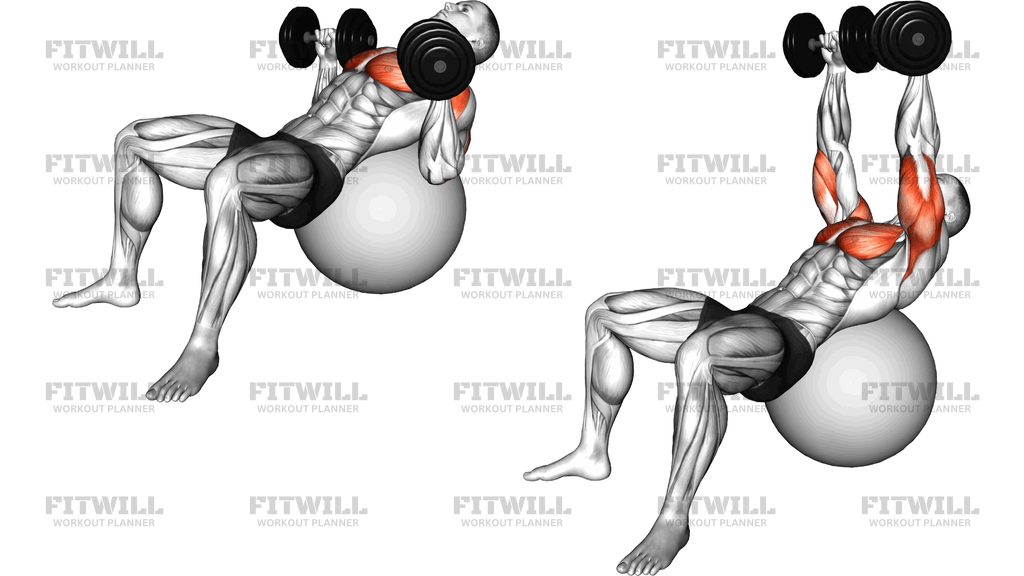
Dumbbell Incline Press On Exercise Ball is a chest-focused pressing exercise that uses the ball to create an unstable incline position under the upper back. It trains the pecs, front shoulders, and triceps while also asking the core and glutes to keep the torso from drifting or arching as the dumbbells move.
The exercise works best when the ball is placed so the shoulder blades and mid-back are supported and the feet can stay planted wide enough to keep the ball steady. That setup changes the whole rep: instead of simply lying on a bench, you have to organize the body first, then press without letting the ball roll or the ribs flare up.
Because the movement is done on a stability ball, the load usually needs to be lighter than a flat or incline bench press. The goal is not just to move the dumbbells, but to keep the dumbbells stacked over the upper chest and shoulders while the torso stays braced and the wrists, elbows, and shoulders travel in a clean pressing line.
A good repetition starts with the dumbbells near the chest, elbows slightly tucked, and shoulder blades set back and down against the ball. Press the weights upward in a controlled arc until the arms are extended without locking aggressively, then lower them slowly until the upper arms come back just below parallel or to a comfortable chest stretch.
This exercise is useful for upper-body strength work, accessory chest volume, and core-stability demands within the same set. It also gives a clear feedback loop: if the ball shifts, the feet are too narrow, the rib cage is overextended, or the dumbbells are too heavy. Clean execution should feel steady, smooth, and repeatable from the first rep to the last.
Use it when you want pressing volume with extra stability demand, but keep the range pain-free and the setup strict. If the shoulders feel pinched, shorten the lower phase, reduce the load, or switch to a more stable incline press until the pattern feels solid.
[ Workout Log & Planner ]
Put your next workout in Fitwill
Keep your plan and training log ready when you are.


Instructions
- Sit on the floor with a dumbbell in each hand and roll onto the exercise ball until your upper back and shoulder blades are supported on it.
- Walk your feet forward or back until your knees are bent, your feet are planted wide enough to stabilize the ball, and your torso is slightly inclined.
- Bring the dumbbells to chest level with your palms facing forward or slightly turned in, and tuck your elbows about 30 to 45 degrees from your sides.
- Set your ribs down, tighten your midsection, and keep your hips level so the ball stays steady before the first rep.
- Press both dumbbells upward in a smooth arc until they finish above the upper chest and shoulders.
- Keep the wrists stacked over the elbows as you press, and avoid letting the weights drift forward toward your face.
- Lower the dumbbells slowly until the upper arms are just below parallel or until you feel a comfortable chest stretch.
- Exhale as you press and inhale as you lower, keeping the torso braced through every rep.
- Reset your feet and shoulder position if the ball shifts, then continue for the planned number of repetitions.
Tips & Tricks
- Keep your feet wider than hip width if the ball feels unstable; a narrow stance makes the press wobble fast.
- Set the ball under the shoulder blades, not the neck, so the chest can press without cranking the cervical spine.
- Choose lighter dumbbells than you would use on a bench, because the ball adds balance demand to every rep.
- Stop the lowering phase before the elbows drop so far that the shoulders roll forward or pinch.
- Keep the ribs from flaring up at the top; the goal is a strong press, not a big low-back arch.
- A slight inward turn of the dumbbells can feel better on the shoulders if the straight-palmed position feels cramped.
- Move the weights in a controlled arc so they finish over the upper chest, not out toward the forehead.
- If the ball slides under you, fix the setup before the next rep instead of trying to save the set with momentum.
Frequently Asked Questions
What muscle does Dumbbell Incline Press On Exercise Ball target most?
The main emphasis is on the chest, especially the upper and mid pecs, with help from the front shoulders and triceps.
Why use an exercise ball instead of a bench?
The ball adds instability and core demand, so you have to control your torso and pressing path more carefully than on a bench.
How do I keep the ball from rolling during the press?
Plant your feet wider, keep your hips level, and make sure the ball sits under your upper back before you start pressing.
Should my elbows flare out wide?
No. Keep them slightly tucked so the shoulders stay stacked and the press feels smoother on the joints.
How low should I lower the dumbbells?
Lower until the upper arms are just below parallel or until you feel a comfortable stretch without losing shoulder position.
Can I use a neutral grip?
Yes. A slightly turned-in grip often feels better if a fully pronated grip bothers the shoulders.
Is this harder than a regular incline dumbbell press?
Usually yes, because the ball forces you to stabilize your torso while you press.
What should I do if my lower back arches too much?
Reduce the load, keep your ribs down, and reset your feet so your hips stay level on the ball.