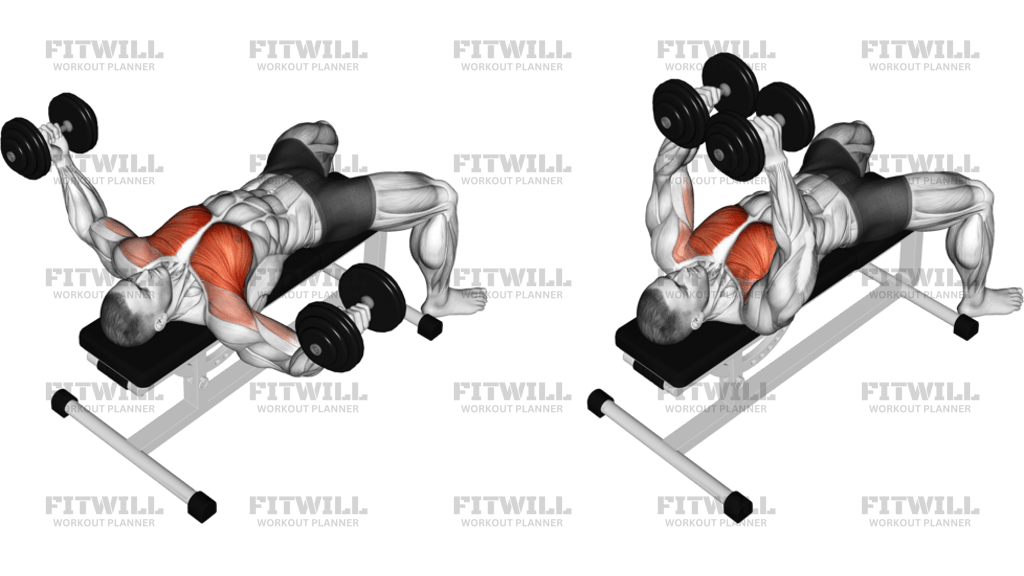
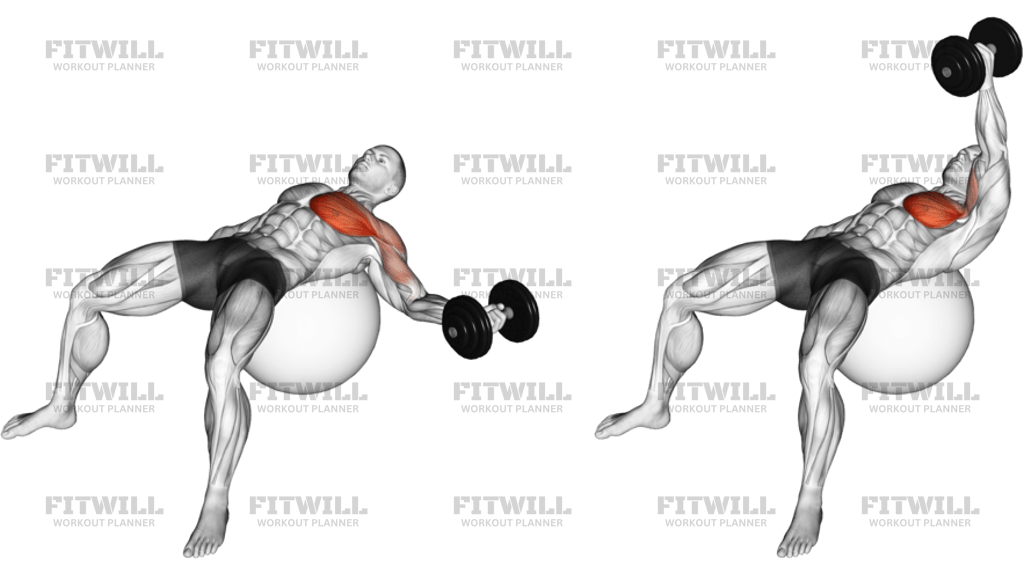
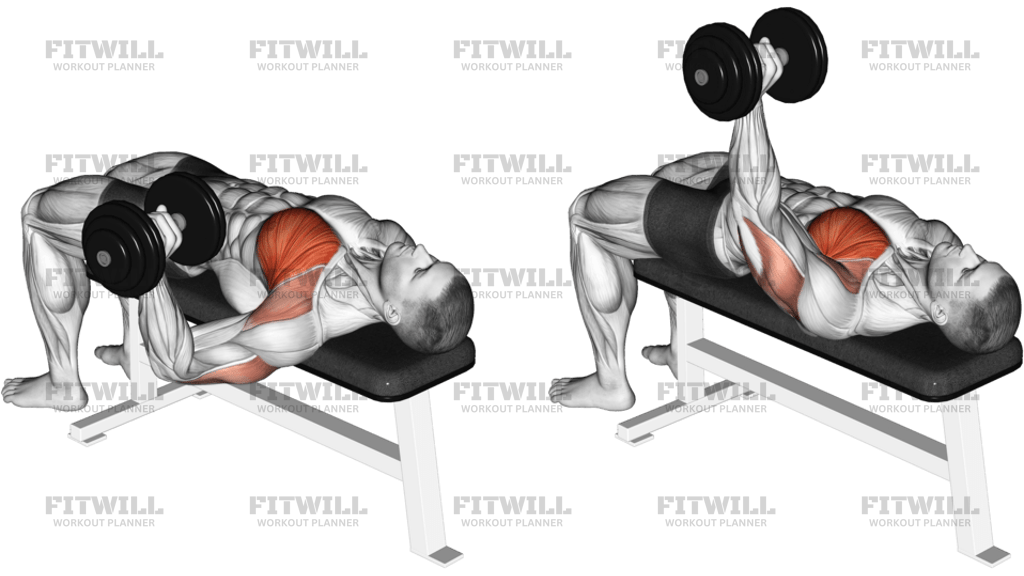
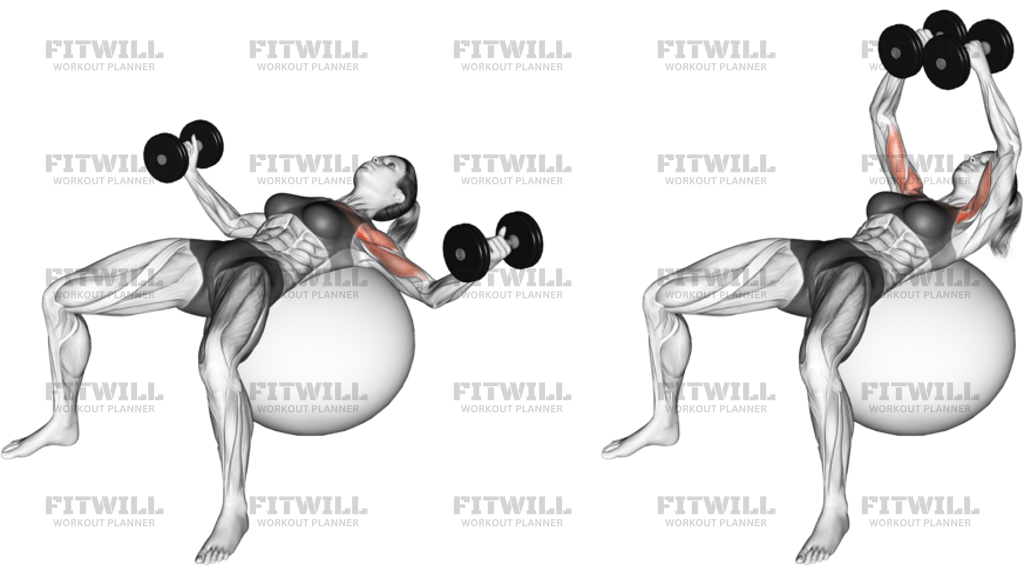
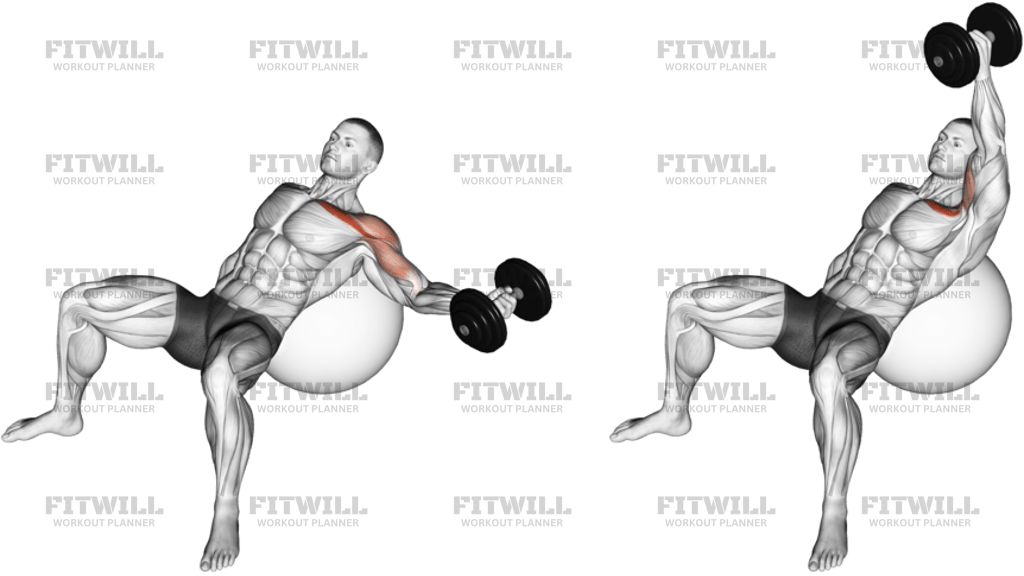
Dumbbell Lying Pullover On Exercise Ball
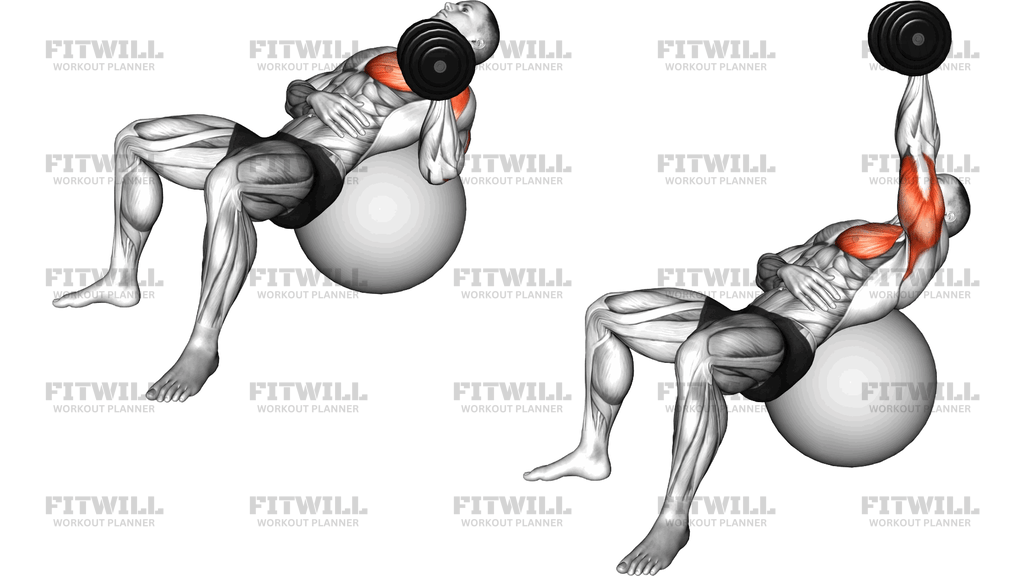
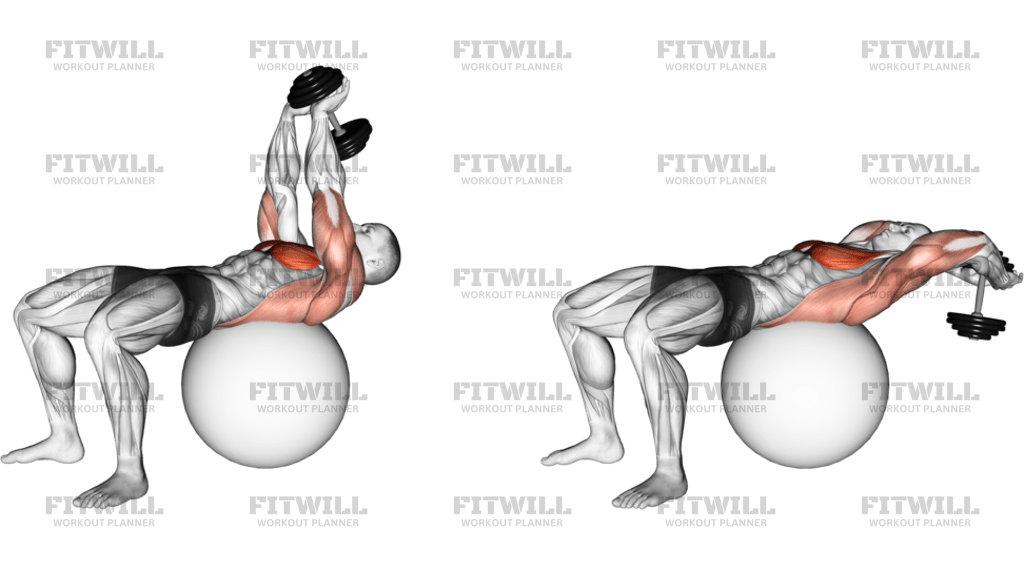
Dumbbell Lying Pullover On Exercise Ball is a stability-ball pullover variation that places the upper back and shoulders on the ball while the feet stay planted on the floor. In the setup shown here, the hips are lifted in a bridge so the torso stays long and the dumbbell can travel in a clean arc without turning the movement into a loose shoulder swing. That position makes the exercise part strength work and part trunk control, because the ball demands balance while the arms create the loading pattern.
The main action is a controlled overhead-to-chest arc. From the stacked position above the chest, the dumbbell lowers behind the head until the shoulders open without the rib cage flaring or the ball shifting, then it returns to the start by following the same path. The movement trains the chest, shoulders, triceps, and core as stabilizers, with the Pectoralis major as the primary muscle listed for this exercise.
The stability ball changes the feel of the pullover compared with a bench version. The upper back has a smaller base of support, so the head, upper back, glutes, and feet all have to stay organized while the dumbbell moves. That is why the setup matters: if the ball is too far under the lower back, the hips drop; if it is too far toward the head, the shoulders lose room to move. A solid rep starts with the body braced and ends with the dumbbell back over the chest, not drifting forward or bouncing out of the bottom.
Use a lighter load than you would for a flat-bench pullover and keep the elbows softly bent without changing that angle during the set. The stretch should come from the shoulder and rib position, not from collapsing the lower back or flinging the weight overhead. If the ball rolls, the neck strains, or the lower back arches hard enough to take over, shorten the range and slow the eccentric phase.
This exercise works well as accessory chest work, a controlled upper-body strength drill, or a core-stability movement in a full-body session. It is especially useful when you want to train the pullover pattern with a little more balance demand than a bench provides. The best reps look smooth, symmetrical, and deliberate from the first lowering phase to the final return.
[ Workout Log & Planner ]
Put your next workout in Fitwill
Keep your plan and training log ready when you are.


Instructions
- Sit on the floor with an exercise ball behind you, then roll down until your upper back and shoulders are supported and your feet are flat on the floor.
- Lift your hips into a bridge so your torso stays long and the ball sits under your upper back rather than your low back.
- Hold one dumbbell above your chest with both hands and keep a soft bend in your elbows before you start the rep.
- Brace your ribs down and set your neck so your head stays relaxed on the ball.
- Lower the dumbbell in a smooth arc back behind your head until your upper arms reach a comfortable stretch without losing shoulder control.
- Keep your elbows in the same slightly bent position as the weight travels, and do not turn the movement into a triceps extension.
- Pause briefly at the bottom only if you can stay balanced and keep the dumbbell under control.
- Pull the dumbbell back over your chest along the same arc while keeping your hips lifted and your torso steady.
- Exhale as the weight comes back to the start, then repeat for the planned reps before carefully lowering your hips and sitting up.
Tips & Tricks
- Keep your feet wider if the ball feels unstable, especially when you first lift into the bridge position.
- Use a dumbbell that lets you control the bottom stretch without your elbows collapsing or your shoulders shrugging.
- Do not let the dumbbell drift so far behind your head that your ribs flare and your lower back takes over the rep.
- A slight elbow bend should stay almost fixed from the top to the bottom; changing that angle turns the exercise into something else.
- Think about moving the weight in a long arc rather than dropping it straight back and yanking it up again.
- If the ball slides under you, move it farther under the upper back or reduce the range until your balance improves.
- Keep your glutes engaged in the bridge so the hips do not sag when the dumbbell gets heavy.
- A slower lowering phase usually improves the stretch and helps the shoulders stay centered on the ball.
- Stop the set when your neck starts to crane forward or the dumbbell no longer returns to the same path.
- For chest emphasis, keep the dumbbell centered over the sternum on the return instead of finishing high over the face.
Frequently Asked Questions
What does the dumbbell lying pullover on an exercise ball train most?
It mainly trains the chest as the listed primary muscle, while the shoulders, triceps, and core help stabilize the ball and control the overhead arc.
Why is the upper back placed on the exercise ball?
The ball gives you room to lower the dumbbell behind the head while also adding instability, so the trunk and hips have to stay organized through the rep.
Should my hips stay up during this pullover?
Yes, the bridge position in the image helps keep the torso long and prevents the lower back from taking over when the dumbbell moves overhead.
How far should I lower the dumbbell?
Lower it only until you feel a controlled stretch through the shoulders and chest without the ribs flaring or the ball shifting under you.
Do I keep my elbows straight the whole time?
No. Keep a soft bend in the elbows and hold that angle steady so the pullover stays a pullover instead of becoming a press or extension.
What is a common mistake with the ball version?
A common mistake is letting the ball roll or the hips sag as the weight goes behind the head, which usually means the load is too heavy or the setup is too unstable.
Is one dumbbell or two dumbbells better for this exercise?
This version is usually done with one dumbbell held with both hands, because that makes the arc easier to control and keeps the load centered over the chest.
Can beginners use this movement?
Yes, but beginners should start light, limit the range to a controlled stretch, and make sure they can hold the bridge position without wobbling.
Where should I feel the rep?
You should feel the chest and upper torso working, with support from the shoulders and triceps; if the front of the shoulders or lower back take over, the range or load is too aggressive.