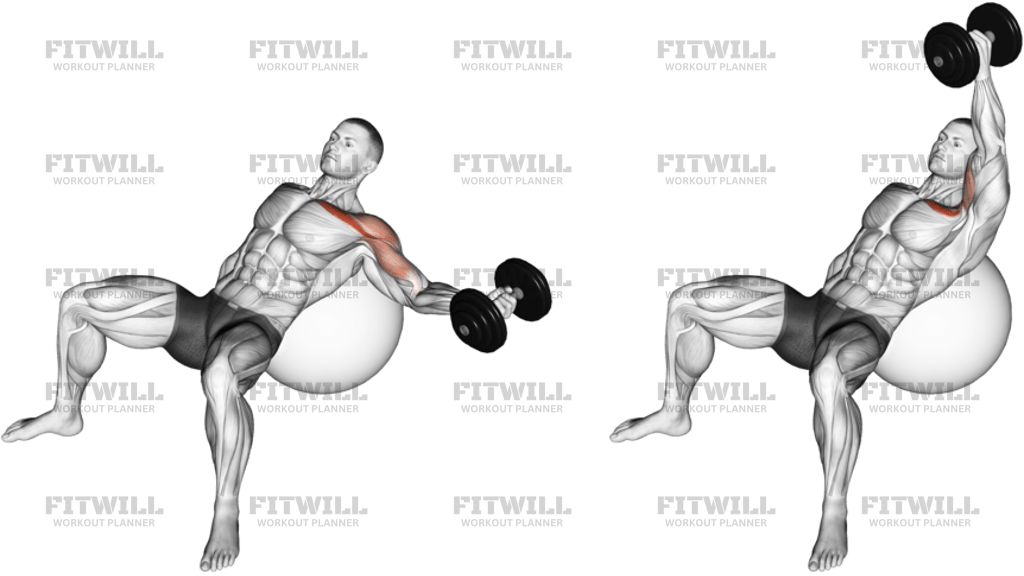
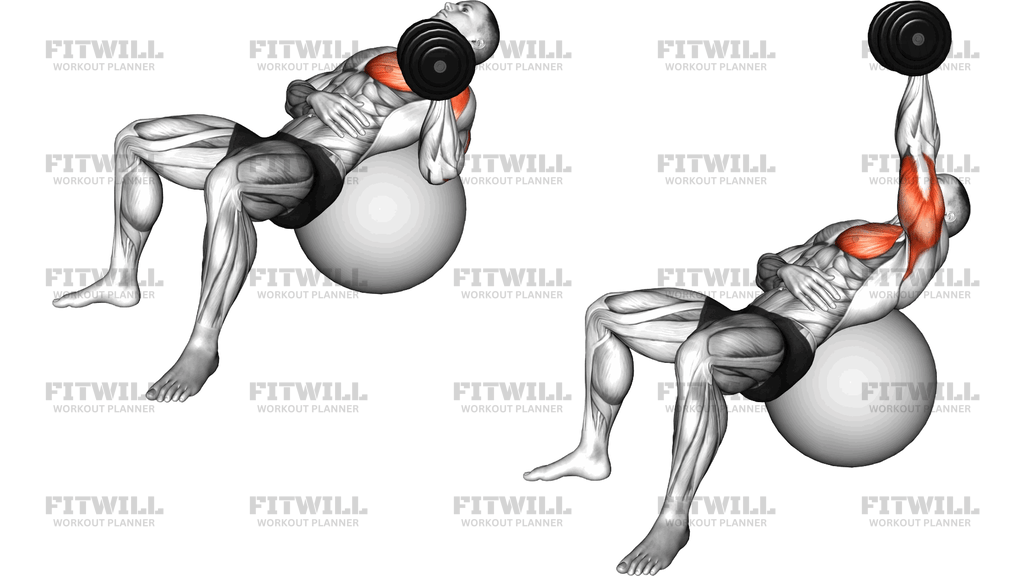
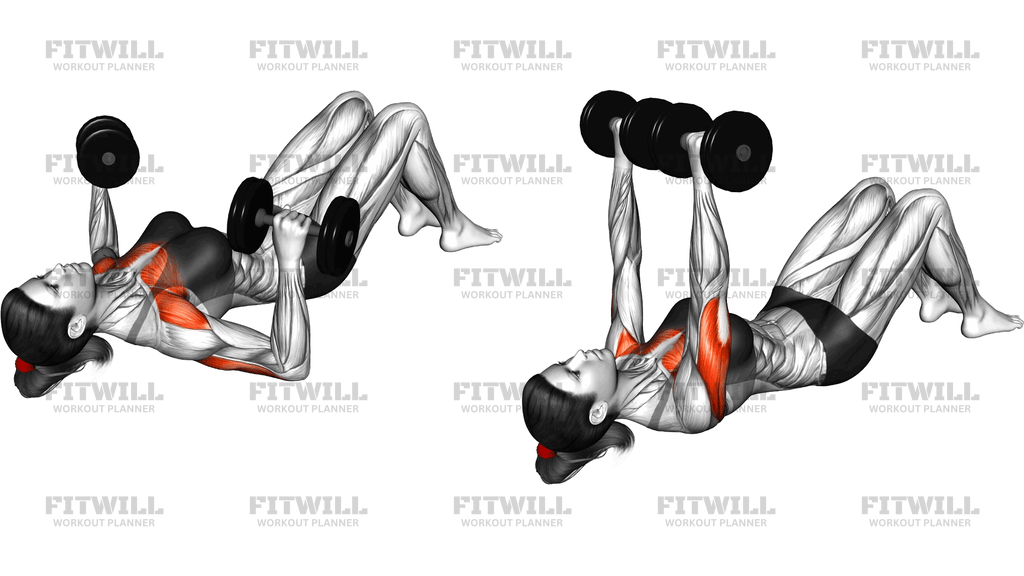
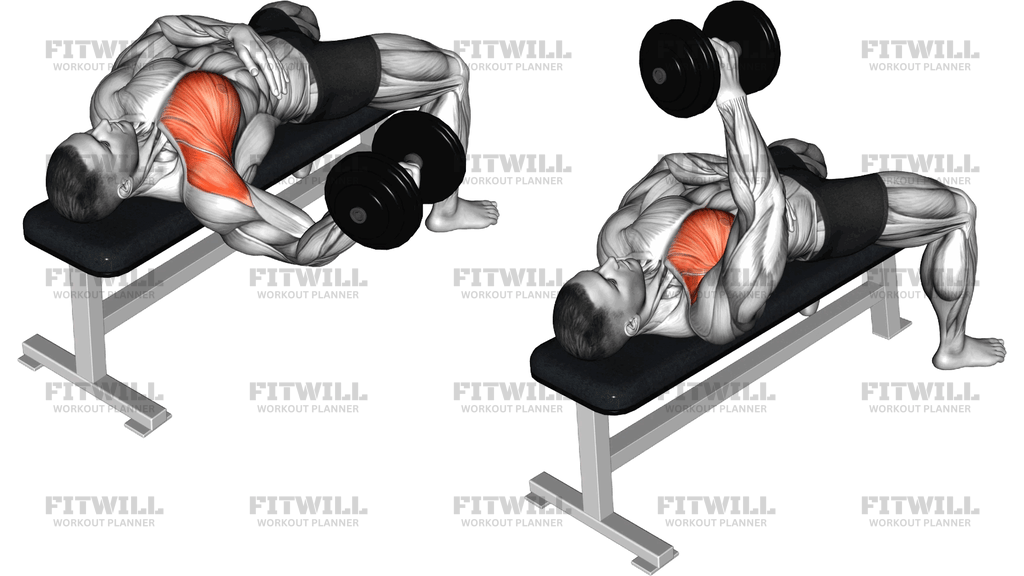
Dumbbell One-Arm Incline Chest Press
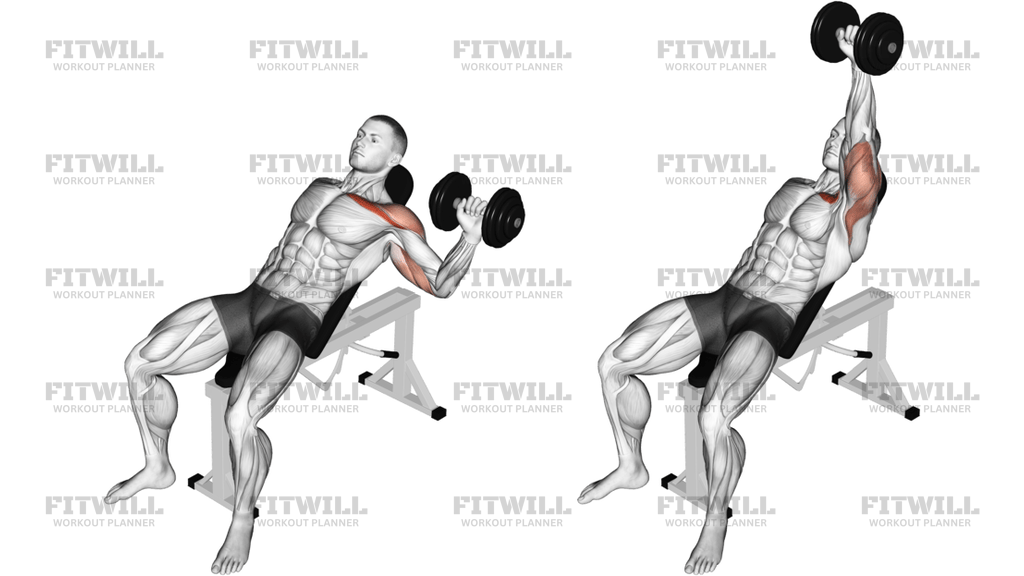
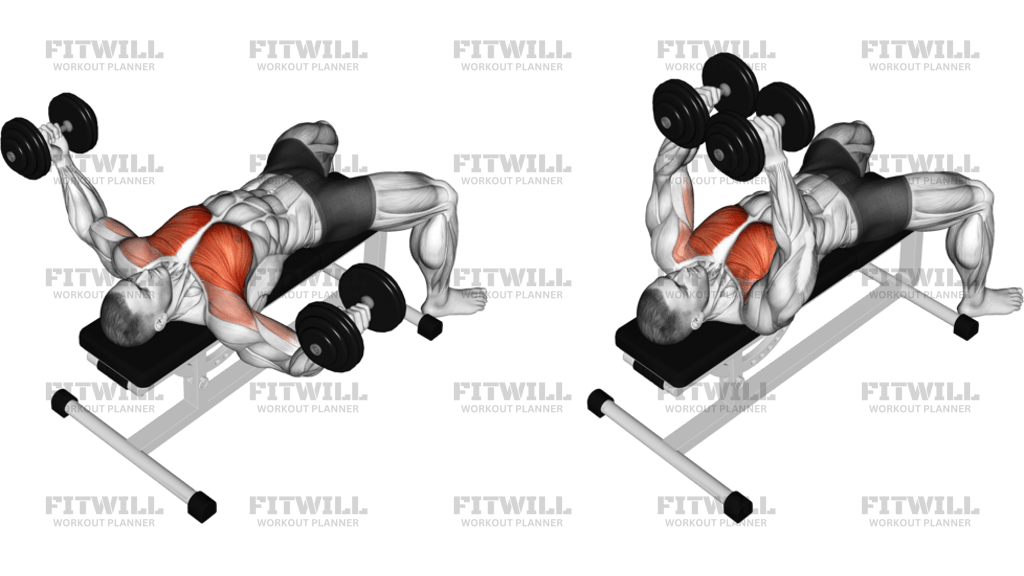
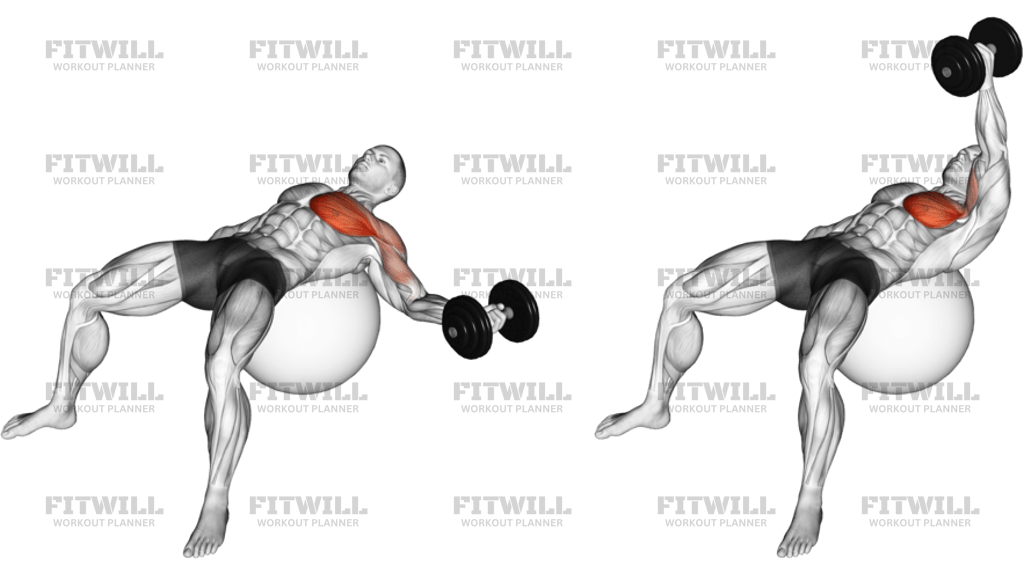
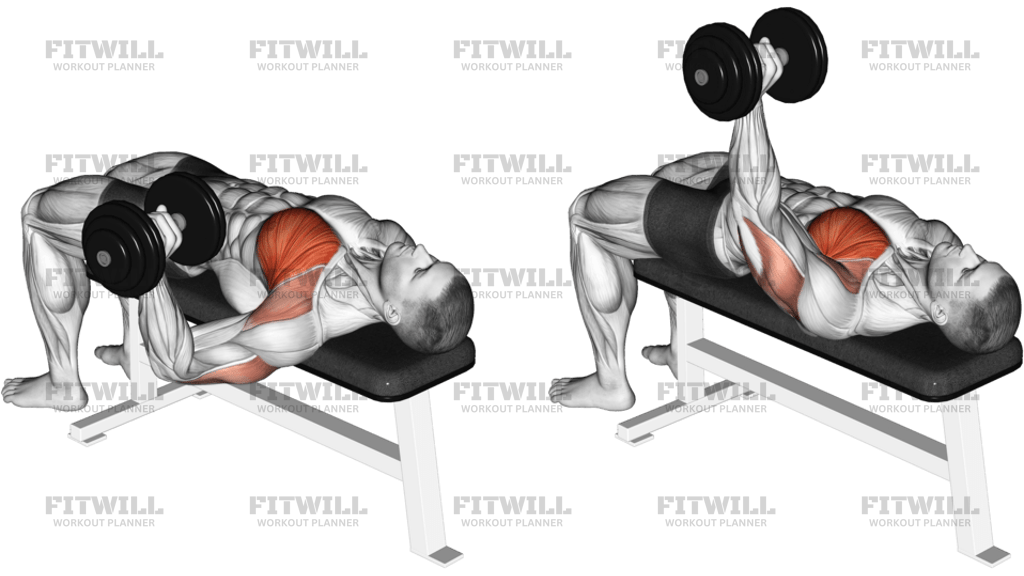
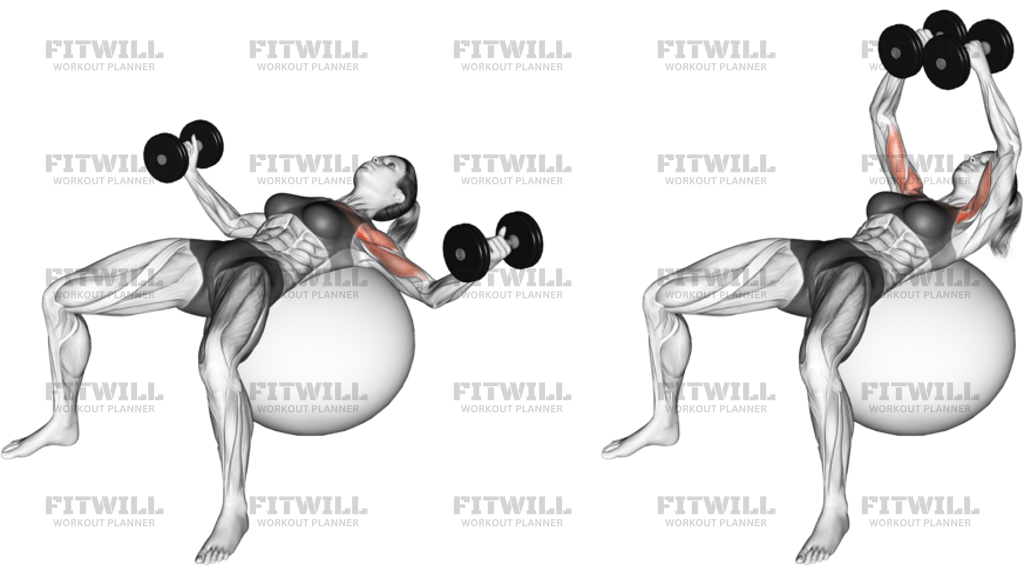
Dumbbell One-Arm Incline Chest Press is a unilateral pressing exercise that combines an inclined bench position with one-sided dumbbell work to load the upper chest, front shoulder, and triceps while challenging the torso to stay square. Because only one arm is pressing at a time, the exercise also asks the core and hip position to resist rotation, which makes it useful for building strength that carries over to more demanding pressing patterns.
The incline angle shifts the line of force toward the upper portion of the chest instead of the lower or mid-chest. In practical terms, that means the dumbbell should travel from shoulder level in a smooth arc up and slightly back, not straight forward like a machine press and not so high that the movement turns into an overhead shoulder press. The pictured setup shows the lifter supported on the bench with both feet planted, which is important for keeping the rib cage and pelvis steady while the working side does the press.
Setup quality matters a lot here. Lower the bench to a low or moderate incline, sit with the dumbbell on the working-side thigh, then lean back and guide the weight to shoulder level before starting the first rep. Keep the shoulder blade set, the wrist stacked over the elbow, and the free side quiet so the body does not roll toward the pressing arm. If the bench is too steep or the load is too heavy, the exercise quickly shifts away from the chest and becomes a strained shoulder movement.
Each repetition should feel deliberate: lower under control until the upper arm reaches a comfortable deep position near chest level, then press up and slightly back to full extension without bouncing or twisting. The working elbow should stay under the dumbbell, and the nonworking side should remain grounded so the torso does not rotate to help the press. Exhale through the press, inhale on the lowering phase, and keep the ribs from flaring as the dumbbell moves.
This is a strong accessory choice for upper-chest development, unilateral strength work, and correcting side-to-side differences in pressing control. It fits well after heavier bilateral presses, or as a focused accessory when you want a controlled contraction with less overall spinal loading than standing work. Beginners can use it if they keep the bench angle modest and the load light enough to control the path, but anyone with shoulder discomfort should shorten the range and avoid forcing the elbow below a pain-free line.
Fitwill
Log Workouts, Track Progress & Build Strength.
Achieve more with Fitwill: explore over 9600 exercises with images and videos, access built-in and custom workouts, perfect for both gym and home sessions, and see real results.
Start your journey. Download today!




Instructions
- Set a low to moderate incline bench and sit with the dumbbell resting on the thigh of the working side.
- Plant both feet firmly on the floor, then lean back and guide the dumbbell to shoulder level with your wrist stacked over your elbow.
- Keep the free hand quiet on the torso or bench, and set your shoulder blade down and back before the first rep.
- Brace your midsection so your ribs stay down and your torso does not roll toward the pressing arm.
- Lower the dumbbell in a controlled arc toward the outer chest until the upper arm reaches a comfortable deep position just below the torso line.
- Press the dumbbell up and slightly back along the same arc until the elbow is straight but not violently locked out.
- Exhale as you press and inhale as you lower, keeping the forearm vertical and the wrist aligned.
- Complete all reps on one side with the same tempo and range before switching to the other arm.
Tips & Tricks
- Keep the bench angle modest; a steep incline turns this into more of a shoulder press.
- Use the free hand only for balance, not to help drive the dumbbell upward.
- If your torso twists, widen your foot stance or reduce the load before chasing more reps.
- Let the elbow travel slightly out from the ribs, but do not flare it so wide that the shoulder pinches.
- Lower the dumbbell more slowly than you press it to keep tension on the chest.
- Stack the wrist over the elbow so the dumbbell does not drift behind the hand at the bottom.
- Stop the descent when the shoulder starts to roll forward or the front of the joint feels strained.
- Match the rep count and range on both sides, starting with the weaker side if one arm lags behind.
- Choose a load that lets you finish every rep without bouncing off the bottom or rotating the rib cage.
Frequently Asked Questions
What muscles does Dumbbell One-Arm Incline Chest Press work most?
The main work goes to the upper chest, with the front shoulder and triceps helping finish the press. The core also has to resist rotation so the torso stays square on the bench.
Why use a one-arm incline press instead of both arms together?
Pressing one arm at a time makes it easier to notice side-to-side differences in strength and control. It also adds an anti-rotation challenge that both the core and hips have to manage.
How high should the bench be for this press?
A low to moderate incline is usually the best choice. If the bench is too steep, the front shoulder takes over and the chest contribution drops.
Can beginners do this exercise safely?
Yes, as long as the bench angle stays modest and the load is light enough to keep the torso from rotating. A shorter range of motion is fine if the shoulder feels better that way.
What is the most common form mistake?
The biggest mistake is twisting the rib cage toward the pressing arm or flaring the elbow too much. Both usually mean the load is too heavy or the setup is not stable enough.
How low should I lower the dumbbell?
Lower until the upper arm reaches a deep but pain-free position near chest level. If the shoulder starts to roll forward or pinch, shorten the descent.
Should my palm face forward or inward?
Either a forward or semi-neutral grip can work, but a slightly turned-in grip is often easier on the shoulder. Use the position that lets you keep the wrist stacked and the path smooth.
Where does this fit in a workout?
It works well as accessory upper-chest work after a heavier press, or as a unilateral strength exercise when you want more control than a bilateral lift.