Dumbbell One-Arm Press On Exercise Ball
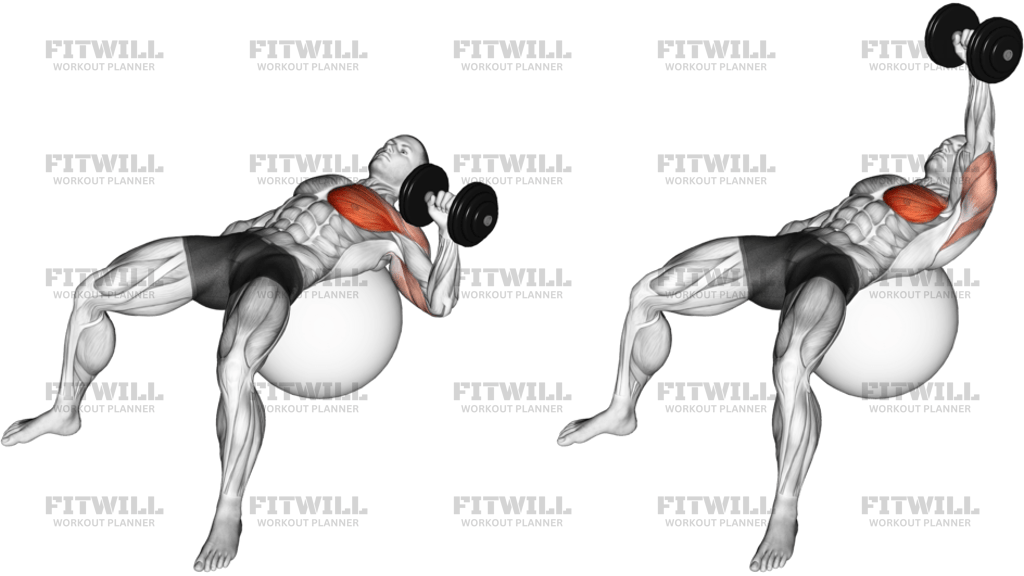
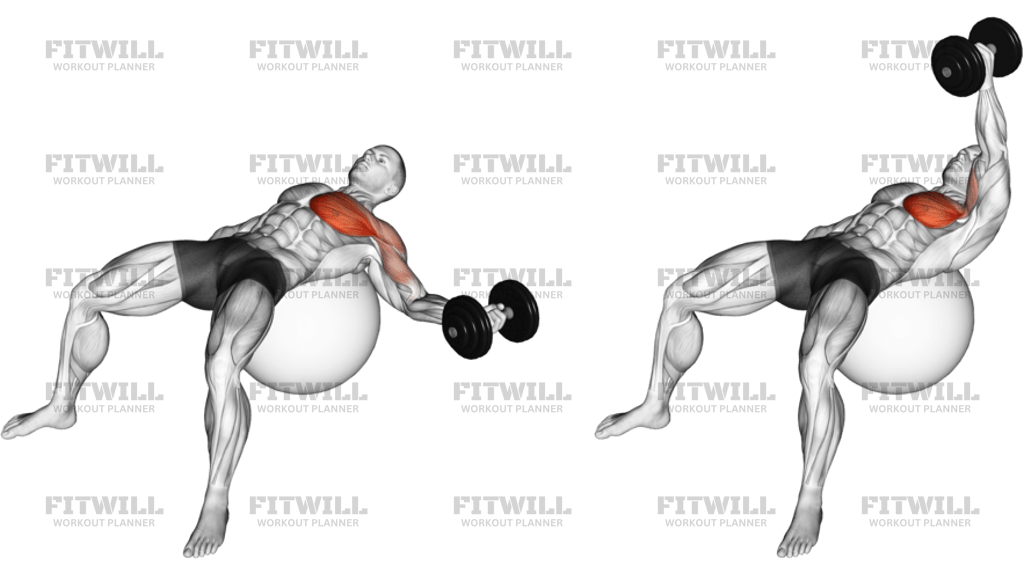
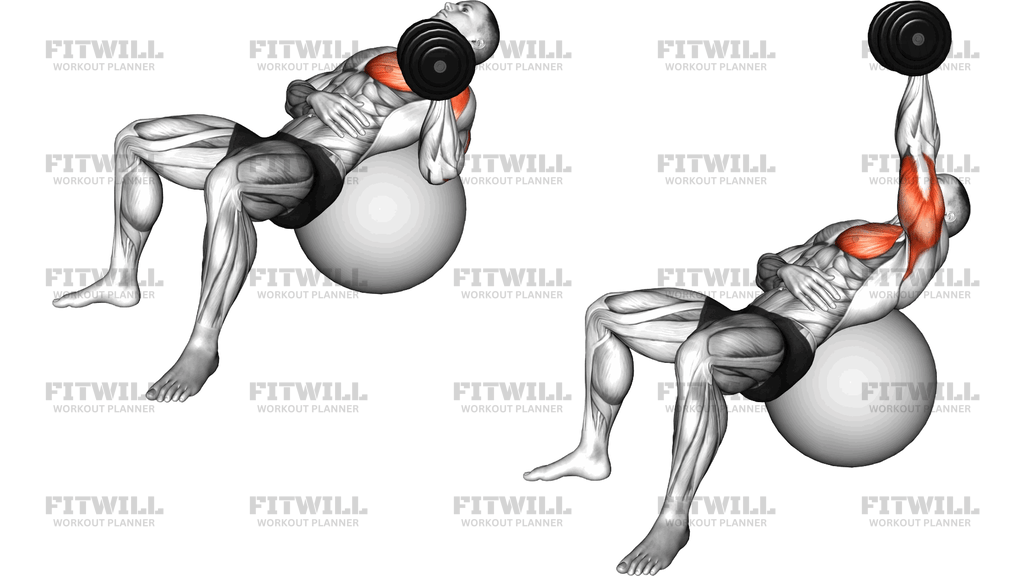
Dumbbell One-Arm Press On Exercise Ball is a unilateral chest press that places your upper back on an exercise ball while one arm drives a dumbbell from chest level to full extension. The setup looks simple, but the ball turns it into a much stricter test of body control because you have to press without letting your ribs flare, hips sag, or torso twist. That makes it useful for lifters who want chest work with a little extra demand on stability and shoulder control.
The main mover is the chest, with the front shoulder and triceps assisting through the press. The ball also asks the abs, obliques, and glutes to keep the torso level, so the exercise rewards clean positioning more than brute force. If the dumbbell is too heavy, the body usually shows it quickly by shifting across the ball, arching the low back, or losing a steady wrist path.
A good setup starts with the upper back and shoulder blades supported on the ball, feet planted firmly on the floor, and hips lifted so the body feels anchored instead of loose. The feet should be wide enough to keep the ball from rolling, and the dumbbell should start over the chest with the wrist stacked over the elbow. That position gives you a stable pressing line and keeps the shoulder in a safer groove.
Press by lowering the dumbbell toward the upper chest with a controlled elbow bend, then drive it back up and slightly inward until the arm is straight. Keep the rib cage down, the glutes lightly engaged, and the head relaxed against the ball so the movement stays centered through the chest instead of turning into a full-body wobble. Exhale on the press and inhale on the way down so every repetition stays deliberate.
Dumbbell One-Arm Press On Exercise Ball works well as accessory chest work, unilateral balance training, or a lighter pressing option when you want more core involvement than a flat bench press provides. It is not the best choice for chasing maximal load, but it is excellent for controlled volume, shoulder-friendly pressing, and cleaning up side-to-side strength differences. Use a load you can lower smoothly and press without shifting across the ball, then stop the set when the torso starts to twist or the shoulder loses its path.
[ Workout Log & Planner ]
Put your next workout in Fitwill
Keep your plan and training log ready when you are.


Instructions
- Sit in front of an exercise ball, roll down until your upper back and shoulder blades are supported, and plant both feet flat a little wider than hip width.
- Lift your hips until your torso and thighs form a straight line from shoulders to knees, then hold one dumbbell over the center of your chest.
- Stack your wrist over your elbow, keep the dumbbell steady, and let the free arm stay out for balance if you need it.
- Set your ribs down, squeeze your glutes lightly, and keep your head and neck relaxed against the ball.
- Lower the dumbbell in a controlled arc toward the upper chest until the elbow is just below chest level and the forearm stays close to vertical.
- Pause briefly without letting the shoulder roll forward or the ball shift under you.
- Press the dumbbell up and slightly inward until the arm is straight and the weight finishes above the shoulder.
- Exhale as you press, inhale as you lower, and keep both hips level so the torso does not twist.
- Bring the dumbbell back to the thigh, lower your hips, sit up carefully, and reset before switching sides.
Tips & Tricks
- Start lighter than you would on a flat bench; the exercise ball makes a load feel heavier because you have to resist rotation too.
- Widen your stance if the ball drifts while you press, especially when one side is stronger than the other.
- Keep the dumbbell over the shoulder at lockout instead of letting it drift toward the face or toward the stomach.
- Lower only until the upper arm reaches a consistent, comfortable depth; bouncing off the chest usually makes the ball shift.
- Use a smooth, slightly slower lowering phase so the torso stays quiet and the shoulder keeps a clean path.
- If your low back arches, lower the hips a little and reset the ribs before the next rep.
- Keep the wrist straight and the knuckles stacked over the forearm so the press stays efficient and the shoulder does not have to compensate.
- Stop the set when the torso starts to twist or the non-working side has to fight for balance.
Frequently Asked Questions
What muscles does Dumbbell One-Arm Press On Exercise Ball work most?
It mainly works the chest, with the front shoulder and triceps assisting. The abs, obliques, and glutes help keep the body from rotating on the ball.
Why use an exercise ball instead of a bench for Dumbbell One-Arm Press On Exercise Ball?
The ball adds an anti-rotation challenge, so you have to keep the torso level while pressing. That usually means lighter loads and stricter control than a flat-bench press.
How wide should my feet be during Dumbbell One-Arm Press On Exercise Ball?
Use a stance a little wider than hip width so the ball stays stable. If you feel yourself sliding or wobbling, move the feet wider before adding weight.
How should my elbow track on Dumbbell One-Arm Press On Exercise Ball?
Keep the elbow slightly tucked, about 30 to 45 degrees from the torso, rather than flaring straight out. That keeps the shoulder in a more controlled pressing path.
Can beginners do Dumbbell One-Arm Press On Exercise Ball?
Yes, if they can stay balanced on the ball and keep the hips lifted without twisting. Beginners should start very light or learn the pattern on the floor first.
How deep should I lower the dumbbell?
Lower it to the upper chest area with control, then reverse the rep before the shoulder rolls forward. If the bottom position feels unstable, shorten the range slightly.
What if my hips drop or my torso twists during the press?
The load is too heavy or your feet are too narrow. Lower the dumbbell and widen the stance until the torso stays square on the ball.
What is a good substitution for Dumbbell One-Arm Press On Exercise Ball?
A single-arm dumbbell floor press is the easiest swap, while a flat-bench single-arm press keeps the same basic pressing pattern with less balance demand.
What should I do if I feel pinching in the front of the shoulder?
Shorten the range slightly, keep the elbow a little closer to the torso, and use a lighter dumbbell. If the pinch stays, switch to a more stable press variation.