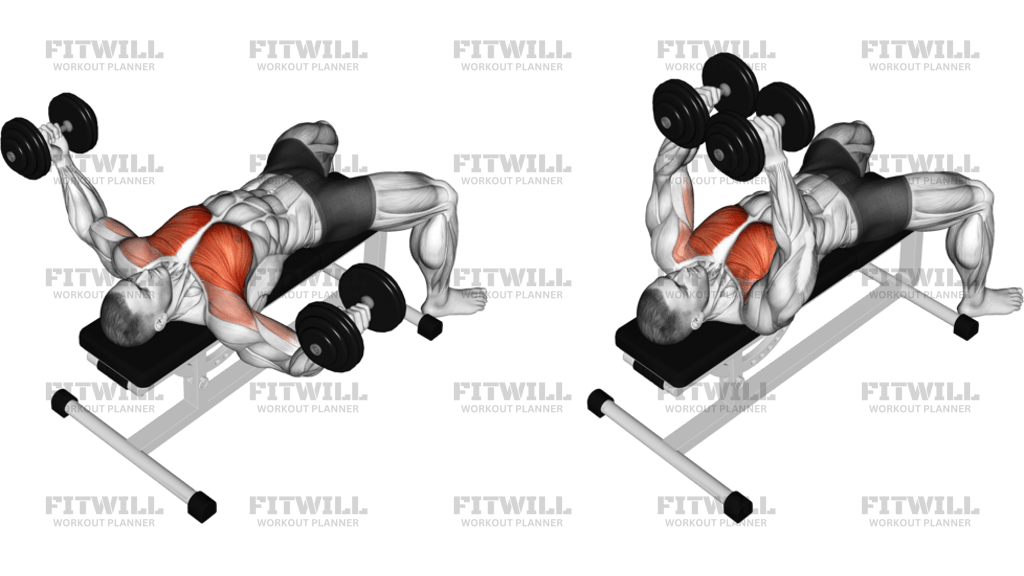
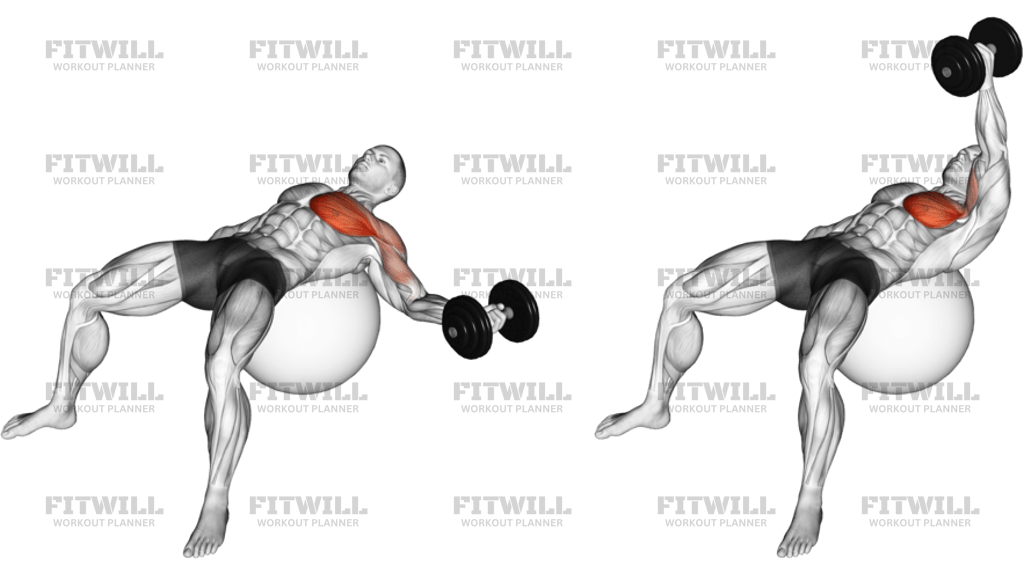
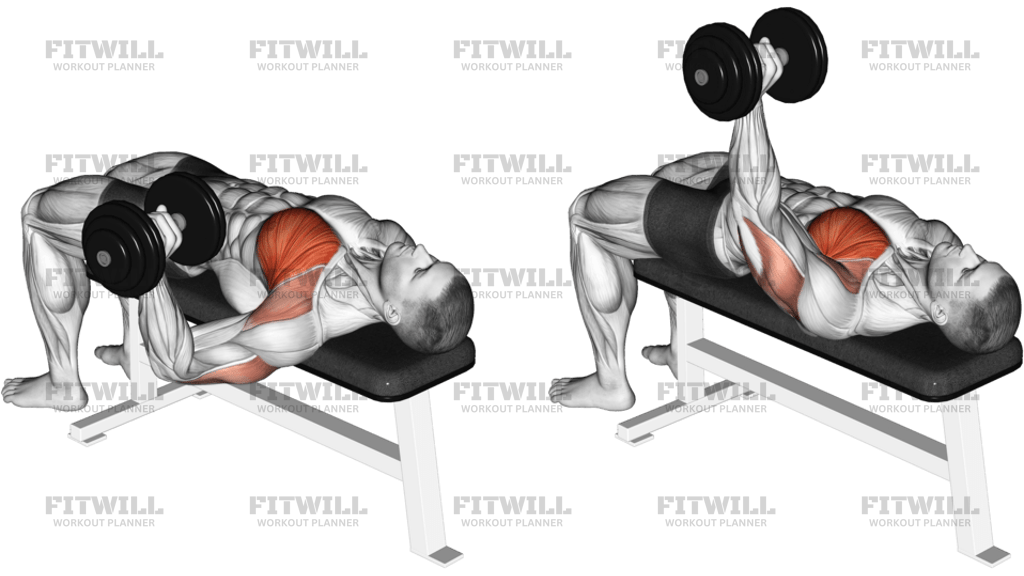
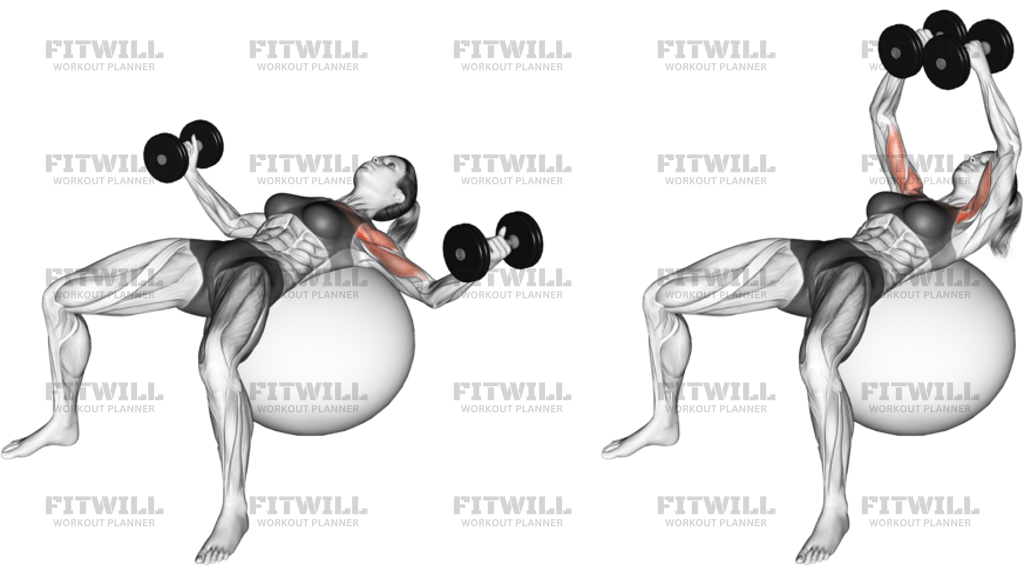
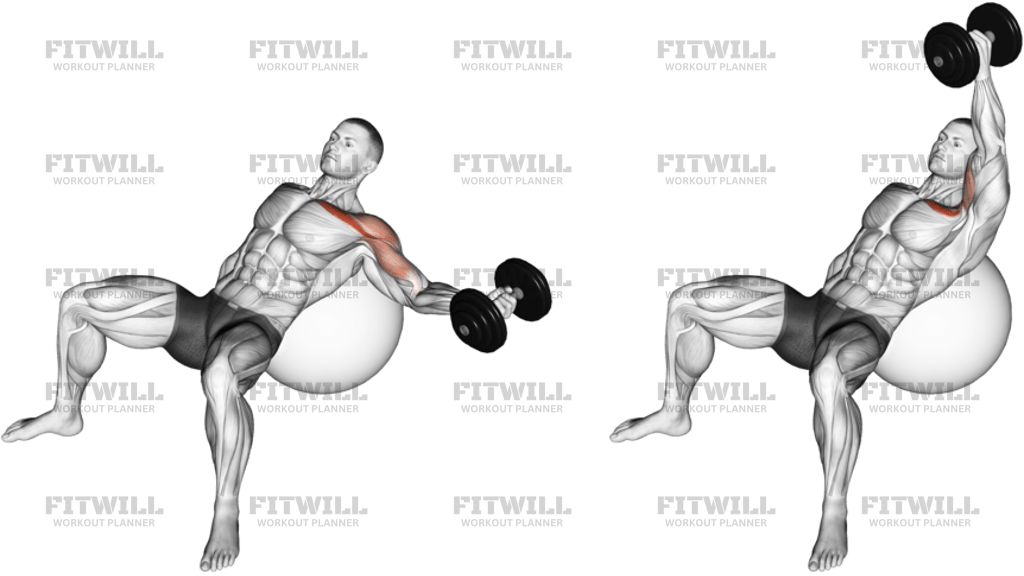
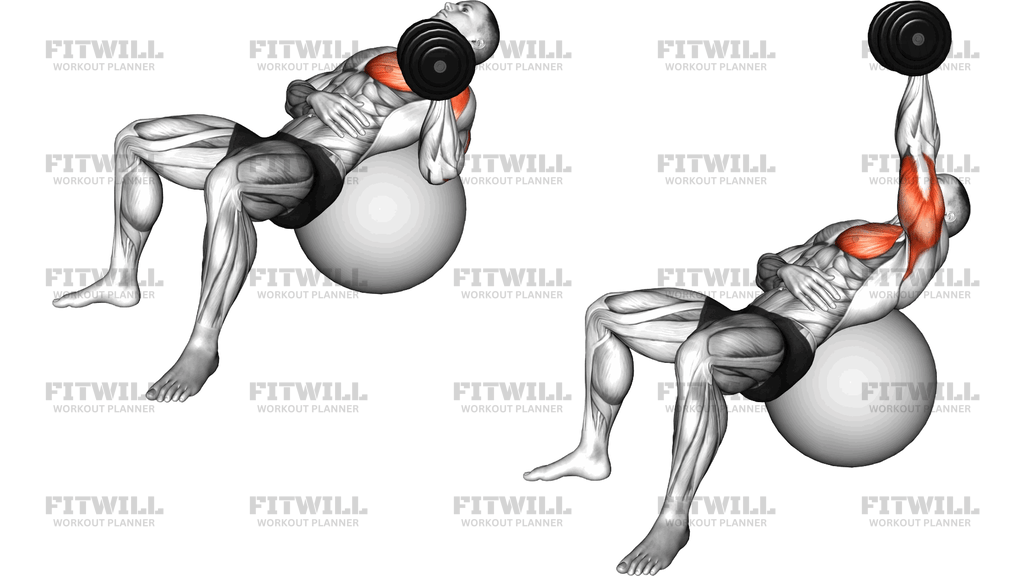
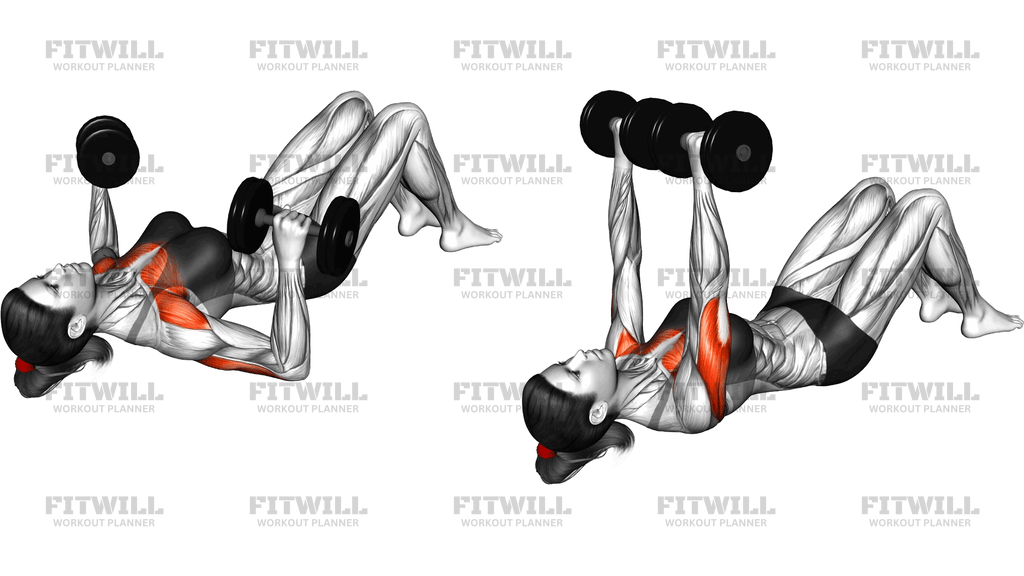
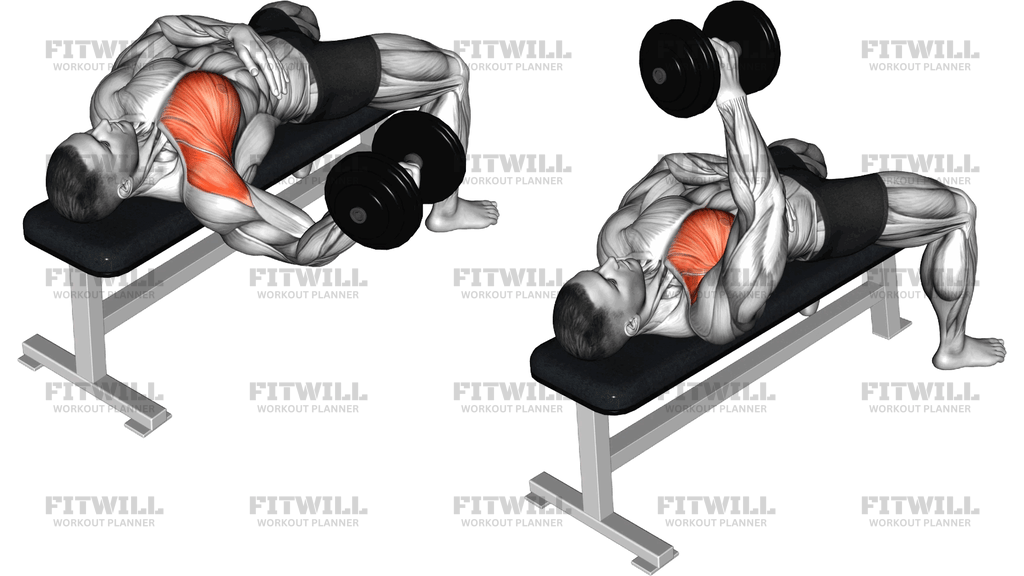
Dumbbell One Leg Fly On Exercise Ball
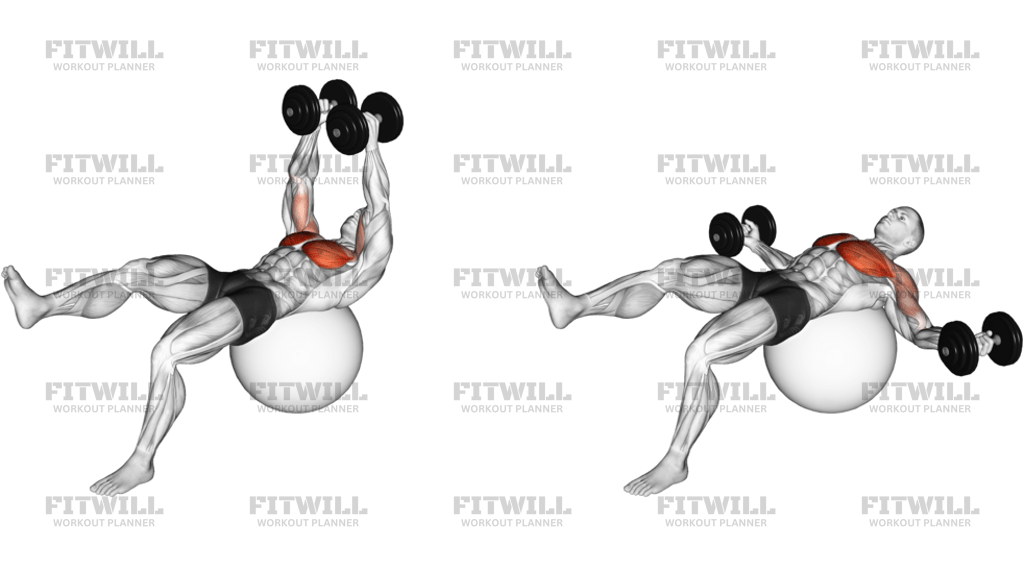
Dumbbell One Leg Fly On Exercise Ball is a chest-focused stability exercise that combines a dumbbell fly with an off-balance setup on an exercise ball. The upper back rests on the ball while one foot stays planted and the other leg extends away from the bench line, which makes the torso work harder to stay level while the chest moves the load through a wide arc.
The main training effect comes from the pectoralis major, especially when the arms open into the stretched position and then squeeze back together over the chest. The front deltoids and triceps assist the movement, but the single-leg position also asks the core, glutes, and hips to keep the body from twisting or sliding on the ball. That makes this a useful accessory movement when you want chest work with a built-in stability demand.
The setup matters more here than on a flat bench fly. Position the ball so your upper back is supported, your head is neutral, and your shoulders can move freely without the dumbbells drifting behind your body. A controlled range is more important than a big stretch: open the arms until the chest is loaded and the shoulders still feel secure, then bring the dumbbells back together over the sternum without bouncing or letting the rib cage flare.
Use this exercise when you want to train chest isolation while also challenging balance and trunk control. It fits well in accessory work, hypertrophy blocks, or core-stability-focused sessions. Keep the load moderate, the tempo deliberate, and the single-leg position steady so the exercise stresses the chest instead of turning into a balancing act. If the ball shifts, the hips twist, or the shoulders feel strained, shorten the range and reduce the weight before the set gets sloppy.
Fitwill
Log Workouts, Track Progress & Build Strength.
Achieve more with Fitwill: explore over 9600 exercises with images and videos, access built-in and custom workouts, perfect for both gym and home sessions, and see real results.
Start your journey. Download today!




Instructions
- Sit on the exercise ball with a dumbbell in each hand, then walk your feet out until your upper back is supported and your hips are lifted in a bridge.
- Plant one foot firmly on the floor and extend the other leg straight so your pelvis stays level instead of rocking side to side.
- Hold the dumbbells above the center of your chest with soft elbows, wrists stacked over shoulders, and your chin slightly tucked.
- Brace your ribs down, squeeze your glutes, and keep the ball still before you start the fly.
- Lower both arms out in a wide arc until you feel a stretch across the chest and the upper arms are roughly in line with the torso.
- Stop the descent before the shoulders roll forward or the dumbbells drift behind your body.
- Exhale and bring the dumbbells back together over the chest, finishing with the hands close but not crashing the weights together.
- Pause briefly at the top, keep the hips steady, and repeat for the planned reps before carefully lowering the hips and stepping out of position.
Tips & Tricks
- Keep the ball under the upper back, not the mid-back, so the chest can open without forcing the lower spine into an exaggerated arch.
- A bent-elbow fly is safer here than a straight-arm arc; the slight elbow angle protects the shoulder while keeping tension on the pecs.
- The extended leg should stay active and in line with the torso; if the pelvis twists, shorten the set or reset the foot position.
- Do not let the dumbbells travel lower than the shoulders if that turns the stretch into front-shoulder strain.
- Press the lifted glute on the planted side to stop the hips from sagging when the arms open.
- Use a slower lowering phase than lifting phase so the chest controls the stretch instead of the shoulder joint absorbing it.
- Choose lighter dumbbells than you would for a flat-bench fly because the ball and single-leg setup reduce stability.
- Keep the neck long and eyes up; looking for the weights often causes the head to crane and the ribs to flare.
- If the ball slides, place it against a wall or shorten the range before increasing load.
- End the set when you can no longer keep both the chest opening and the pelvis steady at the same time.
Frequently Asked Questions
What does Dumbbell One Leg Fly On Exercise Ball train most?
It mainly trains the chest through a fly pattern, with the shoulders, triceps, core, and glutes helping stabilize the body on the ball.
Why use one leg instead of both feet on the floor?
The single-leg position makes your hips and trunk work harder to stay square, so the chest has to move the dumbbells without extra sway.
How far should I lower the dumbbells?
Lower only until you feel a strong chest stretch and the shoulders still feel controlled. On the ball, a smaller range is usually better than chasing depth.
Should my elbows stay straight during the fly?
No. Keep a soft bend in the elbows and hold that angle throughout the rep so the shoulder joint is not taking all the stress.
What is the most common mistake on the exercise ball?
Letting the hips twist or drop when the arms open. The torso should stay level while the dumbbells move in a smooth arc.
Can I do this if I do not feel stable on the ball?
Yes, but start with very light dumbbells, shorten the range, or use both feet on the floor until you can keep the ball and ribs steady.
Is this better for strength or muscle growth?
It is usually better for controlled chest hypertrophy and stability work than for heavy strength training because the ball limits how much load you can safely use.
What should I feel if the form is correct?
You should feel the chest lengthen on the way down and contract as the dumbbells come back over the chest, with the core and hips working to keep you centered.