Dumbbell Pullover On Exercise Ball
Dumbbell Pullover On Exercise Ball is a chest-focused pullover performed with the upper back supported on a stability ball and the feet planted on the floor. The ball gives the movement a longer range and a less fixed base than a bench, so the exercise asks the pecs, shoulders, triceps, and core to coordinate while you move a dumbbell in a smooth arc from above the chest to behind the head and back again.
The exercise is useful when you want to train the chest through an overhead-to-front path without heavy pressing. Because the shoulders have to control a long lever arm while the torso stays braced on the ball, the setup matters as much as the lift. A good rep keeps the ribs from flaring, the hips from sagging, and the elbows from bending into a press or a triceps extension.
Use a light-to-moderate dumbbell and establish the ball position before you start moving. Your upper back should be supported, your feet should be flat and stable, and your head should stay neutral rather than hanging off the ball. From there, the dumbbell should travel in a controlled arc: lower until you feel a strong but manageable stretch through the chest and lats, then bring it back over the chest without letting momentum take over.
This is not a fast exercise and it is not a max-load exercise. The best reps feel smooth, deliberate, and symmetrical from the lowering phase to the return. If your shoulders pinch, your lower back arches hard, or the dumbbell keeps drifting behind the point where you can control it, the range is too deep or the load is too heavy.
Use Dumbbell Pullover On Exercise Ball as accessory chest work, as a stability challenge after your main lifts, or as part of a controlled upper-body session. It is suitable for beginners when the load is kept modest and the range stays strict, but the instability of the ball means form should stay the priority from the first rep to the last.
Fitwill
Log Workouts, Track Progress & Build Strength.
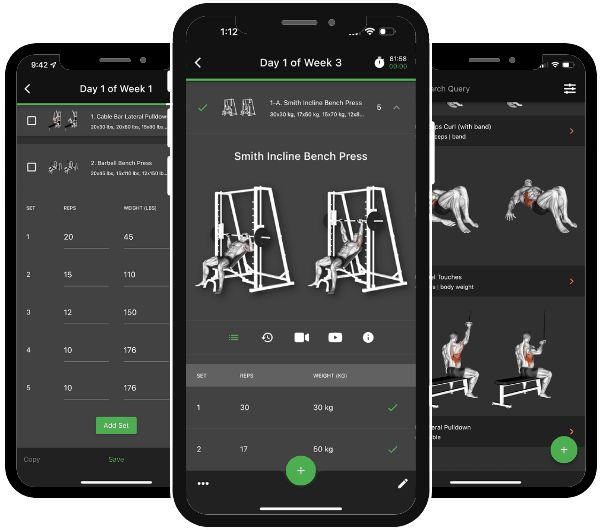
Achieve more with Fitwill: explore over 5000 exercises with images and videos, access built-in and custom workouts, perfect for both gym and home sessions, and see real results.
Start your journey. Download today!


Instructions
- Sit on the floor with the dumbbell resting on your thighs, then walk your feet forward and roll your upper back onto the exercise ball until your shoulder blades and upper back are supported.
- Plant both feet flat on the floor, about hip- to shoulder-width apart, and lift your hips so your torso is roughly parallel to the floor.
- Hold one end of the dumbbell with both hands above the center of your chest, keeping a small bend in the elbows and your wrists stacked.
- Set your ribs down, brace your core, and keep your neck neutral before each rep begins.
- Inhale as you lower the dumbbell in a controlled arc behind your head, letting the upper arms travel back while the elbow angle stays nearly fixed.
- Lower only until you feel a strong stretch through the chest and shoulders without losing control of the ball or arching your lower back.
- Exhale as you sweep the dumbbell back over your chest in the same arc, squeezing the pecs to bring it home rather than turning the movement into a press.
- Pause briefly above the chest, reset your brace, and repeat for the planned reps before carefully sitting back up after the set.
Tips & Tricks
- Use a lighter dumbbell than you would for a floor or bench pullover, because the ball makes the lift less stable and the long lever is harder to control.
- Keep the elbows softly bent and that bend nearly fixed; turning the rep into a press will shift work away from the chest.
- If your lower back arches hard, move your feet farther forward and keep the ribs knitted down instead of chasing a bigger stretch.
- Do not let the dumbbell disappear far behind your head if the shoulders start to shrug or the torso starts to wobble.
- Think about sweeping the weight in a clean semicircle rather than dropping it straight back and yanking it up.
- A controlled lowering phase matters more here than a fast return; a smooth 2 to 3 second descent usually keeps the shoulders happier.
- Keep the head supported and the neck long so you are not craning upward to watch the dumbbell.
- If the shoulders feel pinchy, shorten the range and stop the descent earlier, even if that means using less load.
Frequently Asked Questions
What muscles does Dumbbell Pullover On Exercise Ball work?
It primarily targets the chest, with the shoulders and triceps assisting and the core working to keep the torso stable on the ball.
Is this more of a chest exercise or a back exercise?
This version is chest-focused, although the lats and upper back help control the lowering phase and keep the shoulders organized.
How deep should I lower the dumbbell?
Lower only until you feel a solid stretch and can still keep the ribs down, the hips steady, and the shoulders comfortable. If the ball position or shoulder position starts to break down, stop earlier.
Why use an exercise ball instead of a bench?
The ball adds instability and a slightly different body angle, which makes the core work harder and can give the chest a longer, smoother arc of motion.
Can beginners do this exercise safely?
Yes, if they use a light dumbbell and keep the range strict. The ball makes balance part of the exercise, so beginners should build control before adding load.
What should my feet and hips be doing during the rep?
Your feet should stay planted and your hips should stay lifted but not overarched. If the hips sag or twist, the load is probably too heavy or the ball is too far under you.
What is the most common form mistake?
Most people bend the elbows too much, turn the movement into a press, or lower the dumbbell too far and lose shoulder control.
What is the best way to progress it?
Increase the dumbbell gradually only after you can keep the same arc, the same elbow angle, and the same ball position for every rep.