Wide-Grip Push-Up
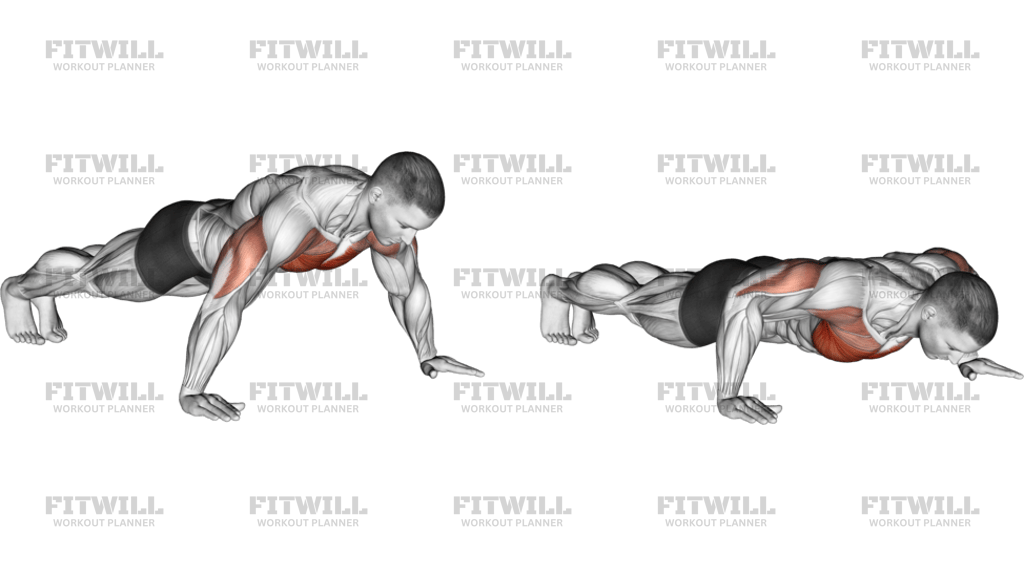
Wide-Grip Push-Up is a bodyweight pressing exercise that shifts more demand toward the chest by placing the hands wider than a standard push-up. In this variation, the wider base changes the arm path and increases the stretch across the pecs at the bottom of the rep, while the shoulders, triceps, and core still work hard to keep the body rigid and the press smooth.
The image shows a long plank position with the hands set well outside shoulder width, the torso held in one line, and the chest lowering between the hands. That setup matters: if the hips sag or the ribs flare, the rep turns into a lower-back compensation drill instead of a chest-focused press. A solid wide-grip push-up starts with the shoulders packed, the glutes and abs tight, and the hands planted far enough apart to create a chest bias without putting the shoulders in a painful position.
Use the descent to create tension, not speed. Lower under control until the chest is close to the floor or until your shoulder position starts to lose quality, then press the floor away and return to a locked-out plank. The elbows will naturally travel out from the torso more than in a narrow push-up, but they should still move in a controlled arc rather than snapping wide. Breathing should stay organized: brace before each rep, inhale on the way down, and exhale as you drive back up.
This exercise is useful in chest-focused strength work, upper-body accessory blocks, and bodyweight conditioning when you want a simple pressing pattern with no equipment. It is also easy to scale by changing the hand width, elevating the hands, or shortening the range of motion if the shoulders or wrists need a friendlier version. The goal is not just to get through reps, but to keep every rep crisp, symmetrical, and pain-free so the chest does the work the movement is meant to demand.
If shoulder discomfort appears, narrow the hands slightly, reduce how deep you lower, or switch to an incline version before forcing more range. A well-performed wide-grip push-up should feel demanding across the pecs and triceps, with the core preventing the torso from twisting or collapsing as you press.
[ Workout Log & Planner ]
Put your next workout in Fitwill
Keep your plan and training log ready when you are.


Instructions
- Place both hands on the floor wider than shoulder width, with fingers spread and wrists stacked under the shoulders from the front view.
- Extend your legs back into a straight plank so your head, upper back, hips, and heels form one line.
- Set your feet about hip width apart for balance and tighten your glutes and abs before you move.
- Keep your shoulders slightly down and away from your ears while you look at the floor a few inches ahead of your hands.
- Lower your chest toward the floor under control, allowing the elbows to drift out at a comfortable angle without losing torso tension.
- Pause briefly near the bottom if you can keep your shoulders and hips aligned.
- Press the floor away to straighten your arms and return to the top without letting the hips pike or sag.
- Reset your brace at the top, breathe, and repeat for the planned number of reps.
Tips & Tricks
- A hand position that is only slightly wider than shoulder width will feel different from a very wide stance; use the width that lets you keep a strong shoulder position.
- If your elbows flare so far that the shoulders feel pinched, bring the hands in a little and keep the forearms tracking more naturally.
- Keep the chest moving between the hands rather than dropping the head first; that keeps the pecs loaded instead of turning the rep into a neck dive.
- Do not let the ribs pop up at the bottom, because that usually means the lower back is taking over the hold.
- A short pause near the floor makes the chest work harder and reduces bouncing out of the bottom.
- If full-depth reps lose quality, stop one or two inches above the floor and keep the line from shoulders to heels solid.
- Elevating the hands on a bench or box is the cleanest regression when bodyweight on the floor is too demanding.
- Keep the wrists under control with active fingers and a firm palm so the wider stance does not collapse into the shoulders.
- Exhale through the press and finish each rep with the elbows fully extended but not jammed backward.
- End the set as soon as your hips sag or your shoulders roll forward, because the chest stimulus drops once the plank breaks.
Frequently Asked Questions
What does the wide hand position change in this push-up?
It shifts more of the work toward the chest and reduces the tucked-elbow pressing pattern used in a standard push-up.
Which muscles are doing most of the work?
The chest is the main mover, with the front shoulders, triceps, and core helping stabilize and press.
How wide should my hands be?
Start a little wider than shoulder width, then adjust until you feel the chest load increase without shoulder pinching or loss of control.
Should my elbows flare out to the sides?
Some flare is normal in a wide-grip push-up, but the elbows should still move in a controlled path instead of snapping straight out.
Can beginners use this version?
Yes, but many beginners do better with an incline wide-grip push-up first so they can keep the plank line and shoulder position clean.
What is the most common form mistake?
Letting the hips sag or the ribs flare so the lower back takes tension away from the chest and abs.
How can I make it easier if the floor version is too hard?
Raise your hands on a bench, box, or Smith bar to reduce the load while keeping the same wide pressing path.
What should I feel at the bottom of the rep?
A stretch across the chest with the shoulders still organized, not a sharp pinch at the front of the shoulder.