Dips Between Chairs
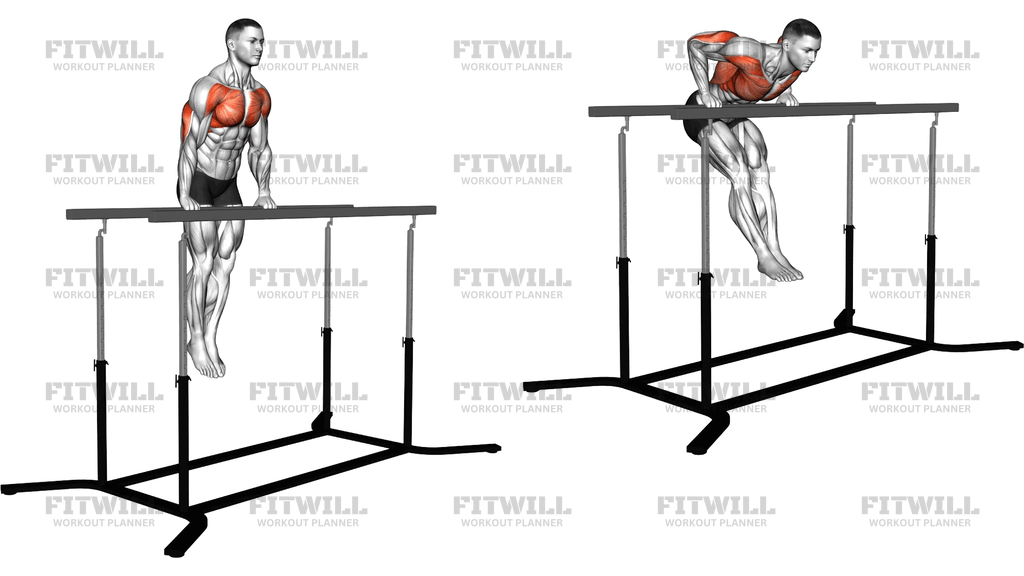
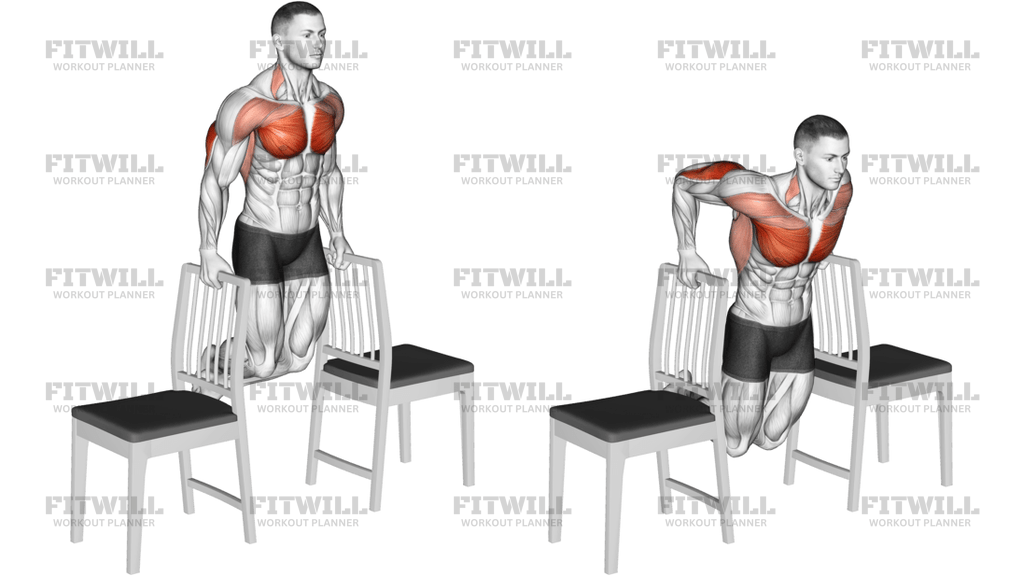
Dips Between Chairs is a body-weight pressing exercise performed with the hands on two stable chairs and the body suspended between them. It is a practical chest-and-triceps movement that also asks the front shoulders and midsection to keep the torso organized while the arms move through a deep pressing range. Because the hands are fixed on separate supports, the setup matters as much as the rep itself: if the chairs wobble, slide, or sit at uneven heights, the shoulders and wrists will pay for it.
The main training effect comes from the combination of elbow extension and shoulder extension at the bottom of the dip. That is why this exercise usually feels strongest in the chest, triceps, and anterior deltoids, with the core helping prevent excessive swinging. In anatomy terms, the primary work centers on the Pectoralis major, with help from the Anterior deltoid, Triceps brachii, and Rectus abdominis. For most lifters, a slight forward lean shifts more tension toward the chest, while a more upright torso shifts some emphasis toward the triceps.
A clean rep starts before you descend. Set the chairs on a flat, non-slip surface and grip the seat edges or outer rails firmly with wrists stacked under the shoulders. Press tall on straight arms, draw the shoulders down away from the ears, and keep the chest open without flaring the ribs. From there, lower under control until the upper arms approach parallel or until your shoulder comfort and chair height say to stop.
At the bottom, the body should stay tight rather than hanging loosely. Keep the elbows tracking back instead of flaring wide, and avoid collapsing into the front of the shoulder. Drive back up by pushing the chairs down and away while exhaling, finishing with straight arms and controlled shoulders rather than a shrug or a bounce. The best repetitions look smooth, repeatable, and quiet from start to finish.
Use Dips Between Chairs when you want a simple body-weight press that can be loaded by leverage, tempo, or range rather than external weight. It fits upper-body strength work, home training, and accessory chest or triceps sessions, but it is not a movement to rush if the setup is unstable or the shoulders feel pinchy. Keep the range pain-free, keep the chairs secure, and use only as much depth as you can own with clean control.
[ Workout Log & Planner ]
Put your next workout in Fitwill
Keep your plan and training log ready when you are.


Instructions
- Place two sturdy chairs on a flat, non-slip surface with enough space between them to fit your body.
- Grip the seat edges or side rails, then step between the chairs and support your body with straight arms.
- Set your shoulders down and away from your ears, keep your chest open, and brace your midsection before moving.
- Lean the torso slightly forward if you want more chest emphasis, or stay a bit more upright for a stronger triceps focus.
- Bend your elbows and lower your body in a controlled line until your upper arms are near parallel or just before the shoulders lose comfort.
- Keep your elbows tracking back at a moderate angle instead of flaring wide, and keep your wrists stacked and neutral.
- Pause briefly at the bottom without bouncing off the chairs or letting the shoulders roll forward.
- Press through your palms to straighten your arms and rise back to the top with the chest and shoulders still organized.
- Exhale as you press up, inhale as you lower, and finish each rep with steady control before starting the next one.
Tips & Tricks
- Test both chairs before the first rep; if either one shifts, stop and reset the setup.
- A small forward lean usually makes the dip feel more like a chest press, while a taller torso shifts effort toward the triceps.
- Do not let the shoulders drift up toward the ears at the top; keep them packed down through the whole set.
- If the front of the shoulder pinches at the bottom, shorten the range instead of forcing a deeper descent.
- Keep the ribs from flaring as you press; a hard arch usually turns the movement into a loose swing.
- Move slowly through the lowering phase so the bottom position is under control, not a drop into the chairs.
- Stop with the elbows slightly bent at the top if locking out hard irritates the elbows or shoulders.
- Use crossed ankles or bent knees to reduce sway if your legs keep drifting during the set.
Frequently Asked Questions
What muscle does Dips Between Chairs target most?
The chest is the main target, with the triceps and front shoulders doing a lot of the work as you press out of the bottom.
Should I lean forward or stay upright in the chairs?
A slight forward lean usually shifts more work to the chest. Staying a bit more upright makes the triceps work harder.
How low should I go on the dip?
Lower only until your upper arms are near parallel or until your shoulders still feel smooth and pain-free. Depth matters less than control.
Why are stable chairs so important?
The entire exercise depends on fixed hand supports. If the chairs wobble or slide, your shoulders and wrists lose the support they need.
Can I do this exercise if my shoulders feel tight?
Only if you can keep the range comfortable. Tight or irritated shoulders are a sign to shorten the descent or choose a different press variation.
What should I do if I feel this mostly in my elbows?
Reduce the range, avoid locking out aggressively, and keep the descent slower. Too much joint stress usually means the setup or depth is too demanding.
What is the easiest way to make the movement harder?
Use a slower lowering phase, a deeper but still controlled range, or a more forward torso lean before adding external load.
Is this a good beginner exercise?
It can be, but only if the chairs are solid and you can control the whole range. Many beginners do better with a shorter range or bench-assisted dip first.