Barbell Reverse-Grip Incline Bench Row
Barbell Reverse-Grip Incline Bench Row is a chest-supported rowing exercise that uses an underhand barbell grip on an incline bench to train the upper back without asking the lower back to hold the torso up. The bench support changes the feel of the row completely: once your chest is anchored, the rep becomes a strict pull from the shoulder blades, lats, and arms instead of a standing hip hinge or a loose, body-driven heave.
The reverse grip shifts the elbows and forearms into a position that usually makes it easier to keep the bar path close, load the midline of the upper back, and keep tension honest through the top half of the pull. In practical terms, this is a rowing variation for building thickness through the traps, rhomboids, lats, and biceps while keeping the torso quiet. It is useful when you want back work but do not want fatigue in the spinal erectors to dominate the session.
The setup matters more than it looks. An incline angle that is too steep turns the movement into a shrug-heavy pull, while a bench that is too low can leave the plates and bar path cramped. With the chest pressed into the pad, feet braced wide, and the grip set underhand and shoulder-width or slightly wider, each rep should start from a dead-hang at the elbows without losing contact with the bench. That chest contact is what keeps the movement strict and repeatable.
A good rep starts by setting the shoulders and then rowing the bar toward the lower chest or upper abdomen, depending on your arm length and bench angle. The elbows should travel back under control, not flare into a wild sweep. At the top, squeeze the shoulder blades together without jerking the torso off the pad; on the way down, let the bar lower smoothly until the arms are long again and the shoulders stay organized. Breathing should stay calm and deliberate: brace before the pull, exhale through the effort, and reset on the descent.
This is a strong accessory lift for back strength, posture work, and upper-back hypertrophy when you want high-quality reps with less cheating than a free-standing row. It is also a good choice for lifters who need a row that is easier to stabilize than a bent-over barbell row. Keep the load honest, use a bench angle that matches the image and your body dimensions, and stop the set when the chest starts peeling off the pad or the bar begins to bounce.
[ Workout Log & Planner ]
Put your next workout in Fitwill
Keep your plan and training log ready when you are.


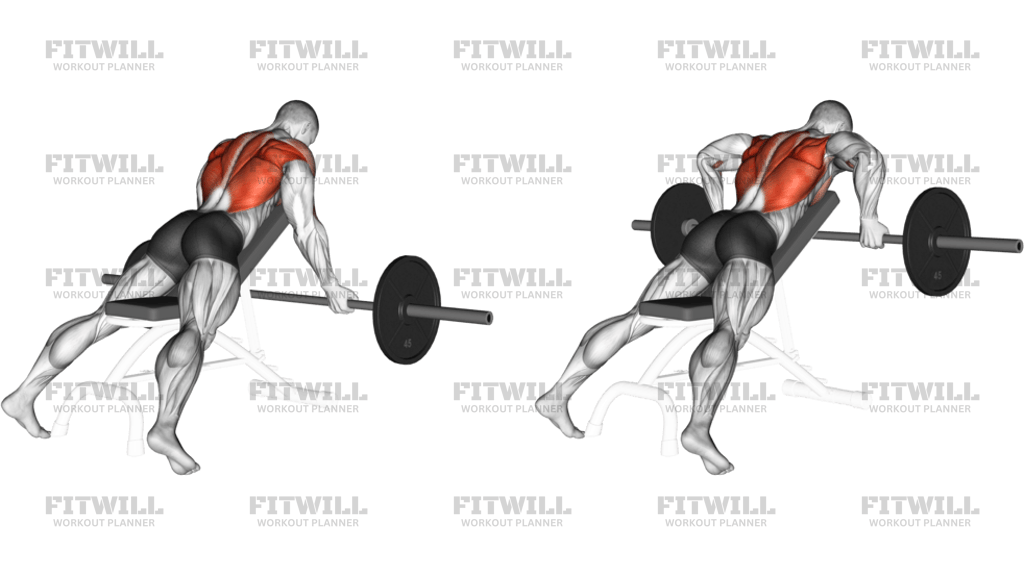
Instructions
- Set an incline bench to a moderate angle and place a barbell within reach at the front of the bench.
- Lie chest-down on the pad with your sternum and upper chest supported, feet planted wide on the floor behind you.
- Take a reverse grip on the barbell, about shoulder-width or slightly wider, then let your arms hang straight down.
- Pin your chest to the bench, brace your abs and glutes, and keep your neck long before the first pull.
- Pull the bar toward your lower chest or upper abdomen by driving your elbows back under control.
- Squeeze your shoulder blades together at the top without lifting your torso off the bench or jerking the bar.
- Lower the bar slowly until your arms are long again and your shoulders stay settled against the pad.
- Reset the brace before each rep and keep the breathing steady: exhale on the pull, inhale on the way down.
Tips & Tricks
- Choose a bench angle that lets your arms hang naturally; if the bench is too steep, the pull turns into a shrug.
- Keep the underhand grip shoulder-width or a touch wider so your wrists stay stacked and the bar path stays clean.
- Let the chest stay glued to the pad; if your torso leaves the bench, the set has become too heavy or too sloppy.
- Think about driving elbows back, not curling the bar with your hands.
- Use a controlled touch at the top instead of bouncing the bar into the chest or pad.
- Stop the set when the shoulders start rolling forward and the bar path drifts away from your torso.
- Keep the neck neutral and avoid looking up, which tends to shorten the upper-back squeeze.
- A slower lowering phase usually makes this row feel better in the traps and mid-back than a rushed descent.
Frequently Asked Questions
What does Barbell Reverse-Grip Incline Bench Row train most?
It emphasizes the upper back, especially the traps and rhomboids, while the lats and biceps help finish the pull.
Why use an incline bench for this row?
The incline bench supports the chest and removes most lower-back fatigue, so the row stays stricter and easier to repeat.
Why is the reverse grip important?
The underhand grip helps keep the elbows tucked and the bar close to the body, which changes the feel of the row and often improves the top squeeze.
Where should the bar touch or finish?
For most lifters, the bar should travel toward the lower chest or upper abdomen, not up toward the neck.
Can beginners use this exercise?
Yes, as long as they keep the load light enough to maintain chest contact and a smooth bar path.
What is the biggest form mistake?
The most common error is turning the rep into a shrug or bouncing the torso off the bench instead of pulling with the upper back.
Is this easier on the lower back than a bent-over row?
Yes. Because the chest is supported, the lower back does far less stabilizing than it does in a free-standing row.
What should I do if the plates hit the floor or bench?
Raise or lower the incline angle and adjust your bench position so the bar can move through a full range without crashing into anything.