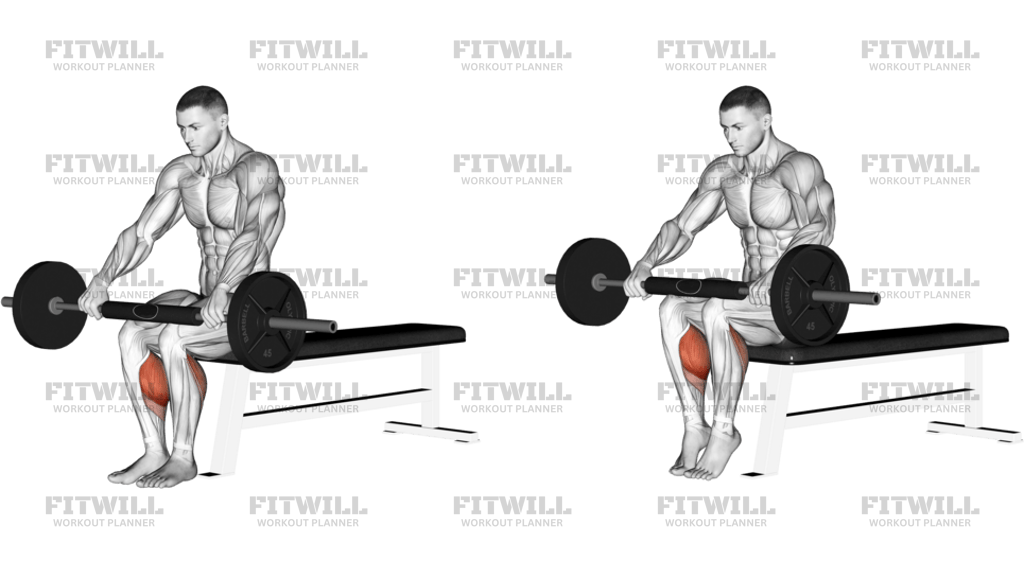
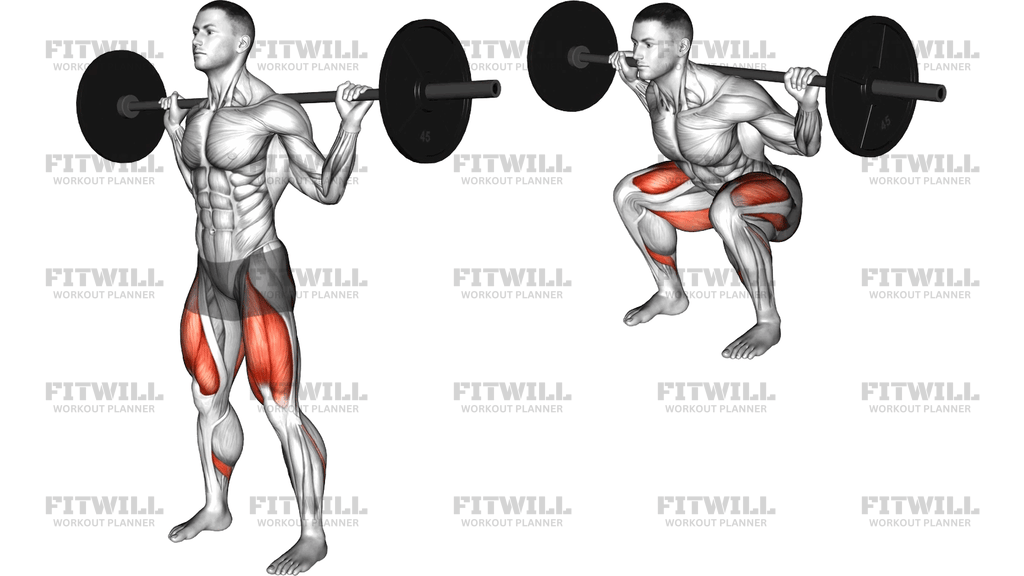
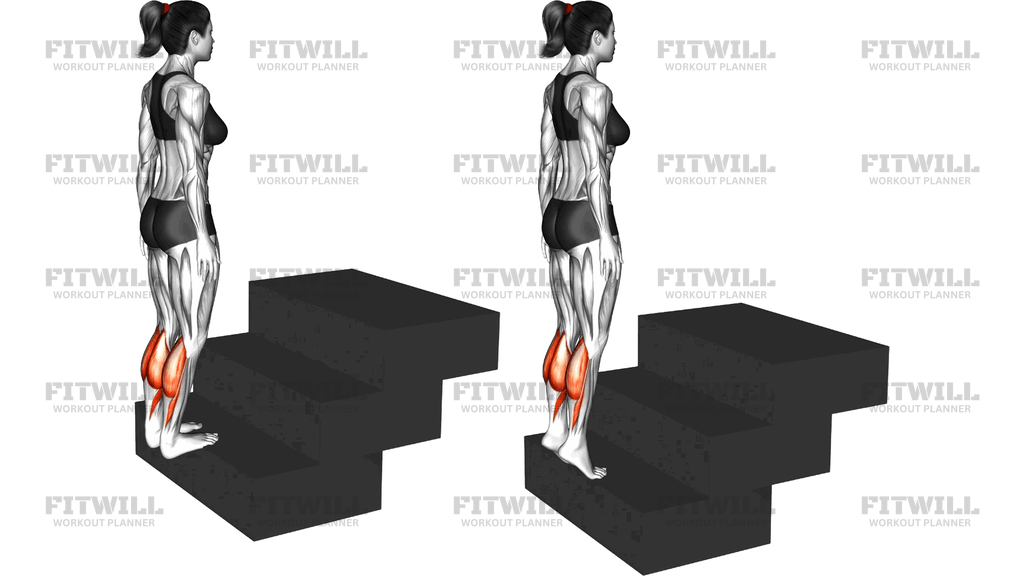
Barbell Standing Calf Raise
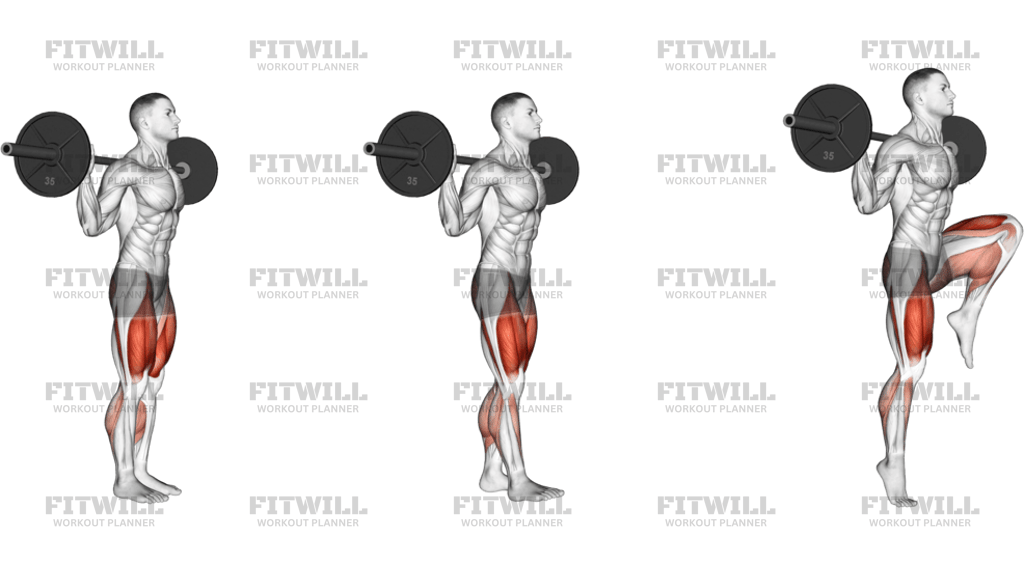
Barbell Standing Calf Raise loads the calves through ankle plantarflexion while the bar sits across the upper back. It is a simple exercise in appearance, but the setup matters a lot: the bar has to stay balanced on the traps, the torso needs to stay stacked, and the feet need a stable base so the calves can do the work instead of the hips or lower back.
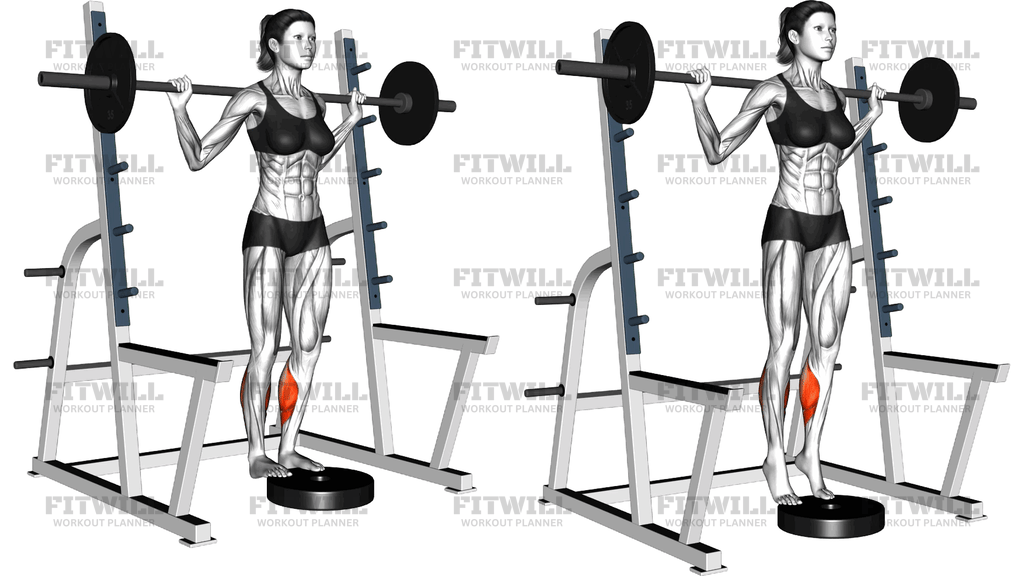
The main training effect is direct calf work, especially the gastrocnemius with help from the soleus and the smaller stabilizers around the ankle and foot. Because the knees stay nearly straight, this version emphasizes the standing calf function you use in running, jumping, sprinting, and general lower-leg strength. The raised foot position in the image also lets the heels travel lower so you can get a more complete stretch at the bottom.
Good reps start with a tall posture and a controlled setup. Place the bar on the rear delts or upper traps, stand with the balls of your feet on a plate or low step if one is available, and keep your heels free to drop. A slight knee unlock is fine, but do not turn the movement into a squat. The goal is to keep pressure centered over the forefoot, brace the trunk, and let the ankles move through a clean range.
From there, lower the heels under control until you feel the calves lengthen, then drive up through the big toe and second toe to rise as high as you can without leaning back or bouncing. A short pause at the top makes the contraction more honest, and a slower lowering phase keeps the tension on the calves instead of the joints. Breathing should stay steady: brace before the rep, exhale as you lift, and reset at the bottom.
This exercise fits well as accessory work after squats or deadlifts, as part of lower-body hypertrophy work, or in athletic programs that need stronger ankles and more resilient calves. Use a load you can control through a full stretch and a full contraction. If the bar starts to roll, the heels rebound, or your body sways to finish the rep, the weight is too heavy for the range you are trying to train.
[ Workout Log & Planner ]
Put your next workout in Fitwill
Keep your plan and training log ready when you are.


Instructions
- Place the bar across your upper back or rear delts and stand tall with your feet hip-width apart.
- Set the balls of your feet on a low plate or step so your heels can drop below forefoot level.
- Keep your weight centered over the big toe and second toe, and unlock the knees just enough to stay soft.
- Brace your torso and keep the bar fixed before you start the first rep.
- Lower your heels slowly until you feel a strong calf stretch without losing balance.
- Drive through the forefoot to raise your heels as high as possible without swinging your hips.
- Pause briefly at the top and squeeze the calves before lowering again.
- Repeat for the target reps, then step down carefully and re-rack the bar.
Tips & Tricks
- Keep the bar anchored on the upper back; if it rolls, your stance is usually too loose or too narrow.
- Let the ankles move, not the hips. If your torso is pitching forward, the load is drifting away from the calves.
- Do not straighten the knees hard at the top. A small knee unlock keeps the tension where you want it.
- Use the edge of a plate or low step only if your ankles tolerate the deeper heel drop.
- Press through the big toe and second toe to keep the foot from collapsing to the outside edge.
- Lowering slowly usually creates more calf stimulus than trying to bounce through more reps.
- Hold the top for a beat so the set is driven by calf contraction, not momentum.
- If balance limits the set, keep a light fingertip touch on a rack instead of changing the rep pattern.
Frequently Asked Questions
What muscle does Barbell Standing Calf Raise target most?
It primarily targets the calves, especially the gastrocnemius, with the soleus and ankle stabilizers assisting.
Can beginners perform this exercise?
Yes. Start light, use a stable stance, and learn to control the full heel drop before adding load.
Do I need to stand on a plate or step?
It is helpful because it lets the heels drop lower, but a flat floor version still works if you want a smaller range.
How high should I rise on each rep?
Rise as high as you can on the forefoot without leaning back, bouncing, or shifting the bar.
Why keep a slight bend in the knees?
A soft knee keeps the movement focused on the calves and prevents you from turning it into a locked-out balance drill.
What is the most common mistake here?
Bouncing out of the bottom and using hip sway to finish the rep instead of letting the calves do the lift.
What should I feel during the rep?
You should feel a strong stretch in the lower calf at the bottom and a hard squeeze in the calves at the top.
Can I use this after squats or deadlifts?
Yes. It fits well as accessory work after heavy lower-body training because it is simple and easy to load precisely.