Hamstrings Lying Stretch
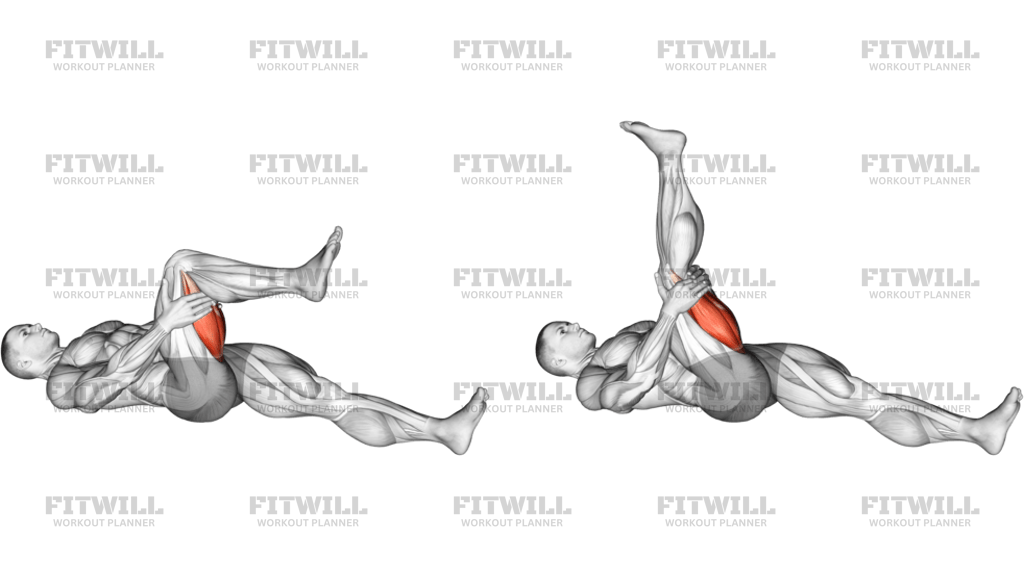
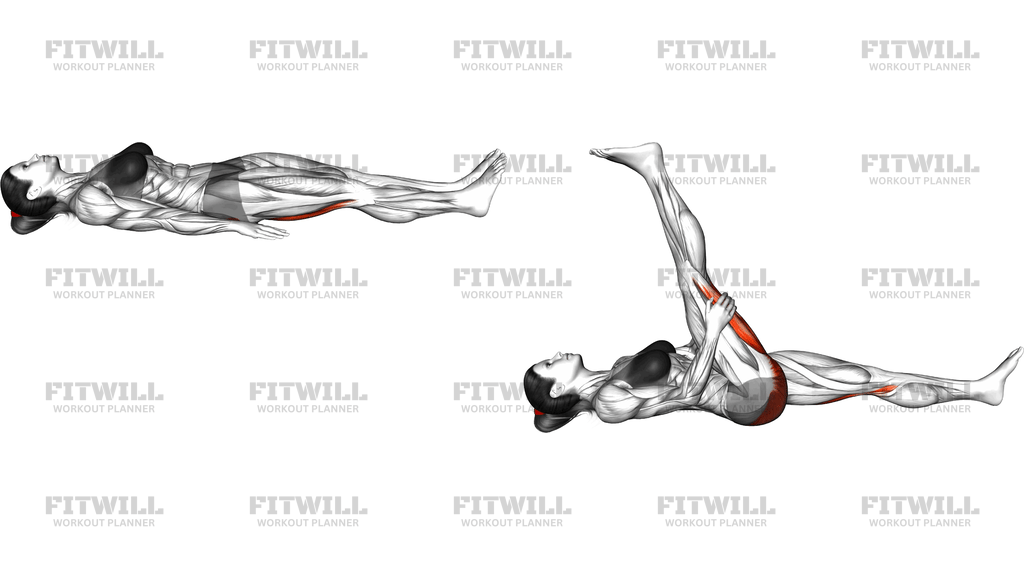
Hamstrings Lying Stretch is a floor-based hamstring mobility drill performed on an exercise mat with nothing more than body weight. The image shows a classic supine setup: one leg stays long on the floor while the other leg is lifted toward the ceiling and supported at the back of the thigh or lower leg. That position makes the stretch more controlled than a standing toe-touch because the pelvis and spine can stay quieter while the hamstrings do the work.
The main target is the hamstring group on the raised leg, with help from the calves, glutes, and deep trunk stabilizers that keep the pelvis from tipping. In practical terms, the stretch is useful when you want to improve straight-leg raise range, ease posterior-chain tightness, or cool down after squats, deadlifts, running, and sprint work. It is also a good option for beginners because the floor gives you a stable reference and makes it easier to adjust the stretch dose.
The setup matters more than people expect. If the lower back arches or the hips rotate, the stretch shifts away from the hamstrings and into the spine or hip capsule. Keeping the non-working leg extended and the opposite hip heavy on the mat helps isolate the line of pull. The raised leg should come up only as far as you can keep the knee straight enough to feel the back of the thigh, not a sharp pull behind the knee or a cramp in the calf.
During Hamstrings Lying Stretch, move slowly into the end range and then settle there with steady breathing. A small bend in the knee is fine if it lets you keep the pelvis level and the stretch focused higher on the hamstring belly. If you pull on the leg, use your hands to guide it rather than yanking the heel toward your face. The goal is a clear, repeatable stretch sensation that you can hold without bracing hard or bouncing.
Use this stretch after training, during mobility work, or between lower-body sessions when the hamstrings feel dense and short. It can help restore length for hinges, kicks, and straight-leg positions, but it should never be forced through pain, numbness, or nerve-like tension. When it is done well, Hamstrings Lying Stretch feels calm, specific, and controlled from the first breath to the last.
[ Workout Log & Planner ]
Put your next workout in Fitwill
Keep your plan and training log ready when you are.


Instructions
- Lie on your back on an exercise mat with both legs long, then bend one knee and bring that thigh toward your chest.
- Keep the opposite leg straight on the floor with the toes relaxed so the pelvis stays level.
- Place your hands behind the thigh, shin, or foot of the raised leg and keep the shoulders relaxed against the mat.
- Lift the leg toward the ceiling until you feel a strong but manageable stretch in the back of the thigh.
- Keep the raised knee as straight as you can without letting the stretch shift into the knee or calf.
- Hold the top position and breathe slowly, letting the hamstrings soften on each exhale.
- If needed, make small adjustments by drawing the leg a little closer or backing off slightly until the stretch feels clean.
- Keep the lower back from arching and the non-working leg anchored to the mat throughout the hold.
- Lower the leg back to the mat with control and reset before switching sides.
- Repeat on the other leg with the same setup, range, and breathing pattern.
Tips & Tricks
- If the stretch lands behind the knee instead of the thigh, slightly bend the raised knee and bring the stretch higher up the hamstrings.
- Keep the opposite heel heavy on the floor; if that leg lifts or the hips twist, you are losing the floor-based support that makes this version useful.
- Use the hands to guide the leg into position, not to yank it upward. A gentle pull is enough once the hamstrings are at end range.
- Exhale as you settle deeper into the hold. Many lifters can gain a little more range on the breath out without forcing the leg higher.
- If the lower back starts to arch, back the leg off a few degrees and re-stack the pelvis instead of chasing a bigger angle.
- A soft knee bend is better than a locked, trembling knee when the goal is a clean hamstring stretch.
- Stop the hold if you feel numbness, tingling, or a sharp tug that runs down the leg; that usually means the stretch is too aggressive for the current position.
- Short, repeatable holds work better than long battles. Use the same leg angle for several breaths before trying to increase range.
- Pointing the toes toward you increases the stretch through the calf as well as the hamstrings, so adjust ankle position if the calf becomes the limiter.
- Match both sides carefully so one tighter hamstring does not get a much stronger stretch than the other.
Frequently Asked Questions
What does Hamstrings Lying Stretch target most?
It primarily targets the hamstrings on the raised leg, especially when the knee stays mostly straight and the pelvis stays heavy on the mat.
Is Hamstrings Lying Stretch good for beginners?
Yes. The floor gives you a stable setup, and you can control the stretch by changing how high the leg rises and how much the knee bends.
Should my knee stay straight in Hamstrings Lying Stretch?
Mostly straight is ideal, but a small bend is fine if it keeps the stretch in the hamstring belly instead of behind the knee or in the calf.
Why does my lower back arch during Hamstrings Lying Stretch?
Usually the leg is being pulled too far. Back off a little and keep the non-working leg long on the mat so the pelvis stays level.
What is the best way to hold the leg in this stretch?
Support the thigh, shin, or foot with your hands and guide the leg upward gently. The support should feel steady, not like a hard yank.
Can I use a strap for Hamstrings Lying Stretch?
Yes. A strap around the foot can make the stretch easier to control if you cannot comfortably reach the leg with both hands.
When should I do Hamstrings Lying Stretch?
It fits well after lower-body training, after running, or during a mobility block when the hamstrings feel tight and you want a controlled floor stretch.
What should I avoid feeling during this stretch?
Avoid sharp pain, numbness, tingling, or a strong pull that runs down the back of the leg. Those signs usually mean the stretch is too aggressive.