Chest Dip On Dip-Pull-Up Cage
Chest dip on a dip-pull-up cage is a bodyweight pressing exercise that biases the lower and outer fibers of the chest while still asking the triceps, front delts, and trunk to hold the line. The fixed parallel bars make the movement easy to recognize, but the training effect depends on the body angle you choose. A small forward lean and controlled depth shift the emphasis toward the pecs; an upright torso turns it into more of a triceps-dominant dip.
The setup matters because the shoulders have to support your bodyweight at the bottom of the rep. Grip the parallel handles, lock out the elbows, and settle the shoulders down away from the ears before you descend. Keep the chest lifted, ribs controlled, and legs bent or crossed behind you so the lower body does not swing. When the top position feels stable, the rest of the set is much easier to control.
During the lowering phase, bend the elbows and let the upper arms drift slightly out and back while the torso stays slightly inclined forward. The goal is a smooth descent until you feel a strong chest stretch without the shoulders rolling forward or pinching. Press the handles down and slightly back to return to straight arms, keeping the same torso angle and avoiding a big kick from the hips. Exhale as you drive up and inhale on the way down.
This exercise is useful when you want a scalable bodyweight chest movement that can sit after heavier presses or stand on its own in a chest-focused session. It can be made easier with assistance or by shortening the range, and harder by adding load once the pattern is clean. The rep quality should stay high: no bouncing, no drifting shoulders, and no forced depth just to make the rep look bigger.
If the bottom position bothers the shoulders, reduce the range and keep the lean modest. Chest dips are most productive when the chest stays proud, the scapulae stay controlled, and every rep returns to a solid top position before the next descent.
Fitwill
Log Workouts, Track Progress & Build Strength.
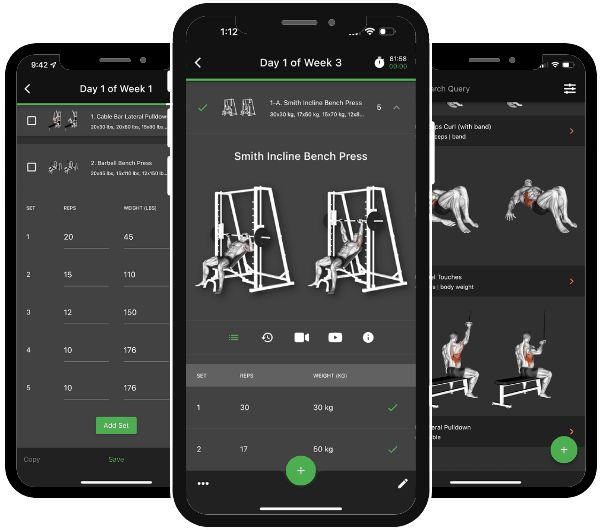
Achieve more with Fitwill: explore over 5000 exercises with images and videos, access built-in and custom workouts, perfect for both gym and home sessions, and see real results.
Start your journey. Download today!


Instructions
- Grip the parallel dip handles on the cage and support your body on straight arms with your shoulders down and chest lifted.
- Lean your torso slightly forward, bend your knees or cross your ankles behind you, and keep your body still before the first rep.
- Inhale, then lower by bending your elbows until your upper arms are near parallel to the floor or you feel a strong chest stretch.
- Keep your elbows angled slightly out and back so the chest stays loaded instead of dumping all the work into the shoulders.
- Pause briefly at the bottom without bouncing or letting the shoulders roll forward.
- Press the handles down and slightly back until your elbows are straight again and your chest stays lifted.
- Exhale as you press up, then reset the shoulders at the top before starting the next rep.
- Repeat for the planned number of repetitions with the same body angle and control on every rep.
Tips & Tricks
- A small forward lean keeps the chest involved; staying too upright shifts the set toward the triceps.
- Stop the descent before the shoulders drift forward or you lose tension across the chest.
- Think about pushing the bars down and slightly back rather than simply locking the elbows hard at the top.
- Crossing the ankles or bending the knees helps keep the lower body quiet on the cage.
- Keep the forearms close to vertical under the hands so the joints stack cleanly through the rep.
- Use a slower lowering phase if you tend to drop into the bottom and bounce out of it.
- If the front of the shoulder feels pinched, shorten the range and reduce the amount of torso lean.
- Add load only after you can repeat the same torso angle and bottom position every rep.
Frequently Asked Questions
What does a chest dip on a dip-pull-up cage train most?
It primarily trains the chest, especially the pecs, while the triceps and front delts assist.
How is this different from a more upright dip?
A forward torso lean shifts more work to the chest; a more upright torso makes the triceps do more of the pressing.
How low should I go on the dip handles?
Lower only until you get a strong chest stretch and your shoulders still feel stable, usually with the upper arms near parallel.
Why do my shoulders feel the bottom more than my chest?
You may be dropping too deep, leaning too little, or letting the shoulders roll forward at the bottom.
Can a beginner use this exercise?
Yes, but it should start with assistance, a shortened range, or very controlled bodyweight reps.
Should I lock out hard at the top?
Reach straight arms under control, but do not bounce or shrug into the shoulders before the next rep.
What should I do with my legs on the cage?
Bend the knees or cross the ankles so the lower body stays quiet and does not swing.
What is the safest way to progress it?
First improve range control and shoulder comfort, then add load or reps only when the same torso angle stays consistent.