Dumbbell Bent Arm Pullover Hold Isometric
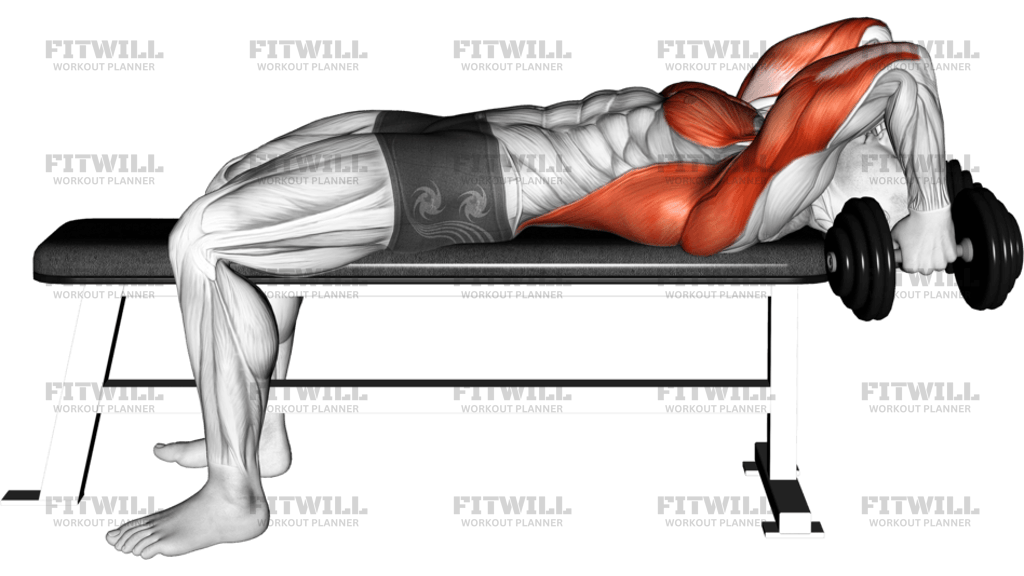
Dumbbell Bent Arm Pullover Hold Isometric is a flat-bench dumbbell position that loads the shoulders, chest, and upper torso while the elbows stay bent and fixed. Instead of repeating a full pullover rep, you hold the hardest part of the range and teach the body to stay organized under tension. That makes it useful for lifters who want a stronger stretched position, better shoulder control, and a more deliberate upper-body accessory movement.
The setup matters because the hold only feels productive when the ribs stay down and the shoulder position stays clean. Lie on a flat bench with your upper back supported, feet planted on the floor, and a dumbbell in each hand. Bring the weights back until the upper arms are angled behind the torso but the elbows still have a soft bend, so the shoulders take the load without the elbows locking out or drifting wildly.
From there, the goal is to keep the dumbbells steady instead of letting them sway or sink deeper. Hold the position with the wrists stacked over the elbows, the neck relaxed, and the chest open without forcing the lower back to arch. A slow, controlled breath is usually enough; if the torso starts flaring or the shoulders pinch, shorten the hold range and reset the arm angle before trying again.
This exercise fits well as an accessory drill, a pre-fatigue hold before pressing, or a finisher when you want upper-body tension without fast movement. It is especially useful when a regular pullover feels too dynamic or when you want more time under tension in the stretched overhead position. The best repetitions are the ones that look quiet from the bench: no bouncing, no rib flare, and no rushing to escape the hold.
Use a lighter load than you would for a normal pullover and stop the set as soon as the dumbbells begin to drift or the shoulders lose their smooth line. If the front of the shoulder feels pinchy, raise the hold slightly and reduce the range. If the low back wants to arch, tighten the abdomen, keep the feet grounded, and make the hold shorter rather than forcing the dumbbells farther back.
Fitwill
Log Workouts, Track Progress & Build Strength.
Achieve more with Fitwill: explore over 9600 exercises with images and videos, access built-in and custom workouts, perfect for both gym and home sessions, and see real results.
Start your journey. Download today!




Instructions
- Lie on a flat bench with your upper back and head supported, feet flat on the floor, and a dumbbell in each hand.
- Hold the dumbbells above your chest with a neutral grip and keep a soft bend in both elbows.
- Pull your ribs down and lightly brace your abs so your lower back stays in contact with the bench.
- Lower the dumbbells back in a wide arc until your upper arms are slightly behind your torso.
- Keep the elbow angle fixed as you settle into the stretched position instead of straightening the arms.
- Squeeze the handles hard, keep your wrists stacked over your elbows, and hold the position without letting the weights drift.
- Breathe slowly through the hold while keeping your chest open and your neck relaxed.
- End the hold, guide the dumbbells back over your chest, and place them on your thighs or the floor before sitting up.
Tips & Tricks
- Choose light dumbbells first; the long lever makes this hold much harder than it looks.
- Keep the elbow bend almost frozen. If the arms straighten, the exercise turns into a very different shoulder drill.
- Stop the descent when the upper arms are just behind the torso, not when the shoulders start to pinch.
- Keep the wrists neutral so the dumbbells sit over the forearms instead of folding back toward the face.
- If your ribs pop up, shorten the hold and reset your brace before trying again.
- A quiet neck and still head usually mean the upper back is doing the work instead of the momentum.
- Use shorter holds with perfect control rather than forcing a long hold with shaking dumbbells.
- If one side feels lower than the other, reset both arms so the dumbbells finish at the same height.
Frequently Asked Questions
What muscles does Dumbbell Bent Arm Pullover Hold Isometric work?
It loads the chest, lats, and shoulder stabilizers most, with the triceps and grip helping keep the dumbbells steady.
Can beginners perform this exercise?
Yes, but start very light and keep the hold short. The position is demanding because the shoulders stay under tension for the whole rep.
How low should the dumbbells go in Dumbbell Bent Arm Pullover Hold Isometric?
Lower them only until the upper arms are slightly behind your torso and the shoulders still feel smooth. Going deeper usually turns the hold into a shoulder strain.
Should my elbows stay bent the whole time?
Yes. Keep a fixed soft bend in both elbows so the load stays on the stretched shoulder position instead of turning into a straight-arm pullover.
Why do my ribs flare during the hold?
The load is probably too heavy or the arms are drifting too far back. Bring the dumbbells up a little and keep your abs braced so the bench stays stable.
Is this the same as a regular dumbbell pullover?
No. A regular pullover moves through the range, while this version pauses and holds the stretched position to build control and time under tension.
What is the best bench setup for this exercise?
Use a flat bench with your head and upper back supported and your feet planted on the floor. That setup makes it easier to keep the torso from rocking.
How should I progress Dumbbell Bent Arm Pullover Hold Isometric?
First increase the hold quality, then add a few seconds, and only after that raise the dumbbell weight. If your shoulders lose position, the load is already too high.