Dumbbell RDL Stretch Isometric
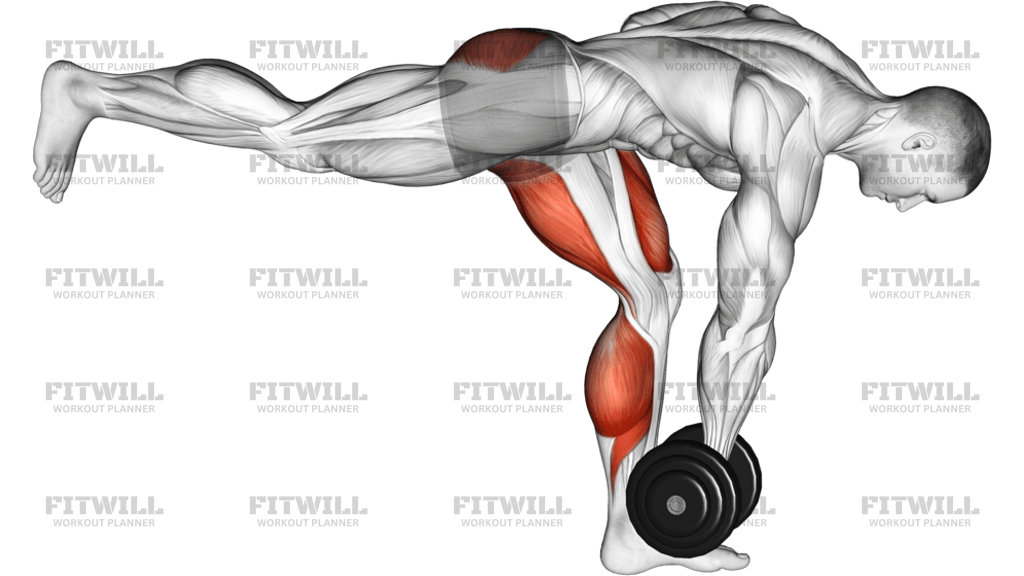
Dumbbell RDL Stretch Isometric is a single-leg hip hinge hold that loads the stretched position of the standing leg. You stand on one leg, tip the torso forward from the hips, and let the free leg reach long behind you so the body forms a controlled line from head to heel. The dumbbells hang beneath the shoulders while you hold the bottom range instead of cycling through full repetitions.
The main training effect comes from the standing-side glutes and hamstrings working hard while the pelvis stays square and the trunk stays long. In anatomy terms, the emphasis falls on Gluteus maximus and the hamstrings, with Rectus abdominis and Erector spinae helping keep the ribcage and spine organized. That combination makes the exercise useful for end-range strength, balance, and hip control, not just flexibility.
The setup matters because the bottom position is where people usually lose the line of the movement. A good rep starts with a soft knee, a long spine, and the dumbbells kept close to the standing leg so the load stays centered. The working hip should travel back while the lifted leg counterbalances behind you. If the torso rounds, the pelvis opens, or the weight drifts away from the shin, the stretch stops being specific to the hamstrings and starts becoming a back-dominant hold.
Because this is an isometric stretch, the goal is not to force depth. Hold the position where you can breathe, keep tension, and feel the stretch across the back of the standing thigh and glute without collapsing into the lumbar spine. Smooth breathing and a quiet upper body matter more than chasing a bigger range. The exercise works well as part of a warm-up, accessory block, or mobility-strength session when you want controlled single-leg loading.
Use it to build confidence in single-leg balance, to reinforce a clean hip hinge pattern, or to expose one side of the body to more honest hamstring tension. Beginners can use bodyweight, light dumbbells, or a light touch on a wall or rack for balance. More advanced lifters can progress by lengthening the hold, reducing support, or increasing the load while keeping the same neutral spine, square hips, and controlled return to standing.
[ Workout Log & Planner ]
Put your next workout in Fitwill
Keep your plan and training log ready when you are.


Instructions
- Stand on one leg with a soft knee and hold the dumbbells under your shoulders, keeping the load close to the standing shin.
- Hinge your hips back until your torso tips forward and your free leg reaches long behind you as a counterbalance.
- Keep the standing foot planted and let the pelvis stay square to the floor instead of opening toward the lifted leg.
- Lower only as far as you can keep a long spine, a flat back, and steady tension in the standing hamstring.
- Let the dumbbells hang straight down without swinging, twisting, or drifting away from the leg you are standing on.
- Pause in the stretched position and hold the isometric position for the programmed time while maintaining control.
- Breathe steadily through the hold and keep your ribs stacked so the lower back does not take over.
- Drive through the standing heel to return to upright, then reset before switching sides.
Tips & Tricks
- A slight bend in the standing knee usually keeps the hamstrings loaded better than locking the knee straight.
- Think about sending the hips back, not about reaching the dumbbells toward the floor.
- Keep the weights close to the shin; if they drift forward, the lower back has to work harder.
- The free leg should stay long and active so it helps balance the torso instead of hanging loosely.
- If your pelvis keeps opening, reduce the depth and square the hip before you push for a longer hold.
- Use slow nose breaths or quiet exhales so you do not brace so hard that the ribcage flares.
- A shorter, perfectly stacked hold is better than a deep position that makes you twist or round.
- If balance is the limiter, lightly touch a wall or rack and keep the hinge quality high.
Frequently Asked Questions
What does Dumbbell RDL Stretch Isometric train most?
It primarily trains the standing-side glutes and hamstrings while challenging the core to keep the torso and pelvis aligned.
Is this the same as a regular dumbbell RDL?
No. A regular RDL moves through repetitions, while this version holds the stretched bottom position on one leg.
Should the dumbbells touch the floor?
Not necessarily. Lower only until you can keep a neutral spine and steady pressure in the standing leg.
How long should I hold the stretch?
Most people do well with 10 to 30 seconds per side, but the right hold time is the one that lets you stay square and controlled.
Can beginners do this exercise?
Yes. Start with bodyweight, very light dumbbells, or a fingertip support on a wall or rack until the balance and hinge feel clean.
Why do I feel this in my lower back instead of my hamstrings?
That usually means the torso rounded, the pelvis opened, or the weights drifted away from the standing leg.
Should the lifted leg stay straight?
A long, active back leg works best here because it helps you balance the hinge and keeps the position more athletic.
How do I make the exercise harder?
Increase the hold time, add a little load, or reduce support, but keep the same square hips and long spine.