Standing Calf Raise On A Staircase
Standing Calf Raise on a Staircase is a bodyweight calf exercise that uses a stair edge to create a deeper stretch at the bottom and a cleaner lockout at the top. The setup is simple, but the small details matter: the balls of the feet stay on the step, the heels drop below the edge, and the ankle does the work while the rest of the body stays quiet. That makes it useful for building calf size, ankle strength, and control without needing a machine or added load.
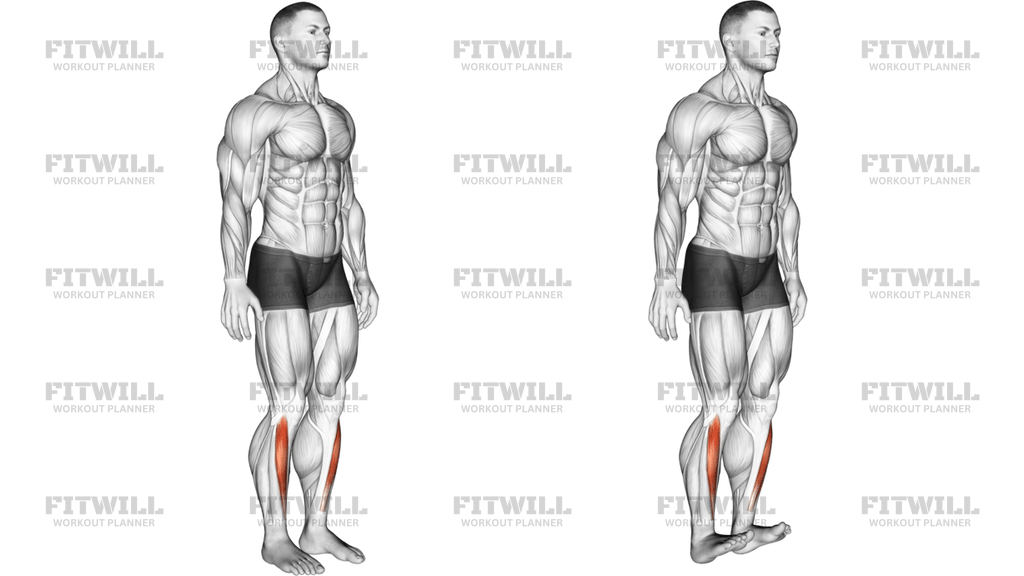
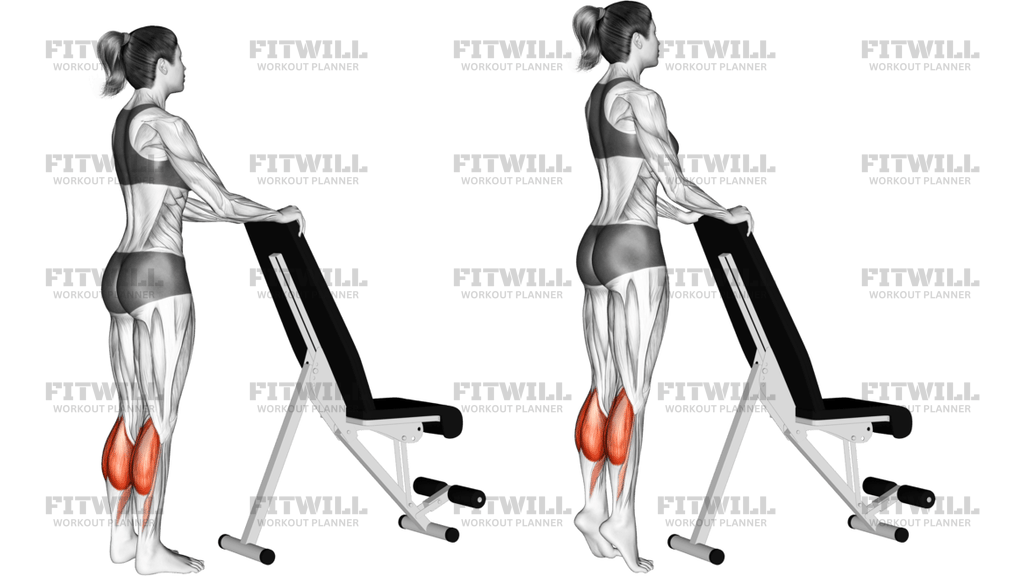
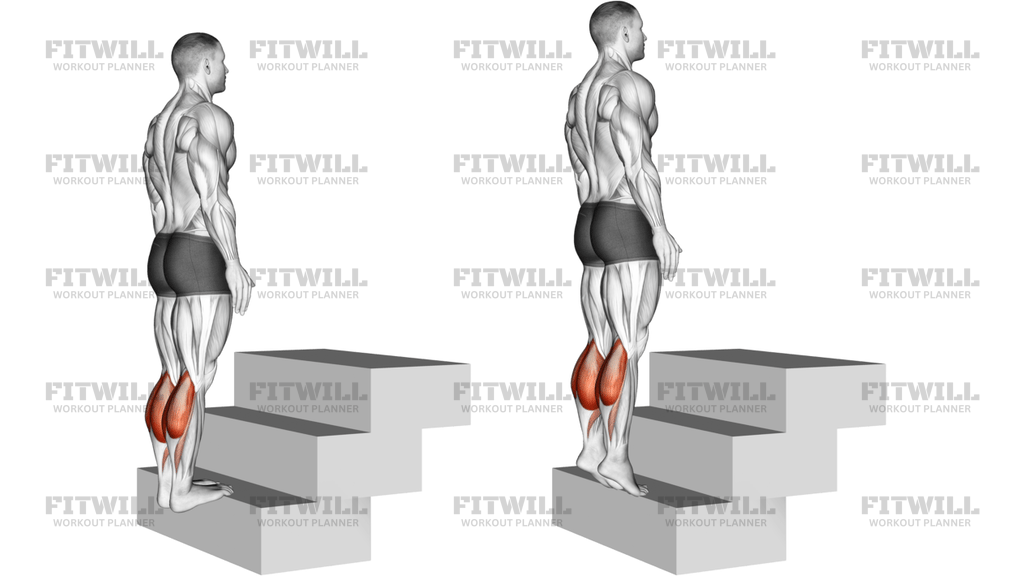
This variation emphasizes the gastrocnemius strongly because the knees stay mostly straight, while the soleus still contributes to the press and the stabilizers help keep you balanced on the stair. The image shows a tall, upright stance with the torso stacked over the midfoot and the heels moving through a full drop-and-rise cycle. If you rush the motion or shift your weight forward, the calves lose tension and the exercise turns into a bounce.
The staircase setup also changes the training feel by letting you lower the heel below foot level. That extra lengthened position is valuable, but only if you control it. Let the heels sink under control until you feel a strong calf stretch, then drive through the big toe and second toe to rise as high as you can without rolling the ankles outward or leaning back. A light fingertip hold on a rail or wall is fine if it helps you stay steady; the support should reduce wobble, not help you push the rep.
Use this movement when you want direct calf work, ankle mobility under load, or an accessory exercise that fits into lower-body training, running preparation, or general strength work. It can be done for higher reps, slow pauses, or one-leg progressions, but the standard two-foot version is a good place to start. The key is a consistent bottom stretch, a strong top squeeze, and a controlled descent on every rep so the calves stay under tension instead of the staircase becoming a bounce pad.
Fitwill
Log Workouts, Track Progress & Build Strength.
Achieve more with Fitwill: explore over 9600 exercises with images and videos, access built-in and custom workouts, perfect for both gym and home sessions, and see real results.
Start your journey. Download today!




Instructions
- Stand on the edge of a stair with the balls of both feet on the step and your heels hanging off the back edge.
- Keep your feet about hip-width apart and stack your hips, ribs, and head over the midfoot.
- Hold a wall, rail, or post lightly for balance if needed, but do not lean your body weight into it.
- Start with your heels lowered below the step until you feel a strong stretch through both calves.
- Press through the big toe and second toe to lift your heels as high as possible.
- Pause briefly at the top and squeeze the calves without bouncing or rolling the ankles outward.
- Lower the heels slowly back below the stair edge under control.
- Keep your knees mostly straight but not locked, and breathe out as you rise and in as you lower.
- Repeat for the planned number of reps, then step fully off the stair before resetting.
Tips & Tricks
- Use the stair edge, not the flat part of the step, so the heels can drop below foot level.
- A light fingertip touch on a rail is enough for balance; do not use your arms to help lift the rep.
- Keep the pressure centered over the big toe and second toe so the ankles do not drift outward.
- Do not fully lock the knees, because a hard lock shifts tension away from the calves and into the joints.
- A slower lowering phase usually produces better calf tension than quick, bouncy reps.
- Pause in the stretched bottom position if you want more range and control, but keep the stretch comfortable.
- If your balance is shaky, reduce the stair height or keep both hands on support for the first few reps.
- Stop the set if the feet start twisting, the heels are bouncing off the step, or the torso starts swinging.
- For more calf emphasis, use a brief squeeze at the top instead of trying to add speed or momentum.
Frequently Asked Questions
What muscles do stair standing calf raises work?
They primarily train the calves, especially the gastrocnemius, with the soleus helping during the ankle raise and lower.
Why use a staircase instead of the floor?
The step lets your heels drop below the level of the forefoot, which increases the stretched range at the bottom of each rep.
How should my feet sit on the stair?
Place the balls of the feet on the edge of the step and let the heels hang off the back so the ankle can move freely.
Can I hold the railing during this exercise?
Yes. A light hand on a rail or wall is useful for balance, but keep the support minimal so the calves still do the work.
How low should my heels drop?
Lower them until you feel a strong calf stretch without losing foot contact or collapsing through the arch.
What is the most common mistake on stair calf raises?
The biggest mistake is bouncing through the bottom range instead of controlling the drop and the push to the top.
Are straight knees correct for this movement?
Mostly straight knees are correct, but they should stay soft rather than locked so the joints stay comfortable and the calves can contract cleanly.
How can I make this exercise harder without adding weight?
Slow the lowering phase, pause in the stretched bottom position, or progress to single-leg calf raises on the same stair edge.