Band Pull Apart
Band Pull Apart is a standing shoulder and upper-back drill that uses a light resistance band to train horizontal pulling, scapular control, and posture. The movement is simple on paper, but the details matter: where you hold the band, how high the hands stay, and how much tension you create before the first rep all change what the exercise feels like. A clean pull apart should light up the rear delts and upper back without turning into a shrugging contest or a lower-back sway.
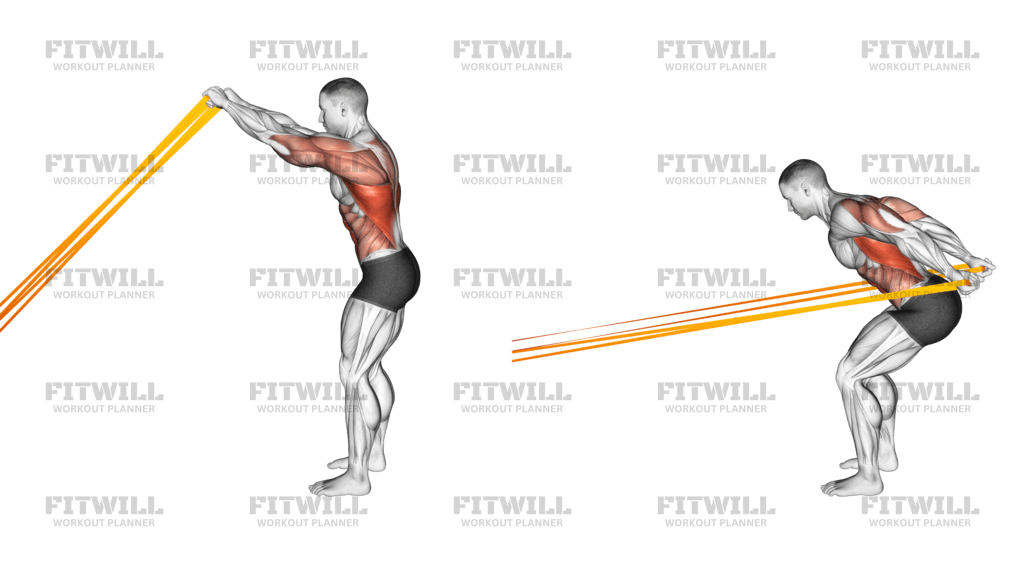
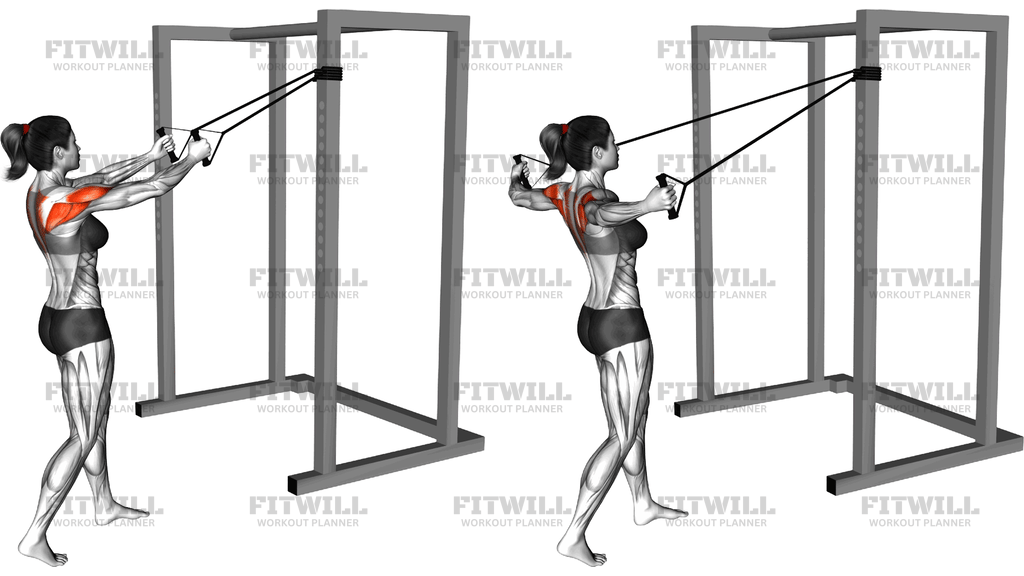
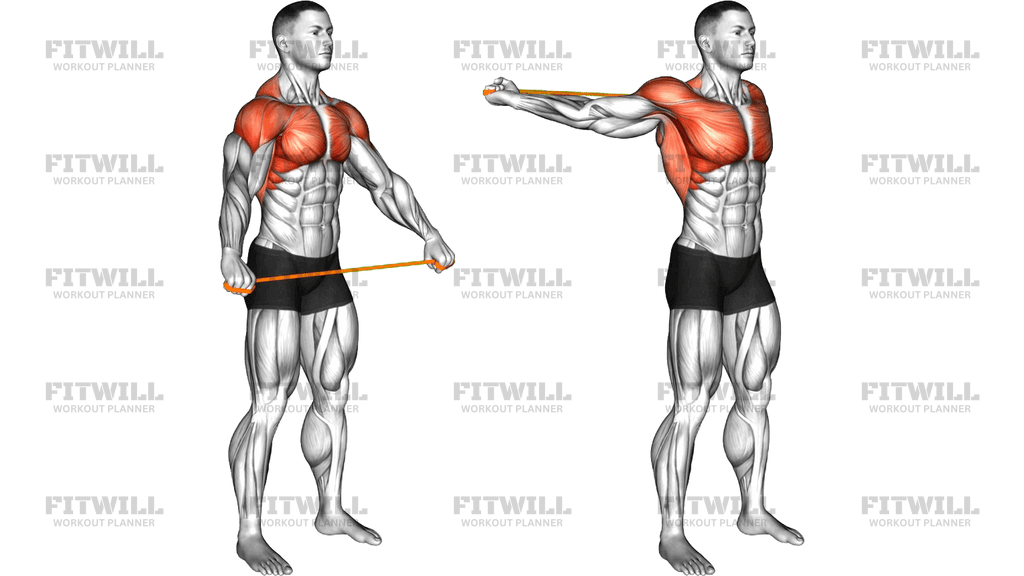
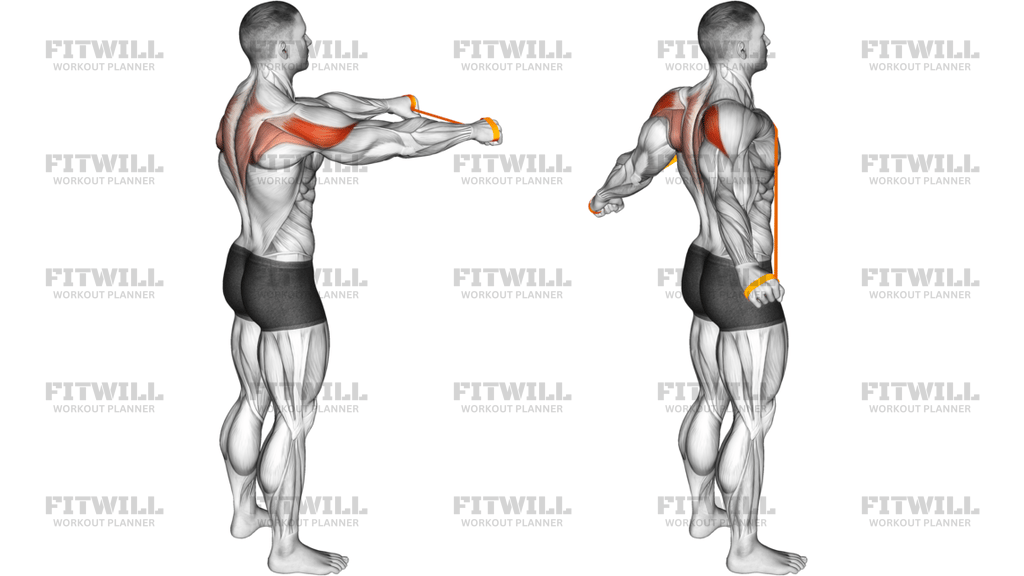
The image shows a band held at chest height with the arms reaching straight forward before the hands travel outward into a wide T shape. That path is what makes the exercise effective. As the hands separate, the shoulder blades should move smoothly back and slightly down, while the ribs stay stacked over the pelvis. If the band is anchored too low, the torso usually compensates. If it is too high, the movement drifts into the neck and upper traps. A centered chest-height setup keeps the target muscles honest.
This exercise is especially useful as a warm-up before pressing, overhead work, rows, or any session where the shoulders need to be switched on without heavy loading. It also works well as accessory volume for lifters who spend a lot of time pressing or sitting with rounded shoulders. Because the resistance is light, the goal is not to yank the band apart. The goal is to create smooth tension, pause briefly in the fully opened position, and return under control so the rear delts and mid-back do the work instead of momentum.
Good execution depends on a calm setup. Stand tall, soften the elbows only slightly if needed, and keep the wrists in line with the hands so the band does not twist the joints. Pull until the chest opens and the arms form a wide line across the body, then stop before the shoulders ride up. On the way back, resist the band instead of letting it snap forward. That slow return is where a lot of the shoulder control work happens.
Use a light band and a repeatable range that you can keep clean from the first rep to the last. If the neck starts tightening, the shoulders shrug, or the torso leans back to finish the rep, the band is too heavy or the setup is off. For most people, this is a technique and prep movement first, and a strength-endurance accessory second. Keep it crisp, controlled, and pain-free.
[ Workout Log & Planner ]
Put your next workout in Fitwill
Keep your plan and training log ready when you are.


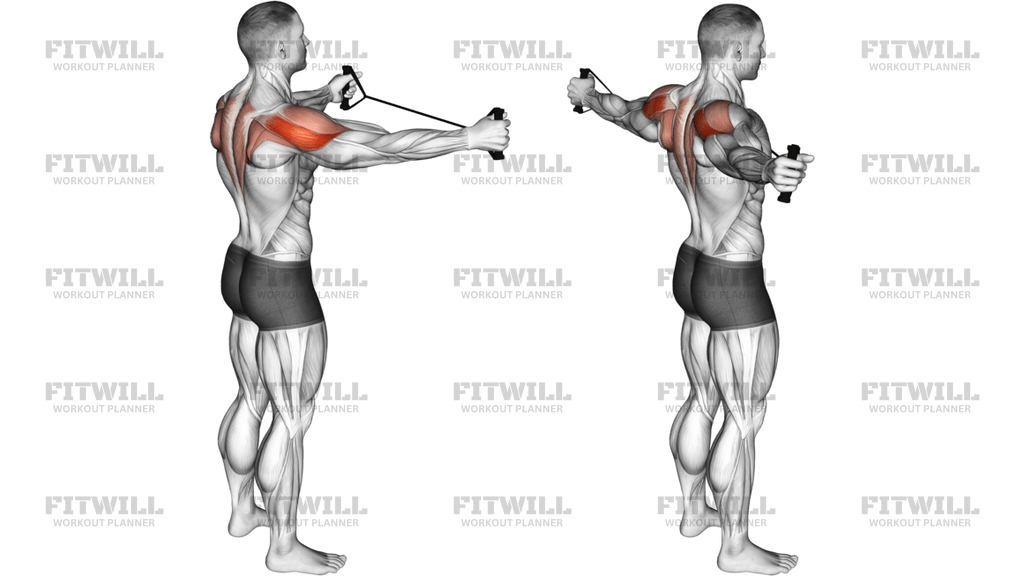
Instructions
- Stand tall with the band held at chest height, one handle in each hand, and your arms reaching straight forward at shoulder level.
- Set your feet about hip-width apart or use a light staggered stance so you can stay balanced without leaning back.
- Keep the wrists straight and the elbows nearly locked, with only a soft bend if the band feels too harsh on the joints.
- Before the first rep, set the shoulders down away from the ears and lightly brace your midsection.
- Pull the handles apart in a wide arc until your arms form a T shape and the band reaches across the chest line.
- Squeeze the rear delts and upper back for a brief pause without shrugging or arching the lower back.
- Return the handles forward slowly, letting the band pull your hands together under control rather than snapping back.
- Breathe out as you open the band, then inhale as you come back to the starting position.
- Reset your posture between reps if the chest lifts, the ribs flare, or the neck starts to tense.
- Repeat for the planned number of repetitions with the same clean range on every rep.
Tips & Tricks
- Keep the hands at chest height so the pull stays on the rear delts and mid-back instead of drifting into a high shrug.
- Think about spreading the band wide rather than pulling the shoulders backward as hard as possible.
- A very light band is usually enough; if you have to lean back to finish the rep, the resistance is too heavy.
- A brief pause in the open position makes the rear delts work harder than a fast, bouncing repetition.
- Do not let the wrists fold back or turn in during the pull; keep the knuckles, wrists, and forearms lined up.
- If your neck tightens first, lower the resistance and focus on keeping the shoulder blades down as the arms open.
- Use a staggered stance if a double-foot stance makes you rock or shift your hips during the set.
- The return phase matters: resist the band all the way forward so the upper back stays active.
- Stop the set when the shoulders start rolling forward or the torso begins to twist to create extra range.
Frequently Asked Questions
What does Band Pull Apart train most?
It primarily trains the rear delts and upper back while teaching the shoulders to open and close under control.
Do I need to bend my elbows during the pull?
A slight bend is fine, but the movement should look almost straight-armed so the band tension stays on the shoulders and upper back.
Where should the band be when I start?
Hold it at chest height with both hands in front of you so the first rep starts from a stable, even line.
How do I know if the band is too heavy?
If you have to lean back, shrug, or bend the elbows a lot to finish the pull, the band is too strong for clean reps.
Should my shoulder blades move during this exercise?
Yes. They should glide back and slightly down as you open the band, then return forward under control on the way back.
Can beginners use Band Pull Apart?
Yes. It is beginner-friendly when the band is light and the range stays smooth and pain-free.
What is a common mistake with the hands and wrists?
Bending the wrists back or letting the band twist the hands changes the line of force and makes the set less stable.
When should I use this exercise in a workout?
It works well in a warm-up, between pressing sets, or as accessory work when you want upper-back activation without heavy loading.