Band Lateral Raise Version 2
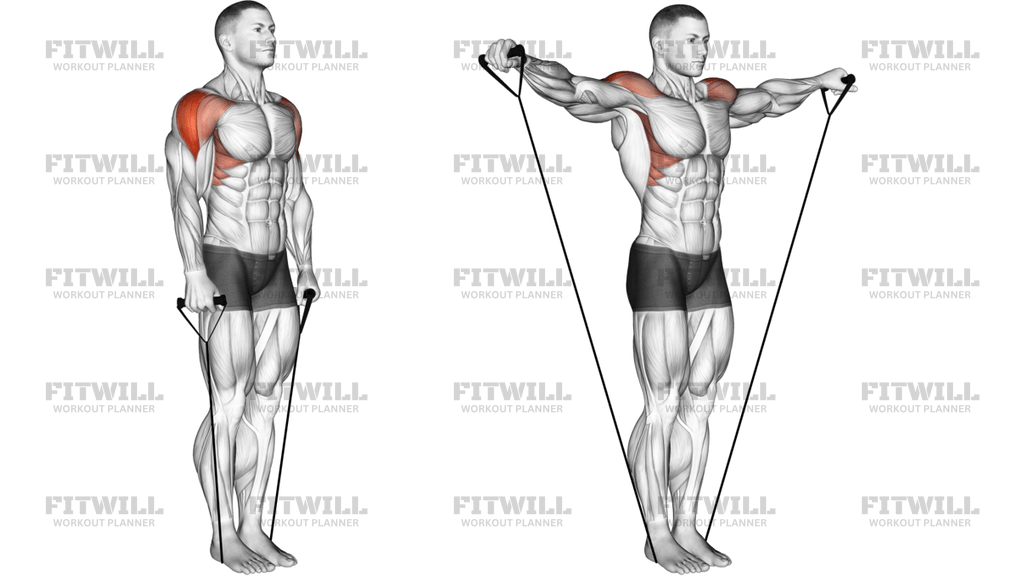
Band Lateral Raise Version 2 is a standing shoulder isolation exercise that uses band tension to train the side delts through a long, controlled arc. It is useful when you want direct shoulder work without needing heavy dumbbells or a machine, and it fits well in accessory blocks, warm-ups, or higher-rep hypertrophy work. The band keeps tension building as the arms move away from the body, so the rep feels smooth at the bottom and more demanding near the top.
The main target is the delts, especially the lateral head that helps create shoulder width. The upper traps, upper back, and arms help stabilize the shoulder girdle and keep the motion organized, but they should not take over the lift. In practical terms, this exercise works best when the shoulders stay down, the rib cage stays quiet, and the arms travel out to the sides instead of swinging forward.
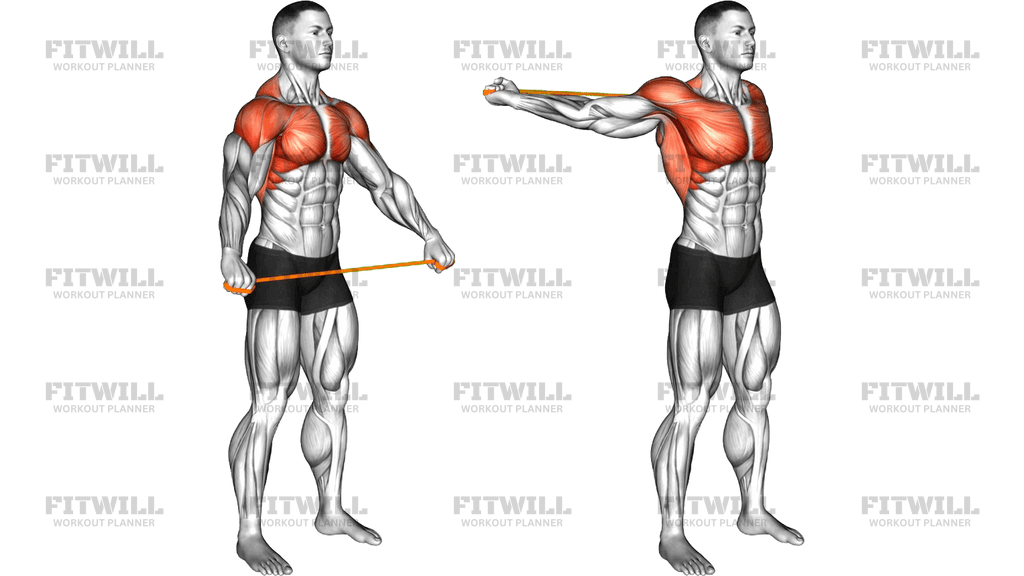
The setup matters because the band tension, foot position, and starting hand height determine how clean the first rep feels. Stand on the center of the band with the handles or ends secured under both feet, then hold the band at your sides with a soft bend in the elbows and neutral wrists. If the band is too light at the bottom or too heavy at the top, adjust your stance or band length before you start; the goal is to make every rep controlled from the first inch to the last.
From there, raise your arms out and slightly forward until they reach about shoulder height, then lower them slowly to your sides without letting the band snap you down. Keep the movement driven by the shoulders rather than by leaning back, shrugging, or turning it into a partial upright row. A short pause near the top can help you feel the side delt working, but the descent should stay smooth and deliberate so the band tension never disappears.
Band Lateral Raise Version 2 is especially useful for lifters who want shoulder volume without beating up the joints. It also works well when you need an exercise that is easy to set up at home, in a hotel, or anywhere a band can be anchored under your feet. The most important quality is consistency: repeat the same stance, the same arm path, and the same control on each rep so the shoulders do the work instead of momentum.
[ Workout Log & Planner ]
Put your next workout in Fitwill
Keep your plan and training log ready when you are.


Instructions
- Stand on the middle of the band with feet about hip-width apart and hold the handles or ends at your sides with your palms facing in.
- Set your shoulders down, soften your knees, and keep your chest tall so the band starts with light tension before the first rep.
- Keep a small bend in your elbows and brace your torso so your ribs do not flare as you begin the lift.
- Raise both arms out to the sides in a wide arc until your hands reach roughly shoulder height.
- Lead with the elbows and keep the wrists stacked over or slightly below them so the band does not pull your hands forward.
- Pause briefly at the top without shrugging, leaning back, or letting the band yank you higher.
- Lower the band slowly back to your sides until your hands return near your thighs and the shoulders are ready for the next rep.
- Inhale as you lower and exhale as you lift, then reset your posture before starting the next repetition.
Tips & Tricks
- If the band feels too easy at the bottom, step wider on it or shorten the slack so the first half of the rep stays loaded.
- Stop the raise around shoulder height; going higher usually turns the movement into a trap-dominant shrug.
- Keep the elbows slightly bent the whole time so the tension stays on the side delts instead of locking out the elbows.
- Do not swing the torso to cheat the rep upward; a small lean-back means the band is too heavy or the set is too hard.
- If your shoulders roll forward, think about spreading the floor and keeping the collarbones broad as the arms come up.
- A slower lowering phase makes the band work harder and helps control the bottom position where tension drops off.
- Use lighter band tension than you would for dumbbell laterals; the band gets harder as you approach the top.
- If one shoulder rises faster than the other, match the hands and reduce the range until both arms move evenly.
Frequently Asked Questions
What muscles does Band Lateral Raise Version 2 work most?
It mainly targets the side delts, with the upper traps and upper back helping to stabilize the shoulders.
How do I set up the band for Band Lateral Raise Version 2?
Stand on the center of the band, hold the ends or handles at your sides, and start with a small amount of tension before the first lift.
How high should my arms go in Band Lateral Raise Version 2?
Lift until your hands are about shoulder height. Higher than that often shifts tension into the traps and makes the rep less clean.
Can beginners do Band Lateral Raise Version 2?
Yes. A light band and a short range of motion make it very beginner-friendly, especially if you keep the torso still.
Why do my upper traps take over this exercise?
Usually the band is too heavy, the arms are going too high, or the shoulders are shrugging as the hands rise. Keep the neck long and stop at shoulder level.
Should I bend my elbows during Band Lateral Raise Version 2?
Yes, keep a soft, fixed elbow bend so the arms move like a wide lever instead of a straight-arm swing.
What is the best tempo for Band Lateral Raise Version 2?
Use a smooth lift and a slower lowering phase so the band stays under control and the shoulders do the work instead of momentum.
Can I substitute dumbbells or a cable for this movement?
Yes. Dumbbells are a close substitute for the same shoulder pattern, while a cable keeps tension more constant through the whole range.