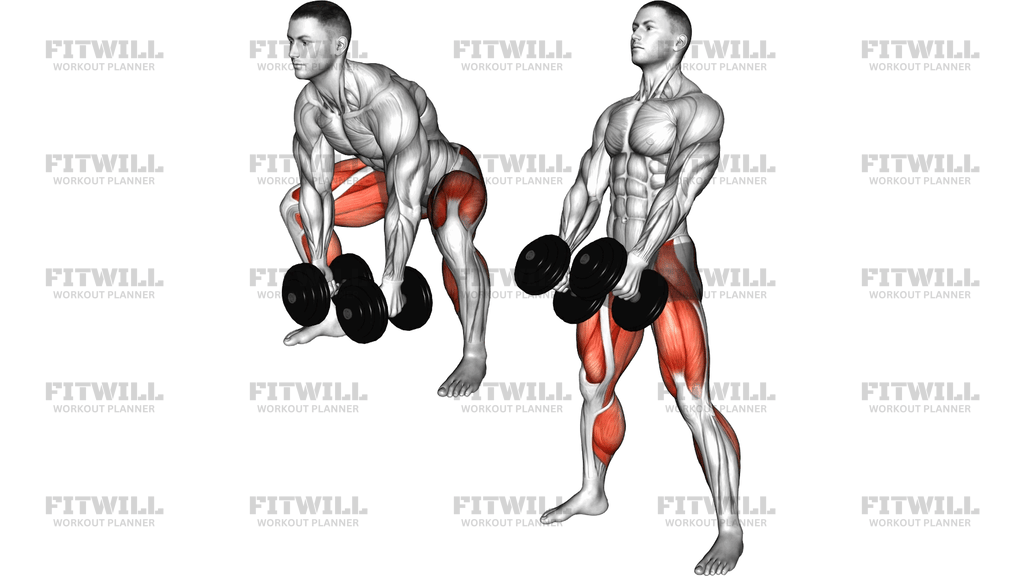
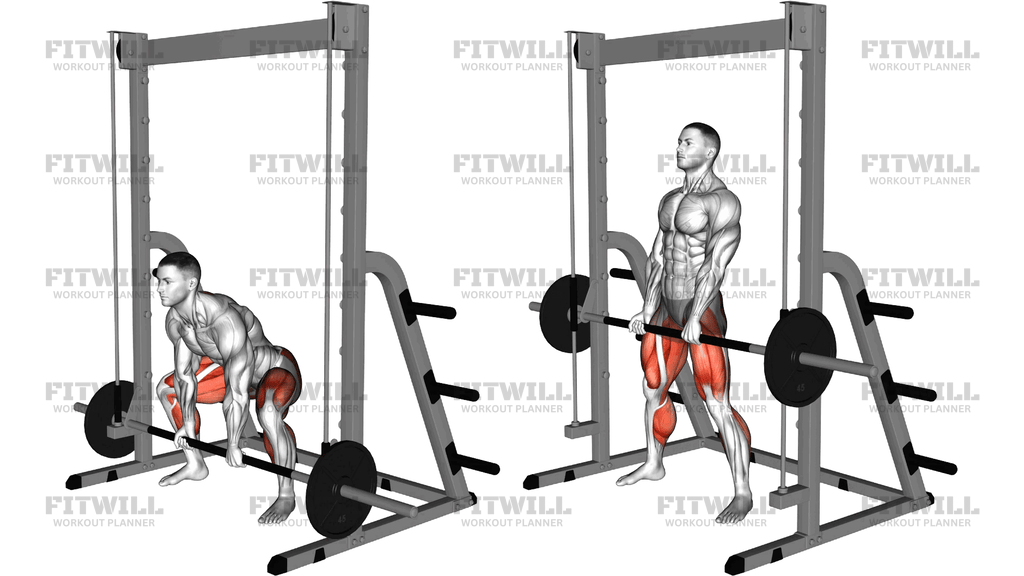
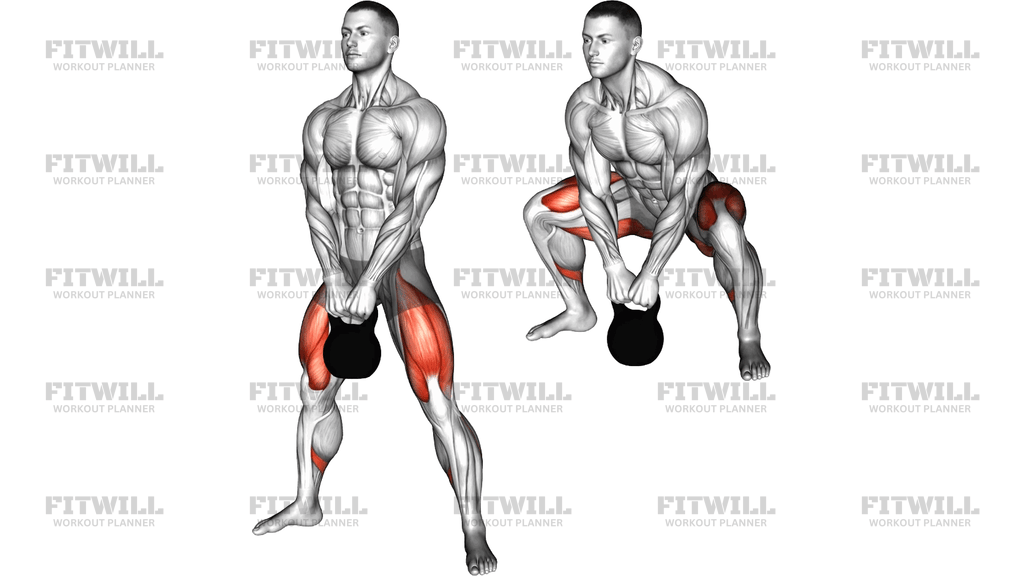
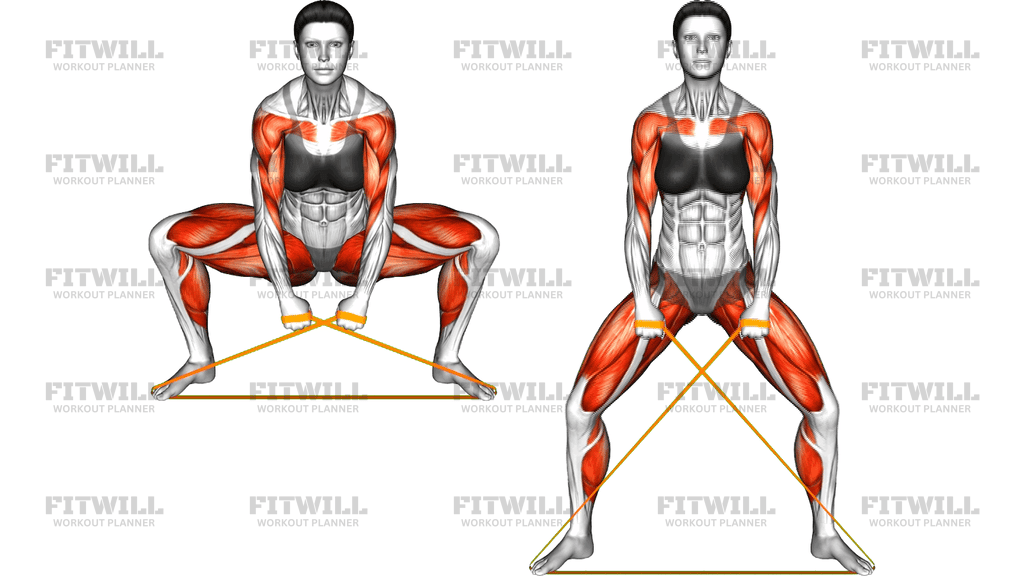
Barbell Bench Squat With Chains
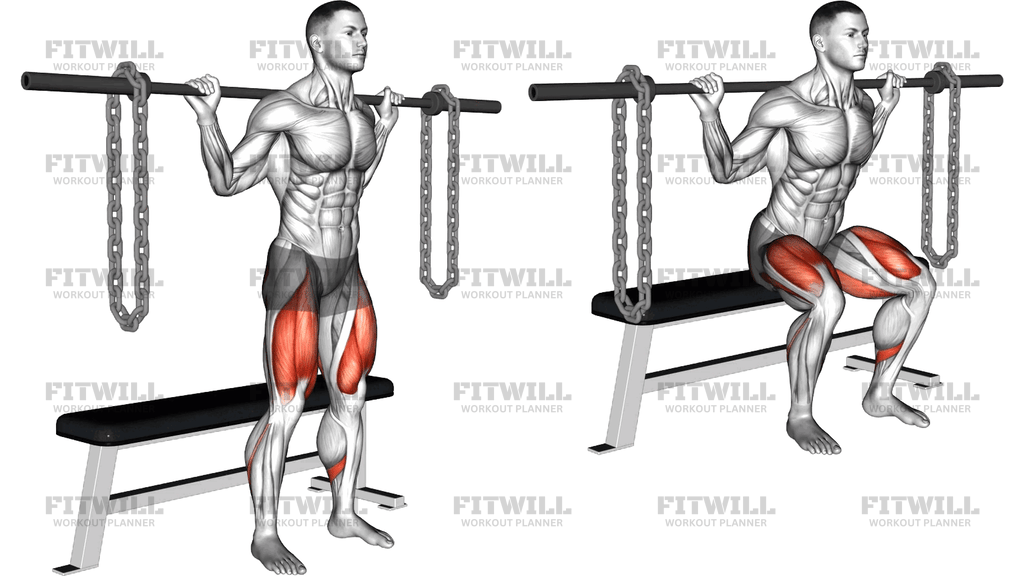
Barbell Bench Squat With Chains is a back-rack squat variation that uses a bench as a depth target and chains to make the top of the rep heavier than the bottom. The setup in the image shows the bar resting across the upper back, the feet set in a shoulder-width squat stance, and the hips traveling back to a bench behind the lifter. That bench gives you a consistent stop point, while the chains increase resistance as you stand up.
This movement is mainly a quad-focused squat, but it also asks a lot from the glutes, adductors, hamstrings, trunk, and upper back. The quads have to drive the lift away from the bench, while the torso stays braced so the bar stays over the midfoot. The chains are not just decoration: when they are adjusted correctly, they unload slightly at the bottom and add resistance as the lifter rises, which makes the concentric phase more demanding.
Setup matters more here than in a free squat because the bench changes how you organize the descent. The bench height should let you touch down at the depth you want without collapsing, rocking, or losing brace. Step out far enough that your hips can sit back to the bench with the heels planted and the knees still tracking over the toes. If the bench is too high, you will shorten the squat; if it is too low, you may lose position and bounce.
On each rep, lower under control until the glutes lightly contact the bench, then stay tight and drive back up without relaxing onto it. Think of the bench as a target, not a place to rest. The chains should hang evenly and clear the floor or nearly clear the floor so they create a smooth change in load through the rep. Keep the chest proud, the ribs stacked, and the bar path steady while you stand tall through the top.
Use this exercise when you want squat practice with a repeatable depth cue, extra overload at lockout, or a strength-focused variation that rewards clean mechanics. It can be useful for intermediate lifters building confidence out of the bottom, and for stronger lifters who want to train force production without changing the squat pattern too much. The main safety priorities are a stable bench, even chain length, and a load you can control without crashing into the seat or shifting side to side.
[ Workout Log & Planner ]
Put your next workout in Fitwill
Keep your plan and training log ready when you are.


Instructions
- Load the chains evenly on the bar and place a stable bench behind you at the depth you want to hit.
- Step under the bar, set it across your upper back, and grip it firmly with your elbows angled down.
- Walk your feet out to a shoulder-width stance with toes slightly turned out and your weight balanced over the midfoot.
- Take a breath, brace your trunk hard, and keep your chest up before you start the descent.
- Sit your hips back and bend your knees together, lowering under control until your glutes lightly touch the bench.
- Keep tension in your legs and torso on the bench contact; do not fully relax, rock, or collapse backward.
- Drive through your heels and midfoot to stand up, pushing the floor away as the chains rise and add load.
- Finish tall with your hips and knees fully extended, then reset your breath before the next rep.
Tips & Tricks
- Set the bench height so you can touch it with control at a depth that matches your squat goal, not just the bench height you happen to have.
- Keep the chains symmetrical on both sides; uneven chain lengths will twist the bar and make the descent feel unstable.
- Treat the bench like a depth marker only. If you sit and relax, the bounce will come from the bench instead of your legs.
- Let the knees travel forward as needed while keeping the feet planted; forcing the shins vertical often shifts the load onto the hips and turns the rep into a partial squat.
- Keep the bar stacked over the midfoot from start to finish so the chains do not pull you forward as they leave the floor.
- Use a controlled eccentric on every rep because the changing resistance can tempt you to drop too fast to the bench.
- Exhale as you pass the sticking point on the way up, then re-brace at the top before the next descent.
- Choose a load that lets you touch the bench cleanly on every rep without bouncing, shifting, or tipping onto one side.
Frequently Asked Questions
What does Barbell Bench Squat With Chains train most?
The quads are the main driver, with the glutes and trunk working hard to keep the squat upright and controlled.
Why are chains used on this squat?
Chains make the top of the lift heavier than the bottom, so you have to accelerate harder as you stand up.
Should I sit all the way onto the bench?
No. Lightly touch the bench and keep tension so the bench guides depth without stealing the rebound.
How high should the bench be?
Use a bench height that lets you reach your intended depth with a tight torso and stable foot pressure.
Is this a good beginner squat variation?
Only if the lifter already knows how to brace and squat safely; the bench and chains add complexity, so start light.
What is the most common mistake with this movement?
Relaxing onto the bench and then bouncing back up, which breaks tension and makes the bar path unstable.
Where should the bar sit during the rep?
Keep it fixed across the upper back and centered over the midfoot so the chains rise evenly as you stand.
What can I do if I do not have chains?
Use a standard barbell bench squat or box squat and keep the same depth target and bench control.