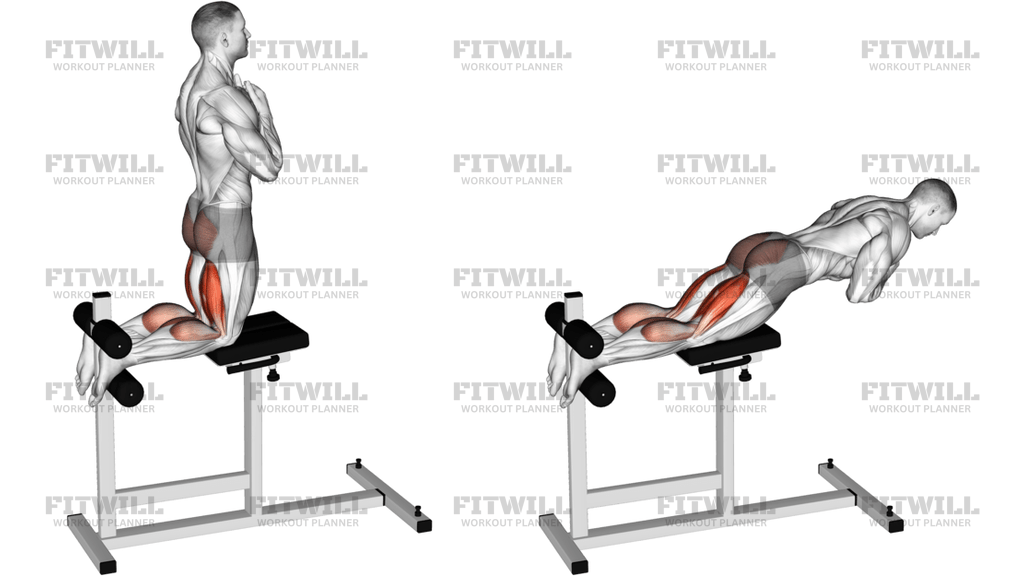
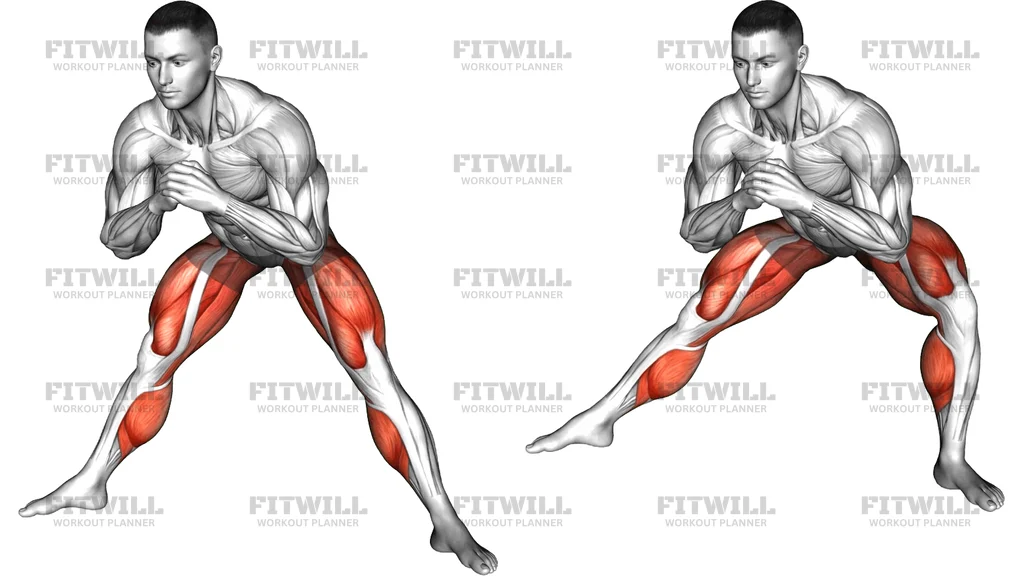
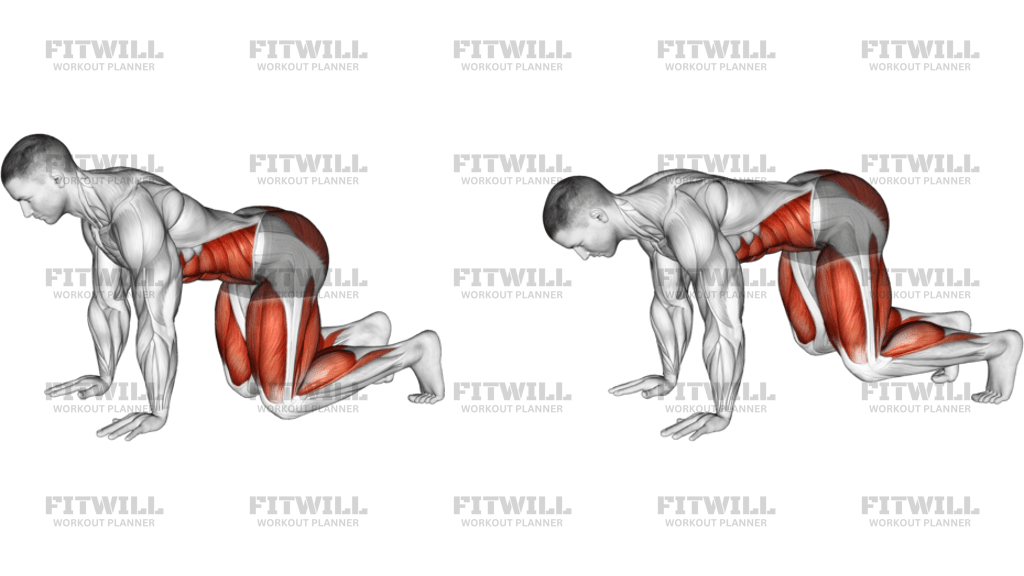
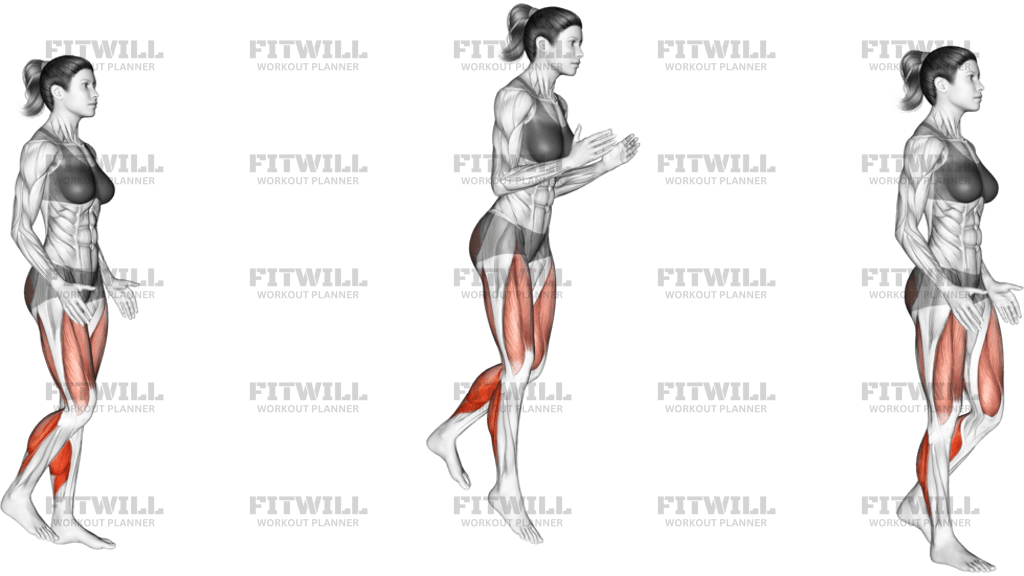
Crossover Reverse Lunge
Crossover Reverse Lunge is a bodyweight lower-body exercise that combines a reverse lunge with a diagonal step behind the standing leg. It asks you to control your balance, hip position, and knee tracking while the thighs and glutes do the main work. The crossover path adds a little more challenge for the inner thighs and core than a straight-back reverse lunge, which is why the setup matters so much.
This movement is useful when you want a unilateral leg drill that does not need equipment but still trains coordination and lower-body control. The front leg handles most of the load, while the back leg crosses behind and helps you challenge the hips without turning the torso. When Crossover Reverse Lunge is done well, the torso stays tall, the pelvis stays square, and the front foot stays rooted instead of wobbling or rolling inward.
Start from a stable stance with your feet about hip-width apart and your hands held in front of your chest or clasped together. From there, step one leg back and across the body so the foot lands behind the opposite side, not directly in line with the front foot. That diagonal path should feel controlled and deliberate, with enough width to keep balance but not so wide that the torso twists or the front knee caves inward.
As you lower, bend both knees and let the back knee travel toward the floor while the front shin stays roughly vertical or slightly forward depending on your mobility. Keep most of your pressure through the front heel and midfoot, and keep your chest lifted instead of folding over the front thigh. On the way up, drive through the front leg, squeeze the glute to stand, and bring the back leg back under you without bouncing out of the bottom.
Crossover Reverse Lunge works well in a warm-up, accessory block, or home workout where you want a clean single-leg pattern with plenty of control. It is also a good option for beginners who are still learning split-stance mechanics, as long as they keep the crossover small and the range comfortable. If balance is the limiting factor, shorten the step, slow the lowering phase, or lightly touch a wall for feedback while you keep the movement smooth and square.
Fitwill
Log Workouts, Track Progress & Build Strength.
Achieve more with Fitwill: explore over 9600 exercises with images and videos, access built-in and custom workouts, perfect for both gym and home sessions, and see real results.
Start your journey. Download today!




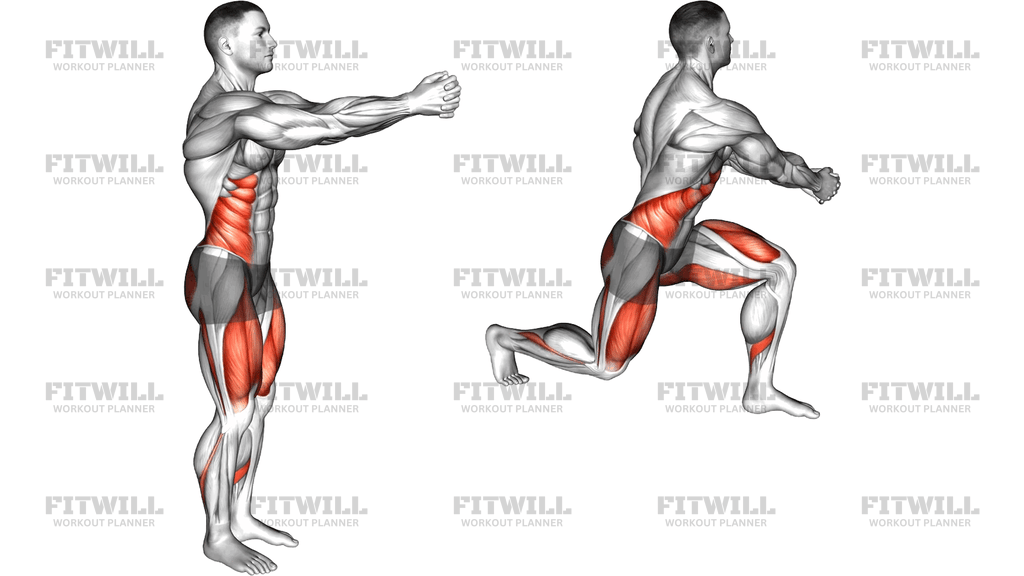
Instructions
- Stand tall with your feet about hip-width apart and your hands held together in front of your chest.
- Brace your trunk, keep your chest lifted, and shift your weight onto one leg before you step.
- Step the other leg back and across your body so the foot lands behind the standing leg on a diagonal line.
- Keep the front heel down and the front toes pointing forward as you begin to lower.
- Bend both knees and drop the back knee toward the floor while keeping your hips square to the front.
- Let the front knee travel in line with the middle toes instead of collapsing inward.
- Pause briefly near the bottom if you can stay balanced, with your torso still tall and your back leg lightly loaded.
- Drive through the front heel and midfoot to stand back up, then bring the crossing leg back under your hips with control.
- Reset your stance and repeat for the planned reps, then switch sides or alternate sides as programmed.
Tips & Tricks
- Take a smaller crossover step if your front knee dives inward or your pelvis twists.
- Keep the back foot on the ball of the foot; the rear heel should stay light and quiet.
- Imagine the front glute lifting you out of the bottom instead of pushing off the back leg.
- If the movement feels unstable, keep your hands clasped at chest height instead of letting the arms swing.
- Lower only as far as you can keep the front foot flat and the torso stacked over the hips.
- A slow 2-3 second descent makes the crossover pattern cleaner and exposes balance leaks fast.
- Use a wall, rack, or chair for a fingertip touch if balance limits the quality of the rep.
- Stop the set when the front arch collapses or the back leg starts swinging instead of stepping.
- For a harder set, pause for one second at the bottom before driving back up.
Frequently Asked Questions
What does Crossover Reverse Lunge train?
It trains the thighs and glutes on the front leg while challenging the inner thighs, hips, and core to keep the body square during the crossover step.
How is Crossover Reverse Lunge different from a regular reverse lunge?
Instead of stepping straight back, you step back and across the body. That adds more balance demand and usually makes the hip stabilizers and inner thigh work harder.
Should my front foot stay flat in Crossover Reverse Lunge?
Yes, keep the front heel down and pressure spread across the heel, big toe, and little toe. If the foot rolls inward, shorten the crossover and reduce the depth.
How low should I go in this exercise?
Lower until the back knee is close to the floor and the front knee still tracks cleanly over the toes. Depth should stop before your torso twists or the front arch collapses.
Can beginners do Crossover Reverse Lunge?
Yes. Start with a smaller diagonal step, body weight only, and a slow descent so you can learn the balance pattern before adding speed or load.
Why do I feel Crossover Reverse Lunge in my inner thigh?
The crossover path asks the adductors to help control the pelvis and the front leg. Some inner thigh tension is normal, especially if the step crosses farther behind the body.
What is the most common mistake in Crossover Reverse Lunge?
The biggest mistake is letting the hips rotate open as the back leg crosses behind. Keep the hips facing forward and step back on a diagonal instead of swinging the leg wide.
Can I add load to Crossover Reverse Lunge later?
Yes. Once the bodyweight version stays stable, you can hold dumbbells or a kettlebell, but only if the front knee, foot, and torso stay aligned through every rep.