Barbell Quarter Squat
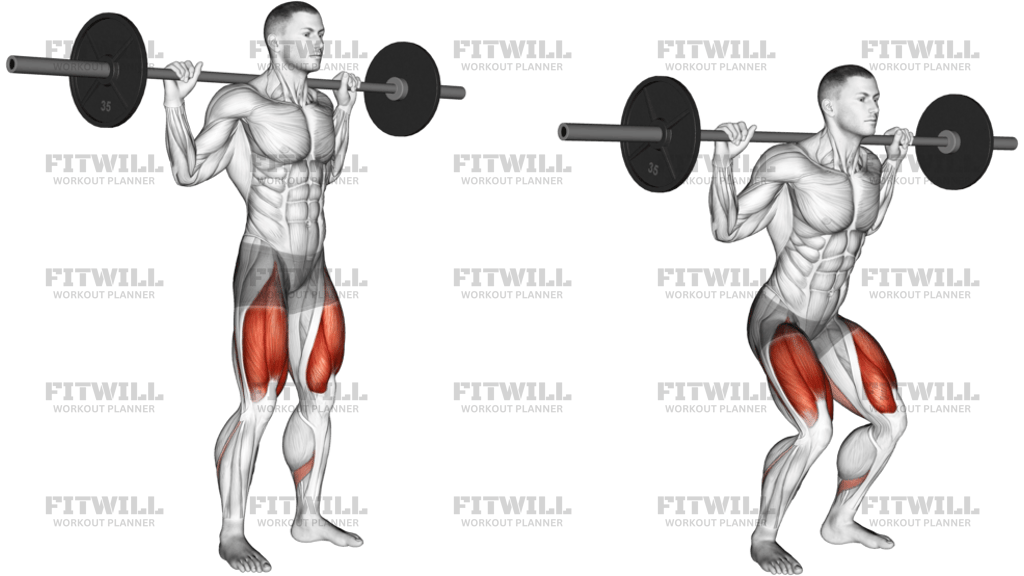
Barbell Quarter Squat is a shallow barbell squat performed from a standing back-rack position, with the bar resting across the upper back and the knees bending only through the top portion of the squat. The shorter range makes it a useful way to load the quads hard while keeping the torso tall and the rep pattern crisp. In the image, the lifter uses a back-squat setup with a shoulder-width stance and a controlled dip instead of a deep descent.
Because the range is intentionally limited, setup matters more than in a full squat. Your feet need to be planted, your brace needs to be active before you unlock the knees, and the bar needs to stay fixed on the back so the torso does not pitch forward as soon as you descend. This exercise is meant to challenge leg strength and position control at the top half of the squat, not to chase depth.
The main training stress is on the quads, with glutes, adductors, hamstrings, upper back, and trunk all helping stabilize the bar and control the knee and hip angles. That makes the quarter squat useful for athletes, strength work, and accessory blocks where you want heavy leg loading without the fatigue of full-depth squatting. It can also help lifters practice staying braced and upright through the sticking area near the top half of the movement.
Each repetition should look smooth and deliberate: sit back and down only until the thighs are well above parallel, keep the knees tracking in line with the toes, and then drive straight up through the midfoot. The bar should travel over a steady base, not drift forward over the toes. If the bar rolls, the heels rise, or the torso collapses, the load is too heavy or the stance is not stable enough for this variation.
Use Barbell Quarter Squat when you want quad-focused barbell loading, top-range squat strength, or a controlled partial squat that fits into a strength or power program. It is not a replacement for full squats if your goal is complete squat depth, but it is a practical tool for overloading the top portion of the squat pattern with strict control and repeatable positioning.
[ Workout Log & Planner ]
Put your next workout in Fitwill
Keep your plan and training log ready when you are.


Instructions
- Set the bar across your upper back or rear delts, then grip it just outside shoulder width and stand with feet about shoulder width apart.
- Brace your trunk, lock in a tall chest, and keep your ribs stacked over your pelvis before you start the descent.
- Unlock the hips and knees together and sit down only into the top quarter of a squat, stopping well above parallel.
- Keep both heels down and let the knees travel in line with the second and third toes instead of caving inward.
- Pause briefly at the bottom of the partial range without relaxing your brace or letting the bar drift forward.
- Drive up by pressing the floor away through the midfoot and heels until the hips and knees return to full standing.
- Keep your torso firm and the bar path steady as you rise, especially through the first half of the ascent.
- Reset your breath and posture at the top before the next repetition.
Tips & Tricks
- Use a quarter-squat depth that stays consistent from rep to rep; do not chase depth changes just because the load feels light.
- If your torso folds forward, lower the load and keep the chest stacked over the hips before adding weight again.
- A shoulder-width stance usually makes it easier to keep the knees tracking cleanly in this partial squat.
- Keep pressure through the whole foot, but avoid letting the heels pop up as soon as the knees bend.
- Treat the top half of the squat as the hard part of the lift and move the bar with a controlled, vertical rise.
- Do not bounce out of the bottom; the rep should reverse under control instead of relying on rebound.
- If the bar shifts on your back, tighten your upper back and choose a grip width that lets the elbows stay slightly down and back.
- This variation is best suited to deliberate strength sets, so use a load that preserves the same shallow depth on every rep.
Frequently Asked Questions
What muscles does the barbell quarter squat work most?
It emphasizes the quads most, with glutes, adductors, hamstrings, upper back, and core helping stabilize the bar and legs.
Is the bar supposed to sit high or low on my back?
The image shows a back-rack setup across the upper back and rear delts, so keep the bar fixed there and brace hard before you descend.
How deep should I squat in this exercise?
Only descend through the top quarter of the squat, stopping clearly above parallel while keeping the feet flat and the torso controlled.
Why do the knees need to track over the toes?
That keeps the load centered over the feet and helps prevent the knees from collapsing inward as you drive back up.
Can I use this instead of a full barbell squat?
It is a useful accessory or overload movement, but it does not replace full squats if you want complete squat depth and patterning.
What is the most common mistake with quarter squats?
Most errors come from leaning forward, bouncing out of the bottom, or turning the movement into a half-rep with no control.
Is the barbell quarter squat good for beginners?
Beginners can learn it with light load, but they should first be able to hold a stable back-squat position and brace consistently.
Where should I feel the effort during the rep?
You should feel strong quad work and some glute and trunk tension, especially as you drive out of the shallow bottom position.