Barbell Stiff Legged Deadlift
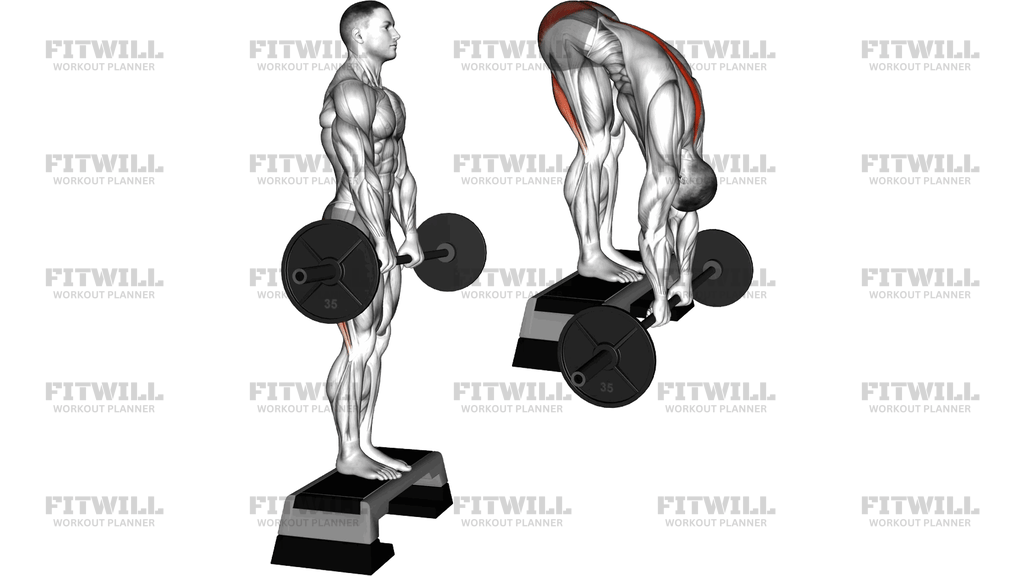
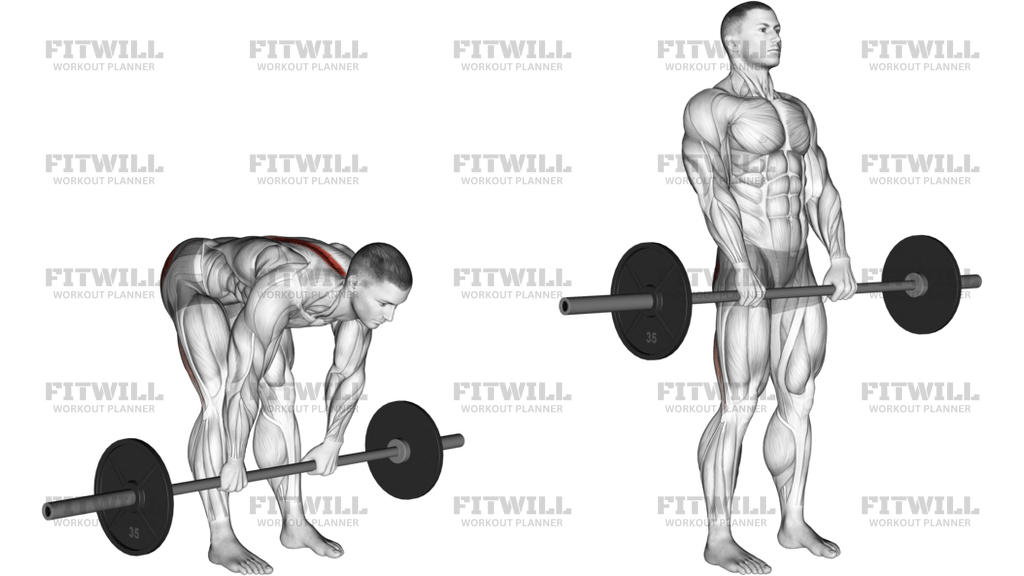
Barbell Stiff Legged Deadlift is a barbell hip-hinge exercise that loads the back side of the body, especially the hamstrings and glutes, while the torso, grip, and trunk work to keep the lift organized. In the image, the bar stays in front of the thighs and the body folds at the hips rather than dropping into a squat, which is what gives the movement its stiff-legged deadlift character. The goal is not to bounce the weight or chase a huge range. The goal is to own the hinge, keep the bar close, and finish every rep with the same posture you started with.
This exercise is useful when you want direct posterior-chain work without turning the movement into a knee-dominant squat pattern. The slight knee bend lets the hips move back and the hamstrings lengthen under load, while the spine stays neutral and the shoulders stay packed. That setup matters: if the bar drifts away from the legs or the knees bend too much, the stress moves away from the hinge pattern and the lift becomes harder to control. A clean repetition should feel like a deliberate stretch through the hamstrings on the way down and a strong hip extension on the way up.
Start from a tall standing position with the bar resting against the front of the thighs, then brace and hinge the hips backward until the torso tips forward under control. The bar should travel in a straight line close to the legs, usually down to mid-shin or to the point where the back can stay flat and the hamstrings still own the movement. From there, drive the feet into the floor, pull the hips forward, and stand tall without leaning back at the top.
This lift shows up well as an accessory on lower-body or pull days, especially when you want more hamstring loading, hip-hinge skill, and glute finish without pulling from the floor. Light to moderate loads usually work best because form degrades quickly if the weight is so heavy that the back rounds or the bar drifts forward. Beginners can learn it safely if they use a small range, keep the knees softly unlocked, and stop the descent as soon as the hinge position starts to change. Treat the movement like controlled strength work, not a speed rep or a bounce out of the bottom.
[ Workout Log & Planner ]
Put your next workout in Fitwill
Keep your plan and training log ready when you are.


Instructions
- Stand tall with the barbell against the front of your thighs, feet about hip-width apart, and your hands gripping just outside the legs.
- Unlock the knees slightly and pull the ribs down so you can brace your torso before the first rep.
- Push the hips straight back and let the torso tip forward while the bar stays close to the thighs.
- Keep the shins nearly vertical and maintain a soft knee bend as the bar slides down the legs.
- Lower only until you feel a strong hamstring stretch and can still keep the spine flat and long.
- Pause briefly in that stretched position without relaxing your brace or letting the shoulders round forward.
- Drive the feet into the floor, pull the hips forward, and stand up by squeezing the glutes rather than leaning back.
- Finish tall with the bar back against the thighs, then reset your brace before the next rep.
- Inhale on the way down, exhale as you pass the hardest part of the lift, and repeat for the planned reps.
Tips & Tricks
- Keep the bar brushing the thighs and shins; if it drifts forward, the hinge usually turns into a lower-back exercise.
- Think about sending the hips back instead of reaching the bar toward the floor.
- Use only a small knee bend, because too much knee flexion turns this into a squat pattern.
- Stop the descent the moment your pelvis tucks or your low back starts to round.
- A slower lowering phase makes the hamstrings do more of the work and keeps the rep honest.
- The top position should be tall and stacked, not a backward lean with the ribs flared up.
- Choose a load that lets you keep the same torso angle and bar path on every rep.
- Use straps if grip is the limiting factor and you still want the hamstrings to be the main driver.
- If tight hamstrings shorten the range, keep the back position clean and work only through the range you can control.
Frequently Asked Questions
What muscles does Barbell Stiff Legged Deadlift work?
It mainly trains the hamstrings and glutes, with the spinal erectors, core, and grip helping you keep the bar and torso organized.
How is this different from a Romanian deadlift?
The two are very similar hip hinges, but the stiff-legged version usually starts a little more upright and keeps the knees only softly bent without turning into a squat.
How low should the bar go on each rep?
Lower it only as far as you can keep a neutral spine and a strong hamstring stretch, usually around mid-shin for most lifters.
Should my knees stay straight the whole time?
No. Keep them softly unlocked so the hips can hinge back, but do not keep bending them more as you descend.
Should the bar touch my legs?
Yes. The bar should stay very close to your thighs and shins so the lift remains a true hip hinge instead of drifting away from your body.
Can a beginner learn this safely?
Yes, if the load is light and the range stays short enough to preserve a flat back, stable brace, and smooth bar path.
Why do I feel it in my lower back?
A little erector work is normal, but if the lower back is doing most of the work, the load is probably too heavy or the bar is getting too far from the legs.
Can I do this if my hamstrings are tight?
Yes, but shorten the range and keep the hinge clean. Only lower as far as your back position and hamstring tension can both stay under control.