Barbell Wide Stance Stiff Leg Deadlift
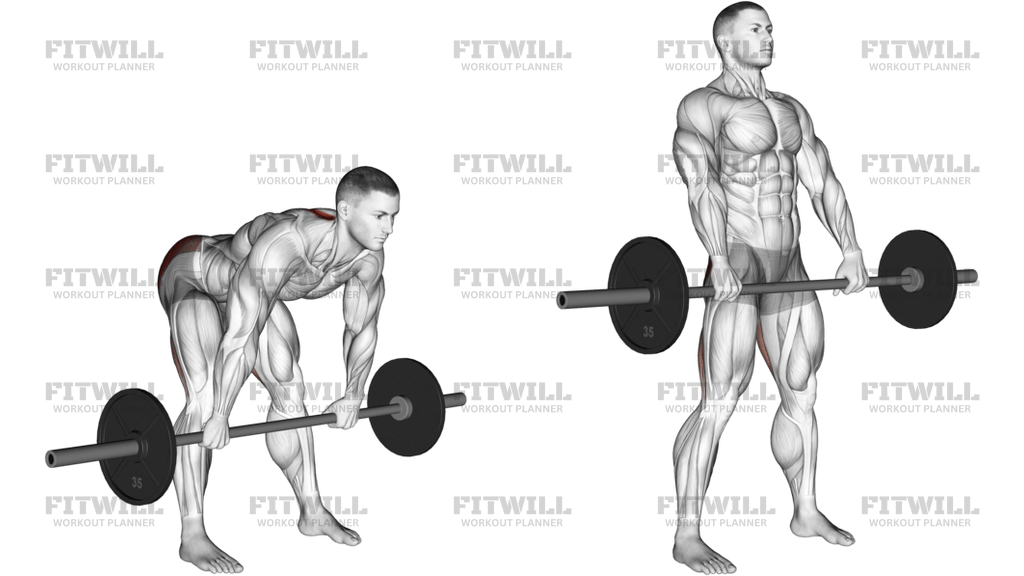
Barbell Wide Stance Stiff Leg Deadlift is a wide-stance hip hinge built to load the back side of the body while keeping the bar close to your legs. It is usually used to train the hamstrings, glutes, and spinal erectors with a controlled stretch, but the wide stance also asks the adductors and trunk to stay organized so the bar path stays clean.
The stance matters because it changes how much room you have to hinge between the thighs. With the feet set wider than shoulder width and the toes turned slightly out, you can sit the hips back more easily while keeping the bar traveling close to the body. That close bar path is important: the farther the bar drifts forward, the more the lower back has to fight to keep the torso from collapsing.
This movement is not a squat and it is not a bounce. The knees stay soft, but the hinge comes from pushing the hips back and folding at the hips while the spine stays long and neutral. On the way down, the hamstrings should lengthen under tension; on the way up, the glutes finish the lift by driving the hips forward without leaning back at the top.
The range of motion should be based on the position you can control, not on forcing the bar lower for the sake of depth. Lower only until you feel a strong stretch in the hamstrings and can still keep the ribs stacked over the pelvis. If the back rounds or the bar moves away from the legs, the set is already too deep or too heavy.
Use this lift as accessory work, posterior-chain training, or a technique-focused hinge when you want tension rather than speed. It works well with moderate loads, deliberate eccentrics, and clean repetition quality. Beginners can use it if they keep the range modest and learn to hinge before adding weight, while experienced lifters can use it to build control in the lengthened position without turning the movement into a deadlift from the floor.
[ Workout Log & Planner ]
Put your next workout in Fitwill
Keep your plan and training log ready when you are.


Instructions
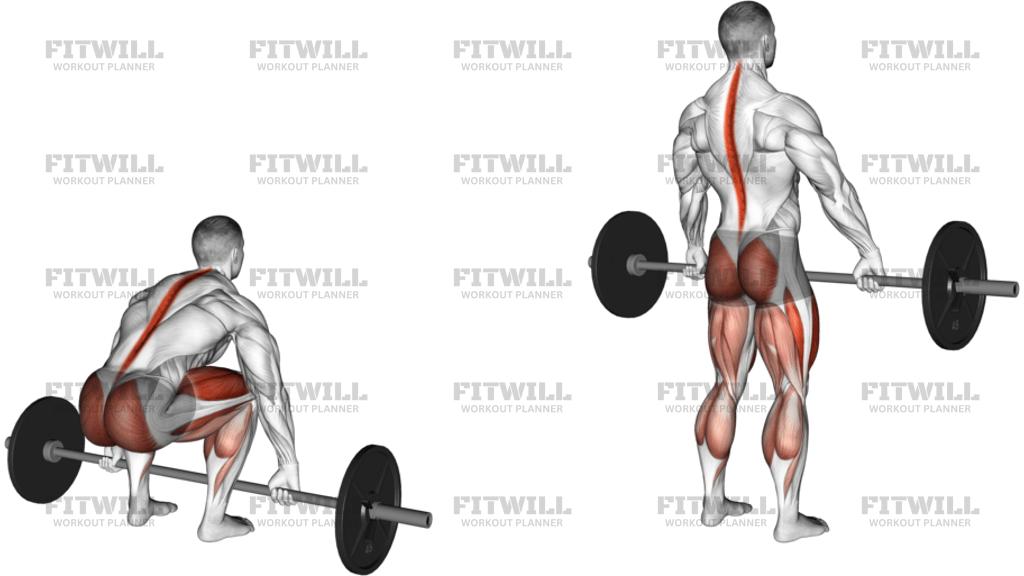
- Stand over the bar with your feet wider than shoulder width, toes turned slightly out, and the bar over your midfoot.
- Grip the bar just outside your legs so your arms can hang straight without crowding your thighs.
- Soften your knees a little, lift your chest, and set a long neutral spine before you move.
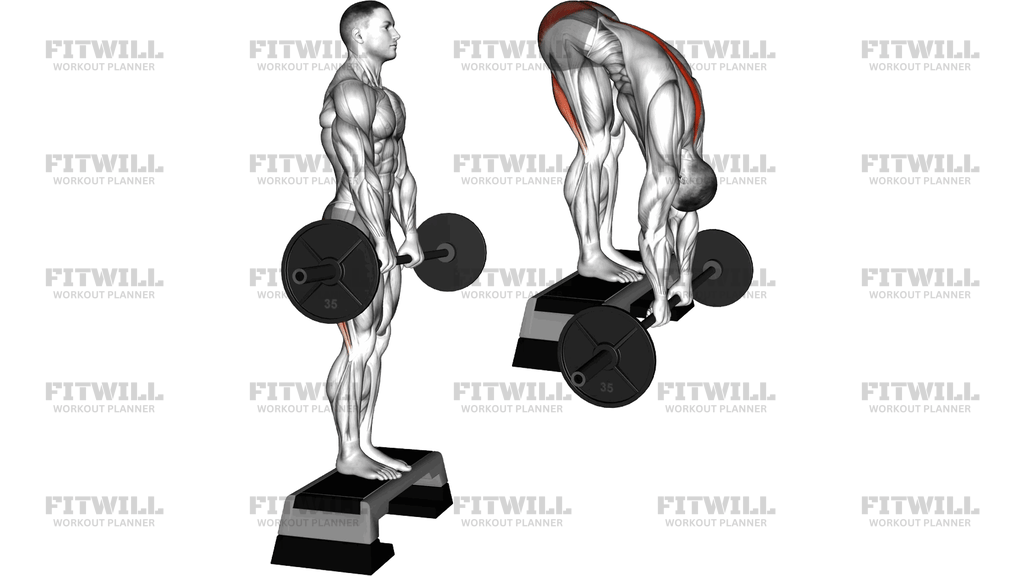
- Brace your trunk, then push your hips back as you hinge forward and let the torso tip down between the thighs.
- Keep the bar brushing your legs as it travels down toward the shins and stop before your lower back starts to round.
- Pause briefly in the stretched bottom position with the hamstrings loaded and the weight still close to your body.
- Drive through the feet, squeeze the glutes, and bring the hips forward to stand tall without leaning back at the top.
- Exhale as you pass the hardest part of the lift, then reset your brace before the next rep.
- Repeat for the planned number of repetitions with the same stance, bar path, and range on every rep.
Tips & Tricks
- Keep the stance wide enough to create room for the bar, but not so wide that your pelvis tucks under at the bottom.
- Let the knees stay softly unlocked; locking them straight turns the lift into a sloppy stretch and can pull the pelvis out of position.
- Think about pulling the bar down your thighs and shins instead of reaching it toward the floor.
- Stop the descent when the hamstrings are fully loaded but your back can still stay long and neutral.
- Use a mixed or double-overhand grip that lets the hands sit outside the legs without forcing the shoulders forward.
- Keep most of the pressure through the midfoot and heel so the hips can travel back instead of the knees drifting forward.
- Lower the bar slowly and lift with the same control; this movement is about tension, not speed.
- If you feel the lower back taking over, shorten the range, reduce the load, and re-check that the bar is staying close to the legs.
Frequently Asked Questions
What muscles does Barbell Wide Stance Stiff Leg Deadlift work most?
It primarily targets the hamstrings and glutes, with the spinal erectors and adductors helping stabilize the wide stance and hinge.
Is the wide stance different from a regular stiff leg deadlift?
Yes. The wider foot position creates more room between the thighs and changes how the hips drop back, but the movement is still a controlled hip hinge.
How low should the bar go on this exercise?
Only as low as you can keep the bar close and the spine neutral. For most lifters, that is around mid-shin or just below the knees, not all the way to the floor.
Should my knees stay straight during the rep?
No. They should stay softly bent the whole time so you can hinge at the hips without locking the joints or pulling the pelvis out of position.
Why does the bar need to stay close to my legs?
A close bar path keeps the load over your base of support and reduces the lever arm on the lower back, which makes the hinge stronger and safer.
Can beginners use Barbell Wide Stance Stiff Leg Deadlift?
Yes, if they keep the load light, the stance comfortable, and the range short enough to maintain a neutral spine.
What should I do if I feel this mostly in my lower back?
Reduce the load, shorten the descent, and make sure the hips are moving back rather than the torso folding forward.
Is this more of a strength or hypertrophy exercise?
It can serve both, but it is especially useful for controlled posterior-chain work where tension in the stretched position matters.