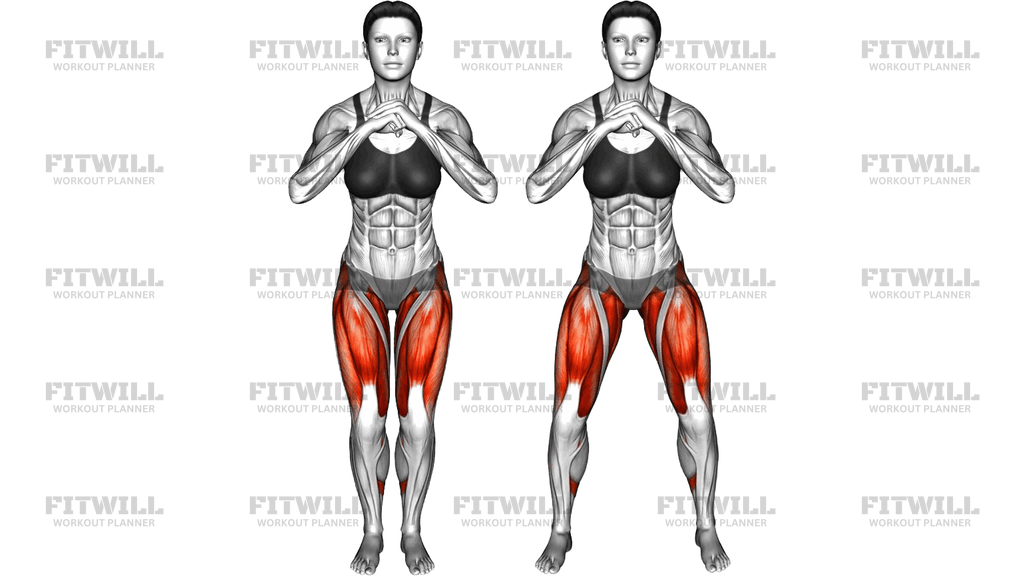
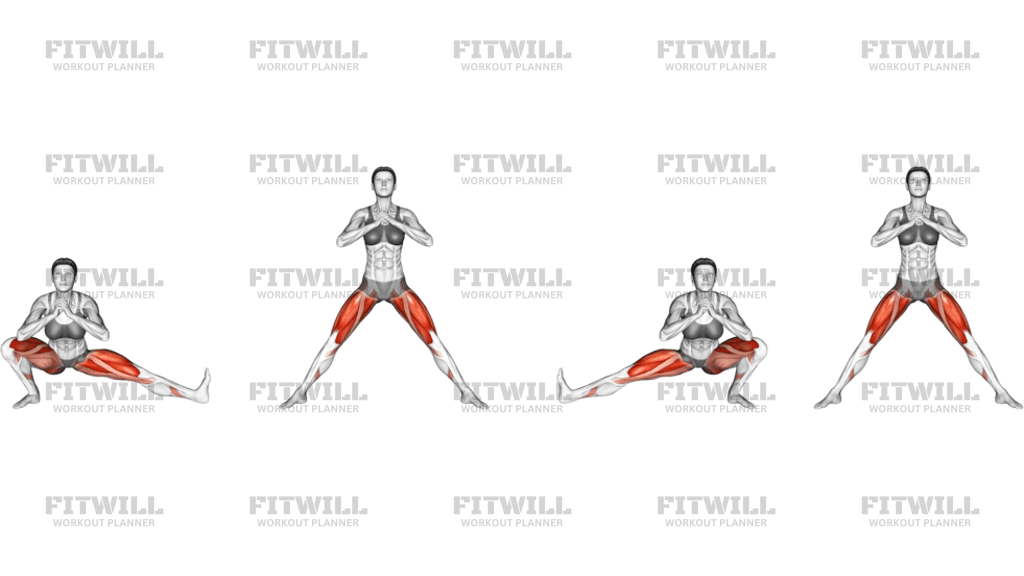
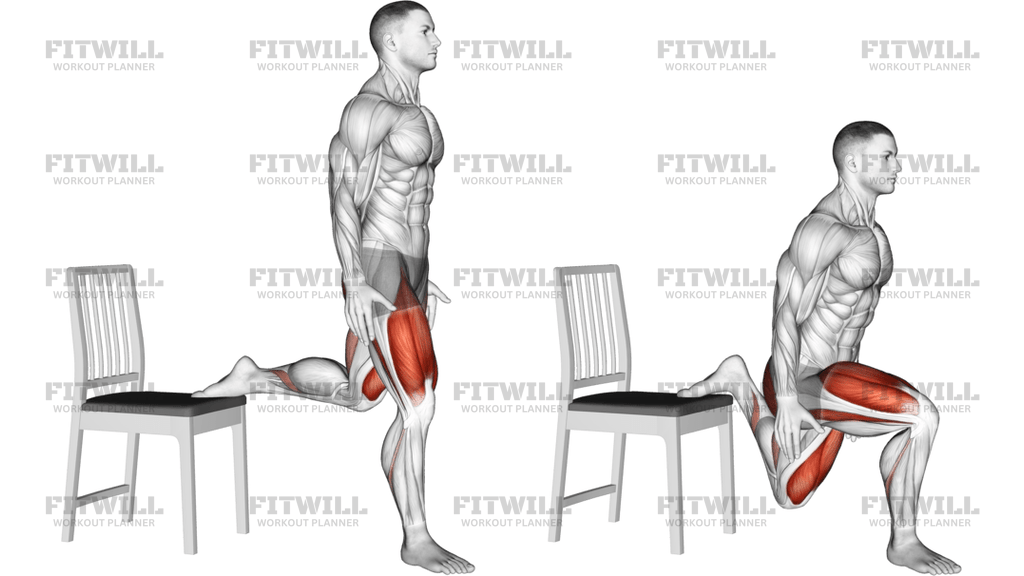
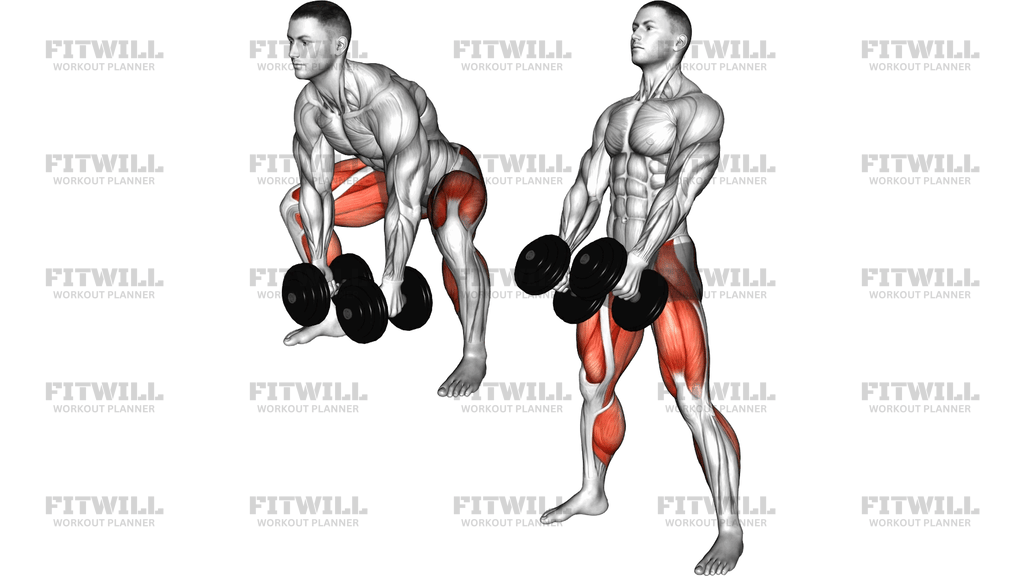
Bodyweight Wall Squat
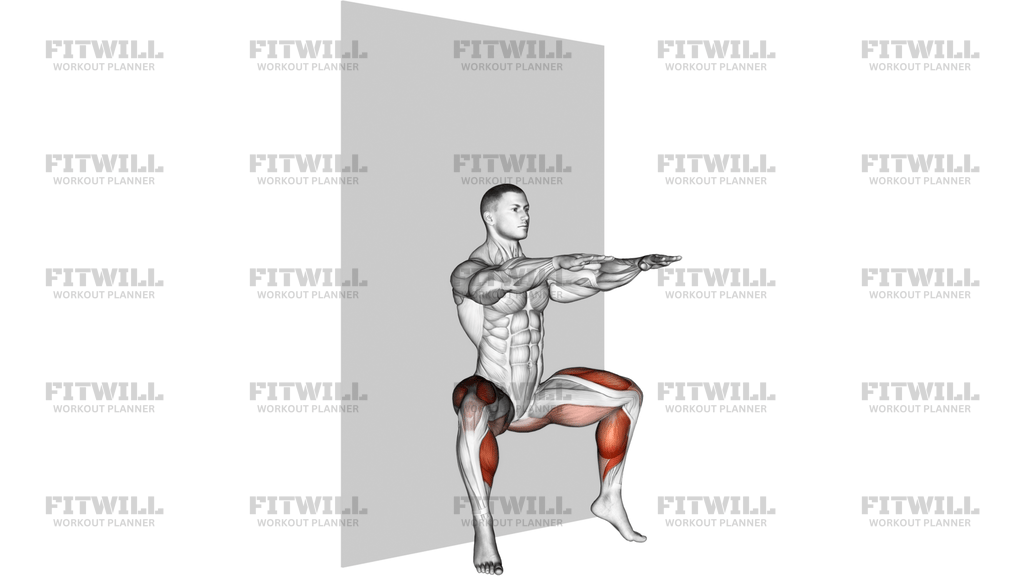
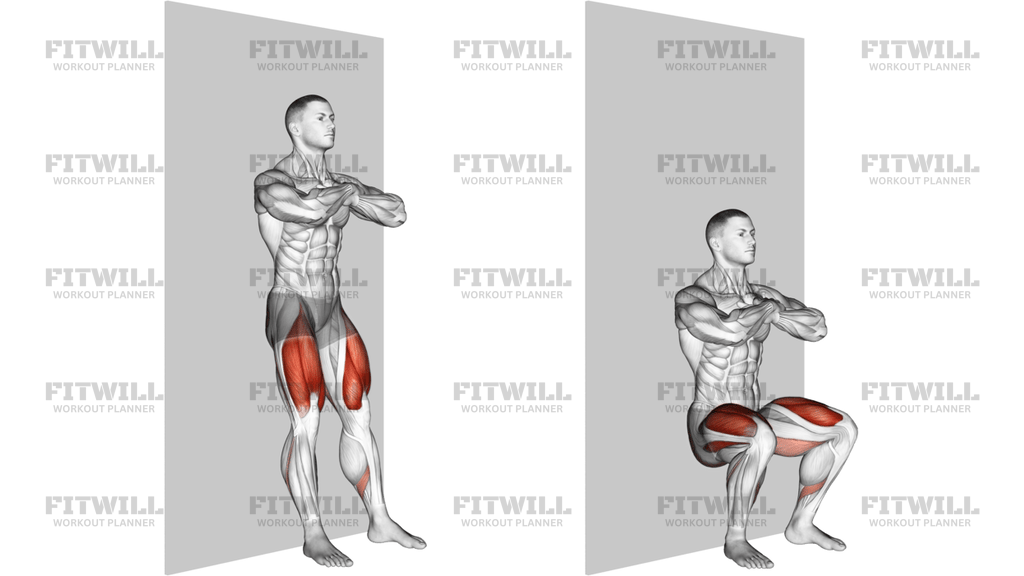
Bodyweight Wall Squat is a wall-supported lower-body exercise where your back stays in contact with the wall while you bend and straighten the knees in a controlled squat pattern. The wall reduces balance demands and gives you a clear posture reference, which makes the movement useful for learning squat mechanics, building quad endurance, and training legs without external load.
The main emphasis is on the quads, with the glutes, adductors, calves, and trunk helping keep the pelvis, knees, and ribs organized. Because the wall fixes your upper body in space, small setup details matter more than they would in a free squat. Foot distance, stance width, and depth all change how much tension stays on the thighs and how easy it is to keep the back gently pressed into the wall.
A good setup starts with the heels planted a short step in front of the wall, feet about hip to shoulder width apart, and toes turned out only slightly. Cross the arms over the chest or hold them in front of the body, then slide into the squat with the head, shoulders, and upper back still braced against the wall. Lower only as far as you can keep steady pressure through the whole foot and avoid letting the knees cave inward or the low back peel away from the wall.
On the way down, inhale and let the knees track over the toes as the hips and knees flex together. On the way up, drive through the midfoot and heel while keeping the torso tall and the wall contact consistent. If you are using this as a hold, stay low without bouncing and breathe in short, controlled cycles. If you are using repeated reps, rise smoothly to full standing before starting the next descent.
Bodyweight Wall Squat fits well in warm-ups, rehab-style leg work, tempo training, and finishers where you want constant quad tension without heavy loading. It is especially useful when you want to practice squat depth and knee tracking before moving to goblet, barbell, or split-squat variations. Keep the range pain-free, use the wall as feedback instead of a crutch, and stop the set once the pelvis starts tucking or the knees drift inward.
[ Workout Log & Planner ]
Put your next workout in Fitwill
Keep your plan and training log ready when you are.


Instructions
- Stand with your head, shoulders, and upper back against the wall, and place your feet about one short step in front of it.
- Set your feet hip to shoulder width apart with your toes slightly turned out and your weight spread across the whole foot.
- Cross your arms over your chest or hold them in front of you so you can keep the torso quiet.
- Brace your abdomen and keep your ribs stacked over your pelvis before you start the descent.
- Bend your knees and hips to slide down the wall under control until you reach a squat depth you can hold without losing contact.
- Keep your knees tracking in line with your toes and your heels flat on the floor as you lower.
- Pause briefly at the bottom or hold the bottom position if that is the planned version of the exercise.
- Drive through your midfoot and heels to stand back up while keeping steady pressure into the wall.
- Reset your breath at the top, re-brace, and repeat for the planned number of reps or seconds.
Tips & Tricks
- If your heels want to lift, move your feet a little farther from the wall before chasing deeper depth.
- Keep pressure through the big toe, little toe, and heel so the foot does not roll inward as you descend.
- Let the knees travel forward, but keep them lined up with the second and third toes instead of collapsing inward.
- Do not force the lower back flat; keep it gently supported by the wall and stop the rep before you lose that contact.
- Use a slower lowering phase if you want more quad tension and better control at the sticking point.
- Breathe steadily at the bottom of a hold instead of locking your breath for the entire set.
- A slightly narrower stance usually feels more quad-dominant, while a slightly wider stance may feel more stable for some people.
- Stop the set when your pelvis tucks under or your knees drift off line, because those are the first signs that form is slipping.
Frequently Asked Questions
What muscles does Bodyweight Wall Squat work most?
It mainly works the quads, with help from the glutes, adductors, calves, and core to keep the squat position stable.
Can beginners perform this exercise?
Yes. The wall makes it easier to balance and gives beginners a clear cue for torso position and squat depth.
How far should my feet be from the wall?
Start with your heels about one short step in front of the wall, then adjust until you can keep your back in contact without lifting the heels.
Should my back stay on the wall the whole time?
Yes, your head, shoulders, and upper back should stay braced against the wall so the squat stays controlled and upright.
Is this a squat or a wall sit?
This version is an active wall squat with controlled up-and-down reps, although you can also hold the bottom position for an isometric set.
What should I do if my knees cave inward?
Shorten the range, slow the descent, and focus on tracking the knees over the toes while keeping pressure through the whole foot.
How can I make the wall squat harder without weights?
Use a slower lowering phase, add a pause at the bottom, or extend the time you spend in the squat hold.
What is the safest depth for this exercise?
Go only as low as you can keep the heels down, the knees tracking well, and the lower back comfortably supported by the wall.