Lying Hip Flexor
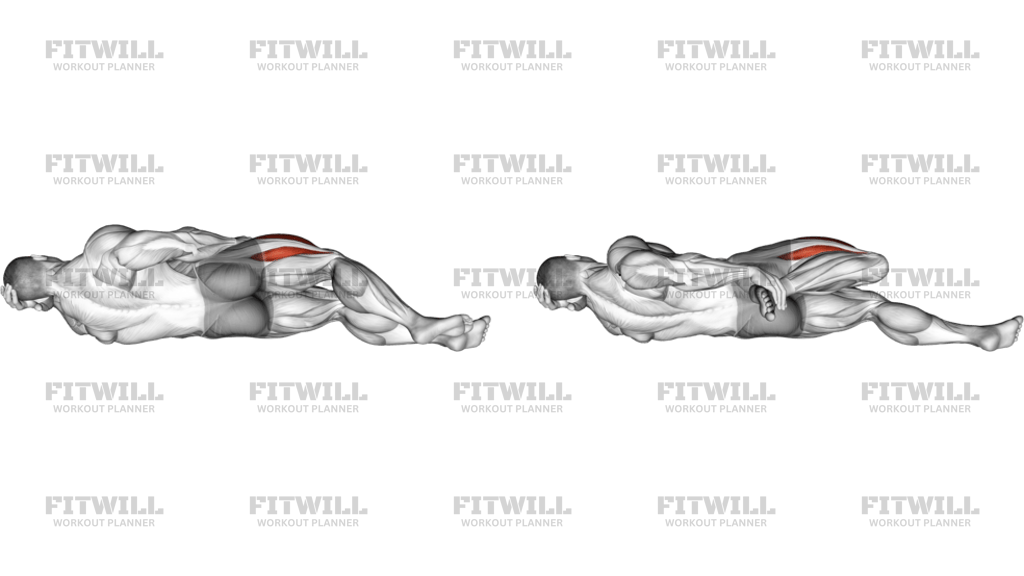
Lying Hip Flexor is a floor-based mobility drill for opening the front of the hip and thigh. The side-lying setup lets you isolate one leg at a time while keeping the torso supported, which makes it easier to notice where the stretch is coming from and whether the pelvis is staying stacked. It is a useful choice when hip flexors feel short from sitting, when the quads feel tight after lower-body training, or when you want a low-load drill before work that requires hip extension.
The image shows a controlled side-lying stretch rather than a strength movement. The top leg bends back so the heel can travel toward the glute, while the lower leg stays long and relaxed on the floor. That position opens the front of the thigh and hip on the top side, especially if you keep the hips stacked instead of rolling backward. The movement is simple, but the setup matters because a small shift in pelvis position can turn the stretch into a low-back twist.
The best version of this exercise is calm and precise. Reach only until you feel a strong but manageable line of tension through the front of the hip or upper thigh, then use slow breathing to let the tissue ease instead of forcing the end range. If the ribs flare or the lumbar spine arches, the stretch is leaking out of the hip. A cleaner position with less range is usually more effective than chasing a bigger pull.
Lying Hip Flexor fits well in a warm-up, cool-down, or recovery block, and it can also be used between sets on lower-body days when you want to restore hip motion without loading the spine. It is beginner-friendly, but it should still be done with care around the knee and low back. If you cannot keep the pelvis quiet, reduce the range, use support under the head, or choose a gentler hip-flexor stretch until the position feels smooth and repeatable.
Fitwill
Log Workouts, Track Progress & Build Strength.
Achieve more with Fitwill: explore over 9600 exercises with images and videos, access built-in and custom workouts, perfect for both gym and home sessions, and see real results.
Start your journey. Download today!




Instructions
- Lie on your side on a mat and rest your bottom arm under your head or in front of your chest for support.
- Stack your shoulders and hips so the torso stays quiet, and keep the bottom leg long and relaxed.
- Bend the top knee and reach back with the top hand to hold the ankle or foot.
- Draw the heel toward the glute until you feel a stretch through the front of the top thigh and hip.
- Keep the top hip from rolling backward; lightly press it forward so the pelvis stays stacked.
- Let the ribs stay down and avoid arching the lower back to create extra range.
- Breathe slowly and hold the stretch for the planned time without bouncing.
- Release the foot with control, reset the body position, and repeat on the other side.
Tips & Tricks
- If you cannot reach the ankle comfortably, use a strap around the foot instead of pulling harder.
- Keep the top knee pointing mostly down; letting it flare outward usually shifts the stretch away from the hip flexor.
- A small pillow or folded towel under the head helps you keep the neck and shoulder relaxed.
- You should feel this high in the front of the thigh or hip, not as a pinch in the low back.
- Exhale as you bring the heel back and use the breath to soften the front of the hip.
- Do not yank the foot toward the glute; ease into the end position over a few breaths.
- Keep the bottom leg loose so you do not twist the pelvis to create more range.
- Stop if the knee complains and shorten the bend or reduce the hold angle.
Frequently Asked Questions
What does Lying Hip Flexor stretch the most?
It mainly opens the front of the hip and upper thigh on the top leg, especially the hip flexors and rectus femoris.
Can beginners perform this exercise?
Yes. Beginners usually do well with a short hold, a relaxed setup, and a strap if they cannot reach the foot cleanly.
Should my hips stay stacked while I hold the stretch?
Yes. Keeping the hips stacked helps the stretch stay in the front of the hip instead of turning into a low-back twist.
Where should I feel the stretch?
You should feel a strong line of tension through the front of the top thigh and hip, not sharp pain in the knee or spine.
How long should I hold each side?
A 20 to 30 second hold is a practical starting point, though longer holds can work if the position stays comfortable and steady.
What if I feel this mostly in my lower back?
Reduce the pull on the foot, keep the ribs down, and shorten the range until the stretch shifts back into the hip.
Is this a good warm-up before squats or running?
Yes. It can help restore hip extension before lower-body training or running drills, as long as you keep it gentle.
What is a simple substitution if this position bothers my knee?
A standing or kneeling hip flexor stretch is usually easier on the knee because you can control the angle more directly.