One Leg Quarter Squat
One Leg Quarter Squat is a bodyweight single-leg squat variation that trains the standing leg to support body weight through a short, controlled range. The exercise emphasizes the quads on the working side while also challenging the glutes, calves, and hip stabilizers that keep the pelvis level and the knee aligned. Because the range is shallow, it is especially useful for building control, balance, and leg strength without asking for a deep knee bend.
The setup matters more here than in a two-leg squat. Stand tall on one leg, keep the opposite leg lifted slightly in front of you, and plant the working foot flat with pressure spread through the heel and midfoot. A stable torso and level hips help the working thigh do the job instead of letting momentum, trunk sway, or a collapsed arch take over. If you need it, a light fingertip touch on a wall or rack can help you learn the pattern without changing the exercise.
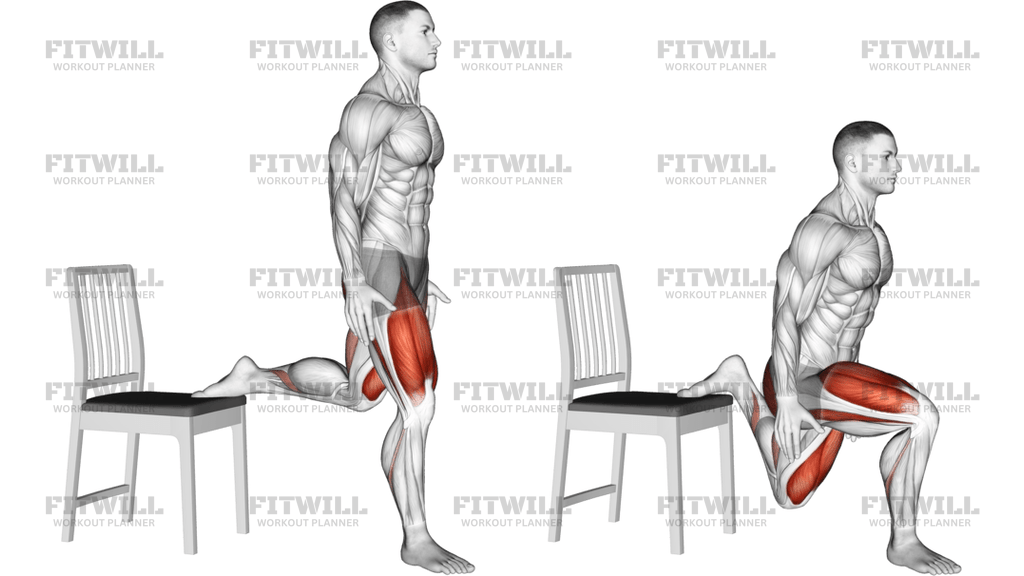
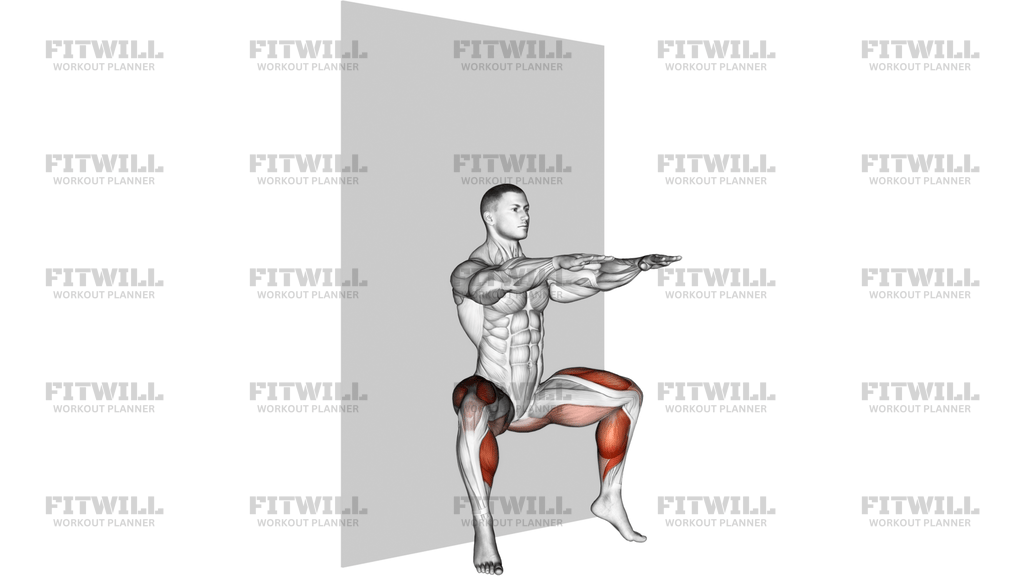
During the rep, sit the hips back a small amount and bend the standing knee only until you reach the quarter-squat depth shown in the image. The knee should track in line with the toes, not cave inward, and the torso should stay mostly upright instead of folding forward. At the bottom, reverse direction smoothly and stand by pushing the floor away through the working leg. Keep the free leg quiet and extended in front rather than swinging to create balance.
This movement is a strong choice for warm-ups, accessory work, rehab-style leg training, and unilateral lower-body programs where you want quad work without heavy loading. It can expose left-right differences quickly, which makes it valuable for correcting imbalances and improving single-leg control. Keep the motion crisp and repeatable, stop the set when the knee drifts inward or the pelvis starts to tilt, and use a pain-free range that you can own on every rep.
[ Workout Log & Planner ]
Put your next workout in Fitwill
Keep your plan and training log ready when you are.


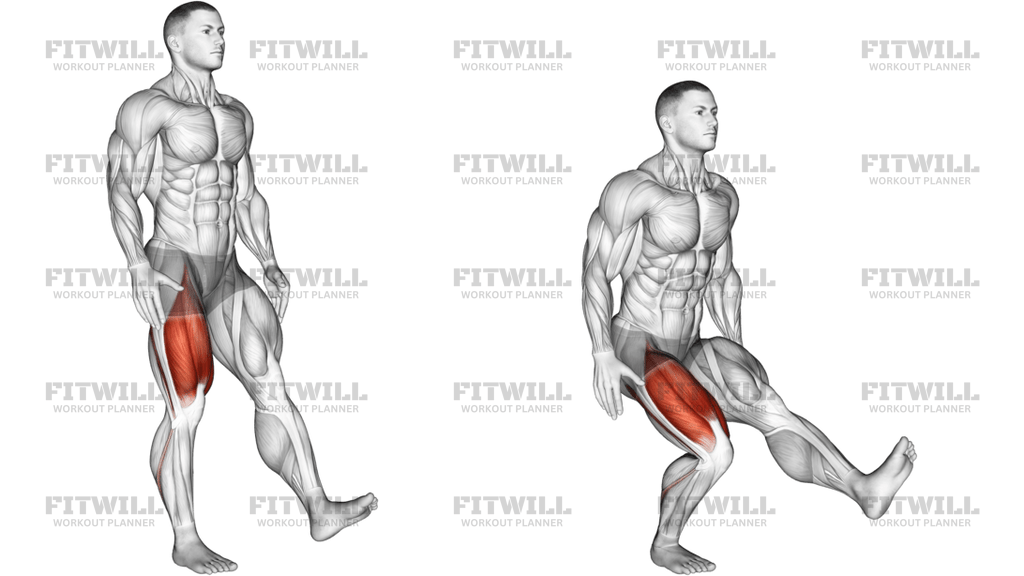
Instructions
- Stand on one foot with the other leg lifted slightly in front of you and your arms relaxed at your sides or held out lightly for balance.
- Plant the working foot flat on the floor and spread your weight through the heel and midfoot before you start the descent.
- Brace your trunk and keep your hips level so the standing leg can control the movement.
- Sit the hips back a few inches and bend the standing knee into a shallow quarter squat.
- Keep the knee tracking over the second or third toe as you lower, and keep the lifted leg quiet in front of you.
- Lower only as far as you can without letting the arch collapse, the torso fold, or the pelvis tilt.
- Pause briefly at the bottom if you can hold the position without wobbling.
- Drive through the standing foot to return to full balance at the top.
- Inhale as you lower, exhale as you rise, and reset your stance before the next rep.
Tips & Tricks
- Keep the standing foot tripod anchored so the big toe, little toe, and heel all stay connected to the floor.
- Let the free leg hover in front of you without kicking it forward or using it to counterbalance the rep.
- If your knee dives inward, reduce the depth before you try to add more reps.
- A tall chest is useful, but do not over-arch the lower back to fake an upright torso.
- The bottom of the rep should feel loaded in the standing quad, not like a hamstring stretch or a wobble drill.
- A light wall touch is a better regression than shortening the range into a sloppy bounce.
- Move slowly enough that you can stop the descent at any point without losing balance.
- Stop the set when your heel lifts, your arch collapses, or your standing hip starts drifting sideways.
Frequently Asked Questions
What muscle does One Leg Quarter Squat target most?
The standing-leg quads do most of the work, with help from the glutes, calves, and hip stabilizers.
Can beginners perform this exercise?
Yes. Beginners should use a shallow depth, keep the free leg light in front, and lightly touch a wall if balance is an issue.
How low should I go in the quarter squat?
Only lower until the standing knee bends a short, controlled amount and the torso can stay stacked over the working leg.
Should the lifted leg stay in front of me?
Yes. Keeping it slightly raised in front helps you balance and prevents you from shifting work onto the other foot.
Why does my standing knee cave inward?
That usually means the hip and foot are losing control. Shorten the range, slow down, and keep pressure through the whole foot.
Is this the same as a pistol squat?
No. A pistol squat goes much deeper, while this version uses only a shallow quarter-squat range.
What if I lose balance during the rep?
Use a wall or rack lightly for support, reduce depth, and slow the descent until the standing leg feels stable.
How can I make this exercise harder without adding weight?
Slow the lowering phase, pause briefly at the bottom, or reduce hand support while keeping the same shallow range.