Prisoner Squat
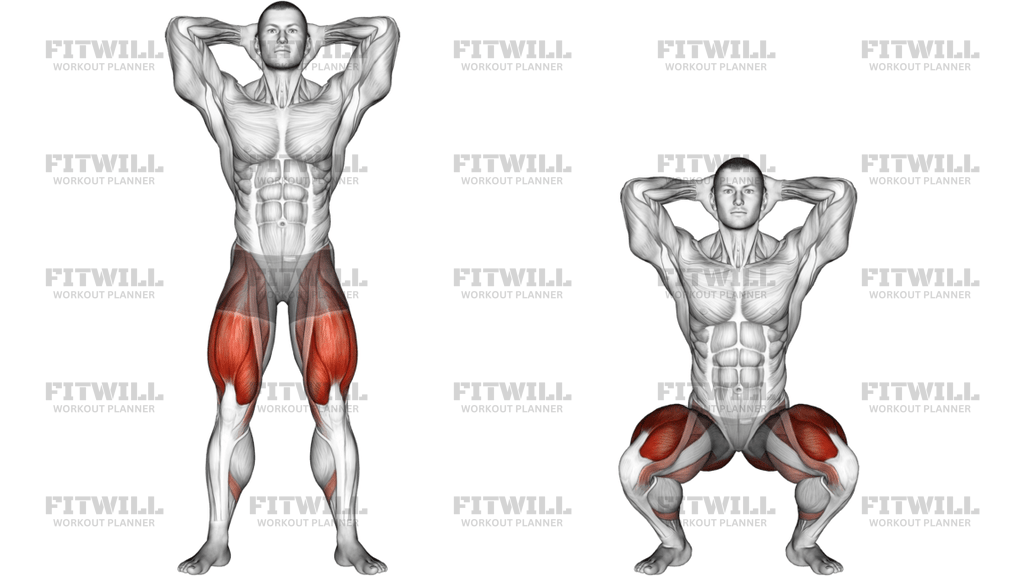
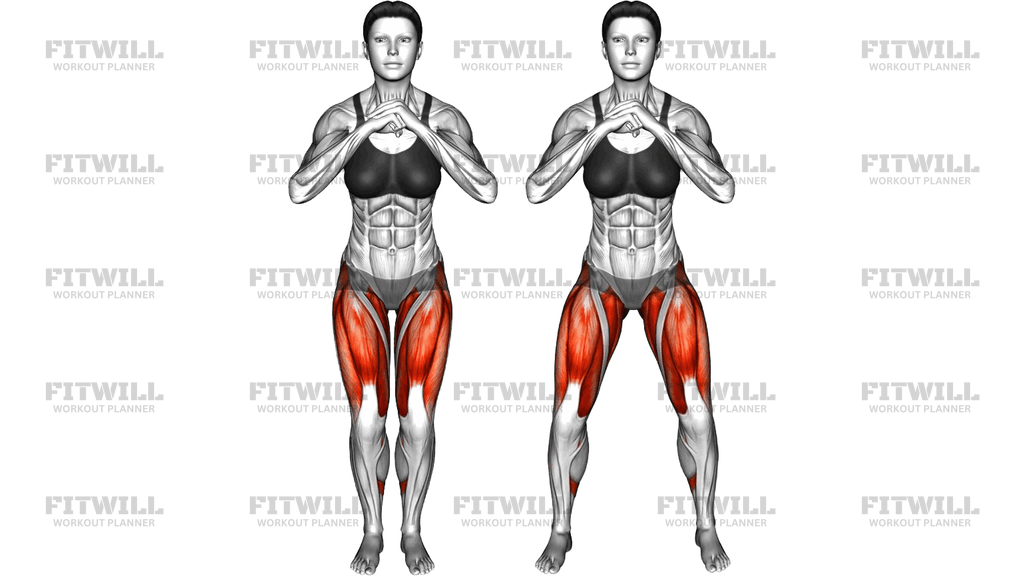
Prisoner Squat is a bodyweight squat variation performed with the hands placed behind the head and the elbows pulled wide. That upper-body position makes it harder to cheat with momentum and helps keep the torso upright, so the exercise is useful when you want a simple squat pattern that also asks more of the core, upper back, and postural control.
The main training effect comes from knee and hip flexion under bodyweight resistance, with the quads doing most of the work and the glutes and adductors contributing as you stand. Because the arms stay fixed behind the head, you also have to resist collapsing forward, which is why this movement often feels more demanding than a plain air squat even though there is no external load.
Setup matters. Place your feet about shoulder width apart with toes slightly turned out, stand tall, and keep the chest open before you start descending. The elbows should stay wide rather than pulled forward, and the ribcage should stay stacked over the pelvis instead of flaring. A stable start makes it easier to control knee tracking, depth, and balance throughout the set.
Lower by sending the hips back slightly and bending the knees at the same time, then squat until your thighs reach a comfortable depth that you can hold without losing heel contact or torso position. Drive back up through the midfoot and heel, keep the knees tracking in line with the toes, and finish each rep by standing fully tall without leaning back. Breathe in on the way down and exhale as you stand.
This exercise is a good choice for warmups, conditioning circuits, beginner leg work, or technique practice when you want a squat pattern without adding load. It can also be used as a high-rep accessory movement to build leg endurance and reinforce clean movement mechanics. Keep the repetitions smooth and deliberate so the bodyweight tension stays in the quads and hips instead of turning into a bounce or forward collapse.
[ Workout Log & Planner ]
Put your next workout in Fitwill
Keep your plan and training log ready when you are.


Instructions
- Stand with your feet about shoulder width apart and turn the toes out slightly.
- Place both hands behind your head and keep your elbows wide instead of letting them collapse forward.
- Lift your chest, stack your ribs over your pelvis, and keep your eyes looking straight ahead.
- Inhale as you lower by bending the knees and hips together, letting the hips travel back slightly.
- Keep both heels planted and let the knees track in line with the toes as you descend.
- Lower until your thighs reach a comfortable depth while your torso stays controlled and upright.
- Drive through the midfoot and heels to stand back up, keeping the elbows wide and the chest open.
- Finish each rep by fully extending the hips and knees without leaning back or bouncing.
- Repeat for the planned reps with the same stance, depth, and breathing pattern.
Tips & Tricks
- Think about spreading the floor with your feet so the knees do not cave inward as you stand.
- Keep the elbows wide the whole time; if they drift forward, the chest usually drops with them.
- A slightly narrower stance makes the quads work harder, while a slightly wider stance can feel easier on tight hips.
- Stop the descent before your lower back rounds or your heels want to lift.
- Use a controlled tempo on the way down instead of dropping straight into the bottom.
- If balance is an issue, fix your gaze on one point at eye level instead of looking down.
- Exhale as you pass the hardest part of the ascent to help keep the trunk braced.
- High reps work well here, but the set should end when your torso starts folding forward or the knees lose tracking.
Frequently Asked Questions
What muscles do prisoner squats work most?
They mainly target the quads, with the glutes, adductors, and core helping stabilize the movement.
Why are the hands behind the head?
That position forces a taller torso and makes it harder to use momentum, which turns the squat into a cleaner bodyweight leg drill.
How low should I squat?
Go as low as you can while keeping both heels down, the chest lifted, and the lower back from rounding.
What should my elbows do during the squat?
Keep them wide and steady. If the elbows collapse forward, the torso often follows and the squat turns into a lean.
Is this a good beginner squat variation?
Yes. It is a useful bodyweight option for learning squat mechanics before adding external load.
What is the most common mistake?
Letting the chest fold forward and the heels pop up as fatigue builds.
Should I feel this in my knees?
You should feel work around the thighs and hips, not sharp knee pain. If the knees hurt, reduce depth and check your stance and tracking.
How can I make prisoner squats harder without weights?
Use slower descents, longer pauses near the bottom, or higher repetitions while keeping the same upright body position.