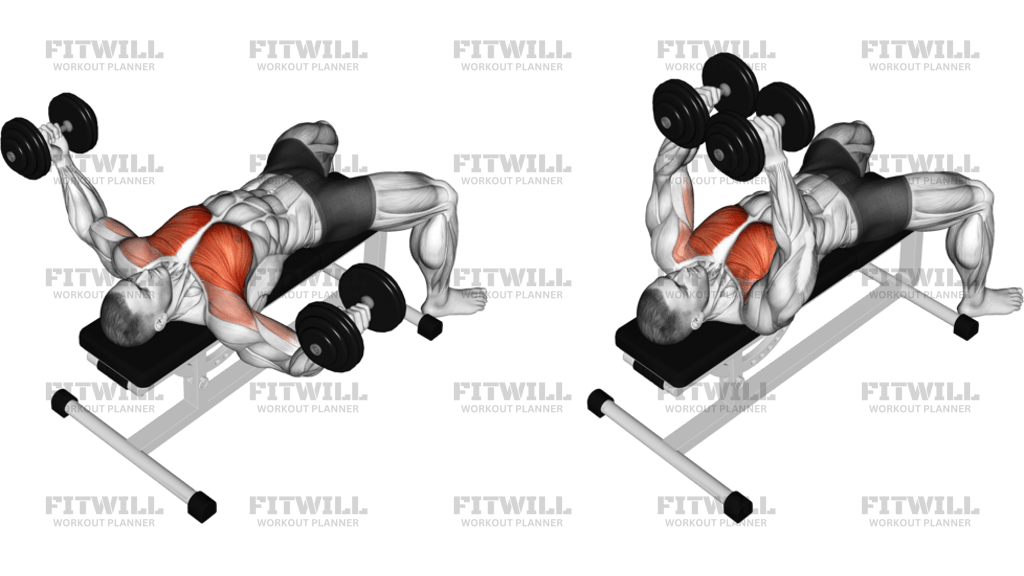
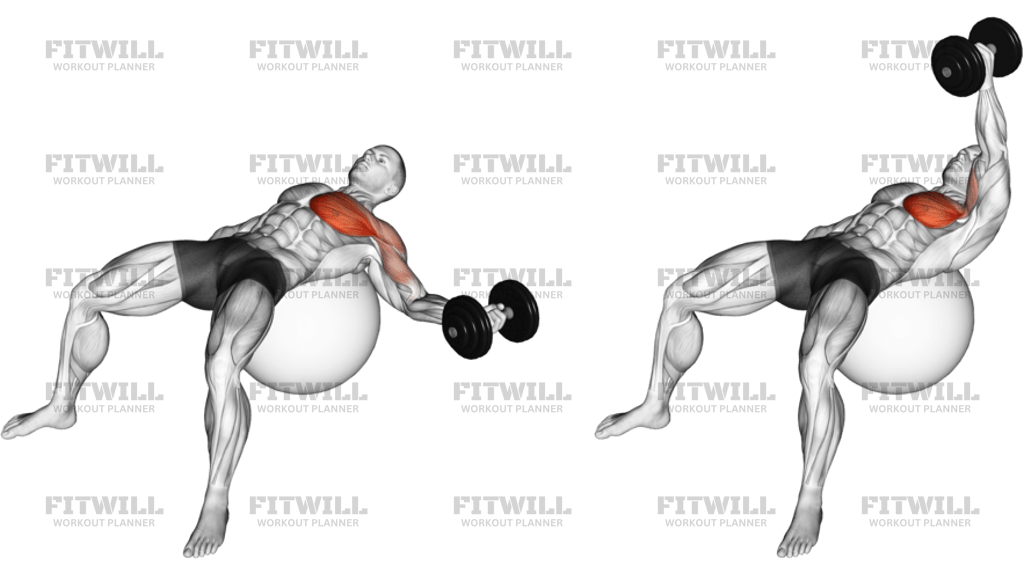
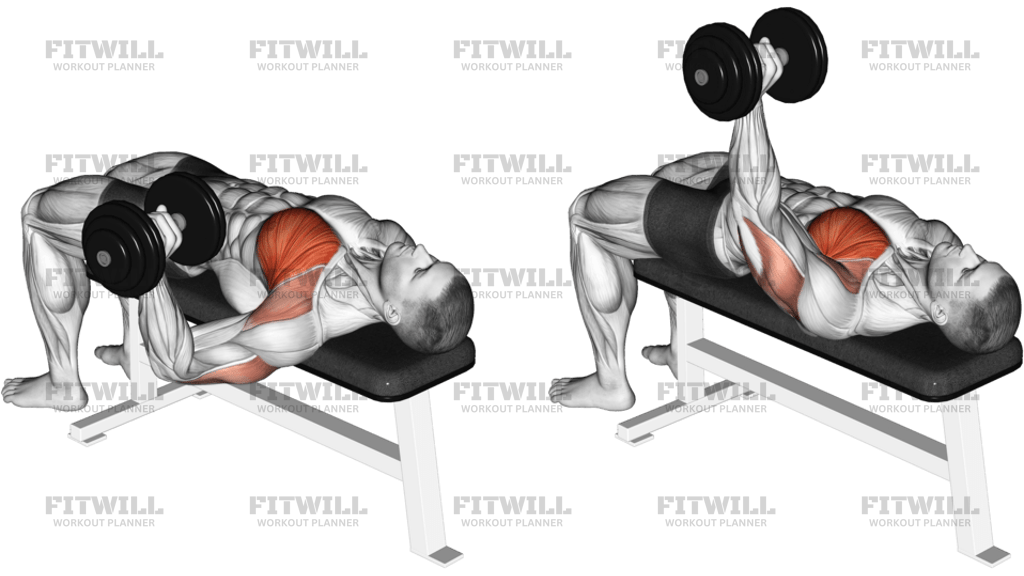
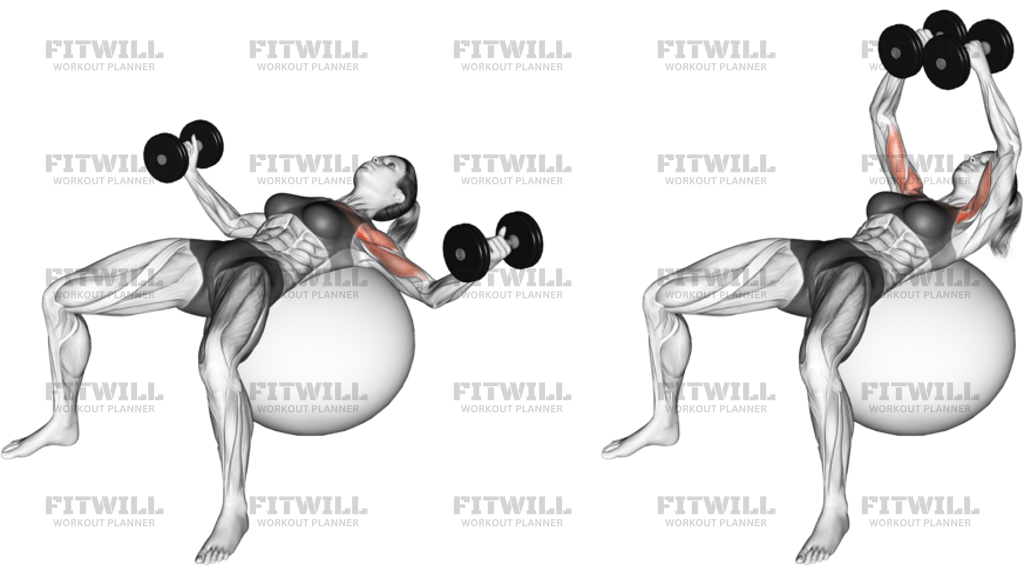
Dumbbell One-Arm Reverse-Grip Press
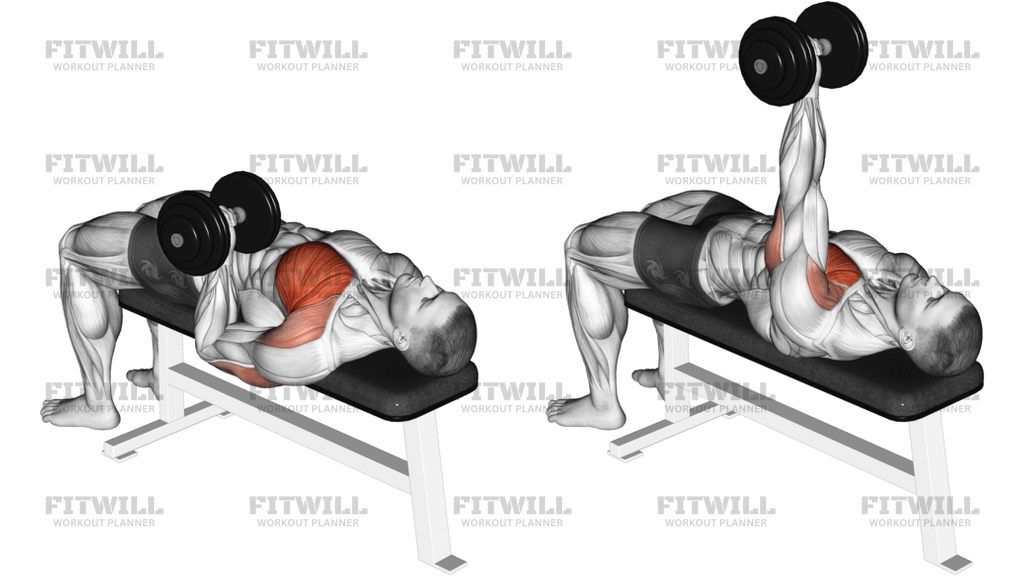
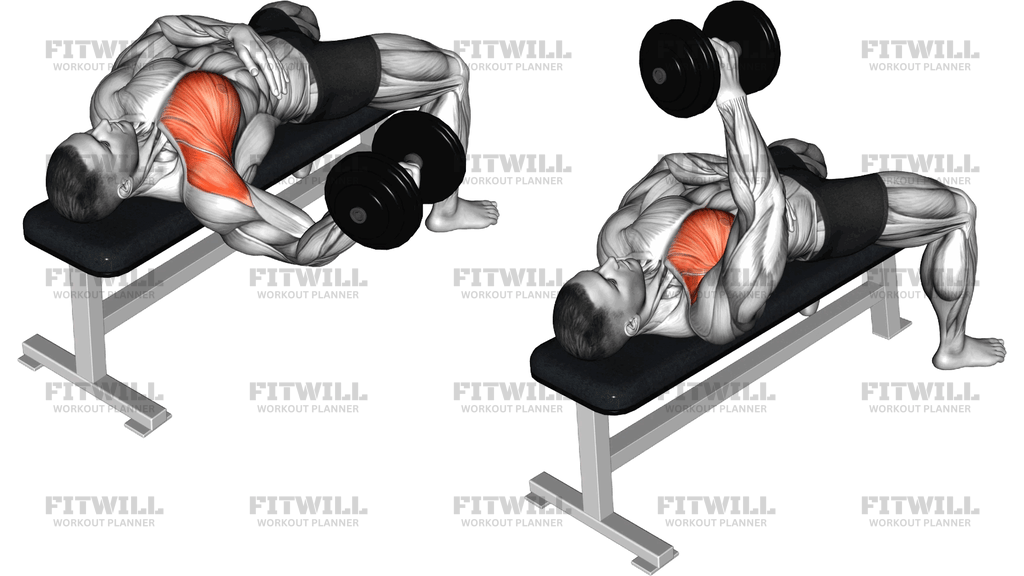
Dumbbell One-Arm Reverse-Grip Press is a flat-bench pressing variation where one arm presses a dumbbell from a supinated, palm-up position while the other side stays still for balance. The reverse grip changes the shoulder and elbow angle compared with a standard dumbbell press, so the lift often feels more natural for people who want to keep the elbow tucked and the upper arm closer to the torso. The exercise is still a chest press first, but it also asks the front delt, triceps, and trunk to stabilize the load without letting the torso twist.
The setup matters because the dumbbell starts low and the wrist, elbow, and shoulder need to line up before the press begins. Lie on a flat bench with both feet planted, set the shoulder blades firmly against the pad, and hold the dumbbell in one hand over the lower chest or upper sternum. The palm stays turned up or toward the face in a reverse-grip position, and the forearm should stay stacked under the weight so the wrist does not collapse backward. A solid brace keeps the ribcage from flaring and stops the body from rolling toward the loaded side.
The path should look like a controlled vertical press with a slight arc back toward the shoulder line at the top, not a drifting punch across the body. Lower the dumbbell until the upper arm reaches a comfortable depth and the elbow stays close to the torso, then press smoothly until the arm is straight without snapping the elbow or shrugging the shoulder. The non-working side should stay quiet. If the bench or shoulder feels unstable, reduce the range slightly and keep the rep clean rather than chasing a deeper stretch.
This is a useful accessory press for building unilateral chest strength, fixing side-to-side control differences, and teaching a stronger elbow track for lifters who feel better pressing with a tucked arm. It can fit into chest day, upper-body assistance work, or rehabilitation-style training when the goal is controlled tension rather than maximal load. Keep the movement pain-free, start light enough to control the lowering phase, and stop the set if the torso rotates, the wrist bends back, or the shoulder shifts forward under fatigue.
[ Workout Log & Planner ]
Put your next workout in Fitwill
Keep your plan and training log ready when you are.


Instructions
- Lie on a flat bench with both feet flat on the floor and your shoulder blades set firmly into the pad.
- Hold one dumbbell in a reverse, palm-up grip over the lower chest or upper sternum with the wrist stacked over the elbow.
- Keep the non-working arm relaxed and the ribs down so your torso stays level on the bench.
- Lower the dumbbell under control until the upper arm reaches a comfortable depth and the elbow stays close to your side.
- Briefly pause at the bottom without letting the shoulder roll forward or the wrist bend back.
- Press the dumbbell upward in a smooth line with a slight drift back toward the shoulder line as you finish the rep.
- Stop just short of a hard lockout if that helps you keep the shoulder packed and the ribcage quiet.
- Exhale as you press, then inhale as you lower into the next rep.
- Reset the shoulders and brace again before each repetition if the set starts to feel unstable.
- Complete all reps on one arm before switching sides.
Tips & Tricks
- Keep the forearm vertical under the dumbbell so the load stays over the wrist and elbow instead of folding behind the hand.
- Let the elbow track closer to the torso than it would in a standard press; flaring usually shifts the work away from the chest.
- Use a lighter weight than your regular flat dumbbell press until the reverse-grip path feels stable.
- Keep both shoulders pinned to the bench so the pressing side does not hike upward as fatigue builds.
- Do not bounce the bottom position off the chest or shoulder; the pause should be brief but controlled.
- If the dumbbell wobbles, slow the descent and shorten the range before adding load.
- Keep the opposite foot planted and the hips quiet so you do not rotate toward the working arm.
- A slightly neutral wrist is safer than forcing an extreme underhand angle if your forearm or elbow feels strained.
- Stop the set when the dumbbell starts drifting across your midline or the shoulder slides forward on the pad.
- Use a deliberate lowering phase because the reverse grip can make the bottom position feel stronger than it actually is.
Frequently Asked Questions
What does Dumbbell One-Arm Reverse-Grip Press train most?
It primarily trains the chest, especially the lower-to-mid pressing line, with help from the front delts, triceps, and trunk stabilizers.
Why use a reverse grip instead of a normal dumbbell press?
The palm-up grip changes the elbow path and often lets the lifter keep the upper arm tucked more comfortably while still pressing the chest hard.
Should the dumbbell touch my chest at the bottom?
Only if you can keep the shoulder packed and the wrist stacked; a slightly shorter range is better than forcing depth.
Can I use this if one shoulder feels better than the other?
Yes, it can be useful for unilateral work, but the shoulder should feel stable and pain-free throughout the press.
What is the most common form mistake?
The usual mistake is letting the torso twist or the wrist bend back, which turns the rep into a shaky shoulder-dominant press.
Is this exercise good for beginners?
Beginners can use it with very light dumbbells, but only if they can keep the bench position, grip angle, and elbow track under control.
How should I breathe during the rep?
Take a breath and brace before the descent, then exhale as you press the dumbbell upward.
Can I replace a regular dumbbell bench press with this?
It can be a useful variation, but it is usually better as accessory work or a technique-focused press rather than your main heavy bench pattern.