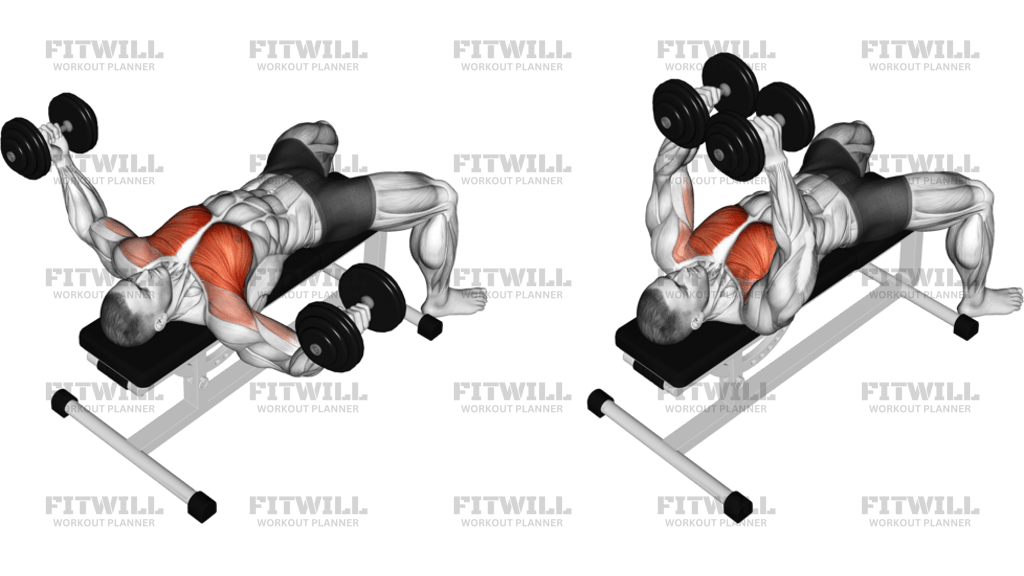
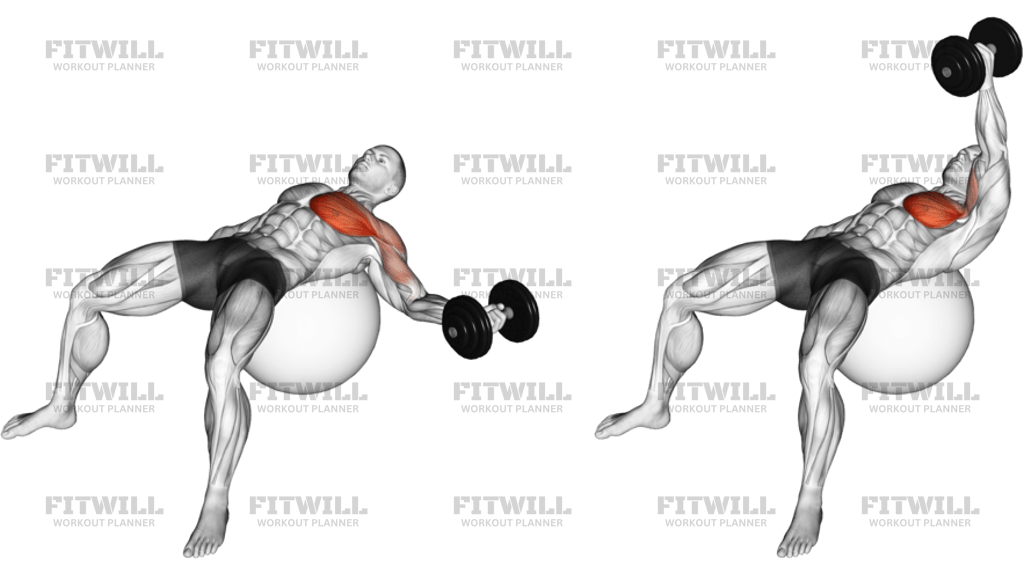
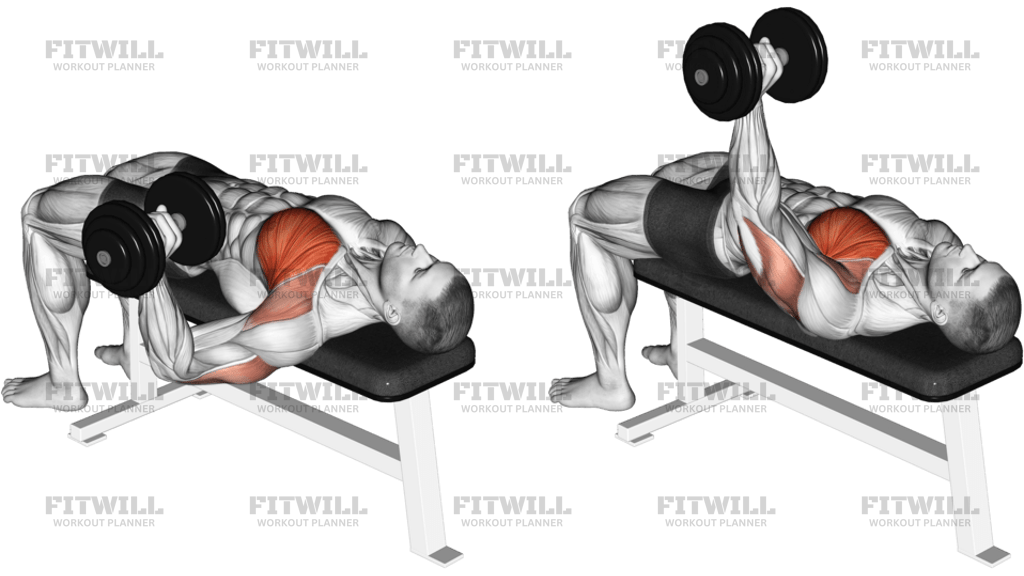
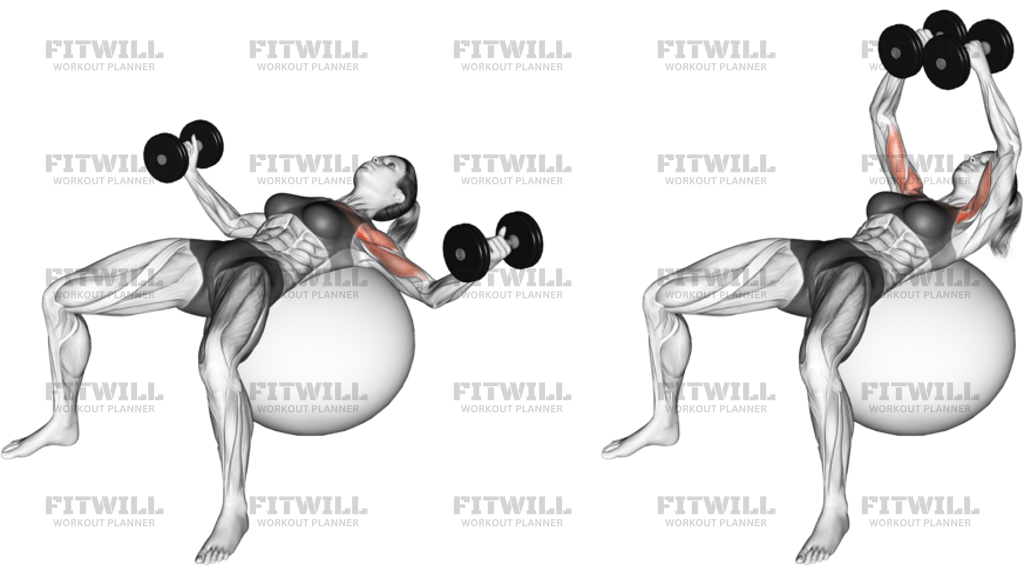
Dumbbell Reverse Bench Press
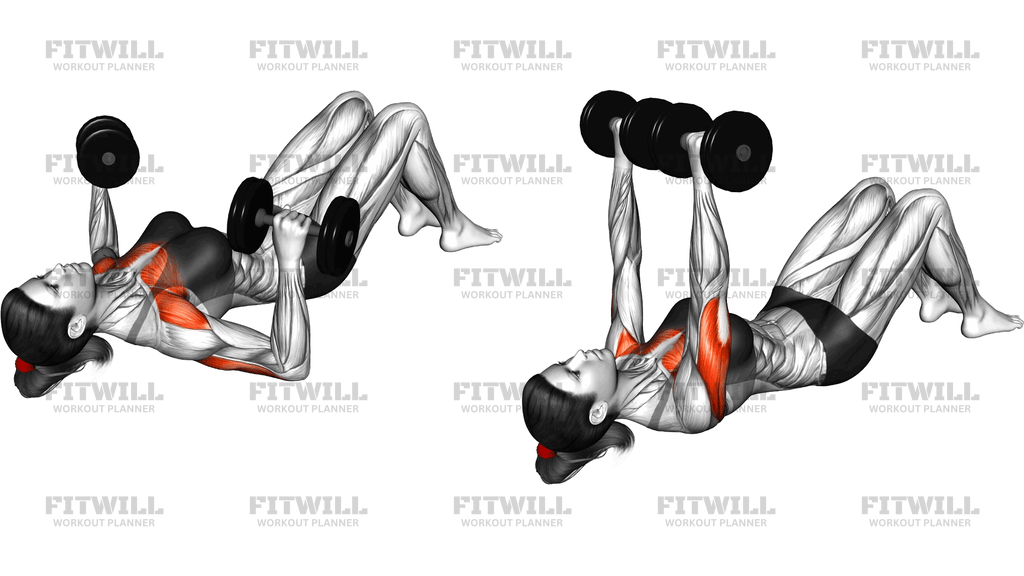
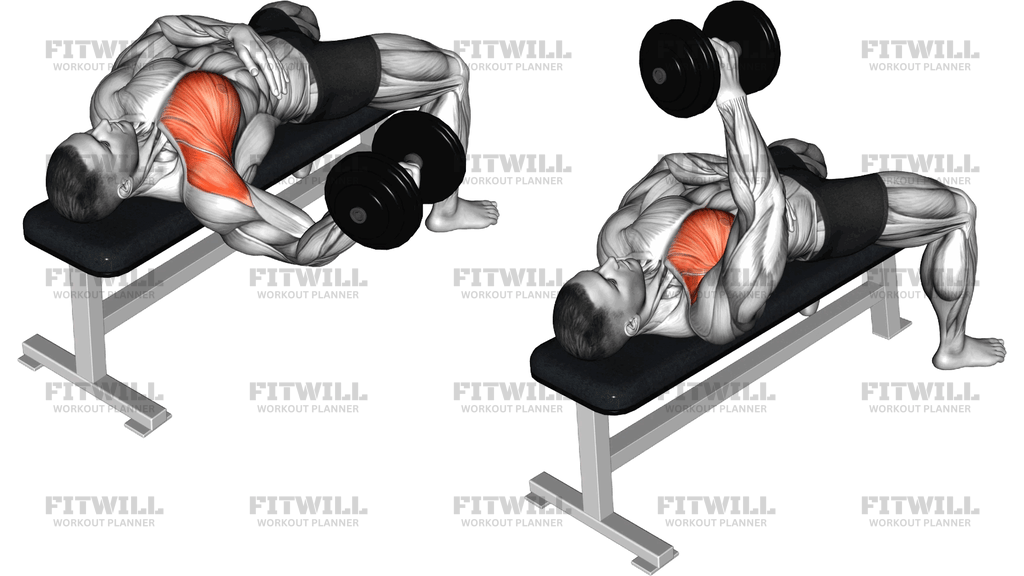
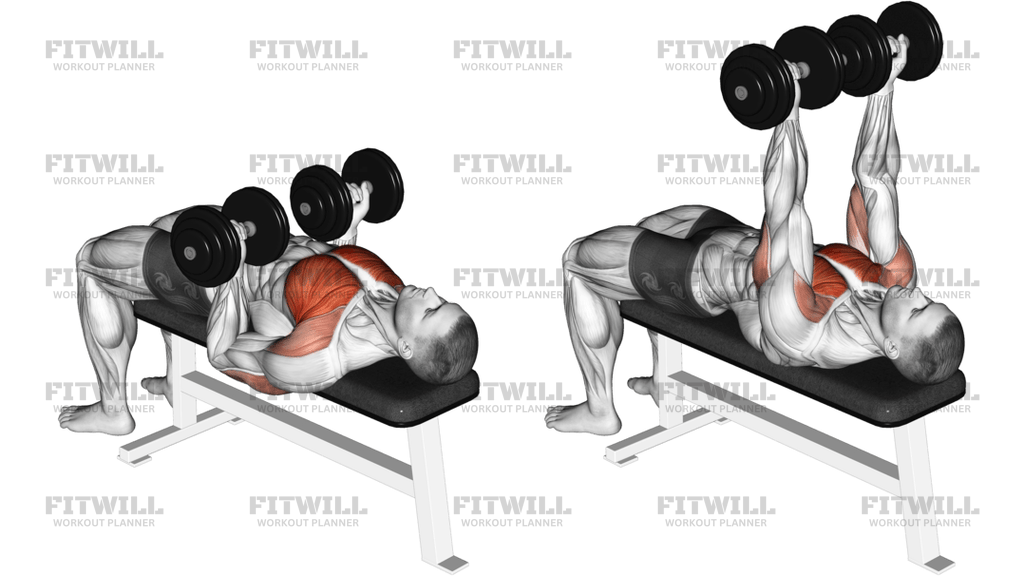
Dumbbell Reverse Bench Press is a flat-bench dumbbell pressing variation done with a reverse grip, so the palms are turned back toward your face or hips instead of facing forward. That change in hand position alters the pressing angle and usually keeps the elbows a little closer to the torso, which makes the exercise feel more deliberate than a standard dumbbell bench press.
The movement is mainly used to train the chest, with the front shoulders and triceps helping finish each press. Because each dumbbell moves independently, the exercise also asks for more control through the wrists, shoulders, and upper back than a barbell version. For that reason, the setup matters: a stable bench position, firm foot placement, and packed shoulder blades make the pressing path much cleaner.
Start with the dumbbells resting on your thighs or at chest height, then lie back and set your upper back on the bench before you begin the first rep. Keep the chest lifted, wrists stacked over the handles, and the dumbbells lined up over the mid-chest or slightly lower depending on shoulder comfort. From there, lower the weights with control until the upper arms are close to bench level, then press them back up on the same path.
This exercise is useful when you want a chest press that feels a little different from the usual neutral- or overhand-grip dumbbell bench press. Lifters often use it as accessory work after heavier pressing, or as a main press when they want a less flare-heavy position for the shoulders. It can also be a solid option for beginners who need a simpler flat-bench setup, as long as the load stays light enough to keep the wrists and elbows organized. That keeps the movement useful for chest-focused work without turning every rep into a shoulder fight.
The main things to watch are wrist position, elbow angle, and depth. Letting the wrists fold back or letting the dumbbells drift too low usually makes the shoulders take over. Keep the reps smooth, lower under control, and stop the set if the dumbbells start wobbling or the reverse grip starts to feel unstable.
[ Workout Log & Planner ]
Put your next workout in Fitwill
Keep your plan and training log ready when you are.


Instructions
- Sit on a flat bench with a dumbbell on each thigh, then lie back and bring the weights to chest level with a reverse grip.
- Plant both feet flat on the floor, set your upper back on the bench, and squeeze your shoulder blades gently back and down.
- Hold the dumbbells with your palms turned toward your face or hips so the wrists stay stacked over the handles.
- Start with the dumbbells above the mid-chest or slightly lower, with elbows tucked about 30 to 45 degrees from your sides.
- Lower both dumbbells slowly toward the sides of your chest, keeping the forearms close to vertical and the shoulders from rolling forward.
- Pause briefly when the upper arms are near bench level or just below, as long as the shoulders still feel comfortable.
- Press the dumbbells back up along the same line until the arms are straight, finishing with the weights over the chest and wrists still firm.
- Exhale as you press, inhale as you lower, then bring the dumbbells back to your thighs before sitting up to end the set.
Tips & Tricks
- Treat the reverse grip as the main challenge: if your wrists bend back, the load is too heavy.
- Keep the elbows tucked instead of flaring wide, or the front shoulders will take over the rep.
- Lower the dumbbells to a consistent depth on both sides; uneven depth usually means one shoulder is shifting or twisting.
- Use a slight upper-back arch, not a big bridge, so the chest stays set without turning the lift into a lower-back exercise.
- Stop the descent before the dumbbells sink deep into the chest if your shoulders feel pinched.
- Press slightly up and back over the chest rather than straight toward your face to keep the line of force smooth.
- Start lighter than you would on a standard dumbbell bench press, because the reverse grip usually limits loading.
- If getting the dumbbells into position is awkward, use a spotter or bring them up one at a time from the thighs.
Frequently Asked Questions
What muscles does Dumbbell Reverse Bench Press train most?
The chest does most of the work, with the front shoulders and triceps helping finish the press. Because the grip is reversed, the wrists and upper back also have to stay organized so the dumbbells track cleanly.
Is Dumbbell Reverse Bench Press the same as a reverse-grip dumbbell bench press?
Yes, that is usually what the name refers to. The key difference from a standard dumbbell bench press is the reverse hand position, which changes the feel at the chest and shoulders.
Where should my palms face on Dumbbell Reverse Bench Press?
Turn the palms back toward your face or hips so the handles sit securely in the hands. If the grip feels slippery or the wrists fold back, reduce the load before continuing.
How low should the dumbbells go?
Lower them until the upper arms are close to bench level or just below that point, as long as the shoulders stay comfortable. You do not need to force a deep stretch if the reverse grip makes the bottom position feel unstable.
Can beginners do Dumbbell Reverse Bench Press?
Yes, but the load should be conservative because the reverse grip feels unusual at first. Beginners should practice the setup with light dumbbells before trying to push the pace or load.
Why do my wrists hurt in this exercise?
Wrist pain usually means the dumbbell is sitting too far back in the hand or the weight is too heavy for the reverse position. Keep the knuckles stacked over the forearms and shorten the set if the grip starts to collapse.
Can I replace flat dumbbell bench press with this?
Yes, but expect to use less weight and a slightly different shoulder feel. It works well as a variation when you want chest pressing without the same elbow flare as a standard dumbbell bench press.
What is the biggest form mistake to avoid?
Letting the elbows flare and the dumbbells drop too deep is the most common problem. That usually shifts the load into the shoulders and makes the reverse grip harder to control.
How many reps work best here?
Moderate reps usually make the most sense, because this variation is more about controlled pressing than maximal loading. Sets in the 6-12 range are a practical place to start if your technique stays crisp.