Dumbbell Bicep Curl With Stork Stance
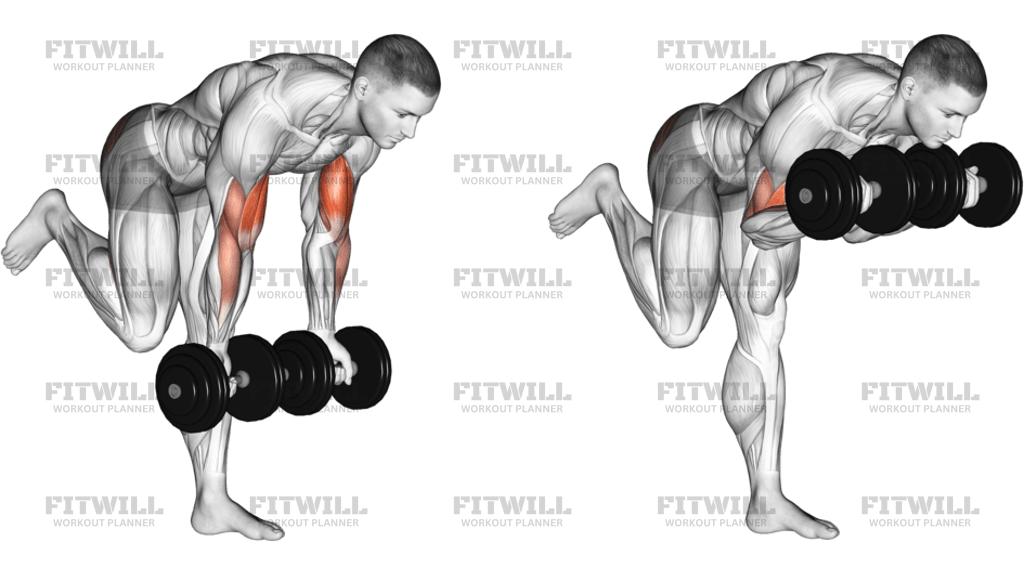
Dumbbell Bicep Curl With Stork Stance is a single-leg, hinged curl that puts the biceps under tension while the body has to stay quiet and balanced. The lifted back leg and forward torso angle make it harder to cheat with a hip drive or shoulder swing, so the curl has to come from elbow flexion and forearm control instead of momentum. That makes this version especially useful when you want a strict arm builder that also challenges balance and trunk stability.
The main target is the biceps, with the brachialis, brachioradialis, and forearm flexors helping control the dumbbell on the way up and down. Because the torso is tipped forward, the exercise also asks the glutes, hamstrings, and deep core muscles to keep the pelvis and rib cage from twisting. In practice, the stork stance turns a simple curl into a cleaner strength-and-control drill, which is why light to moderate loads usually work better than heavy ones.
The setup is what makes the movement work well. Hinge forward from the hips until your chest is angled toward the floor, keep the standing knee softly bent, and lift the back leg so it acts as a counterbalance rather than a kickstand. Let the dumbbell hang straight down from the shoulder, keep the wrist stacked, and set the elbow slightly in front of the torso so the upper arm stays still. If the shoulder rolls forward or the lower back rounds, the load is too heavy or the hinge is too deep.
Each repetition should look deliberate. Curl the dumbbell toward the front of the shoulder by bending the elbow, keep the upper arm fixed, and avoid letting the shoulder drift or the torso rotate open. Squeeze briefly near the top, then lower the weight slowly until the arm is almost straight again. Breathe out on the curl and in on the return, and re-set the stork stance before the next rep so balance does not drift as fatigue builds.
This exercise fits well as accessory work for arm size, arm endurance, or movement quality days, and it is also useful in warmups when you want to wake up the elbow flexors without a lot of joint stress. It is less about moving the heaviest dumbbell possible and more about making the curl strict while the rest of the body stays organized. Beginners can use it if they keep the hinge small, the load light, and the rep speed controlled. The cleanest sets are the ones where the free leg, torso, and shoulders stay calm while the biceps do the work.
Fitwill
Log Workouts, Track Progress & Build Strength.
Achieve more with Fitwill: explore over 9600 exercises with images and videos, access built-in and custom workouts, perfect for both gym and home sessions, and see real results.
Start your journey. Download today!




Instructions
- Stand on one leg with a soft knee, hinge forward at the hips, and lift the other leg behind you so it counters your body weight.
- Let the dumbbell hang straight down from the shoulder with your wrist stacked and your elbow close to the front of your torso.
- Brace your midsection and keep your ribs and hips square before you start the curl.
- Curl the dumbbell toward the front of your shoulder by bending only at the elbow.
- Keep your upper arm still and avoid swinging the torso or using the lifted leg to create momentum.
- Squeeze briefly at the top when the forearm is nearly vertical.
- Lower the dumbbell slowly until the arm is almost straight again.
- Exhale as you curl and inhale as you lower, then reset your balance before the next repetition.
Tips & Tricks
- Use a lighter dumbbell than you would for a standing curl, because the hinge and single-leg balance make cheating easier.
- Keep the standing knee softly bent so the hip hinge, not the lower back, holds the forward position.
- Do not let the elbow drift behind the torso or the front shoulder roll forward at the top of the rep.
- Keep the wrist neutral and stacked over the forearm so the dumbbell does not pull the hand backward.
- Treat the lifted back leg as a counterbalance, not as a way to kick the torso upward during the curl.
- Lower the dumbbell under control for a full count so the biceps stay loaded instead of resting between reps.
- If balance gets shaky, reduce the hinge depth before you reduce the range of motion.
- Stop the set when your hips start opening toward the working arm or the dumbbell starts swinging.
Frequently Asked Questions
What muscle does Dumbbell Bicep Curl With Stork Stance target most?
The biceps are the primary target, with the brachialis, brachioradialis, and forearm flexors helping control the dumbbell.
Why use the stork stance instead of standing normally?
The single-leg hinge makes it harder to swing the weight, so the curl stays stricter and the core has to stabilize the torso.
Should my torso stay fixed during the curl?
Yes. Keep the chest angled forward and let only the elbow move so the dumbbell does not turn into a body swing.
How far back should the free leg go?
Only far enough to counterbalance the hinge. If the leg lift forces your lower back to arch or your hips to twist, the stance is too aggressive.
Can I curl both dumbbells at the same time?
You can if your balance is solid, but one arm at a time is usually cleaner because it makes torso rotation easier to control.
How heavy should the dumbbell be?
Choose a load that lets you keep the elbow still and the torso quiet; if you have to rock forward to finish the rep, it is too heavy.
Is this a good beginner curl variation?
Yes, if the hinge is small and the dumbbell is light. Beginners may also keep the rear toe lightly on the floor until the balance feels stable.
What should I do if I feel the movement in my shoulder more than my biceps?
Reduce the load and keep the upper arm quieter. The shoulder should simply hold the arm position while the elbow does the lifting.