Dumbbell Cross Body Hammer Curl
Dumbbell Cross Body Hammer Curl is a standing arm exercise that uses a neutral-grip dumbbell curl path across the front of the body to train the upper arms and forearms without asking the wrist to rotate into a full supinated curl. The cross-body path shifts a little more attention toward the brachialis and brachioradialis while still challenging the biceps, so it is a useful choice when you want direct elbow-flexion work with a strong carryover to grip and forearm control.
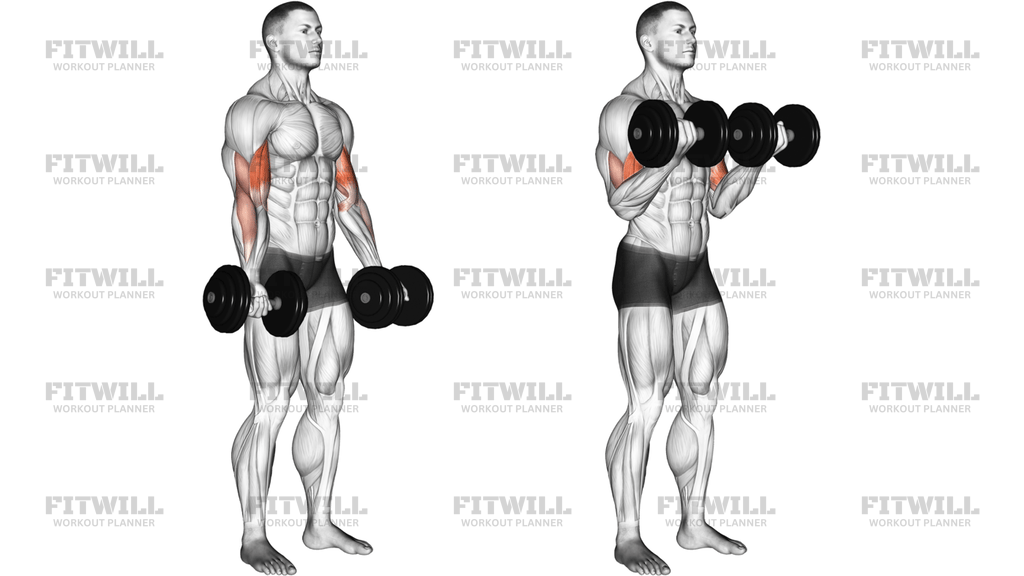
The image shows a tall standing setup with the dumbbells hanging beside the thighs and one arm curling diagonally toward the opposite chest. That diagonal path matters: it should feel like the hand is traveling from the outside of the hip toward the opposite shoulder or upper chest, not like a front raise or a shrug. Keeping the palm facing in and the elbow close to the torso helps the upper arm do the work instead of the shoulder taking over.
Good reps stay strict from the first inch to the last. Brace the torso, keep the ribs stacked over the pelvis, and let the upper arm stay quiet while the forearm bends the elbow. At the top, the dumbbell should be close to the upper chest or opposite shoulder line with the wrist still neutral. On the way down, lower along the same diagonal under control so the elbow straightens without swinging the torso or letting the shoulder roll forward.
This exercise fits well in accessory arm work, upper-body hypertrophy sessions, or any program that needs a simpler curl variation than a full supinating dumbbell curl. It is also a practical option for lifters who want to spare the wrist or prefer a more natural hammer grip. Beginners can use it safely with light dumbbells, but the set should end as soon as the torso starts leaning back, the elbow drifts forward, or the weight turns into a swing.
Use a load that lets each rep look the same. The goal is not to yank the weight across the body; it is to keep tension on the elbow flexors through a clean diagonal path, a controlled lowering phase, and stable breathing. When the setup stays disciplined, the exercise gives honest arm work without much extra joint stress.
[ Workout Log & Planner ]
Put your next workout in Fitwill
Keep your plan and training log ready when you are.


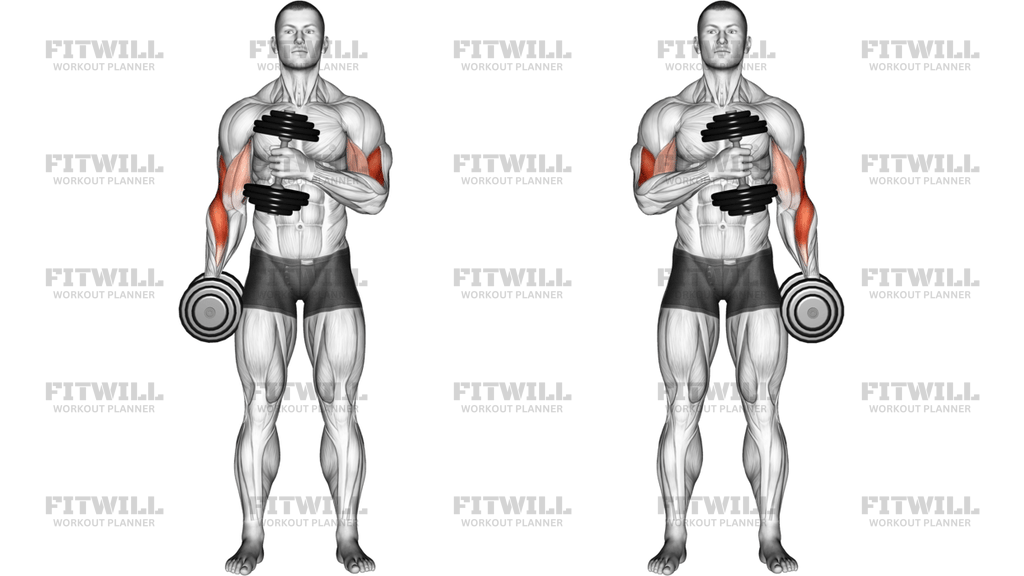
Instructions
- Stand tall with a dumbbell in each hand, feet about hip-width apart, arms hanging at your sides, and palms facing your thighs.
- Keep your chest up, ribs stacked over your pelvis, and shoulders down so the weights start close to the outside of each thigh.
- Pick one arm to work and keep the opposite arm quiet at your side if you are alternating reps.
- Curl the working dumbbell diagonally across your body toward the opposite shoulder or upper chest while keeping the palm facing in.
- Keep the elbow close to your torso and let the forearm travel without swinging the upper arm forward.
- Squeeze briefly at the top when the dumbbell reaches chest height, then pause without shrugging the shoulder.
- Lower the weight along the same diagonal path until the arm is straight again, keeping the descent controlled.
- Repeat on the other side or for the planned number of reps, exhaling on the curl and inhaling on the way down.
Tips & Tricks
- If the dumbbell drifts straight up in front of the shoulder, you are turning the movement into a regular curl instead of a cross-body hammer curl.
- Keep the wrist stacked over the forearm; bending it back or letting it collapse forward usually makes the forearm take over and reduces elbow-flexor tension.
- A slight pause at the top is more useful than chasing a higher rep speed because this variation rewards clean elbow flexion more than momentum.
- Stop the set when the torso starts leaning away from the working arm, because that usually means the load is too heavy.
- Let the elbow stay close to the ribcage instead of flaring outward, especially during the first half of the lift.
- Use a controlled lowering phase so the brachialis and brachioradialis stay loaded instead of letting the dumbbell drop.
- If the front of the shoulder feels more involved than the upper arm, reduce the load and shorten the path slightly.
- Choose dumbbells that allow both sides to match; if one side twists or swings to finish the rep, the set is too heavy.
Frequently Asked Questions
What muscles does the Dumbbell Cross Body Hammer Curl train most?
It mainly trains the biceps, brachialis, and brachioradialis, with the forearms helping hold the neutral grip and control the dumbbell path.
Why does the dumbbell travel across the body instead of straight up?
The diagonal path changes the arm angle a bit and usually keeps the wrist and elbow in a more natural hammer-curl position while still loading the elbow flexors.
Should I keep my palm facing in the whole time?
Yes. The neutral grip is the point of the exercise, so the palm should stay facing your body instead of fully rotating into a palm-up curl.
How high should the dumbbell come up on each rep?
Bring it to about upper-chest or opposite-shoulder height, then stop before you have to shrug, lean back, or roll the shoulder forward.
Can I do both arms at once or should I alternate?
Either works. Alternating often makes it easier to keep the torso still, while simultaneous reps can work if you can keep both dumbbells strict.
Is this easier on the wrists than a regular dumbbell curl?
Often yes, because the neutral grip keeps the wrist and forearm in a more comfortable position for many lifters.
What is the most common form mistake with this curl?
The usual mistake is swinging the torso or turning the rep into a shoulder-dominant lift instead of a controlled elbow-flexion movement.
Can beginners use Dumbbell Cross Body Hammer Curl safely?
Yes, as long as they start light enough to keep the elbow close, the wrist neutral, and the lowering phase controlled.